 Bellingham Exterior
 Exterior Work Built for Birch Bay's Waterfront Climate
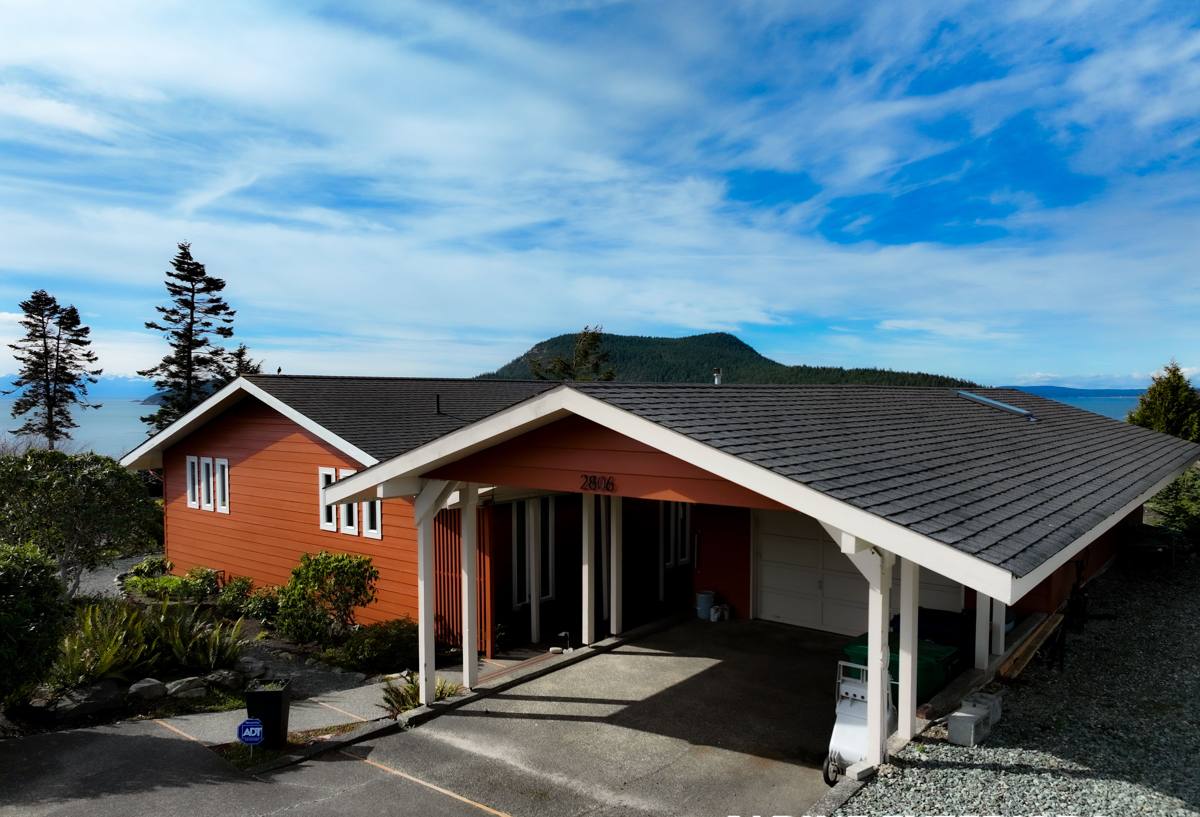
Birch Bay sits close enough to the water that its houses face a different set of problems than homes further inland in Whatcom County. Salt-laden air off the bay, wind-driven rain that comes in sideways during winter storms, and a moss season that can run most of the year all put steady pressure on siding, roofing, trim, windows, and any exterior wood on the property. None of this is dramatic on any single day. It's the accumulation over years that causes trouble — paint that fails early, siding that swells at the bottom edge, roof surfaces that stay damp longer than they should, and hardware that corrodes faster than a homeowner expects.
Bellingham Exterior Contractor works throughout Whatcom County, and Birch Bay is one of the areas where we see the clearest evidence of what coastal exposure does to a building envelope over time. Our approach here isn't a generic siding or roofing pitch — it's shaped by what actually holds up in this specific environment versus what looks fine for a few years and then starts showing problems.
What Birch Bay's Climate Actually Does to a House
Salt Air and Metal Components
Homes within a mile or two of Puget Sound and the bay itself deal with airborne salt in a way that inland Bellingham properties simply don't. Salt accelerates corrosion on fasteners, flashing, gutters, and any exposed metal trim. Over years, this shows up as rust streaking, premature flashing failure, and fastener heads that back out or corrode where they penetrate siding or roofing.
Wind-Driven Rain
Storms moving in off the water don't just drop rain straight down — they push it horizontally into wall assemblies, window frames, and door thresholds. This matters more than people expect. A siding product or window installation that handles vertical rain fine can still let moisture in when rain is being driven sideways under pressure. Flashing details, window integration, and butt joint sealing all carry more weight in a wind-exposed location like Birch Bay than they would on a sheltered inland lot.
A Long Moss and Algae Season
Whatcom County's damp, mild climate already favors moss and algae growth on north-facing roof slopes and shaded siding. Proximity to the water adds humidity that extends the season further. Moss holds moisture against roofing and siding surfaces, which shortens the life of both and creates the dark streaking and green growth that's common on older homes in the area.
Siding: Why We Install James Hardie and Only James Hardie
We get asked fairly often why we don't offer vinyl, LP SmartSide, cedar, or primed spruce as siding options. It's a fair question, and the honest answer is that we made a standardization decision based on how these products perform in this exact climate over the long run — not because any of them are inherently bad products.
Vinyl's Limits Here
Vinyl siding is inexpensive and easy to install, but it's a thin, flexible material that expands and contracts significantly with temperature swings, can crack in impact events, and tends to fade unevenly over time in coastal UV and salt exposure. It also isn't fire-resistant, which matters more every year as wildfire smoke and ember exposure become a broader Pacific Northwest concern.
LP SmartSide and Wood-Based Products
LP SmartSide, cedar, and primed spruce are wood-based products, engineered or solid. Wood-based siding is fundamentally more vulnerable to moisture than fiber cement — and in a location with driving rain and salt air, moisture management is the whole game. Even well-installed wood siding needs more consistent caulking, painting, and edge maintenance to keep water out of seams and cut edges. Skip a maintenance cycle or two, and problems compound quickly near the coast.
Why James Hardie
James Hardie fiber cement is non-combustible, dimensionally stable across temperature and moisture swings, and holds its factory-applied ColorPlus finish far longer than field-applied paint on wood or vinyl. Hardie's HZ5 product line is engineered specifically for climates with significant moisture exposure, which describes Birch Bay well. The warranty is transferable, which matters to homeowners who may sell within the product's service life. We install to Hardie's documented specifications — correct clearances, fastening patterns, and flashing details — because in a wind-driven-rain environment, installation quality determines whether any siding product actually performs the way its warranty assumes it will.
Siding Product Comparison
| Factor | Vinyl | LP SmartSide / Wood | James Hardie Fiber Cement |
|---|---|---|---|
| Moisture resistance | Fair, seams vulnerable | Weaker, needs sealed edges | Strong, engineered for wet climates |
| Fire resistance | Poor, combustible | Poor, combustible | Non-combustible |
| Finish longevity | Fades unevenly over time | Needs repainting on a cycle | Factory ColorPlus finish, long-lasting |
| Salt air performance | Fair | Weaker without upkeep | Strong when installed to spec |
| Maintenance burden | Low, but limited lifespan | Higher, ongoing sealing/painting | Low relative to lifespan |
Roofing for a Wet, Mossy Coastal Climate
Roofing decisions in Birch Bay come down to two things: keeping wind-driven rain out at every penetration and edge, and managing moss growth so it doesn't shorten the roof's usable life. We pay close attention to flashing at chimneys, skylights, and valleys, since these are the points where driving rain finds its way in first. On re-roofs, we also look at ventilation — a roof deck that stays too warm and damp underneath accelerates moss growth and can shorten shingle life regardless of the material on top.
We don't push one roofing material as a universal answer the way we do with siding, because roofing choice depends more on the specific home, roof pitch, and budget. What stays constant is attention to flashing detail and moisture management, since that's what actually determines how a roof performs near the water.
Windows: Where Wind-Driven Rain Finds Weak Spots
Window failures near the coast are rarely about the glass — they're about the flashing and integration with the wall assembly around the window. A window unit can be well-built and still leak if the flashing tape, sill pan, and head flashing weren't installed correctly for a wind-exposed location. When we replace windows in Birch Bay, we treat the flashing and integration with the siding as equally important as the window unit itself, since that's the detail that actually keeps wind-driven rain from working its way into the wall.
Decks: Built to Handle Salt Air and Standing Moisture
Decks in Birch Bay take a beating from the same conditions as the rest of the exterior — salt air corrodes fasteners and hardware faster, and shaded or north-facing decks hold moisture longer, which speeds up rot in wood framing and encourages the same moss and algae growth seen on roofs. We use fasteners and hardware rated for coastal exposure, and we pay attention to ledger board flashing and joist protection, since a deck's structural framing is usually the first place moisture damage shows up — well before the visible decking boards look like a problem.
Why a Local Crew Matters Here
Birch Bay's exposure isn't uniform. A lot on a bluff facing the water deals with different wind and salt exposure than a lot a few blocks inland, and shaded, tree-covered lots have a moss and moisture problem that sunnier lots don't. A crew that works across Whatcom County regularly, rather than one crew doing a single job in the area, has a better feel for which details matter on a given lot — where to be more conservative with flashing, where moss growth is going to be a recurring issue, and which siding and roofing choices actually hold up here rather than just in a showroom or on a spec sheet.
A Practical Checklist for Birch Bay Homeowners
- Check north-facing and shaded roof slopes for moss buildup at least once a year
- Inspect caulking and seams around windows and doors for cracking or gaps before winter storm season
- Look for rust staining at fasteners, flashing, and gutters — an early sign of salt-air corrosion
- Watch deck framing and ledger boards for soft spots or discoloration, not just the surface boards
- Have siding checked for swelling or soft spots at the bottom edge and around penetrations
- Keep gutters clear so water isn't sitting against fascia and siding longer than necessary
What Working With Us Looks Like
We start with an honest look at the specific exposure your property deals with — how close to the water, how much shade, which direction storms typically hit — and go from there. For siding, that means James Hardie fiber cement installed to manufacturer specification, not a lower-cost alternative that will need more attention sooner. For roofing, windows, and decks, it means flashing and moisture management details that are sized to what Birch Bay actually throws at a house, not a one-size-fits-all approach borrowed from drier inland projects.
If you're dealing with an aging roof, siding that's starting to show its age, windows that leak in a storm, or a deck that needs more than a coat of stain, we're happy to take a look and give you a straightforward, no-pressure estimate. Use the form below to get started.