 Bellingham Exterior
 Exterior Work Built for Blaine's Coastal Climate
Blaine sits at the northern edge of Whatcom County, right on the water along Semiahmoo Bay and Drayton Harbor, close enough to the Salish Sea that salt air is simply part of daily life. That proximity to saltwater is what sets Blaine apart from inland Bellingham neighborhoods when it comes to exterior durability. Salt-laden air accelerates corrosion on fasteners, flashing, and hardware, and it can shorten the useful life of exterior products that aren't built to handle it. Add in the marine layer's driving rain and the long gray stretch of moss season that runs from fall through spring, and Blaine homes take a steady, cumulative beating that a lot of siding, roofing, and trim products simply aren't engineered for.
We've worked on homes throughout Whatcom County long enough to know that what holds up in a drier inland climate doesn't always hold up a few miles from the water. Blaine homeowners need exterior materials and installation details that account for wind-driven moisture, salt exposure, and near-constant humidity — not generic products installed the same way they'd be installed anywhere else.
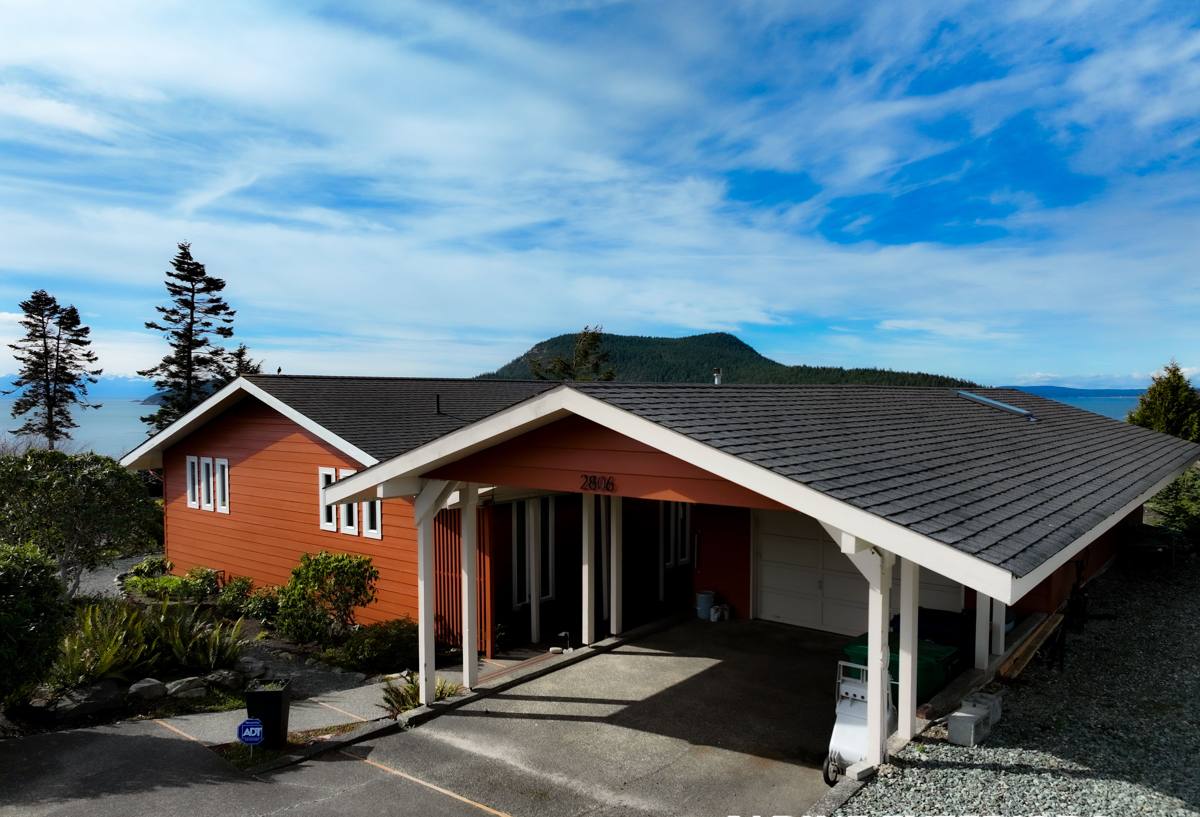
What Blaine's Climate Does to a Home's Exterior
Salt Air and Corrosion
Homes within a mile or two of Semiahmoo Bay or Drayton Harbor are exposed to airborne salt that settles on siding, trim, and roofing hardware. Over years, that salt accelerates corrosion of unprotected metal fasteners and flashing, and it can degrade lower-grade coatings and finishes faster than manufacturers' standard warranties assume. This is one of the reasons material choice and fastener selection matter more in Blaine than they would twenty miles inland.
Driving Rain and Wind
Blaine catches wind and rain coming straight off the water, and that combination pushes moisture into places a calmer rain never would — up under laps, around window and door openings, and into any gap in the weather barrier. A siding system's ability to shed wind-driven rain, not just vertical rain, is a real factor here, and it depends as much on correct installation and flashing detail as it does on the product itself.
Moss, Algae, and Prolonged Damp
Whatcom County's wet season runs long, and Blaine's marine-influenced climate keeps humidity elevated even between rain events. That extended dampness is exactly what moss and algae need to take hold on north-facing walls, shaded rooflines, and anywhere airflow is limited. Left unaddressed, sustained moisture against a home's exterior surfaces can lead to wood rot, coating breakdown, and — on the roof — reduced shingle lifespan.
Siding: Why We Only Install James Hardie
We install James Hardie fiber cement siding exclusively. We don't install vinyl, LP SmartSide, Cemplank, Allura, primed spruce, or cedar, and that's a deliberate standard, not an oversight. In a climate like Blaine's, the trade-offs of those other products become more pronounced, not less.
- Vinyl siding can warp or become brittle over time and its seams rely on overlap rather than a sealed, engineered joint — a real liability when wind-driven rain is a regular occurrence.
- Wood-based and wood siding (cedar, primed spruce) is genuinely attractive but is also organic material in a climate that stays damp for months at a stretch. It demands a disciplined recoating and caulking schedule to resist rot and moss growth, and skipping even one cycle can catch up fast this close to the water.
- OSB-based products like LP SmartSide use engineered wood strand technology that performs reasonably well when installation and maintenance are followed exactly, but any breach in the factory coating or field-cut edge sealing creates a path for moisture absorption and swelling.
- Other fiber cement brands (Cemplank, Allura) are legitimate fiber cement products, but we've standardized on one manufacturer so our crews install one system to one spec, every time, with warranty coverage we can stand behind without qualification.
James Hardie fiber cement is non-combustible, doesn't absorb moisture the way wood-based products do, and holds its factory-applied ColorPlus finish far longer than field-applied paint. Hardie also engineers specific product lines (the HZ5 line, for example) for regions with more moisture and temperature swing, which is directly relevant to a coastal-influenced climate like Blaine's. The combination of material stability, a factory finish that resists fading and chalking, and a strong transferable warranty is why we put it on homes instead of the alternatives.
Comparing Siding Options for a Coastal Whatcom County Home
| Material | Moisture Behavior | Maintenance Demand | Typical Lifespan |
|---|---|---|---|
| James Hardie fiber cement | Does not absorb/swell; engineered for damp climates | Low — occasional wash, no recoating cycle | Decades, with strong factory warranty |
| Vinyl | Sheds water but seams and edges can allow intrusion | Low, but limited repair options if damaged | Variable; can degrade faster with UV and impact |
| Cedar / primed wood | Absorbs moisture; prone to rot without upkeep | High — regular painting/sealing required | Shorter without consistent maintenance |
| LP SmartSide (OSB-based) | Resists moisture when coating is intact; vulnerable at breaches | Moderate — coating and caulk monitoring | Solid if maintained to spec |
Roofing in a Marine Climate
Roofs in Blaine deal with the same combination of driving rain, wind, and prolonged dampness as the siding, plus direct UV and temperature cycling on top. Moss is the most visible problem — it holds moisture against shingles and can work its way under tabs over time — but the less visible issues are usually more important: flashing around chimneys, vents, and valleys that has to shed wind-driven rain rather than just vertical rain, and ventilation that keeps the attic dry enough to prevent condensation from the inside out. A roof that looks fine from the ground can still be failing at the flashing details, which is where most leaks in this climate actually start.
Windows: Sealing Out Wind-Driven Moisture
Window performance in Blaine comes down to two things: the seal at the frame and the flashing behind it. Even a well-built window will leak eventually if it's not flashed correctly into the wall assembly, and that's especially true where wind pushes rain sideways into the building envelope rather than letting it run straight down. We pay close attention to head flashing, sill pans, and proper integration with the siding's weather-resistive barrier, because in a climate this wet, the installation detail matters as much as the window unit itself.
Decks: Built to Handle Salt Air and Standing Moisture
Outdoor living structures in Blaine face a shorter version of the same problem the siding does — salt air accelerates hardware corrosion, and prolonged dampness promotes mold, mildew, and surface wear on decking boards and structural framing alike. Ledger board attachment, proper flashing where the deck meets the house, and drainage that doesn't let water pool against framing are the details that determine whether a deck lasts or starts showing problems within a few years. We build and repair decks with those coastal conditions in mind rather than using standard inland practices.
Why a Local Crew Matters in Blaine
Exterior work in Blaine isn't just about picking the right products — it's about knowing how this specific stretch of Whatcom County behaves. A crew that mostly works drier, inland jobs can install a product correctly by the manufacturer's general instructions and still miss the flashing and sealing details that matter most a few blocks from the water. We work across Whatcom County regularly, which means we see how salt air, coastal wind, and moss season actually affect homes here over time — not just in a manufacturer's spec sheet, but in what we find when we're called back to a home years after installation.
What to Look For When Hiring an Exterior Contractor Near the Water
- Experience specifically with coastal or near-coastal properties, not just general regional work
- A clear explanation of flashing and moisture-barrier detailing, not just the finish material
- Manufacturer certification or training on the specific siding, roofing, or window products being installed
- Willingness to walk the property and point out existing moss, moisture, or corrosion issues before starting work
- A written warranty that covers both material and workmanship, with terms you can actually read and understand
- Local references or a track record of jobs in Whatcom County you can ask about
Planning an Exterior Project in Blaine
Whether you're dealing with moss buildup on an older roof, siding that's showing its age from years of salt and rain exposure, windows that let in drafts during winter storms off the water, or a deck that needs to be rebuilt with better drainage and hardware, the starting point is the same: an honest look at what your home's exterior is actually dealing with. Siding, roofing, windows, and decks all interact with each other at the flashing and transition points, so problems in one area often show up as symptoms in another.
If you're weighing a full siding replacement, we'll walk you through why James Hardie is the product we stand behind for this climate, what it costs relative to the alternatives over its lifespan, and what correct installation actually involves — not just the sales pitch version.
If you own a home in Blaine and want a straight assessment of what your exterior needs, we're happy to take a look. Reach out for a free, no-pressure estimate using the form below.