 Bellingham Exterior
 Exterior Work in Sehome: Built for This Neighborhood's Weather
Sehome sits close to downtown Bellingham and Western Washington University, on rolling terrain that catches wind and moisture coming off Bellingham Bay. Like the rest of Whatcom County, homes here deal with salt-tinged air, long stretches of driving rain, and a moss season that can run from fall through spring. Older homes in the neighborhood, along with newer infill construction, share the same basic problem: exteriors here are wet more often than they're dry, and whatever siding, roofing, and trim you choose has to handle that reality year after year, not just look good on installation day.
We work throughout Bellingham and Whatcom County, and Sehome's mix of housing stock, older single-family homes, some multi-family buildings, and newer construction near campus, means we see a wide range of exterior conditions on any given week. That variety is useful. It means we're not guessing about what holds up here; we're working from what we've actually seen fail and what's actually lasted.
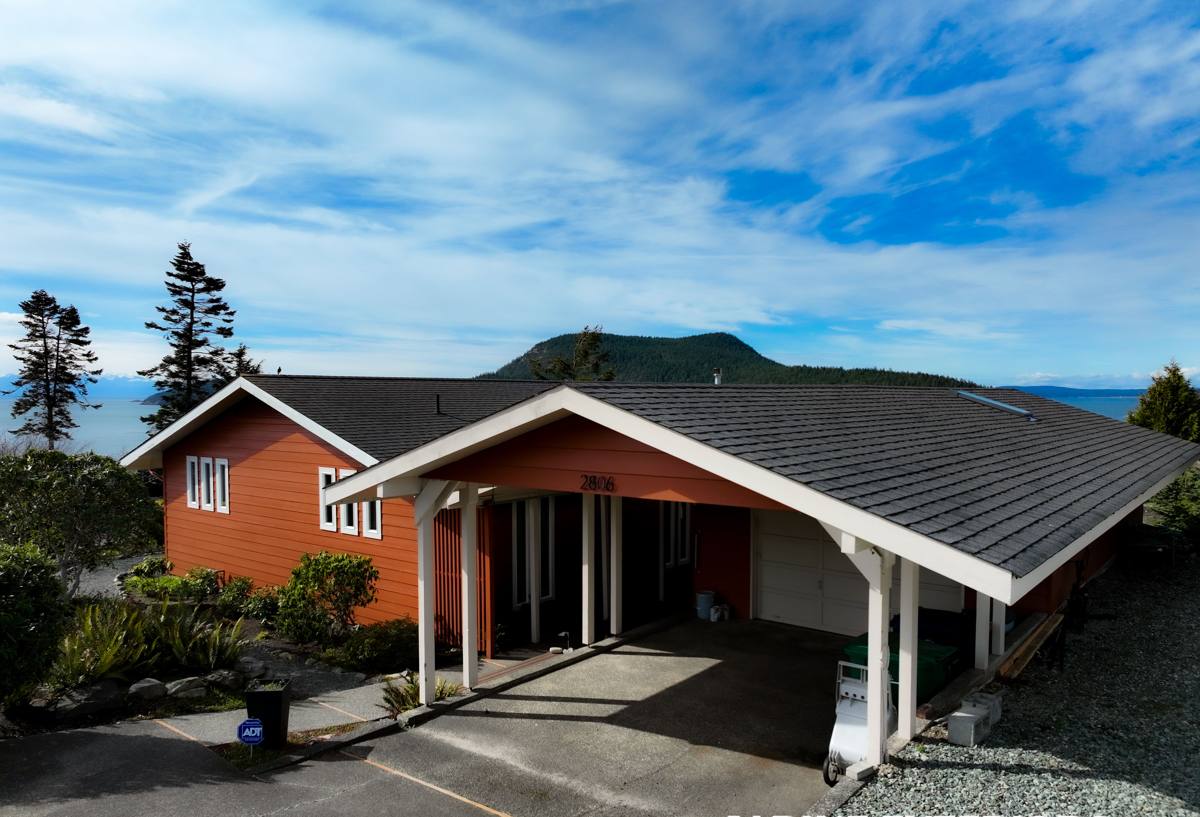
What the Climate Does to Siding, Roofs, and Trim
Bellingham's marine climate is milder than most of the country, but mild doesn't mean easy on a building. The specific combination that wears down exteriors in Sehome includes:
- Persistent moisture: Long, low-intensity rain events soak into any siding seam, unsealed joint, or crack and stay there, since drying windows between storms are short for much of the year.
- Salt air influence: Proximity to the bay means airborne salt accelerates corrosion on fasteners, flashing, and unprotected metal trim, and it can degrade lower-quality paint finishes faster than inland areas.
- Moss and algae growth: Shaded, north-facing walls and roof planes in Sehome's tree-covered lots stay damp long enough for moss and algae to take hold, which traps additional moisture against the surface underneath.
- Wind-driven rain: Storms off the Strait of Georgia don't just fall straight down; they push water sideways into siding laps, window flanges, and anywhere flashing is marginal.
None of this is unusual for the Pacific Northwest, but it adds up. A siding or roofing product that's rated fine for a drier climate can underperform here simply because it never gets a real chance to dry out between exposures.
Siding: Why We Only Install James Hardie
We install James Hardie fiber cement siding exclusively. We don't install vinyl, LP SmartSide, Cemplank, Allura, primed spruce, or cedar, and we think homeowners in Sehome deserve to know why before they commit to a product.
What Hardie Gets Right for This Climate
Fiber cement doesn't absorb and swell the way wood-based products can, and it's non-combustible, which matters increasingly to insurers and to homeowners thinking about wildfire smoke and ember exposure even in a wet region like this one. Hardie's ColorPlus factory finish is baked on under controlled conditions, which gives it more consistent adhesion and UV resistance than field-applied paint, especially useful where moss treatments and pressure washing are part of routine maintenance.
Why We Passed on the Alternatives
Vinyl siding is affordable and low-maintenance in the short term, but it can warp or crack in temperature swings, and its seams and J-channels give wind-driven rain more opportunities to get behind the cladding. LP SmartSide and other engineered wood products perform reasonably well when installation and caulking are perfect and stay perfect, but any breach in that seal lets moisture into the wood substrate, and repairs are harder to blend invisibly. Primed spruce and cedar are attractive natural materials, but they require an ongoing maintenance commitment, re-staining or re-painting, caulk inspection, moisture monitoring, that many homeowners underestimate until they're dealing with rot at year eight or ten. Cemplank and Allura are also fiber cement, and reasonable products, but we standardized on one manufacturer so our crews install to one spec, one warranty structure, and one set of installation details, rather than switching systems project to project.
For a neighborhood that spends a good part of the year wet, we think the trade-off favors a product that doesn't rely on a perfect paint film or a flawless caulk joint to keep water out over the next twenty years.
Hardie Product Lines We Use
| Product Line | Best For | Notes |
|---|---|---|
| HardiePlank lap siding | Most single-family homes | Traditional horizontal look, several exposure widths |
| HardieShingle | Accent gables, Craftsman-style homes | Staggered or straight-edge panels |
| HardiePanel | Modern builds, board-and-batten look | Common on newer infill construction near campus |
| HardieTrim | Window and corner trim | Pairs with any of the above for a finished look |
Hardie's HZ5 product designation is engineered for wetter, freeze-prone regions, which fits Whatcom County's profile better than the HZ10 line built for hot, dry climates.
Roofing in a Moss-Prone Neighborhood
Roof failures in Sehome rarely show up as one dramatic leak. More often it's slow: moss holds moisture against shingles, granule loss speeds up, valleys and penetrations start to fail years before the rest of the roof is due for replacement. A roof system here needs attention to a few specifics that matter more in this climate than in drier parts of the country:
- Proper attic and roof ventilation, so warm interior air doesn't condense against the underside of the sheathing during long damp stretches
- Ice-and-water shield at eaves, valleys, and penetrations, not just where code minimums require it
- Metal flashing detailed to shed wind-driven rain, not just vertical rainfall
- Material choice and color that resists moss colonization better on shaded or north-facing slopes
We also talk with homeowners about realistic moss maintenance, since even a well-installed roof benefits from periodic cleaning in a neighborhood with this much tree cover.
Windows and Their Role in the Exterior Envelope
Windows are frequently the weak point in an otherwise solid exterior, not because the glass fails, but because flashing and integration with the siding around them is rushed or done out of sequence. When we replace windows in Sehome, we treat the flashing details, sill pans, head flashing, and integration with the housewrap as equally important to the window unit itself. A high-end window installed with poor flashing will leak; a mid-range window installed correctly usually won't. We coordinate window work with siding projects whenever possible, since doing both together lets us get the water management right in one pass instead of patching around existing conditions.
Decks: Built for Standing Water and Shade
Decks in Sehome's shaded, tree-lined lots dry slowly, which shortens the practical lifespan of standard lumber decking and accelerates fastener corrosion if the wrong hardware is used. We build and repair decks with attention to drainage under the deck surface, ledger board flashing where the deck meets the house (a common rot point on older homes), and fastener and hardware choices rated for coastal, high-moisture exposure. Composite decking is often a good fit for shaded lots where wood decking would need frequent refinishing to keep up with moss and mildew.
Why a Local Crew Matters Here
Exterior work in Sehome isn't generic. A crew that mostly works in drier parts of the state may not think twice about caulk-dependent seams or flashing sequencing that would be marginal but survivable elsewhere and genuinely risky here. We're a Bellingham-area contractor, working in Whatcom County's climate every week, and that shapes how we detail flashing, where we push back on cost-cutting shortcuts, and which products we're willing to stand behind. It also means we're a known, reachable business if a warranty question or a workmanship issue comes up years down the road, not a crew that worked the region for one season and moved on.
What to Expect When You Work With Us
- An honest on-site assessment of your current siding, roof, windows, or deck, including what's actually failing versus what's just cosmetic
- A clear explanation of why we recommend James Hardie fiber cement over other siding products, specific to your home's exposure
- Straightforward pricing with no pressure to decide on the spot
- Attention to flashing and water management details that don't show up in a sales brochure but determine how the job performs in ten years
- A crew that's used to Whatcom County job sites, weather delays included
Get a Free Estimate for Your Sehome Home
If your siding, roof, windows, or deck are showing signs of wear from Bellingham's wet climate, moss buildup, cracked or swollen siding, roof granule loss, drafty windows, or a deck that never quite dries out, we're happy to take a look. Reach out for a free, no-pressure estimate, and we'll walk your property with you and give you a straight answer about what it actually needs.