 Bellingham Exterior
 Exterior Homes Built for the Water's Edge
Fairhaven sits close enough to Bellingham Bay that its exterior surfaces live a harder life than homes just a few miles inland. Salt-laden air off the water, wind-driven rain that hits siding sideways instead of straight down, and a moss season that can stretch from October well into spring all put steady pressure on roofs, siding, windows, and any exposed wood on a deck. None of this is dramatic, one-time damage. It is slow, cumulative wear — the kind that shows up as a soft trim board, a shingle line thick with moss, or a window that fogs between the panes years before it should.
We work throughout Whatcom County, and Fairhaven's mix of older character homes and newer construction near the waterfront gives us a good cross-section of what holds up here and what doesn't. This page covers what we see on Fairhaven exteriors and how our siding, roofing, window, and deck work is built around those conditions.
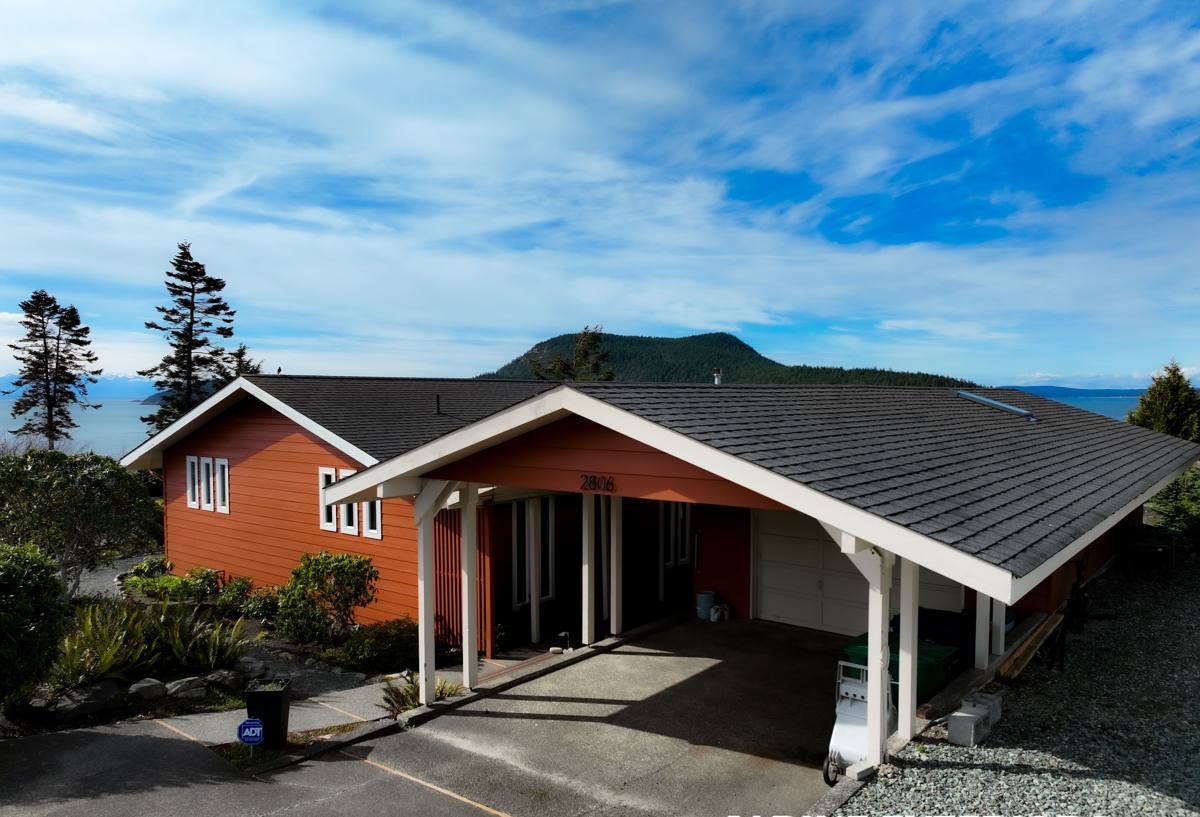
What Salt Air and Driving Rain Actually Do
Salt Air
Proximity to saltwater accelerates corrosion on fasteners, flashing, and any unprotected metal on a home's exterior. It also speeds up the breakdown of lower-quality paints and coatings, which is part of why finish quality matters more here than it would on a home fifteen miles inland. A coating that's rated for general Pacific Northwest exposure isn't automatically rated for a few blocks from the bay.
Driving Rain
Bellingham gets a lot of rain, but the direction matters as much as the volume. Wind off the water pushes rain sideways into wall assemblies, which stresses the seams, laps, and caulk joints of any siding system far more than a straight-down rain would. Products and installation details that work fine in a sheltered inland lot can underperform on a more exposed Fairhaven site if they weren't built or installed with that wind-driven moisture in mind.
Moss Season
Cool, damp, shaded conditions for much of the year make Whatcom County prime territory for moss and algae growth on roofs and north-facing siding. Moss holds moisture against the surface underneath it, which is a slow but real threat to roofing underlayment, siding laps, and any wood trim it takes hold on.
Siding: Why Material Choice Matters More Near the Water
We install exclusively James Hardie fiber cement siding, and we don't install LP SmartSide, vinyl, Cemplank, Allura, primed spruce, or cedar. That's not a marketing position — it's a decision built around what stands up to years of Whatcom County weather without turning into a maintenance project.
Vinyl can warp and become brittle with age and temperature swings, and its seams are a natural place for wind-driven rain to work its way in over time. Wood siding products — cedar and primed spruce among them — need consistent repainting and caulk maintenance to keep moisture out, and in a moss-prone, high-moisture climate like Fairhaven's, that maintenance schedule tends to compress. Engineered wood products like LP SmartSide use resin-treated strand board that performs well when detailing and maintenance are kept up, but any breach in the factory treatment or field-cut edge exposes wood-based material to the kind of sustained dampness this area sees for months at a time.
James Hardie fiber cement is non-combustible, doesn't rot, and its ColorPlus factory finish is baked on under controlled conditions rather than applied on-site, which gives it more consistent, longer-lasting color and moisture resistance than field-applied paint. Hardie also engineers specific product lines (its HZ5 line, for instance) for climates with more moisture exposure, which is a meaningful detail for a neighborhood this close to the bay. It costs more up front than vinyl and is heavier and more particular to install correctly than most alternatives, which is exactly why installation quality — not just material choice — determines how it performs over twenty or thirty years.
Siding Materials Compared for a Coastal Whatcom County Site
| Material | Moisture Behavior | Maintenance | Our Position |
|---|---|---|---|
| James Hardie fiber cement | Resists rot; factory finish holds up to salt air and driving rain | Occasional wash; repaint only if ever desired | What we install |
| Vinyl | Seams can allow water intrusion; can warp with age | Low, but limited repair options when damaged | Not installed |
| Cedar / primed spruce | Absorbs moisture without diligent upkeep | Repainting and caulk maintenance on a recurring cycle | Not installed |
| LP SmartSide (engineered wood) | Good when factory treatment and edges stay intact | Moderate; edge sealing and touch-ups matter | Not installed |
| Cemplank / Allura fiber cement | Similar base material to Hardie | Varies by finish system | Not installed — we standardize on Hardie's engineering and warranty |
Roofing for a Wet, Mossy Climate
Fairhaven roofs deal with sustained dampness, shaded sections that stay wet longer after storms, and moss that takes hold on north- and east-facing slopes especially. A roofing system here needs proper ventilation to let moisture escape from the attic side, underlayment that can handle wind-driven rain finding its way under shingles at edges and valleys, and flashing detail that doesn't rely on caulk alone to stay watertight.
We also pay attention to gutter and downspout capacity on Fairhaven jobs. A roof can be in good shape and still send water where it shouldn't if the drainage system underneath it isn't sized and pitched for the volume of rain this area gets.
Windows: Keeping Moisture and Cold Air Out
Older Fairhaven homes often still have original or early-replacement windows that were never built for today's energy expectations, and single-pane or early double-pane units near the water tend to show seal failure — fogging between the panes — sooner than the same window would inland. Replacement windows we install are chosen for the combination of things that matter most in this climate: sealed, insulated glazing that resists condensation, frame materials that hold up to salt-air exposure, and flashing and installation details that tie properly into the surrounding siding so water can't find a path in around the window itself. A window is only as good as the flashing around it — that's true everywhere, but it matters more on a site that catches wind-driven rain regularly.
Decks in a Marine Climate
Decks near Bellingham Bay take on more than typical Pacific Northwest deck wear — salt air accelerates corrosion on fasteners and hardware, and the same moss and algae growth that shows up on north-facing siding will take hold on shaded deck boards too. We build and repair decks with attention to proper drainage under and around the structure, ledger board flashing that keeps water from working into the house framing, and hardware rated for the exposure this area sees. A deck that looks fine on the surface can have a slowly failing ledger connection underneath if it wasn't flashed correctly the first time.
Signs Your Fairhaven Home's Exterior Needs Attention
- Moss buildup on the roof, especially on shaded north-facing slopes
- Soft or spongy trim boards, window sills, or deck boards
- Paint that's peeling, bubbling, or chalking faster than expected
- Visible gaps or separation at siding seams and joints
- Fogging or condensation between window panes
- Streaking or staining below gutters and downspouts
- Rust stains around fasteners, flashing, or deck hardware
Why a Local Crew Matters Here
A contractor based in or near Bellingham has seen how a given product or detail actually performs after a few Whatcom County winters, not just how it's rated on a spec sheet. That matters for things like which side of a home needs extra flashing attention because of prevailing wind direction, how much moss pressure a particular lot's tree cover creates, and which siding and roofing choices hold up versus which ones create callbacks. It also matters for accountability — a local crew is still around, and easy to reach, years after the job is finished.
How the Process Works
Most Fairhaven projects start with a walk-around assessment of the home's current siding, roofing, windows, and any deck structure, looking specifically at moisture exposure, existing damage, and how the home is oriented relative to prevailing wind and rain. From there we put together a straightforward scope and estimate — what needs replacing now, what can wait, and what a proper installation involves given the site's exposure. There's no pressure to do more than the home actually needs.
If you're in Fairhaven and dealing with any of the wear signs above, or you're just planning ahead for a home this close to the water, we're happy to take a look and give you a straightforward, no-pressure estimate. Use the form below to get started.