 Bellingham Exterior
 Exterior Contracting for Columbia, Bellingham
Columbia is one of Bellingham's older, closer-in neighborhoods, and that history shows up on its houses. You'll find a mix of early-1900s homes, mid-century additions, and newer infill, often sitting on smaller lots with mature trees overhead and close proximity to the water. That combination — age, tree cover, and marine exposure — puts a specific kind of stress on siding, roofing, windows, and decks that's different from what you'd see on a newer subdivision farther inland. We work throughout Whatcom County, and Columbia is a neighborhood we know well because its exterior problems tend to repeat from house to house: moisture trapped behind old siding, moss-loaded roofs, single-pane or failed-seal windows, and decks that have quietly been absorbing rain for decades.
This page walks through what we actually see on Columbia homes, how our services address it, and why a crew that understands this specific pocket of Bellingham's weather and housing stock matters more than a generic bid.
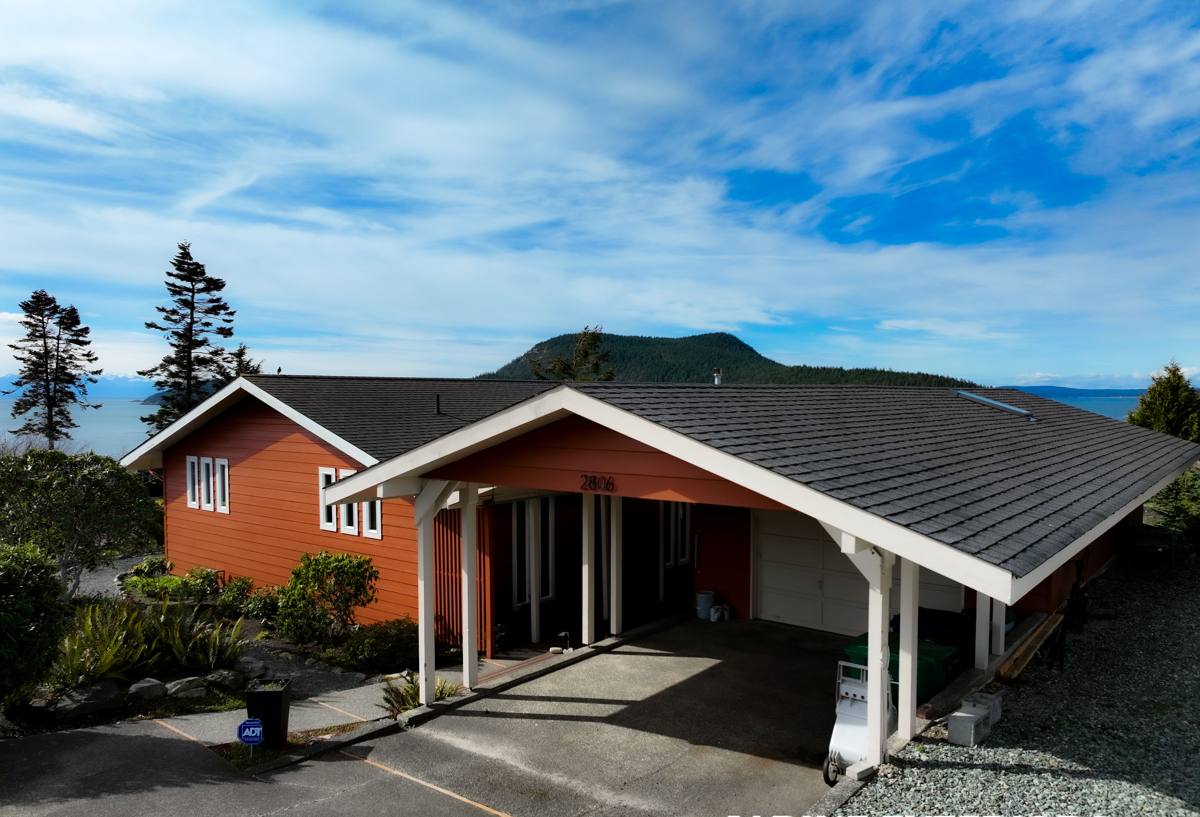
What the Climate Does to Homes Here
Bellingham sits close enough to salt water that homes in neighborhoods like Columbia get a steady, low-grade dose of salt-laden air on top of the region's already heavy rainfall. Add tree canopy that keeps roofs and north-facing siding shaded and damp longer after a storm, and you get conditions that are hard on almost every exterior material.
Salt Air
Airborne salt accelerates corrosion on exposed metal — fasteners, flashing, gutter hardware, and hinges — and it can degrade certain paint and coating systems faster than they'd wear inland. It doesn't ruin materials outright, but it shortens the service life of anything not rated or finished to handle it.
Driving Rain
Whatcom County doesn't just get a lot of rain — a good share of it comes in sideways off wind events, which pushes moisture into joints, laps, and penetrations that would stay dry in a straight-down rain. Siding seams, window flashing, and roof-to-wall transitions are where this shows up first.
Moss and Shade
Tree-covered lots and a long wet season mean moss and algae get a real head start on north- and west-facing roof slopes and siding. Beyond the cosmetic issue, moss holds moisture against the surface for months at a time, which is exactly the condition that rots wood trim, delaminates old siding products, and shortens shingle life.
Siding: What We See and What We Recommend
A lot of Columbia's older homes were sided in wood, and many were later covered with vinyl or an aluminum overlay at some point in the last few decades. Newer builds and remodels in the area are more likely to have engineered wood or fiber cement. Each of these ages differently under Bellingham's conditions, but the failure pattern we see most often is the same: moisture getting behind the cladding at seams, corners, and penetrations, then sitting there because the material or the original install didn't give it a way out.
We install James Hardie fiber cement siding exclusively, and we don't install vinyl, LP SmartSide, Cemplank, Allura, or bare cedar or primed spruce siding. That's a deliberate standard, not a sales pitch, and it's worth explaining honestly:
- Vinyl handles rain fine but can warp or become brittle with age and UV/salt exposure, and it has almost no fire resistance — a real consideration with the wildfire smoke and dry spells Western Washington has seen more of in recent summers.
- Wood products (cedar, primed spruce) look great new but need consistent repainting and caulking to survive a marine climate, and any gap in that maintenance lets rot start, especially under tree cover where surfaces stay damp longer.
- LP SmartSide is an engineered wood product — it performs reasonably when installed and maintained exactly to spec, but wood-based composites are inherently more moisture-sensitive at cut edges and seams than fiber cement, and that sensitivity is a bigger liability in a climate this wet.
- Other fiber cement brands (Cemplank, Allura) are legitimate fiber cement products, but we've standardized on one manufacturer, one factory finish system, and one warranty structure so we can install to spec every time and stand behind the result without ambiguity about which product went where.
James Hardie fiber cement is non-combustible, doesn't swell or rot from moisture the way wood-based products can, and comes with a factory-applied ColorPlus finish that's baked on rather than field-painted — which matters in a neighborhood where UV and salt air both work against paint adhesion over time. Hardie's HZ5 product line is engineered for the Pacific Northwest's wet, cool climate specifically. It's also backed by a strong transferable warranty, which carries real value on older homes in a neighborhood like Columbia that tend to change hands.
Siding Comparison at a Glance
| Material | Moisture Behavior | Maintenance | Fire Resistance |
|---|---|---|---|
| James Hardie fiber cement | Doesn't rot or swell; factory finish resists moisture intrusion | Low — occasional wash, no repainting for years | Non-combustible |
| Vinyl | Sheds water but seams can trap moisture behind it | Low, but can crack/warp with age | Poor — melts and burns |
| Cedar / primed spruce | Absorbs moisture if coating fails | High — regular repainting/caulking required | Combustible |
| LP SmartSide (engineered wood) | Moisture-sensitive at cut edges/seams | Moderate — coating and caulking upkeep | Combustible, treated |
Roofing: Moss, Slope, and Shade
Columbia's tree-covered lots mean a lot of roofs in the neighborhood carry moss and organic buildup that a more exposed, sunnier roof wouldn't. Moss isn't just unsightly — it holds water against shingles and roof decking for extended periods, which accelerates granule loss on asphalt shingles and can work its way into fastener penetrations over time. North-facing slopes and valleys under overhanging branches are almost always the first spots to show wear.
Our roofing work for homes in this area focuses on getting flashing, underlayment, and ventilation right — the details that determine whether a roof sheds Bellingham's driving rain cleanly or lets it find a way in at the edges. On re-roofs we also look at whether tree trimming or gutter changes could meaningfully extend the life of the new roof, since a roof install alone can't solve a moss problem if the shade and debris load haven't changed.
Windows: Older Homes, Newer Options
A lot of the older housing stock in Columbia still has original or early-replacement windows, and in a marine climate those tend to show their age through fogged double panes, swollen wood sashes, or drafts around failed seals rather than dramatic failure. Replacing windows on an older home is also a natural moment to correct flashing details that may never have been done properly in the first place — window flashing failures are one of the more common sources of hidden water damage we find when we open up walls on houses of this era.
When we replace windows, we treat the flashing and integration with the surrounding siding as part of the job, not an afterthought, because a well-sealed window paired with poorly integrated flashing still leaks.
Decks: Built for Wet Seasons
Decks in Columbia deal with the same driving rain and shade issues as siding and roofing, plus standing water on horizontal surfaces, which is a tougher exposure than a vertical wall ever sees. Ledger board connections, joist tops, and any spot where a deck meets the house are the areas most likely to trap moisture and start rot if they weren't detailed with proper flashing and drainage gaps when the deck was built. We build and repair decks with attention to those connection points specifically, since that's where nearly every deck failure we encounter actually starts.
Why a Local Crew Matters
A contractor who mostly works drier, sunnier parts of the state can still do competent work, but they won't necessarily flag the details that matter most in a neighborhood like Columbia — where flashing has to work against sideways rain, where moss-prone shade changes the maintenance conversation, and where salt air quietly shortens the lifespan of anything not rated for it. We work across Whatcom County and see these same conditions repeat across Bellingham's older, tree-covered neighborhoods, which is part of why we standardized on materials and installation details built for exactly this kind of exposure rather than a one-size-fits-all approach.
Signs It's Time to Have Your Exterior Looked At
- Moss or dark streaking building up on roof slopes or siding, especially on shaded sides of the house
- Soft or spongy spots on deck boards, ledger areas, or siding near ground level
- Peeling or bubbling paint, particularly around window trim and siding seams
- Drafts, fogging, or difficulty operating older windows
- Visible corrosion on exterior fasteners, flashing, or gutter hardware
- Water stains on interior ceilings or walls near exterior corners
What Working With Us Looks Like
We start with a walk-around assessment of the house — siding, roof, windows, and any decks — so we can point out what's aging normally versus what needs attention now. From there we give a straightforward, written scope and price range, without pressure tactics or inflated urgency. If Hardie siding is the right call for your home, we'll explain why in specific terms tied to what we saw on your walls, not a generic pitch.
If you're in Columbia or elsewhere in Bellingham and want an honest read on your home's siding, roof, windows, or deck, we're happy to take a look and put together a free, no-pressure estimate using the form below.