 Bellingham Exterior
 Composite Decking in Barkley: What the Climate Puts It Through
Barkley sits within Bellingham's core weather pattern, and that pattern is unforgiving on an outdoor deck. A deck has no roof, no wall, and no siding to shield it — it sits directly under whatever the sky does, season after season. In this part of Whatcom County, that means salt-laden air drifting in off the water, rain that gets driven sideways by wind rather than falling straight down, and a moss season that runs longer here than in drier parts of the state. A horizontal wood or composite surface takes the brunt of all three at once.
This page is about composite decking specifically for Barkley properties — what the material needs to hold up here, what a correctly built deck actually involves, and why a crew that already works this area handles those details differently than one dropping in from somewhere else.
Homes in Barkley range from newer construction to properties built a couple of decades ago, and it's the older decks in particular that tend to show how much these conditions add up over time — soft spots at the ledger, corroded railing hardware, or boards that have cupped and split at fastener points.
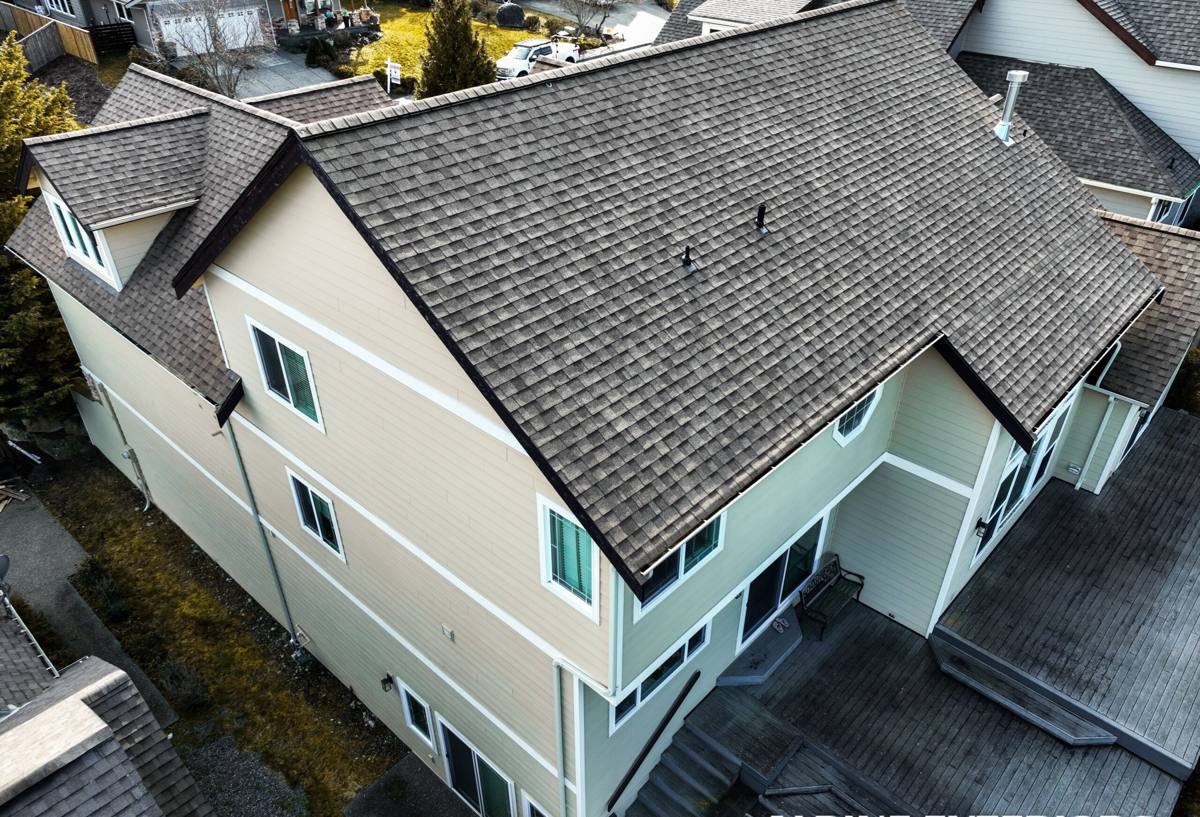
What Salt Air, Driving Rain, and a Long Moss Season Do to a Deck
Salt Air and Corrosion
Salt-laden air speeds up corrosion on any exposed metal — screws, brackets, post hardware, railing connectors. On a deck, that hardware is structural, not decorative. A fastener that's quietly corroding under a board doesn't announce itself until it's already lost holding strength, which is part of why fastener grade matters more here than it would in a drier, inland climate.
Driving Rain and Board Drainage
Wind-driven rain doesn't behave like a calm, straight-down shower. It gets pushed under railings, into ledger connections, and between boards that aren't gapped correctly for the exposure. A deck surface that would shed water fine on a still day can still trap moisture the moment wind gets involved — and in Barkley, wind-driven rain is a regular occurrence, not an occasional storm event.
A Moss Season That Runs Most of the Year
Mild, damp conditions give moss a long window to establish itself, and a horizontal deck surface is one of the easiest places for it to take hold — it holds standing water longer than a vertical wall and stays damp between rain events. Shaded decks and north-facing surfaces are usually first to show it, and any decking material with real surface porosity gives moss something to grip onto.
Why Composite Holds Up Better Than Wood in This Climate
Composite decking is made from a blend of wood fiber and plastic, and on most modern products that core is wrapped in a plastic cap layer that keeps moisture, staining, and UV exposure from reaching the wood fiber underneath directly. In a climate that stays damp for long stretches of the year, that cap layer isn't a marketing detail — it's the difference between a deck that needs an occasional wash and one that needs regular sealing to keep moisture out.
Wood decking, whether pressure-treated lumber or cedar, can look just as good as composite on install day. The gap shows up over the following few winters, as the wood absorbs moisture at the surface and end grain, starts graying and checking, and becomes an easier surface for moss to grip. Composite doesn't eliminate maintenance entirely, but it removes the sealing-and-staining cycle that wood decking in this climate requires to hold its appearance and structural integrity.
Not every composite product on the market has a full cap layer. Uncapped composite, an older and less expensive category, still resists rot better than solid wood but leaves more of the wood-fiber core exposed at the surface, which means it absorbs some moisture and is more prone to staining and mildew over time than a fully capped board. In a climate this wet, the gap between capped and uncapped composite shows up faster than it would in a drier region, which is why we default to fully capped products for Barkley installs.
| Factor | Wood Decking | Capped Composite |
|---|---|---|
| Moisture absorption | Absorbs at surface and end grain; swells and checks over time | Cap layer resists direct moisture absorption |
| Moss resistance | Porous surface gives moss an easy grip | Smoother, non-porous cap resists moss establishment |
| Fading and graying | UV and moisture cause graying within a season or two if unsealed | Cap layer is engineered to resist UV fade over years, not seasons |
| Routine upkeep | Sealing or staining on a recurring cycle | Periodic washing; no sealing or staining required |
| Upfront cost | Lower material cost | Higher material cost, lower long-term maintenance cost |
What a Correctly Built Composite Deck Involves in Barkley
The composite boards get most of the attention, but the framing, fasteners, and drainage underneath are what actually determine how long the deck performs. A build done right for this climate includes:
- Pressure-treated framing sized correctly for the span and load, not just whatever lumber happens to be on the truck
- Stainless steel or coastal-grade corrosion-resistant fasteners throughout, since standard hardware starts corroding in salt air within a few seasons
- Hidden fastener systems on the composite surface where the product allows, cutting down on exposed metal and giving a cleaner walking surface
- Correct board gapping for drainage and thermal movement, so wind-driven rain and standing moisture can actually drain and dry between boards
- Joist tape or flashing over the top of framing members to keep moisture from sitting directly against the wood substructure
- Proper ledger board flashing where the deck ties into the house — one of the most common points water gets into a poorly built deck
- Ventilation and grading underneath the deck so moisture doesn't pool against the framing between storms
Skip any of these and the deck usually still looks fine on day one. The problems — a soft joist, a loosening railing post, corrosion staining on the boards around a fastener head — tend to show up a few winters later, once the shortcuts have had time to compound.
Choosing the Right Composite Product for a Barkley Deck
Cap Quality
Not all composite is capped the same way. Some products cap all four sides of a board, including the ends after cutting; others cap only the visible faces. In a climate this damp, exposed cut ends and uncapped edges are where moisture finds its way into the wood-fiber core first, so how a product handles cut edges is worth asking about directly rather than assuming every composite board behaves the same.
Color and Heat
Darker composite boards absorb more heat and can be noticeably warmer underfoot on sunny days, and in a climate that also sees a lot of shade and cloud cover, color choice is as much about how the deck performs on the handful of bright days as it is about matching the house. Lighter and mid-tone colors also tend to show less visible fading contrast over time in a climate with this much cloud cover and moisture cycling.
Warranty Structure
Composite decking warranties vary in what they actually cover — some address structural integrity and fading separately, with different terms for each, and most require installation to the manufacturer's specifications to stay valid. Reading the warranty before choosing a product matters more than picking based on the color sample alone.
How Our Process Works for a Barkley Deck Project
We start with a site visit to see what's actually there — existing deck condition if it's a replacement, sun and shade exposure through the day, drainage and grade around the area, and how much wind and rain exposure the site sees compared to a more sheltered lot nearby. From there we walk through composite options that fit the budget and how the space will actually get used.
Permitting in Bellingham and the rest of Whatcom County generally follows standard setback, structural, and elevation requirements, and we handle that as part of the job. Once permitted, the build follows the sequence above: substructure and framing first, sized and fastened for the site's actual exposure, then the composite decking surface, railing, and any stairs or trim. We finish with a walkthrough covering what your specific product actually needs going forward — for most capped composite, that's minimal, but it isn't nothing.
Keeping a Composite Deck Looking Right Through the Wet Season
Composite decking is lower-maintenance than wood, not maintenance-free. A short list of what actually keeps it performing well in Barkley's climate:
- Rinse or wash the surface periodically to clear salt residue, pollen, and organic buildup before it works into the cap layer
- Keep the gaps between boards clear of leaves and debris so water and airflow can move through the way the design intends
- Check railing posts and hardware once a year for early corrosion or loosening, especially heading into the wet months
- Trim back overhanging branches or plants that shade the deck and hold moisture against the surface longer than it would otherwise sit
- Address any soft framing or standing water underneath right away — that's a structural issue, not a cosmetic one, and it doesn't improve on its own
Why a Crew That Already Works Barkley Matters
A crew that mostly builds decks elsewhere can still put one together competently, but a Barkley job has variables that don't come up as often in a more sheltered inland setting — corrosion-grade fastener requirements from sustained salt exposure, wind-driven rain patterns that test board gapping and ledger flashing harder than a calm-weather build, and a moss season long enough that surface choice and orientation genuinely matter. Working this area regularly means we're not guessing at those requirements on your project.
That familiarity also shows up in the smaller judgment calls — how to orient a deck for the wind a particular lot actually sees, which composite lines have held up well on similar Bellingham properties, and being straightforward about what a deck here realistically needs to last versus what's just an upsell.
If you're planning a new composite deck or replacing a tired one in Barkley, we're glad to walk the site with you and lay out the options plainly. Reach out using the form below for a free, no-pressure estimate.