 Bellingham Exterior
 York is one of Bellingham's older, more established neighborhoods, and that history shows up in its housing stock — a mix of homes built across many different decades, many with mature trees overhead and the kind of settled, tree-lined streets that give the area its character. That same maturity brings a specific set of exterior challenges. Older homes often carry older siding, aging trim, and roofs that have been through more wet seasons than a newer build across town, and mature tree canopy means more shade, more debris, and more moisture sitting on exterior surfaces longer than it would on an open lot. We handle siding, roofing, windows, and decks throughout the York area, and the work here tends to be as much about correcting decades of accumulated wear as it is about weatherproofing against what's still coming.
What York's Setting Does to a House
Bellingham sits on Bellingham Bay, and salt-laden air off the water reaches well inland across the city, including established neighborhoods like York that aren't directly on the waterfront. Combine that with Whatcom County's driving rain — wind-pushed rain that hits siding and trim at an angle rather than falling straight down — and a long moss season that runs for a good stretch of the year, and you get an exterior environment that punishes shortcuts. In York specifically, the mature tree cover that makes the neighborhood attractive also means more shaded, slower-drying wall and roof surfaces, which extends how long moisture sits against a house after any given storm. Older homes in the area were often built and re-sided under different standards and different products than what's available today, so a lot of exterior work here starts with figuring out what's actually happening underneath what's visible from the curb.
None of this makes York a bad place to own a home — it's a desirable, well-established part of Bellingham for good reason. It does mean the exterior envelope has to work harder here than it would in a newer, more open subdivision, and that both the materials used and the quality of the installation matter more over the long run.
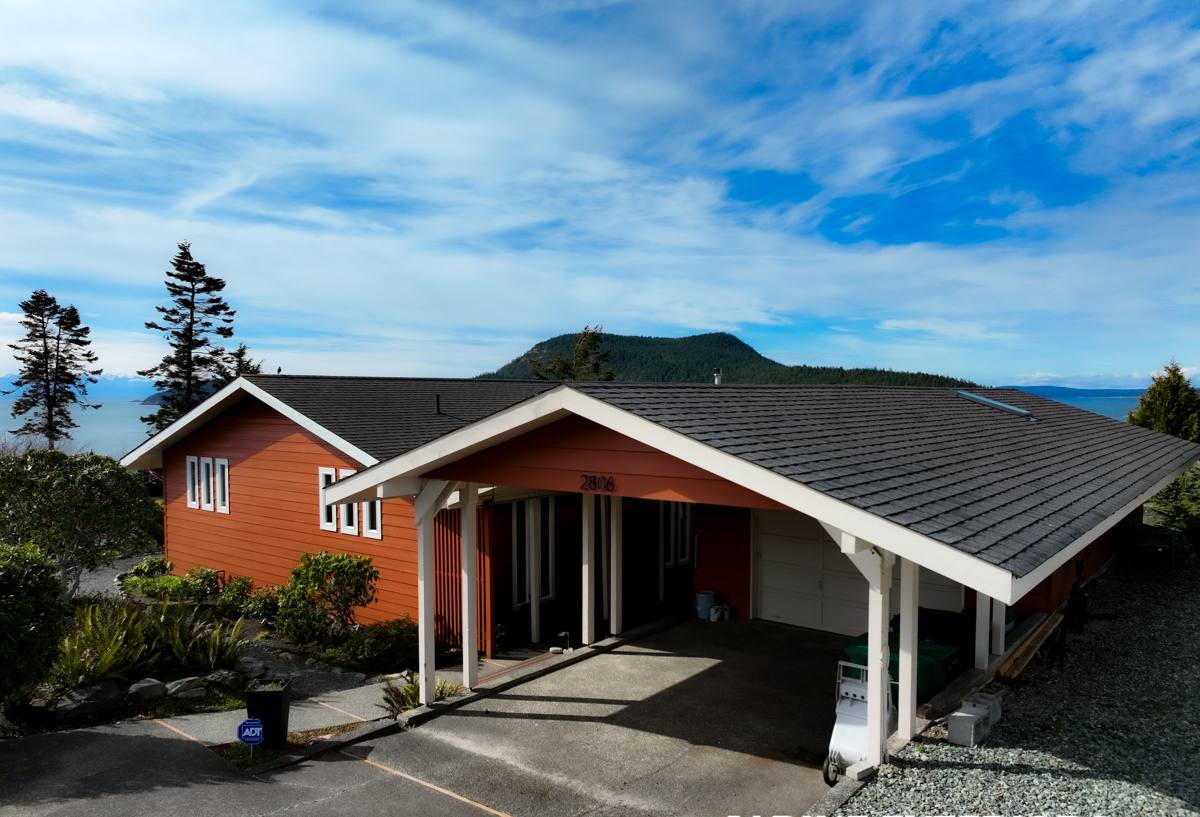
Siding Built for This Climate
We install James Hardie fiber cement siding exclusively. On an older home in a shaded, moisture-heavy neighborhood like York, that's a practical decision, not a brand preference. Fiber cement has no organic core for water to work into, so it doesn't rot, swell, or feed moss and mildew the way wood-based products can under sustained shade and dampness. It doesn't go brittle or lose its finish under years of UV and salt exposure the way vinyl can either. Hardie's ColorPlus finish is baked on at the factory, which matters in a climate where a wall is going to see more freeze-thaw and wet-dry cycling per year than it would somewhere drier.
Why We Don't Install Everything on the Market
Homeowners in York often ask about vinyl, LP SmartSide, primed wood, or cedar, usually because one of those products is already on the house or because it's familiar and cheaper up front. We don't install any of them. Vinyl relies entirely on the barrier and flashing behind it staying intact, and it can become brittle with age, especially with salt exposure in the mix. Engineered wood siding uses a wood-strand core that's vulnerable wherever moisture reaches a cut edge, seam, or fastener hole — a real concern under mature tree canopy where surfaces stay damp longer. Primed wood and cedar both need a genuine, ongoing maintenance routine — recoating, caulk renewal, moss and mildew treatment — and that schedule only gets tighter in a shaded, moist neighborhood like this one. These aren't bad products everywhere. We just don't think they hold up as well here, and we'd rather tell homeowners that directly than sell something we don't stand behind for this climate.
Roofing for Wind-Driven Rain and Moss
A roof in York deals with the same weather as the siding, just overhead. Wind-driven rain works its way under shingles and around flashing at a much higher rate than straight-down rain, so the details that matter most are the ones a homeowner rarely sees during a sales pitch — correctly lapped flashing at valleys and penetrations, proper underlayment, and attic ventilation that lets moisture escape instead of condensing where it can't. Moss is close to a year-round presence on the shaded, north-facing roof planes that are common under mature trees throughout the neighborhood, and left alone it holds moisture against the roofing surface and can work its way under shingle edges over time.
Early Warning Signs Worth Catching Early
Because tree cover and coastal moisture push roofs in York toward heavier moss and slower drying, problems tend to show up first in predictable places — valleys, chimney and skylight flashing, and whichever roof plane sits in the most consistent shade. Granule buildup in gutters, moss thicker than a light surface dusting, and soft or discolored spots near penetrations are all worth a look before they turn into an interior leak. Addressing these early is almost always cheaper and simpler than waiting until water reaches the roof decking.
Windows: Where Most Water Problems Actually Start
Windows are one of the more common failure points on older homes, and it's rarely the window unit itself that's the problem — it's flashing and installation details around the opening that were done to an older or lower standard, or that have simply degraded over the decades. On a shaded, moisture-heavy property, a poorly flashed window is a direct path for water into the wall cavity, and that kind of leak can go unnoticed for years before it shows up as visible damage inside. We pay close attention to sill pan flashing, head flashing, and proper integration with the weather-resistant barrier — details that don't show up in a brochure but determine whether a window installation actually lasts.
- Older single-pane or early dual-pane windows often show fogging between panes, drafts, or visible condensation — signs the seal or unit has failed
- Window trim on shaded, north- or west-facing walls typically shows wear (peeling paint, soft wood, staining) before trim on sunnier sides of the same house
- Replacement is a good opportunity to correct flashing that may have been installed to an older, lower standard originally
- Wood-framed windows on older York homes are worth inspecting closely for rot at the sill, where standing moisture tends to collect first
Decks Built for Shade and Sustained Moisture
Deck framing and fastening take real abuse under the conditions common in York — shade from mature trees, salt-influenced air moving in off the bay, and long stretches without enough sun or wind to dry lumber out between rain events. Ledger board attachment, flashing where the deck meets the house, and corrosion-resistant fasteners matter as much as whatever decking material sits on top. A deck can look fine from a few feet away and still have a compromised ledger connection or corroding hardware underneath if it wasn't built for this kind of sustained moisture exposure.
Composite vs. Wood Decking in a Shaded, Moist Setting
| Factor | Wood Decking | Composite Decking |
|---|---|---|
| Moisture resistance | Depends on species and finish; needs regular sealing, especially in shade | Resists moisture absorption without ongoing sealing |
| Moss and mildew in shade | Organic surface is prone to growth if maintenance lapses under tree cover | Less hospitable to organic growth, though periodic cleaning still helps |
| Maintenance | Annual or biennial sealing/staining recommended, more often in heavy shade | Periodic cleaning; no sealing or staining required |
| Upfront cost | Generally lower | Generally higher |
| Long-term cost | Higher over time with sealing, cleaning, and board replacement | Lower ongoing cost, longer typical service life |
Both materials can perform well in York if the framing and fastening underneath are done right. The decking surface is what a homeowner sees and touches; the structure beneath it is what determines how long the whole thing actually lasts under mature tree cover and coastal moisture.
Why a Local Crew Matters Here
York's older housing stock means every home carries its own history — different original construction standards, different past renovations, different degrees of maintenance over the years. A crew that works in Bellingham neighborhoods like this regularly develops a feel for what decades of moss, shade, and salt air actually do to a house, and for which shortcuts from a past renovation are likely to be hiding behind newer-looking siding or trim. That kind of judgment comes from doing this work repeatedly on homes with similar age and exposure, not from a general contractor passing through once and moving on.
What to Check Before Hiring for Exterior Work in This Area
- Ask how the contractor handles wind-driven rain and flashing specifically, not just which siding brand they carry
- On an older home, ask whether they'll check for hidden moisture damage behind existing siding or trim before quoting a full scope
- Confirm fasteners and hardware are rated for coastal, moisture-heavy exposure rather than standard-grade only
- Get a clear, written answer on both the manufacturer's material warranty and the contractor's own workmanship warranty
- Verify the contractor is licensed, bonded, and insured to perform exterior work in Washington State
What This Means for Your Home
Every house in York carries its own combination of age, past renovation history, and exposure to shade and moisture, so the right scope of work depends on the specific property — not a one-size-fits-all package. We're not going to recommend tearing off siding that still has good years left in it, and we're not going to install a product we don't think will hold up under this neighborhood's tree cover and coastal climate. If you're trying to figure out what your York home's exterior actually needs, we're glad to take a look and give you a straight answer.
If you'd like an honest, no-pressure assessment of your home's siding, roof, windows, or deck, reach out for a free estimate. We'll walk the property, tell you what we actually see, and lay out options that fit the house and your budget.