 Bellingham Exterior
 Edgemoor's Exterior Sits Between the Bay and the Trees
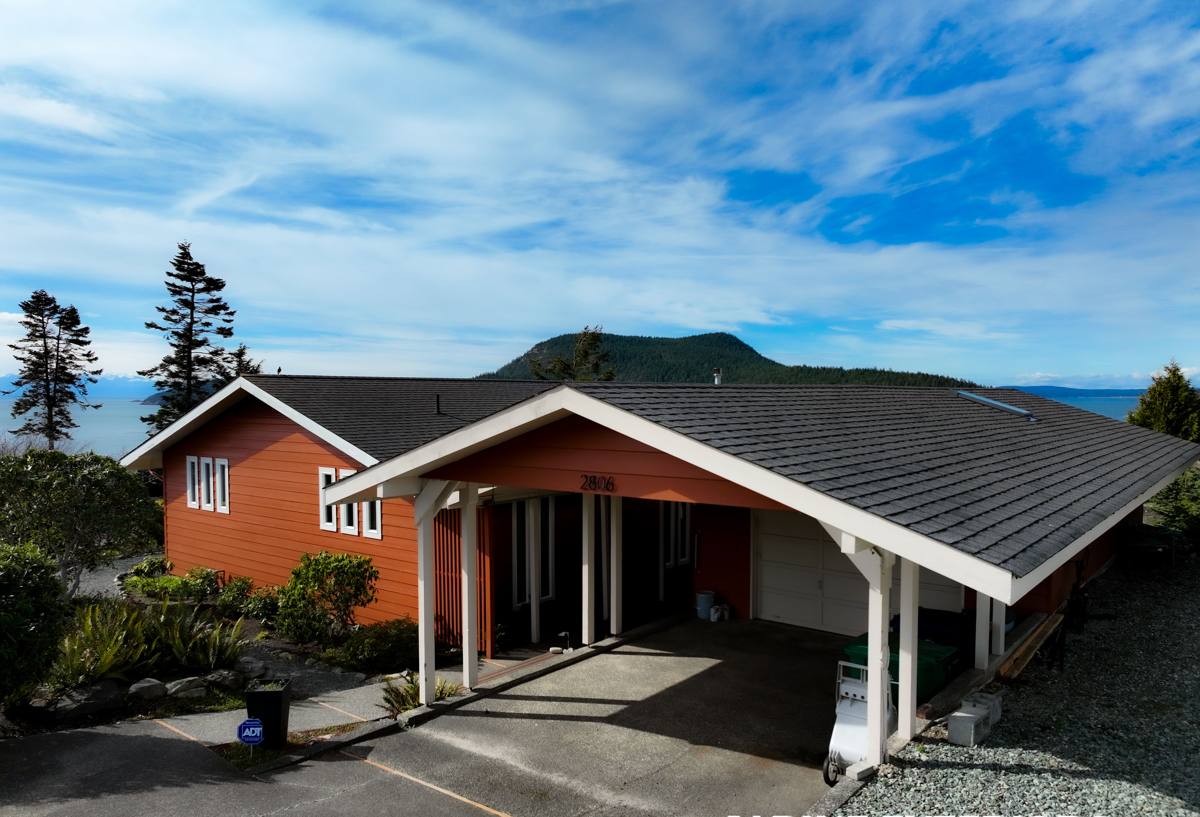
Edgemoor is one of the more distinctive pockets of Bellingham to build and maintain a home in. Many lots sit up on the bluff with a direct line to Bellingham Bay, while others tuck back under mature conifers a few streets inland. Both settings look great and both settings are hard on an exterior, just in different ways. Bay-facing homes take salt-laden air and wind-driven rain off the water. Tree-shaded homes get less wind but far more shade, moisture retention, and moss. A lot of Edgemoor properties get some combination of both, which is exactly why we don't treat this neighborhood like a generic Bellingham address when we quote a job.
We're a Bellingham-based exteriors contractor working across Whatcom County, and Edgemoor is close enough to home that we've seen the pattern repeat on house after house: siding that looks fine from the street but is soft at the bottom courses, roof valleys holding moss longer than they should, window sills with finish failure on the weather-facing side only, and deck ledger boards that never quite dry out. None of that is bad luck. It's what this climate does to exteriors that weren't built or installed with it in mind.
What the Climate Actually Does to a House Here
Salt Air and Corrosion
Homes with any bay exposure deal with airborne salt, even at a modest distance from the water. Salt air accelerates corrosion on fasteners, flashing, and hardware, and it degrades paint and finish coatings faster than an inland home ever experiences. It also tends to hold moisture against surfaces longer, which compounds every other problem on this list.
Driving Rain
Bellingham gets plenty of rain, but the character of it matters as much as the volume. Storms moving in off the water regularly bring rain in sideways rather than straight down, which pushes water into laps, seams, and joints that a calm-weather install would never test. Siding, trim, and window flashing all have to be detailed for that reality, not just for average rainfall.
A Long Moss Season
Between shade, humidity, and mild winter temperatures, Whatcom County supports moss and algae growth for most of the year, and shaded Edgemoor lots are some of the more favorable growing conditions around. Moss on a roof isn't just cosmetic — it holds moisture against roofing material, works into laps and fasteners, and shortens the usable life of a roof that would otherwise perform well.
Siding: Why We Only Install James Hardie
Siding is the surface doing the most day-to-day work against salt air and driving rain, so it's where material choice matters most. We install James Hardie fiber cement siding exclusively. We don't offer vinyl, LP SmartSide, Cemplank, Allura, primed spruce, or cedar, and that's a deliberate standard, not a limitation of what we're capable of installing.
Here's the honest reasoning:
- Vinyl is affordable and low-maintenance in mild conditions, but it can warp under heat and UV, and its seams and butt joints give wind-driven rain more opportunities to find a way behind the cladding — a real concern on exposed Edgemoor lots.
- LP SmartSide is engineered wood. It performs reasonably when detailing and maintenance are perfect, but wood-based products are more sensitive to sustained moisture exposure than fiber cement, and this is a sustained-moisture climate.
- Cedar and primed spruce look beautiful new, but they require ongoing refinishing to hold up, and in a long wet season that maintenance schedule gets demanding fast.
- Cemplank and Allura are also fiber cement, and they're not bad products. We simply standardized on one manufacturer so our crews install one system to spec, every time, rather than switching techniques and warranty paperwork between brands.
James Hardie fiber cement is non-combustible, holds up to moisture cycling far better than wood-based siding, and comes factory-finished with ColorPlus technology, which means the color and finish are baked on before the boards ever reach the jobsite rather than field-painted. For salt air exposure specifically, that factory finish matters — it's more consistent and more resistant to fading and wear than a site-applied coat. Hardie's climate-engineered HZ product lines (HZ5 for the Pacific Northwest's wetter, more humid conditions) are built around exactly the exposure Edgemoor homes face. Combined with a strong transferable warranty, it's the product we're comfortable standing behind on a bluff-top or shaded lot in this neighborhood.
Siding Options at a Glance
| Material | Moisture Behavior | Maintenance | Typical Lifespan |
|---|---|---|---|
| James Hardie fiber cement | Stable, non-combustible, factory-sealed finish | Occasional wash, no refinishing needed | 30+ years to spec |
| Vinyl | Seams/joints vulnerable to wind-driven rain | Low, but can crack or warp over time | 20-30 years, weather dependent |
| Engineered wood (LP SmartSide) | Sensitive to sustained moisture at edges/cuts | Requires diligent sealing and inspection | Varies widely with maintenance |
| Cedar / primed spruce | Absorbs and releases moisture; prone to swelling | Regular refinishing required | Shortened without upkeep |
Roofing for a Shaded, Salt-Exposed Neighborhood
Roofing in Edgemoor has to account for whichever end of the neighborhood a home sits on. Bluff-facing roofs deal with salt-laden wind and driving rain hitting valleys and edges hard. Tree-covered roofs deal with shade, debris buildup, and moss that can start creeping under shingles if it isn't kept in check. Good roofing work here means proper underlayment and flashing detail for wind-driven rain, ventilation that actually moves moist air out of the attic instead of trapping it, and gutter and drainage placement that accounts for how much debris a tree-lined lot generates. We also pay attention to how a new or repaired roof interacts with existing siding and trim, since a roof leak that goes undetected for a season often shows up first as siding or fascia damage below it.
Windows: The Weak Point in Driving Rain
Windows take the brunt of wind-driven rain on exposed elevations, and poor flashing around a window opening is one of the most common sources of hidden water intrusion we find when we're already on-site for something else. Beyond weatherproofing, older single-pane or poorly sealed windows in this climate also struggle with condensation, given the humidity swings between a wet Bellingham winter and drier summer stretches. When we replace windows, we're as focused on the flashing and integration with the surrounding siding as we are on the unit itself — a great window installed with poor flashing detail will leak regardless of its energy rating.
Decks: Built for Damp, Not Just Sun
A lot of exterior contractors size deck materials and structure around sun and UV exposure, which matters less here than in a drier climate. In Edgemoor, the bigger factors are sustained dampness, shade from surrounding trees, and how well a deck's structure — ledger board, joists, footings — sheds and drains water rather than holding it. A deck that looks fine on the surface can have a ledger connection that's staying wet far longer than it should, which is where structural problems usually start. Proper flashing at the house connection, adequate drainage under and around the deck, and material choices suited to shade and moisture (rather than just UV resistance) all matter more here than they would on a sunnier, drier lot.
Why a Local Crew Matters on a Neighborhood Like This
Edgemoor isn't a subdivision with identical lots — it's a mix of bluff-top homes, wooded interior lots, older houses, and newer custom builds, often on sloped or tree-constrained sites that affect how a crew can even access the exterior. A crew that works across Whatcom County regularly, rather than one flown in for a single job, understands how to sequence work around tree cover, slope, and limited staging space, and knows what Bellingham's permitting and inspection process expects for siding, roofing, and window replacement. That local familiarity shows up in fewer surprises mid-project and fewer callbacks after the first hard winter storm.
What to Check Before You Hire Anyone for Exterior Work Here
- Do they carry current Washington contractor licensing and adequate insurance, and will they show you proof without you having to ask twice?
- Do they explain flashing and moisture-management details, not just the finish material, when they walk you through the scope?
- Do they have experience with wooded or sloped lots, which are common throughout Edgemoor?
- Will they give you a written scope and manufacturer warranty information, not just a verbal estimate?
- Do they inspect adjacent systems — for example, checking flashing when replacing siding, or checking fascia when replacing a roof — rather than working in isolation?
Seasonal Exterior Checklist for Edgemoor Homeowners
- Clear moss and debris from roof valleys and gutters at least once before the heaviest fall rains arrive.
- Walk the exterior after a major windstorm and look for lifted siding, loose flashing, or new gaps around windows.
- Check deck ledger boards and under-deck framing for soft spots or staining, especially on shaded decks.
- Look at south- and west-facing trim and siding for finish wear, which shows up faster with salt air exposure.
- Confirm downspouts are directing water away from the foundation and not pooling near siding bottom courses.
How We Approach an Edgemoor Project
We start every job with an on-site look at the specific exposure that house is dealing with — bay-facing wind and salt, shade and moss, or some mix of both — because that determines the details that matter most, not just the finish color someone picked out. From there we scope siding, roofing, windows, and decks with the same underlying priority: keep water moving away from the structure and off the surfaces meant to protect it. That's true whether we're re-siding a bluff-top home in Hardie fiber cement, addressing a mossy roof under mature trees, replacing flashing-compromised windows, or rebuilding a deck connection that's been sitting damp for years.
If you're in Edgemoor and dealing with siding, roofing, window, or deck issues — or just want an honest read on how your exterior is holding up against this climate — we're happy to take a look. Reach out for a free, no-pressure estimate using the form below.