 Bellingham Exterior
 Exterior Work in South Hill
South Hill sits above downtown Bellingham with some of the best views in the city — and some of the most exposed elevation. Homes up here catch wind and driving rain off Bellingham Bay that lower, more sheltered neighborhoods don't see nearly as much of. Combine that with the tree cover on the hill's quieter streets and you get two very different exterior stress patterns depending on exactly where a house sits: open exposure on the west- and south-facing slopes, and heavy shade-and-moisture buildup on the lots tucked under mature trees. Either way, the exterior envelope is working harder than it would in a drier climate, and it shows up first in the siding, trim, and roofing.
We're a Bellingham-based exterior contractor working in siding, roofing, windows, and decks. South Hill is inside our regular service area, and we've done enough work on the hill to know what tends to fail first on its older housing stock and what a correctly built exterior needs to hold up long-term.
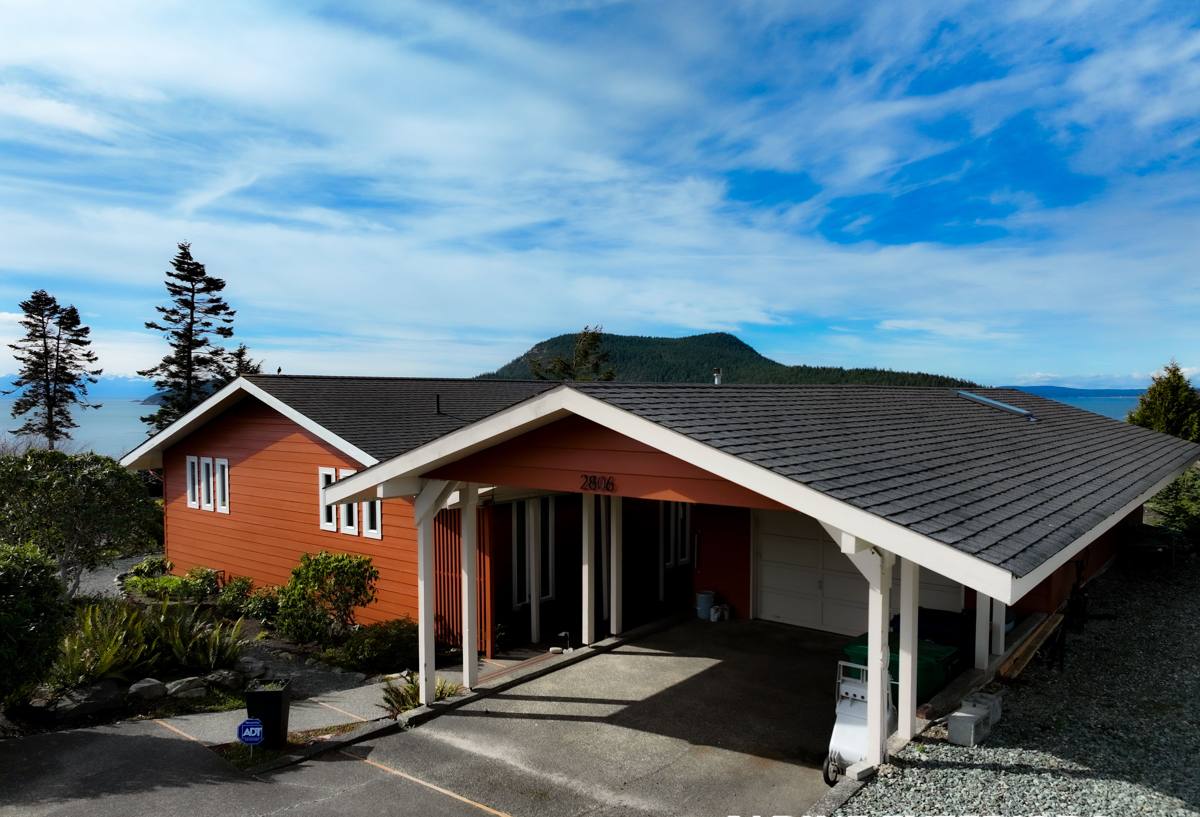
What Whatcom County Weather Does to a South Hill Home
Salt Air and Wind Exposure
Proximity to Bellingham Bay means a measure of salt-laden air reaches South Hill's higher and more open lots, especially on the west-facing side of the hill. Salt air accelerates corrosion on fasteners, flashing, and any metal trim that isn't rated for it, and it degrades paint film faster than it would inland. It's not the same intensity as a beachfront property, but it's enough that material choice and detailing matter more here than in, say, a sheltered valley neighborhood.
Driving Rain
Bellingham's rain rarely falls straight down. Wind-driven rain off the bay hits vertical wall surfaces directly, which puts real pressure on siding laps, window flashing, and any penetration in the wall — light fixtures, hose bibs, vents. A wall system that's fine in a calmer climate can still fail here if the water management details (flashing, house wrap, kick-out flashing at rooflines) weren't done right the first time.
Moss, Algae, and the Long Wet Season
Whatcom County's moss season runs long — often eight months or more of conditions damp enough to keep moss and algae actively growing on north-facing walls, rooflines, and anything shaded by trees. On South Hill's tree-lined streets, this is often the dominant issue: siding and roofing that stay damp for days at a time develop moss growth that traps moisture against the surface, which is exactly the condition that causes rot in wood-based and wood-composite products.
Siding: Why We Only Install James Hardie
We install James Hardie fiber cement siding exclusively. We don't install vinyl, LP SmartSide, Cemplank, Allura, or primed wood siding like spruce or cedar. That's a standard we hold across every job, not just South Hill, but it matters more here than in drier parts of the region.
The Core Reasons
- Non-combustible: Fiber cement doesn't burn, which matters in Whatcom County's increasingly active wildfire-smoke seasons and for general home insurability.
- Moisture-stable: Fiber cement doesn't absorb and swell the way wood-based and engineered wood siding can. In an environment with eight-plus months of damp conditions, that's a meaningful difference over 20-30 years.
- Factory-applied ColorPlus finish: Baked-on finish resists fading and holds up to UV and moisture better than field-applied paint, which means fewer repaint cycles over the life of the siding.
- Climate-engineered product lines: James Hardie makes HZ10 product specifically formulated for wetter, cooler climate zones like ours — it isn't a one-size-fits-all product.
- Transferable warranty: A strong, transferable warranty is worth something if you sell the house — it's one less thing a buyer's inspector flags.
None of the products we don't install are junk — vinyl is inexpensive and low-maintenance in the right application, and cedar has real aesthetic appeal. But each comes with a trade-off (moisture sensitivity, repainting burden, impact resistance, warranty structure) that we don't think holds up well against South Hill's rain and moss exposure over the long run. We'd rather install one product correctly and stand behind it than offer five options and hope the cheaper ones perform.
Siding Product Comparison
| Material | Moisture Behavior | Maintenance | Fire Rating |
|---|---|---|---|
| James Hardie Fiber Cement | Dimensionally stable, doesn't rot or swell | Low — factory finish, occasional wash | Non-combustible |
| Vinyl | Doesn't absorb water but traps moisture behind it if installed poorly | Low, but can warp/fade over time | Combustible, can melt/deform |
| LP SmartSide / engineered wood | Treated to resist moisture but still wood-based; vulnerable at cut edges | Moderate — edge sealing critical | Combustible |
| Cedar / primed spruce | Natural material, absorbs and releases moisture, prone to rot without upkeep | High — regular staining/sealing | Combustible |
Roofing on South Hill
Roofs on the hill deal with the same driving rain and moss pressure as the walls, plus wind exposure at higher elevations. We look at three things on every roofing job: the condition of the underlying decking and flashing (not just the shingles), moss and debris buildup in valleys and around penetrations, and whether ventilation is adequate — poor attic ventilation combined with a wet climate is a common cause of premature roof failure from the inside out. A roof replacement or repair is also the right time to address any siding-to-roof transition details, since that's a common leak point on homes with dormers or multiple roof planes, which are common in South Hill's older housing stock.
Windows
Older South Hill homes often still have original single-pane or early dual-pane windows. Beyond the energy loss, aging window flashing is a common hidden source of wall moisture intrusion — the window itself may look fine while water is getting behind the siding at the frame. When we replace windows, we treat the flashing and integration with the wall system as part of the job, not an afterthought, because a new window installed with poor flashing can trap moisture worse than the old one did.
Decks
Exterior decks on South Hill take the same rain and moss exposure as the walls and roof, often with more standing water risk depending on slope and drainage. Ledger board flashing (where the deck attaches to the house) is one of the most common failure points we see — water getting behind that connection rots the rim joist and can migrate into the wall above it. Whether we're building new or replacing an aging deck, that connection point gets the same attention as any other water-managed detail on the house.
Why a Local Crew Matters Here
South Hill's mix of hillside exposure and tree-shaded pockets means two houses a few blocks apart can have genuinely different exterior needs. A crew that works across Whatcom County regularly — not one flown in for a single job — knows which side of a South Hill street holds moisture longest, how the wind off the bay behaves at different elevations, and which older homes in the area tend to have the same original flashing details that need attention during a re-side or reroof. That local knowledge shows up in the small decisions: where to add extra flashing, which walls need closer inspection, how to sequence work around Bellingham's rain patterns so materials aren't installed wet.
What to Expect From a Project
- An on-site inspection that looks at the whole envelope — siding, trim, flashing, roofline, and any moisture staining — not just the material you called about.
- A written estimate that spells out material, scope, and timeline before any work starts.
- Attention to water management details (flashing, house wrap integration, kick-out flashing) as part of the install, not an upsell.
- James Hardie siding installed to manufacturer specification, which is what keeps the warranty valid.
- A cleanup and walkthrough at the end of the job.
Signs It's Time to Have Your Exterior Looked At
You don't need to wait for visible failure to get an inspection, but these are common signs worth acting on:
- Moss or dark streaking that keeps coming back on the same wall or roof section after cleaning
- Soft or spongy spots on wood trim, fascia, or deck ledger boards
- Paint that's peeling or bubbling in a localized area rather than evenly across the house
- Visible gaps or caulk failure around window and door trim
- Interior signs like a musty smell, staining, or soft drywall near exterior walls
If you're in South Hill and thinking about siding, roofing, windows, or a deck, we're happy to come take a look and give you a straight assessment — no pressure, no upsell script. Use the form below to request a free estimate.