 Bellingham Exterior
 Exterior Work in Cordata, Bellingham
Cordata sits in north Bellingham, a mix of newer subdivisions, multi-family developments, and older homes that predate the area's growth. It's one of the faster-changing pockets of Whatcom County, with a lot of exterior work happening at once — new builds going up, older homes getting their first major re-side or re-roof, and a steady stream of homeowners who bought a house a few years back and are now dealing with the maintenance that comes due on year eight, twelve, or twenty.
That variety matters. A ten-year-old subdivision home and a forty-year-old rambler don't face the same problems, and they don't need the same fix. What they share is the same weather. Whatcom County's marine climate — damp, mild, and rarely dry for long — doesn't care what decade a house was built in. It works on every exterior surface the same slow, patient way.
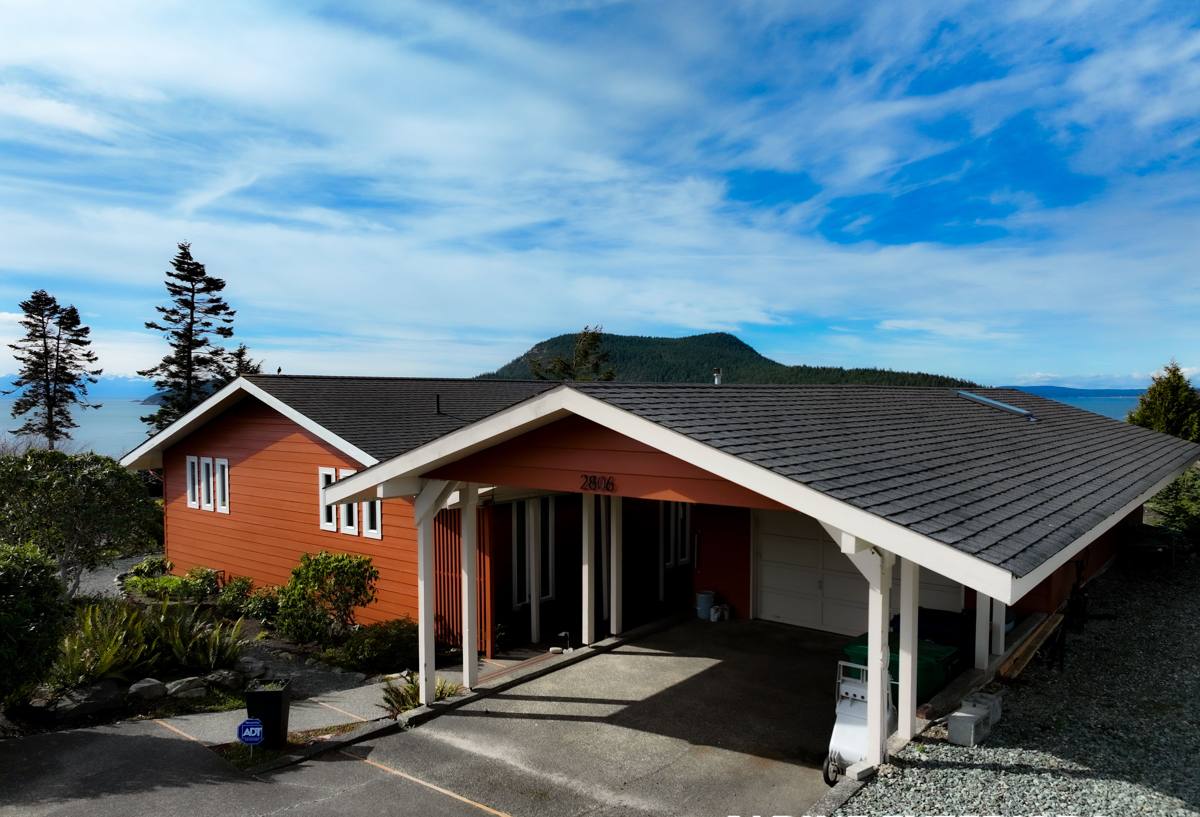
What the Local Climate Actually Does to a House
Bellingham's exterior problems aren't dramatic. They're cumulative. Three things drive most of the work we get called out for in this area:
Driving rain
Wind-driven rain off the Sound doesn't just fall on a house — it gets pushed sideways into seams, laps, and fastener points. Over years, that finds every weak spot in a siding system: caulked joints that were never meant to be a primary water barrier, butt joints that weren't properly flashed, and end cuts that were never sealed. Water that gets behind siding and can't dry out is the single biggest cause of rot we see on Whatcom County homes.
A long moss season
Because the region rarely gets a stretch of hot, dry weather, moss and algae don't get knocked back the way they would somewhere with a real summer. Roofs, especially north-facing slopes and anything shaded by mature trees, stay damp long enough for moss to take hold and start lifting shingles at the edges. Siding in shaded, low-airflow spots — behind shrubs, along fence lines, on the north wall — gets the same green film and holds moisture against the substrate longer than it should.
Salt-tinged marine air
Bellingham Bay and the Sound put a fine mist of salt into the air that travels further inland than most people expect, especially on windy days. It's not the same exposure a waterfront home gets, but it's enough to accelerate corrosion on fasteners, flashing, and hardware over time, and it adds to the general moisture load an exterior has to shed. Combined with the rain and the shade, it's a slow, steady wear pattern rather than any single dramatic failure.
None of this means a house in Cordata is doomed to rot — it means the exterior has to actually be built and installed to handle sustained moisture, not just resist an occasional storm.
Siding: Why We Only Install James Hardie
We install James Hardie fiber cement siding exclusively. We don't install vinyl, LP SmartSide, primed spruce, cedar, or other fiber cement brands, and that's a deliberate standard, not a supply preference.
Wood-based siding products — engineered wood, primed spruce, cedar — depend on paint or coating integrity to keep moisture out. In a climate where the exterior of a house rarely gets a long dry stretch to fully release moisture, any breach in that coating (a nail pop, a hairline crack, a spot where caulk failed) gives water a path into wood fiber that's already primed to absorb it. Cedar looks and performs beautifully when it's maintained on a strict schedule, but that schedule doesn't bend for a busy homeowner, and Whatcom County's damp season doesn't give much grace when maintenance slips.
Vinyl sheds water fine on its face, but it's a thin material that expands and contracts with temperature, and its seams and J-channels are where water actually gets managed — or doesn't. It also doesn't hold up structurally the way a cement-based product does, and it can't be painted to extend its life once the factory color fades.
James Hardie fiber cement is cement-based, not wood-based, so it doesn't absorb and swell the way wood products do, and it's non-combustible. The HZ5 product line is engineered specifically for wetter, harsher climates like ours, and the ColorPlus factory finish is baked on under controlled conditions — it holds color and resists cracking and peeling far better than field-applied paint, which matters enormously in a place where paint rarely gets a full, uninterrupted cure cycle. It carries a strong transferable warranty, which also protects resale value if a Cordata home changes hands down the road.
None of that replaces correct installation. Hardie siding installed with the wrong clearances, unsealed cuts, or missing flashing can still let water in. The product gives you a much wider margin for error over time — but the install still has to be done right.
Roofing
Roofs in this area take the brunt of the moss problem. We handle roof replacement and repair with attention to the details that matter most in Whatcom County: proper underlayment for a wet climate, ice-and-water protection at valleys and eaves, ventilation that actually lets a roof deck dry between rain events, and flashing details around penetrations and roof-to-wall transitions — one of the most common leak points on homes with dormers or additions, which are common in Cordata's mix of older and remodeled houses.
We also do straightforward roof assessments for homeowners who just want to know where they stand — whether a roof has a few good years left, needs a repair, or is due for full replacement.
Windows
Window failure in this climate usually shows up as one of two things: fogging between panes (a failed seal) or drafts and soft trim around the frame (water getting behind the window over time). Both point back to the same root cause — moisture finding a way past the exterior barrier. When we replace windows, flashing and integration with the surrounding siding matters as much as the window unit itself. A great window installed with a poor seal will fail the same way a cheap window would.
Decks
Outdoor living is a year-round consideration here more than people expect, and decks take a beating from the same rain-and-shade combination that affects siding and roofs. Ledger board connections, joist tops, and any spot where two pieces of wood meet and hold water are where deck rot starts. We build and repair decks with drainage and material choices that account for a wet climate, not just how the deck looks on a dry day.
Comparing Siding Options: What Cordata Homeowners Are Actually Weighing
| Material | Moisture behavior in a wet climate | Maintenance | Longevity outlook |
|---|---|---|---|
| James Hardie fiber cement | Cement-based, doesn't swell or absorb like wood | Occasional wash; factory finish resists fading/cracking | Strong transferable warranty; proven long-term performance |
| Vinyl | Sheds surface water; seams are the weak point | Low, but can't be refinished once faded | Shorter practical lifespan; brittle with age and cold |
| Cedar | Absorbs moisture if coating fails | High — regular staining/sealing required | Can last well, but only with disciplined upkeep |
| Primed spruce / engineered wood | Vulnerable at cut edges and coating failures | Moderate to high; paint maintenance matters | Performance tied directly to installation and upkeep quality |
Signs Your Exterior Needs a Closer Look
- Soft or spongy spots on siding, especially near the bottom edge or around windows
- Moss or dark green streaking on roof slopes, particularly north-facing or shaded areas
- Paint that's peeling, bubbling, or chalking on wood-based siding
- Visible gaps, cracked caulk, or separated trim joints
- Fogging or condensation between window panes
- Soft decking boards or discoloration around ledger boards and joists
- Granule buildup in gutters (a sign of aging asphalt shingles)
Why a Local Crew Matters
Exterior work here isn't generic. A crew that mostly works in drier climates will make different assumptions about flashing, drying time, and material tolerances than one that works in Bellingham every week. We know how Whatcom County's rain patterns move across a roof, what shaded walls in a neighborhood like Cordata actually see over a year, and how to sequence a job around the weather instead of fighting it. That local knowledge shows up in the details — where flashing gets extra attention, how long a cut edge sits before it's sealed, which walls get prioritized for drainage.
If you're weighing a re-side, a roof replacement, new windows, or deck work on a home in Cordata, we're happy to take a look and talk through what your specific house actually needs — no pressure, no inflated scope. Reach out for a free estimate using the form below.