 Bellingham Exterior
 Storm Damage Roof Repair for Birchwood Homes
Birchwood sits close enough to Bellingham Bay and the open flats around it that homes here take a particular kind of beating every winter. Wind off the water, driving rain that comes in sideways instead of straight down, and long stretches of gray, damp weather all add up to roofs that fail in different ways than they would in a drier inland climate. When a storm rolls through Whatcom County, the damage isn't always obvious from the ground, and it isn't always the dramatic kind either. Most of what we get called out for in Birchwood is quieter: a few lifted shingles, a strained flashing joint, a soft spot developing under moss that's been sitting too long.
This page is about that one job — storm damage roof repair, done right, for houses in this specific part of Bellingham. Not a general roofing overview, not a sales pitch for a full tear-off you don't need. Just what actually goes wrong after a storm here, what a correct repair looks like, and how we handle it from the first call to the final check.
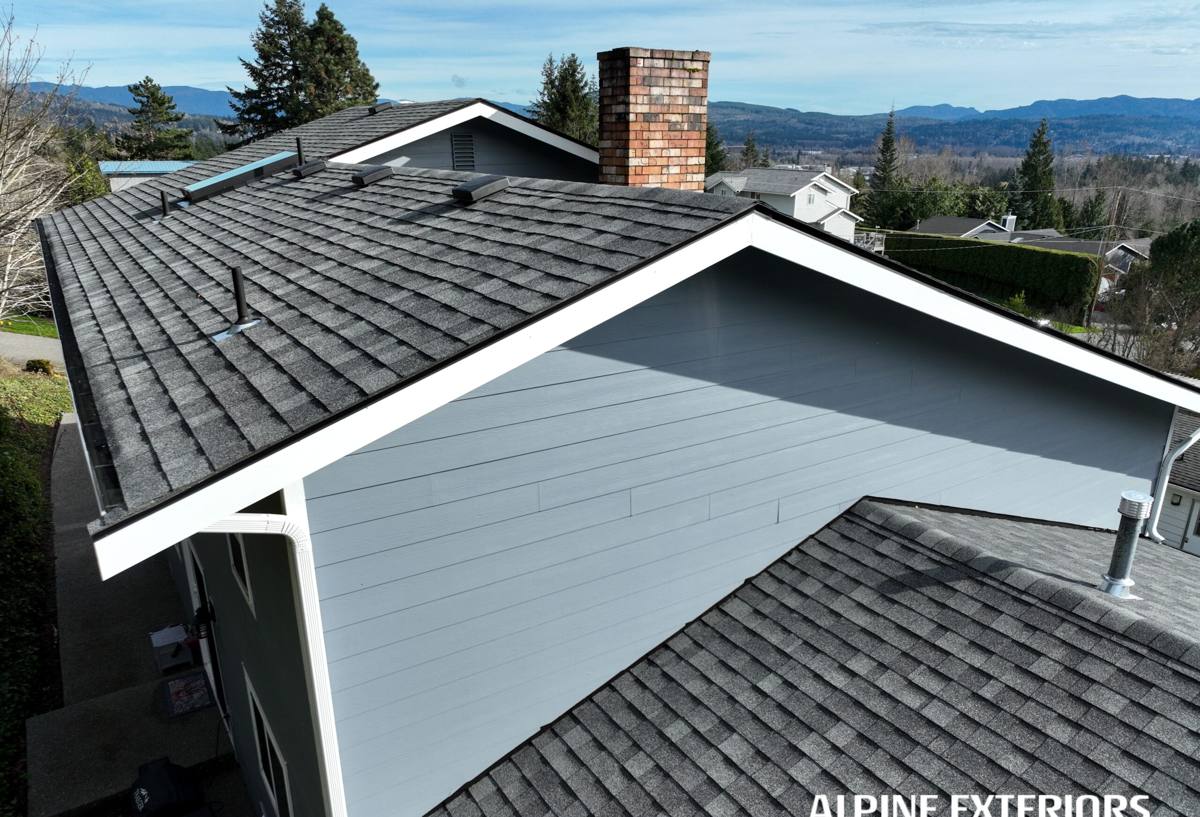
What Bellingham Storms Actually Do to a Roof
Whatcom County doesn't usually get the kind of catastrophic wind events that tear entire roofs off, but it doesn't need to. The damage here builds gradually, storm by storm, and it tends to show up in a few predictable places.
Wind and Driving Rain
Sustained wind off the bay, combined with gusts funneling through the valley, works shingles and flashing loose over time rather than in one dramatic event. Rain driven sideways during a storm finds its way under shingle tabs, around vent boots, and along flashing edges that were fine in calm weather but weren't sealed for wind-driven water.
Salt Air
Proximity to the water means metal components — flashing, fasteners, vent caps, gutter hardware — corrode faster here than they would further inland. Corrosion weakens the seal at exactly the spots where a roof most needs to stay watertight.
Moss and Standing Moisture
Bellingham's long wet season gives moss months to establish itself, especially on north-facing slopes and anywhere tree cover keeps a section of roof shaded and damp. Moss holds water against the roofing material, lifts shingle edges as it grows, and turns a minor storm-related crack into a slow leak that isn't discovered until there's a stain on the ceiling.
None of this means Birchwood roofs are poorly built. It means the climate asks more of a repair than a quick patch, and it's why we look at the whole picture — not just the spot that's obviously damaged — before we touch anything.
Signs of Storm Damage Worth Getting Checked
A lot of storm damage doesn't announce itself. Here's what we'd want a Birchwood homeowner to actually watch for after a wind or rain event:
- Shingles that look lifted, curled, or out of alignment compared to the surrounding field
- Granules collecting in gutters or at the base of downspouts
- New or worsening moss growth right after a wet stretch
- Water stains on interior ceilings or upper-floor walls, even faint ones
- Flashing around chimneys, skylights, or vent pipes that looks bent, separated, or rusted
- Gutters pulling away from the fascia or sagging in one section
- Debris — branches, needles, moss clumps — built up in valleys where water is supposed to flow freely
Any one of these on its own might be minor. Two or three together, especially after a named storm or a stretch of high wind, is worth a proper look before the next rain gets in.
What a Correct Storm Damage Repair Involves
A storm repair that's done right is not just "replace the shingles that are obviously missing." It's a sequence, and skipping steps is how a repair fails again in the next storm.
1. Full Roof Assessment, Not Just the Damaged Spot
Storms rarely damage just one shingle. We check the whole roof plane, the flashing details, the underlayment condition where accessible, and the ventilation — because heat and moisture trapped in an attic accelerate exactly the kind of shingle failure a storm exposes.
2. Securing the Roof First
If there's active water intrusion, the first priority is stopping it — tarping, temporary flashing, or sealing an opening — before scheduling the permanent repair. A house doesn't need to sit exposed for a week while paperwork gets sorted.
3. Matching Materials, Not Just Filling Gaps
Replacement shingles need to match the existing roof in type, weight, and as close to color as the product line allows. A mismatched patch is a cosmetic problem today and a maintenance headache later, since mismatched materials can weather differently.
4. Flashing and Underlayment, Not Just Shingles
Most leaks trace back to flashing or underlayment failure, not the shingle itself. A repair that swaps shingles but ignores compromised flashing underneath is a repair that fails again in the next storm season.
5. Addressing the Cause, Not Just the Symptom
If moss contributed to the damage, if a gutter failure let water back up under the roof edge, or if poor attic ventilation is cooking the underside of the decking, those get flagged and addressed — otherwise the same spot fails again next winter.
How Our Process Works
We keep this straightforward, and we don't push repairs a roof doesn't need.
Inspection and Documentation
We walk the roof (or use a lift/drone where a walk isn't safe), photograph the damage, and note anything relevant to an insurance claim — date, likely cause, extent. This documentation matters if you're filing with your carrier; it's much harder to establish after the fact.
Honest Scope
We tell you plainly whether you're looking at a targeted repair or whether the damage is extensive enough that replacement is the more sensible long-term option. We're not incentivized to inflate the scope, and we're not going to talk you into a full replacement for a fixable section.
The Repair Itself
Work is scheduled around weather — we don't open up a roof section ahead of another incoming storm. Materials are matched, flashing is corrected where needed, and the work area is cleaned of debris and old material when we're done.
Follow-Up
We check our own work after a repair has been through at least one significant rain, so any issue shows up while we're still the ones responsible for it — not months later when it's harder to trace back to the original repair.
Repair or Replace? What Actually Drives the Decision
Storm damage doesn't automatically mean a new roof. The honest answer depends on a few factors, and we walk through these with every Birchwood homeowner before recommending either path.
| Factor | Favors Repair | Favors Replacement |
|---|---|---|
| Age of existing roof | Roof is under 10-15 years old | Roof is near or past its expected service life |
| Extent of damage | Localized to one slope or section | Spread across multiple slopes or the whole roof |
| Underlying decking | Decking is sound where checked | Decking shows rot or soft spots in multiple areas |
| Moss/moisture history | First significant issue in that area | Repeated moss or leak problems over several seasons |
| Material availability | Matching shingles still available | Product discontinued, mismatch would be visible |
When a roof is genuinely borderline, we say so and lay out both options with real numbers, rather than defaulting to whichever job is bigger.
Reducing Repeat Storm Damage
Given how much of Birchwood's roof damage traces back to moss and moisture rather than a single dramatic event, a few maintenance habits go a long way between storms:
- Clear moss on a schedule rather than waiting until it's visibly thick — it's far easier to manage early
- Keep gutters and downspouts clear so storm rain has somewhere to go besides under the roof edge
- Trim back tree limbs that shade a roof section and keep it damp longer than the rest of the roof
- Check attic ventilation — poor airflow traps moisture and accelerates shingle failure from underneath
- Have flashing around chimneys, skylights, and vents checked every couple of years, not just after a storm
Why It Matters to Hire a Crew That Already Works Birchwood
Storm damage repair is one of those jobs where local experience actually changes the outcome. A crew that already works this part of Bellingham knows how moss establishes itself on the roof orientations common in this neighborhood, knows what wind-driven rain does to flashing near the water, and isn't guessing at how Whatcom County's wet season will treat a repair over the following winter. That familiarity means fewer surprises, a scope that reflects what's actually happening on your roof rather than a generic checklist, and a repair built for the climate it has to survive — not just the day it was installed.
If you've got storm damage on a Birchwood roof, or you're not sure whether what you're seeing needs attention, we're happy to take a look. We offer free, no-pressure estimates — no obligation, just an honest read on what your roof needs. The form below gets you started.