 Bellingham Exterior
 Blaine's Coastal Climate Is Hard on Siding
Blaine sits at the far northwest corner of Whatcom County, right on the water, which means homes here take a different kind of weather beating than houses even a few miles inland. Salt-laden air off the water accelerates the breakdown of paint films, caulking, and fasteners. Driving rain, often pushed sideways by wind coming off open water, finds every gap in trim, flashing, and lap joints that a calmer climate would never expose. And because so many lots in this area sit shaded and damp for long stretches of the year, moss and algae get a foothold on siding and stay there, holding moisture against the wall long after the rain stops.
None of that means siding here fails faster because of bad luck — it fails faster because the assemblies weren't built, sealed, or maintained for this specific combination of salt, wind-driven rain, and moss season. A repair that only addresses what's visible on the surface tends to come back. A repair that accounts for what the coastal climate is actually doing to the wall behind the siding tends to hold.
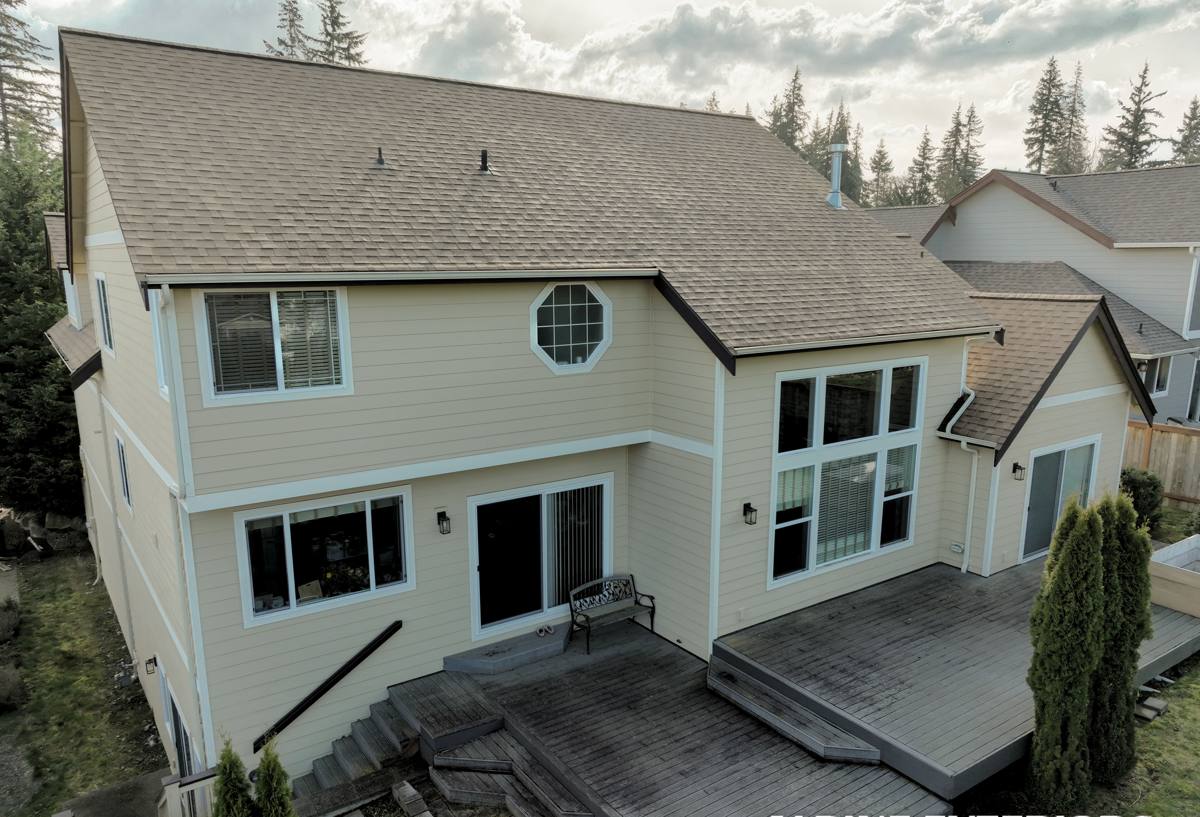
Common Types of Siding Damage We See in Blaine
Salt Air Corrosion and Surface Breakdown
Airborne salt is mildly corrosive to exposed metal fasteners, flashing, and trim, and it also breaks down factory and field-applied paint finishes faster than an inland environment would. On older siding, this often shows up as chalking, fastener bleed-through (rust streaks running down from nail heads), and premature paint failure at corners and edges where the material is most exposed.
Moisture Intrusion Behind the Siding
Wind-driven rain doesn't just wet the face of the siding — it gets pushed into laps, seams, and penetrations that would stay dry in a gentler climate. Once water gets behind the cladding, it's the water-resistive barrier, flashing, and drainage plane doing the real work, not the siding itself. When those layers are missing, damaged, or were never installed correctly, moisture tracks down the wall and shows up later as soft trim, staining, or rot in the sheathing.
Moss, Algae, and Prolonged Dampness
Shaded walls, north-facing exposures, and areas near trees or dense landscaping stay damp longer here than they would in a drier climate, and moss and algae take advantage of that. Left alone, moss holds moisture directly against the siding surface for weeks at a time, which accelerates paint failure on any material and can lead to actual substrate damage on materials that aren't built to handle sustained wetting.
Signs Your Blaine Home Needs Siding Repair
Most siding problems give warning signs well before they become structural. Worth checking for:
- Soft or spongy spots when you press on the siding, especially near the bottom of walls or under windows
- Visible cracking, buckling, or warping in individual boards or panels
- Persistent moss or dark streaking that keeps coming back after cleaning
- Peeling or bubbling paint concentrated in one area rather than spread evenly across the wall
- Gaps opening up at seams, corners, or where siding meets trim, window casings, or the foundation
- Rust streaking below fastener heads
- Interior signs — musty smell, discoloration, or soft drywall — on a wall that backs up to suspect siding
Repair or Replace? What We Actually Look At
Not every problem area needs a full re-side, and not every crack is a simple patch. The right call depends on a handful of factors we evaluate during an inspection before recommending anything.
| Factor | Favors Repair | Favors Larger Replacement |
|---|---|---|
| Extent of damage | Isolated to one board, panel, or small section | Spread across multiple walls or elevations |
| Sheathing condition underneath | Dry, solid substrate | Soft, rotted, or water-stained sheathing |
| Age and condition of remaining siding | Siding is otherwise sound and not near end of life | Siding is old, brittle, or was failing before this damage |
| Cause of the damage | Isolated event (impact, a single failed seam) | Systemic issue — missing flashing, failed water-resistive barrier |
| Material match | Existing material and color still available or blendable | Discontinued product, poor color/texture match |
If we open up a damaged section and find the sheathing behind it is still sound, a targeted repair is usually the right, most cost-effective answer. If we find rot has spread, or the underlying moisture barrier and flashing were never installed correctly to begin with, patching the visible symptom just buys a year or two before the same spot fails again — and we'll tell you that plainly rather than sell you a quick patch we don't believe in.
What a Correct Siding Repair Involves
Diagnosing the Real Problem, Not Just the Symptom
Any repair worth doing starts by opening up the damaged area enough to see what's actually happening behind the siding — not just skimming caulk over a crack. That means checking the water-resistive barrier, the flashing at windows, doors, and penetrations, and the condition of the sheathing itself. In a climate that pushes rain sideways, a repair that ignores drainage and flashing is a repair that's guaranteed to repeat.
Matching Materials the Right Way
Patching in mismatched material, or material with a different profile, texture, or finish, creates a visible seam and, worse, can create a new point where water gets trapped. Where an exact match isn't available — which happens often on older homes with discontinued siding — we'll talk through whether a full elevation or wall section makes more visual and practical sense than a patch that will always look and perform like a patch.
Restoring the Drainage Plane and Flashing
Correct siding repair reinstates the layered system that actually keeps water out: house wrap or building paper lapped correctly, flashing integrated with it (not just caulked over the top), and a drainage gap where the siding calls for one. Skipping this step and just reattaching new siding over a compromised barrier is the single most common reason repairs fail early in wind-driven-rain climates like this one.
Why We Repair and Rebuild With James Hardie Fiber Cement
We install James Hardie fiber cement siding exclusively — we don't install vinyl, LP SmartSide, Cemplank, Allura, or primed wood siding, and that standard carries through to repair work as much as new installs. When a repair or a section replacement is the right call, we don't want to hand a Blaine homeowner a patch that's fighting the same salt air, moss, and driving rain that damaged the original material, using a product with the same vulnerabilities.
Fiber cement is non-combustible and dimensionally stable, meaning it doesn't swell, cup, or warp with repeated wetting and drying the way wood-based products can under sustained coastal moisture exposure. James Hardie's factory-applied ColorPlus finish is baked on and warranted against fading and peeling in a way field-applied paint on repaired wood or vinyl trim generally isn't, which matters directly in an environment where salt air and UV exposure are already working against any paint film. When we replace a failing wall section, we're not just fixing today's problem — we're removing tomorrow's callback.
To be fair to the alternatives: vinyl and engineered wood products aren't inherently defective, and plenty of homes carry them without incident. But we've made a professional call that, given what this climate does to siding over time, we'd rather stand behind one product system we know inside and out than install and repair five different materials with five different failure patterns. That's the honest reason behind the standard, not a knock on any specific brand.
Our Siding Repair Process
- Inspection and diagnosis — We look beyond the visible damage to check flashing, the water-resistive barrier, and sheathing condition wherever it's exposed or accessible.
- Honest scope recommendation — You get a clear explanation of whether this is a spot repair, a section replacement, or something bigger, along with why, before any work starts.
- Removal and prep — Damaged material comes off cleanly, and we address whatever caused the failure — flashing, barrier, or drainage — before anything new goes back on.
- Repair or replacement with James Hardie material — Matched profile and finish where we're patching into existing Hardie siding, or a clean transition plan where we're replacing a full section or elevation.
- Final detailing — Proper caulking, fastening, and finish work so the repaired area performs — and looks — like it belongs.
Why Hire a Crew That Already Works in Blaine
Siding repair in a coastal Whatcom County town isn't identical to siding repair fifty miles inland. A crew that regularly works Blaine and the surrounding coastal areas already knows which wall orientations take the worst of the wind-driven rain, how aggressively moss and algae come back on shaded, damp lots, and how salt air tends to show up first in fastener corrosion and paint failure rather than obvious structural damage. That local pattern recognition shortens the diagnosis phase and means the repair plan accounts for conditions specific to this stretch of coastline from the start, instead of applying a generic fix and hoping it holds.
It also means fewer surprises around permitting and code requirements that can vary by jurisdiction within Whatcom County — details that are easy to get wrong for a crew parachuting in from outside the area.
Protecting Your Repair: Simple Maintenance for This Climate
A correctly done repair still benefits from basic upkeep in a climate this tough on siding:
- Rinse siding periodically to reduce salt buildup, especially on walls facing open water
- Keep gutters clear so water sheds away from siding rather than running down the wall face
- Trim back vegetation that keeps a wall shaded and damp, encouraging moss regrowth
- Re-caulk or touch up sealant at seams and trim joints as it ages — small gaps are cheap to fix and expensive to ignore
- Have any new soft spots, staining, or recurring moss checked before they spread
If you're seeing damage, staining, or repeated moss growth on your siding, we're happy to take a look and give you a straight answer on what's actually going on and what it would take to fix it right. Reach out for a free, no-pressure estimate — there's a form right below to get started.