 Bellingham Exterior
 Fairhaven's Exterior Climate: What Your Siding Is Actually Up Against
Fairhaven sits close to Bellingham Bay, and that proximity to open water shapes what happens to a house's exterior year-round. Salt-laden air moves off the water and settles on siding, trim, and fasteners, accelerating corrosion on anything not built to resist it. Add driving, wind-pushed rain off Puget Sound weather systems and a long, damp Whatcom County shoulder season that runs from early fall through late spring, and you have siding conditions that are noticeably harder on a house than an inland lot a few miles away.
Shaded, tree-lined streets common in and around Fairhaven add a second problem: moss and algae. Where sun exposure is limited and moisture lingers, north-facing walls and anything tucked under overhangs or mature trees can stay damp for days after a storm passes. That combination — salt exposure, sustained rain, and a moss season that barely takes a break — is exactly the kind of environment that separates a siding product that looks fine on day one from one that actually holds up over twenty or thirty years.
Why James Hardie Is the Right System for This Neighborhood
We install James Hardie fiber cement exclusively, and Fairhaven's climate is a good illustration of why. Fiber cement is made from cement, sand, and cellulose fibers — an inorganic composition that doesn't provide the organic food source that mold, moss, and algae need to establish themselves the way they can on wood-based or wood-fiber siding products. That doesn't mean a Hardie wall never gets a moss stain in a shaded, damp spot; it means the siding material itself isn't degrading or feeding that growth the way an organic substrate can.
HZ5 Engineered for the Pacific Northwest
James Hardie manufactures its siding in climate-specific formulations, and the HZ5 product line is engineered for regions with significant moisture exposure — which describes Whatcom County's marine climate well. HZ5 products are formulated and tested for performance in wet, humid conditions rather than being a one-size-fits-all product shipped nationwide. That matters on a lot exposed to bay winds and rain, where the siding is doing real work, not just providing an appearance.
ColorPlus Finish Holds Up to Salt Air Fading
Salt air is hard on ordinary field-applied paint — it accelerates fading and breakdown, which is why so many older homes near the water show chalky, uneven paint within a handful of years. James Hardie's ColorPlus Technology is a factory-applied, baked-on finish with UV protection built in, and it carries its own finish warranty separate from the substrate warranty. For a Fairhaven home taking direct salt air and rain exposure, that factory finish is a meaningfully different proposition than a site-painted product that depends on perfect field conditions and touch-up maintenance to look right for very long.
Why We Don't Install Everything on the Market
We get asked from time to time about vinyl, LP SmartSide, or primed wood alternatives. Each has a place in the market, and each has genuine trade-offs — vinyl can warp and fade and doesn't hold paint well if a color change is wanted later; wood-based composite products are more sensitive to moisture intrusion at cut edges and require more diligent caulk and paint maintenance to stay ahead of it. In a climate like Fairhaven's, where the siding rarely gets a long dry stretch to fully recover between storms, those trade-offs show up faster than they would somewhere drier. We standardized on James Hardie because it's the product we're comfortable standing behind on homes in this specific climate.
What a Correct Installation Actually Involves
James Hardie siding performs the way it's designed to only when it's installed to the manufacturer's specification. A rushed or generic install is where most siding failures actually originate — not in the product itself.
Water Management Behind the Siding
Correct installation starts before a single piece of Hardie board goes up. That means a properly lapped weather-resistant barrier, correctly integrated window and door flashing, and — on most projects — a rainscreen gap that lets any moisture that does get behind the cladding drain and dry out instead of sitting against the wall sheathing. In a damp, shaded climate like Fairhaven's, that drainage plane is one of the most important parts of the whole system, and it's invisible once the job is finished.
Fastening, Clearances, and Caulking Done to Spec
James Hardie publishes specific requirements for fastener spacing and type, minimum clearance from grade, roof lines, and decks, and butt-joint treatment. Skipping ground clearance or caulking a joint that should have been flashed instead are the kinds of shortcuts that don't show up as a problem for a year or two, but eventually let moisture into the wall assembly. We install to the documented spec, not to whatever's fastest.
Choosing the Right Hardie Profile for a Fairhaven Home
Fairhaven's housing stock includes a mix of older craftsman-style and bungalow homes alongside newer construction, and the right Hardie profile depends on the home's existing architecture as much as personal preference.
| Hardie Product | Best Fit | Look |
|---|---|---|
| HardiePlank Lap Siding | Craftsman, traditional, and most single-family homes | Classic horizontal lap, smooth or cedar-textured |
| HardieShingle | Bungalow and cottage-style homes wanting a shingle look without cedar's maintenance | Staggered or straight-edge panel shingle |
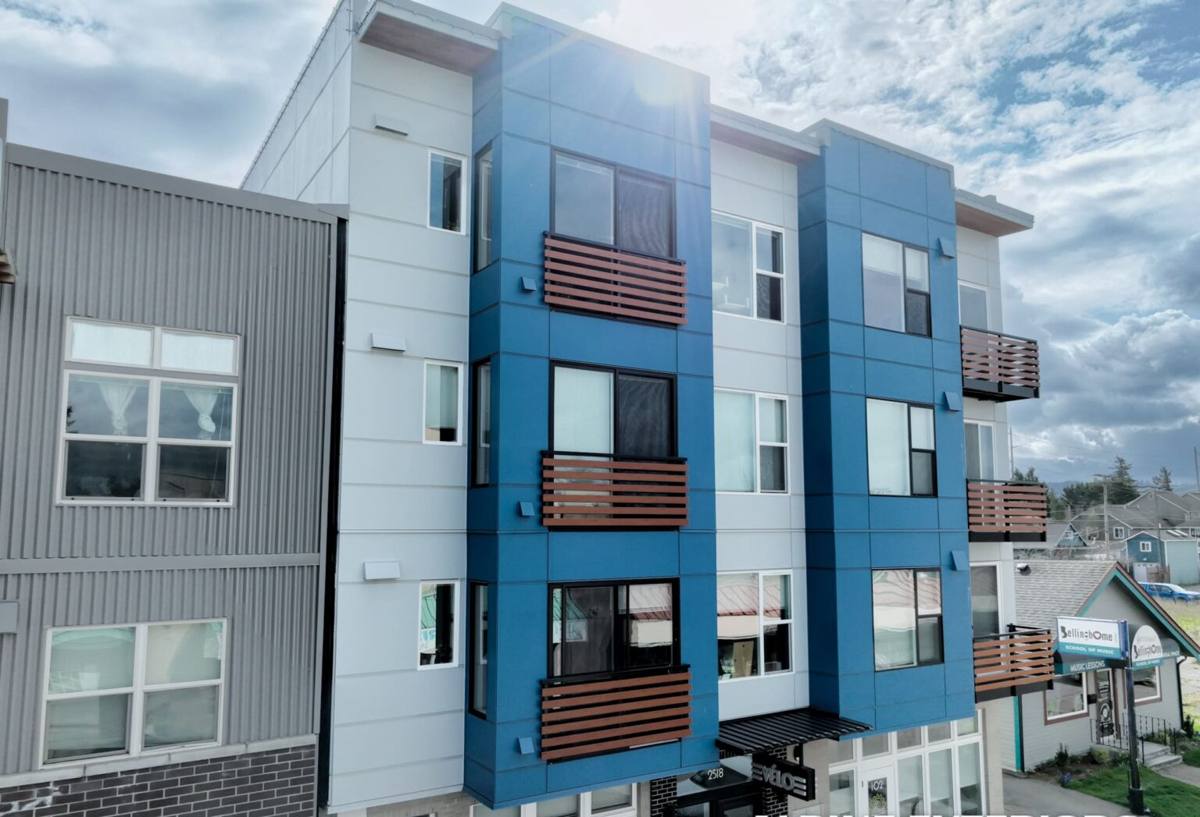
| HardiePanel | Modern builds, accent walls, gable ends | Vertical, smooth or stucco-textured panels |
| HardieTrim | Corner boards, fascia, window and door trim on any style | Smooth, paint-ready trim boards |
Many Fairhaven projects mix profiles — lap siding on the main field with shingle or panel accents on a gable or entry feature — which is common on this style of home and something we plan out with the homeowner before ordering material.
Our Process, Start to Finish
- On-site assessment of existing siding, sheathing condition, and trouble spots (moss, staining, soft spots near grade or roof lines)
- Tear-off of old siding and inspection of the sheathing underneath for hidden water damage before anything new goes up
- Repair or replacement of any compromised sheathing — not paneled over
- Installation of weather-resistant barrier, flashing at all penetrations, and a rainscreen drainage gap
- James Hardie siding installed to manufacturer fastening, clearance, and joint specifications
- Trim, caulking, and touch-up of factory finish at cut ends
- Final walkthrough with the homeowner before we consider the job done
Why Hiring a Crew That Already Works Fairhaven Matters
Siding installation isn't identical from one lot to the next. A crew that regularly works in and around Fairhaven has already seen how differently a shaded, water-facing property behaves compared to a sunnier inland lot a few miles away — where moss shows up first, which walls take the worst of the driving rain, and what kind of drainage detailing actually holds up through a wet Whatcom County winter. That's the difference between a generic install and one built for the specific house in front of us.
There's also a practical side: familiarity with City of Bellingham permitting requirements and typical inspection expectations keeps a project moving instead of stalling on paperwork. And a local crew is accountable locally — if a question comes up two years after the install, we're not a name from out of the area you have to track down.
Maintenance in a Salt Air, Moss-Prone Climate
James Hardie siding installed correctly is low-maintenance, but "low" isn't "none." A little seasonal attention goes a long way in this climate.
- Rinse siding annually, especially shaded and north-facing walls, to keep moss and algae from building up
- Keep gutters clear so overflow doesn't run down the siding face repeatedly
- Trim back vegetation and tree limbs that keep a wall section shaded and damp longer than the rest of the house
- Watch for caulk that's cracked or pulled away at trim joints and have it addressed before water gets behind it
- Check that soil, mulch, or landscaping hasn't crept up over the manufacturer's required ground clearance
- Note any chalking, fading, or peeling — on ColorPlus-finished Hardie this is uncommon well within the warranty period and worth a call if it happens
What This Typically Costs
Every Fairhaven home is different, but a few factors consistently drive the price of a James Hardie siding project up or down.
| Cost Factor | Why It Matters |
|---|---|
| Tear-off vs. new construction | Removing and disposing of old siding, plus any sheathing repair, adds labor a bare install doesn't need |
| Home size and number of stories | More square footage and taller walls mean more material, staging, and labor time |
| Profile and trim complexity | Mixed profiles, extensive trim detail, or shingle accents take more time than a single lap-siding field |
| Sheathing condition | Hidden moisture damage found during tear-off means repair costs that couldn't be quoted sight-unseen |
| Site access | Tight lots, slopes, or limited staging area near the water can add labor time |
Because so much depends on what tear-off reveals and the specific scope a homeowner wants, we don't quote firm numbers without seeing the house. What we can say honestly: a correctly installed James Hardie system is a long-term investment, not the cheapest option on the table, and in a climate like Fairhaven's that durability is exactly what you're paying for.
If you're planning a siding project in Fairhaven and want a straight answer about what your home needs, we're glad to take a look. Request a free, no-pressure estimate using the form below and we'll walk the property with you before you commit to anything.