 Bellingham Exterior
 Why Ferndale Roofs Wear Out Differently Than Roofs Inland
Ferndale sits close enough to Puget Sound and the Nooksack River delta that homes here deal with a combination most inland Washington towns never see: salty, moisture-laden air blowing off the water, long stretches of driving rain off the Pacific systems that funnel through Whatcom County, and a shade-and-damp cycle that keeps roofs wet for days at a time. None of these factors alone is unusual for Western Washington. Together, and applied year after year, they shorten the useful life of a roof that was installed without them in mind.
Salt Air and Metal Fatigue
Salt-laden air accelerates corrosion on exposed metal — flashing, fasteners, gutter hardware, and vent stacks. A roofing system that ignores this reality will show rust streaks, pitted metal, and premature fastener failure years before the shingles themselves are worn out. The fix isn't complicated, but it does mean choosing corrosion-resistant fasteners and flashing metals as a standard practice for this area, not as an upgrade.
Moss, Algae, and a Long Wet Season
Whatcom County's tree cover and cloudy stretches mean many Ferndale roofs stay shaded and damp for much of the year. That's exactly the environment moss and algae need to take hold. Once moss establishes itself under shingle tabs, it lifts them, holds moisture against the roof deck, and speeds up granule loss. A roof that looked fine two summers ago can develop hidden rot by the time moss is visible from the ground.
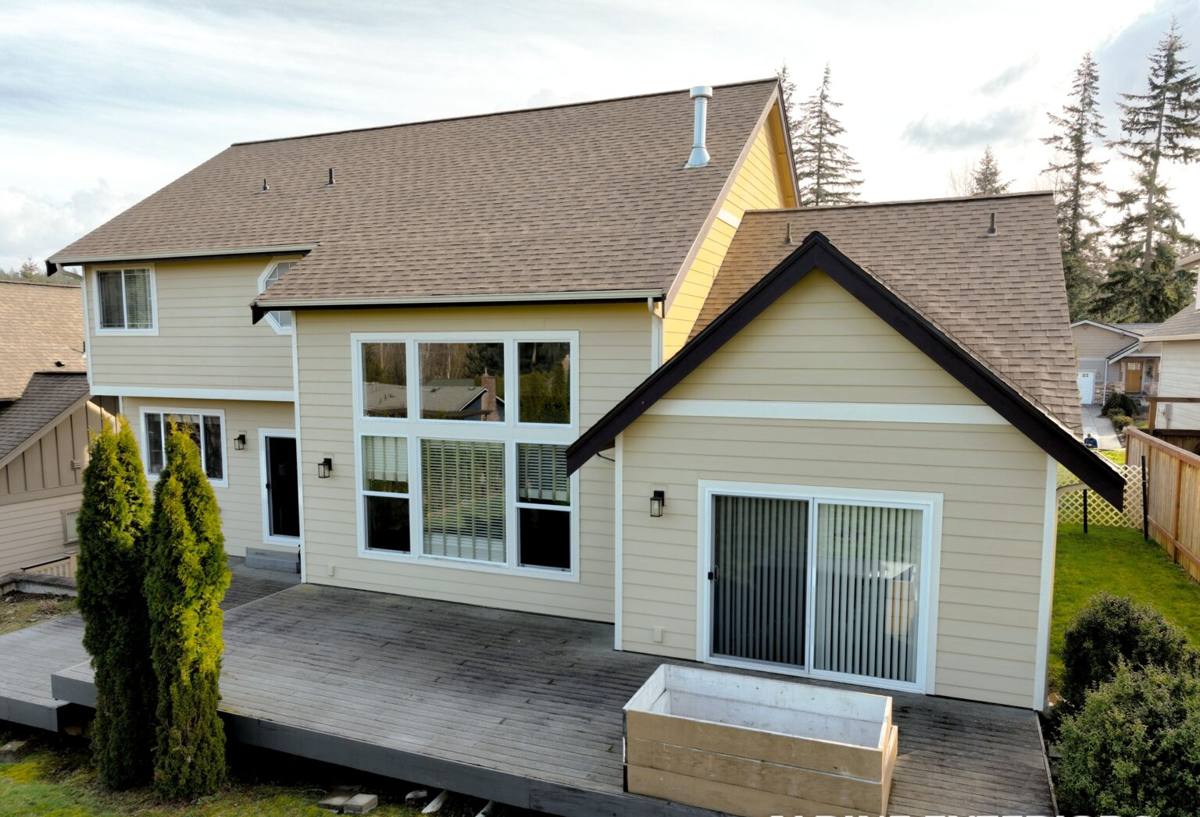
Signs a Ferndale Roof Needs Replacement, Not Another Repair
Not every aging roof needs full replacement, and we won't tell a homeowner they do when a repair will hold. But there's a point where patching becomes a losing game — where every fix addresses one symptom while the underlying material keeps failing elsewhere. Here's what tends to signal that point locally:
- Granules collecting in gutters and at downspout outlets, especially after a hard rain
- Moss growth that returns within a season or two of cleaning, even after treatment
- Soft or spongy spots on the roof deck, often found near valleys or chimney flashing
- Daylight visible through the attic roof boards, or damp insulation below the deck
- Curling, cracked, or missing shingles concentrated on north-facing or shaded slopes
- Repeated leaks around the same penetration despite prior flashing repairs
- A roof that's 20+ years old and has never had underlayment or ventilation upgrades
If two or three of these apply, a full replacement is usually the more honest recommendation — not because a repair can't be done, but because repeated repairs on a roof this age tend to cost more over a few years than one correct replacement.
What a Correct Roof Replacement Actually Involves
A roof replacement is more than swapping old shingles for new ones. The parts you don't see — the deck, the underlayment, the flashing, the airflow — determine whether the new roof lasts fifteen years or thirty in this climate.
Full Tear-Off and Deck Inspection
We remove the existing roofing down to the deck rather than layering over it. This is the only way to actually see the plywood or plank sheathing underneath, which is where moss-related moisture and old leaks tend to do their quiet damage. Any soft, delaminated, or rotted decking gets replaced before anything new goes down — installing new roofing over a compromised deck just hides the problem for another few years.
Underlayment Built for Wet Weather
Given how much rain Whatcom County sees, the underlayment matters as much as the shingle on top of it. We install a synthetic underlayment rated for extended wet exposure, with self-adhering ice-and-water membrane at the eaves, valleys, and any low-slope transitions — the spots where wind-driven rain is most likely to work its way backward under a shingle edge.
Flashing That Won't Corrode Prematurely
Every roof penetration — chimneys, skylights, vent pipes, wall-to-roof transitions — is a potential leak point. We use flashing metals and fasteners chosen for coastal, salt-influenced air rather than generic hardware, because that's where premature corrosion shows up first on homes in this area.
Ventilation That Actually Moves Air
Balanced intake and exhaust ventilation keeps the attic dry and the roof deck at a stable temperature. Poor ventilation traps moisture, which feeds rot and gives moss and algae an easier foothold from underneath as well as above. We evaluate existing soffit and ridge ventilation on every replacement and correct it when it's inadequate — this is one of the most common shortcuts on older roofs in this region.
Choosing a Roofing Material for Ferndale's Conditions
There's no single "best" roofing material — the right choice depends on budget, roof pitch, how much shade and moss pressure the property has, and how long the homeowner plans to stay in the house. Here's how the common options stack up for this specific climate:
| Material | Moss/Algae Resistance | Salt Air Durability | Typical Lifespan Here |
|---|---|---|---|
| Standard asphalt composition shingle | Moderate — benefits from algae-resistant granules | Good with corrosion-resistant flashing/fasteners | 18–25 years |
| Algae-resistant (copper-granule) shingle | Higher — granules actively discourage growth | Good | 20–25 years |
| Standing seam metal roofing | High — sheds moss more easily due to slick surface and no exposed fastener heads | Very good with proper coatings/fasteners | 40+ years |
| Cedar shake | Low without diligent maintenance — retains moisture | Requires more upkeep near salt air | Highly maintenance-dependent |
We're upfront that cedar shake, while attractive, asks for more ongoing maintenance in a shaded, damp, coastal-influenced climate than most homeowners want to take on. That's a maintenance and moisture-behavior trade-off, not a knock on the material itself — it simply needs more attention here than asphalt or metal do. For most Ferndale homes, an algae-resistant architectural shingle or a standing seam metal system offers the best balance of upfront cost and long-term performance.
How Our Replacement Process Works
- On-site inspection. We walk the roof and attic, check for soft decking, evaluate current ventilation, and look at moss/algae patterns to understand how the sun and shade hit the roof through the year.
- Written estimate. You get a clear scope — materials, underlayment, flashing approach, and ventilation work — with no vague allowances hiding surprise charges later.
- Material selection. We walk through the trade-offs in the table above so the decision fits your budget and how long you plan to own the home, not just what looks good from the curb.
- Tear-off and deck repair. Old roofing comes off, the deck is inspected board by board, and any damaged sheathing is replaced before moving forward.
- Underlayment, flashing, and ventilation installation. This is where the climate-specific decisions from earlier in this page actually get built into the roof.
- New roofing installation. Shingles or metal panels go on to manufacturer specification, with attention to nailing pattern and exposure — details that affect wind and rain performance more than most homeowners realize.
- Final walkthrough and cleanup. We inspect the finished roof with you, clear debris and stray fasteners from the yard, and go over basic care going forward.
Ventilation and Moss Prevention Aren't Optional Extras
A lot of roof replacements in this region focus entirely on the visible shingle and skip the ventilation conversation. We treat it as a core part of the job, not an upsell. Proper intake at the soffits and exhaust at the ridge keeps attic humidity down, which slows the conditions moss needs to establish and reduces the chance of condensation forming on the underside of the deck during cold, damp stretches — a problem that's easy to miss until it's already caused rot.
We also talk through simple ongoing moss control at handoff — things like keeping overhanging branches trimmed back to let more light and air reach the roof, and how often a gentle moss treatment makes sense for a shaded lot versus a more open one. None of this replaces a good roof system, but it extends the life of one.
What Roof Replacement Costs Depend On
We don't publish fixed prices because roof cost is driven by real, site-specific variables — but homeowners deserve to know what those variables are before they call around for quotes.
| Cost Factor | Why It Matters |
|---|---|
| Roof size and number of facets | More valleys, hips, and dormers mean more flashing, cutting, and labor time |
| Pitch and access | Steep or hard-to-access roofs require more safety setup and slow the work |
| Existing deck condition | Rot or soft sheathing found during tear-off adds material and labor |
| Material choice | Standard shingle, algae-resistant shingle, and metal carry different upfront costs |
| Ventilation upgrades needed | Adding or correcting soffit/ridge venting is often skipped in cheaper quotes |
| Layers of existing roofing | Multiple old layers add tear-off time and disposal cost |
Be cautious of any quote that's dramatically lower than the others — it usually means one of these factors, most often deck repair or proper ventilation, has been left out rather than priced in.
Why a Crew That Already Works in Ferndale Matters
A roofing crew that regularly works Ferndale and the surrounding Whatcom County area has already seen how the local conditions play out on real roofs — which slopes tend to hold moss, how quickly unprotected flashing corrodes this close to the water, and how much wind-driven rain a given roof pitch and exposure actually needs to handle. That local pattern recognition shows up in small decisions during the job — where to add extra ice-and-water membrane, which fastener spec to use, how much ventilation is actually enough — that a crew unfamiliar with the area might not think to make.
It also matters for accountability. A local contractor is easy to reach for a warranty question or a follow-up visit, and has a reputation in the community worth protecting. When you're vetting any roofing contractor, local or not, it's fair to ask directly how many roofs they've done in your specific area, what licensing and insurance they carry, and whether they'll put the material and ventilation specifics in writing before work starts.
Protecting Your Investment After Installation
A correctly installed roof still benefits from basic upkeep, especially in a climate this wet and shaded. A short annual routine goes a long way:
- Clear gutters and downspouts each fall before the heavy rains set in
- Trim back overhanging branches to reduce shade and debris buildup on the roof
- Do a visual check after major windstorms for lifted or displaced shingles
- Address any small moss growth early rather than waiting for it to spread
- Keep an eye on attic ventilation — musty smells or visible condensation are early warning signs
- Schedule a professional roof check every few years, even without an obvious problem
If you're weighing repair versus replacement, or just want an honest read on what your roof needs, we're glad to take a look. Reach out for a free, no-pressure estimate using the form below.