 Bellingham Exterior
 Ferndale sits close enough to the water and open farmland that its homes take a specific kind of weather beating — salt-laden air drifting in off the coast, driving horizontal rain during winter storms, and long stretches of damp, shaded moisture that keep moss and algae growing on north-facing walls for months at a time. Siding here doesn't fail because homeowners neglect it. It fails because most siding products weren't built for this exact combination of salt, saturation, and shade. When it's time to replace siding on a Ferndale home, the material and the installation both need to answer to that climate, not just to a sales brochure.
Why Ferndale Siding Wears Differently Than Siding Inland
Move ten or fifteen miles inland in Whatcom County and siding problems look different — mostly UV fading and the occasional ice-dam issue. In Ferndale, the problems cluster around moisture that never fully leaves. Salt air is mildly corrosive to fasteners and trim metal, and it also holds moisture against surfaces longer than dry inland air does. Combine that with Ferndale's exposure to driving winter rain — the kind that comes in sideways, not straight down — and you get water finding its way into every gap, seam, and un-caulked joint that a builder-grade install left behind.
Moss and algae growth is the most visible symptom. Shaded exterior walls, especially ones facing north or shielded by trees, stay damp long enough for organic growth to take hold. On some siding products that's cosmetic. On others, it signals moisture sitting against the substrate — which is a much bigger problem than it looks.
What This Means for Material Choice
A siding product for a Ferndale home has to hold up to repeated wetting and drying cycles without swelling, delaminating, or losing paint adhesion, and it has to resist moss growth or at least tolerate cleaning without degrading. That rules out a lot of what gets marketed as a budget-friendly option.
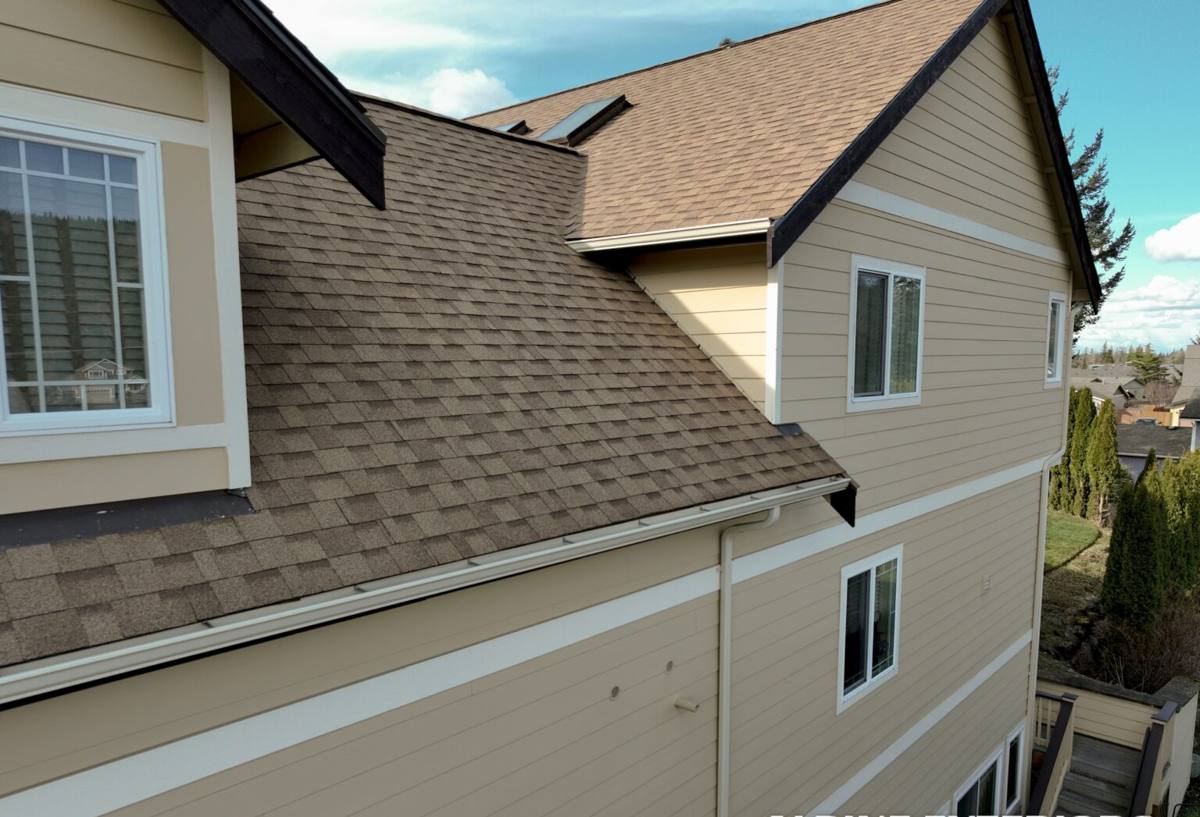
What a Correct Siding Replacement Involves
Replacing siding is not a cosmetic swap — it's a chance to fix everything underneath that's usually invisible until the old siding comes off. A correct job in this climate includes:
- Full tear-off and sheathing inspection — checking for rot, soft spots, and prior water intrusion around windows, doors, and penetrations before anything new goes up.
- Weather-resistive barrier replacement — a proper house wrap or building paper, lapped correctly, with all seams taped or sealed.
- Rainscreen or drainage gap detailing — furring strips or a drainage mat that let bulk water drain and airflow dry out the wall assembly, which matters more here than in drier parts of the state.
- Flashing at every horizontal transition — window heads, trim boards, deck ledgers, and anywhere water runs off one surface onto another.
- Correct fastening pattern and material-specific gapping — following the manufacturer's installation instructions, not generic carpentry habits.
- Factory-finished trim and caulking only where the manufacturer specifies it — over-caulking traps moisture; under-caulking lets it in.
Skip any one of these steps and the new siding will look fine for a year or two, then start showing the same moisture problems the old siding had — just with a newer face on them.
Why We Install Only James Hardie Fiber Cement
We don't install vinyl, LP SmartSide, Cemplank, Allura, primed spruce, or cedar. That's not a marketing position — it's a standard we settled on after weighing how each of those products actually performs in exactly the conditions Ferndale sees every winter.
Wood-based products, including engineered wood siding and traditional cedar, depend on an intact factory coating or field-applied finish to keep moisture out. Once that coating is compromised — by a scratch, a poorly sealed cut edge, or years of driving rain finding a seam — the wood substrate underneath can absorb water, swell, and eventually rot from the inside out. In a salt-air, high-moisture environment, that clock runs faster than it does inland. Vinyl sheds water well enough on its face, but it flexes with temperature swings, doesn't hold paint if a homeowner ever wants a color change, and its seams and J-channels are common spots for wind-driven rain to work its way behind the panel during a real coastal storm.
James Hardie fiber cement is cement, sand, and cellulose fiber — it doesn't absorb bulk water the way wood does, and it isn't organic material for moss and mildew to feed off the way some products can be. It's also non-combustible, which matters given Whatcom County's dry summer wildfire risk. The ColorPlus factory finish is baked on under controlled conditions, which holds up better against UV and salt air than field-applied paint, and it comes with a strong transferable warranty that follows the house, not just the original owner.
Hardie Product Lines Suited to This Climate
James Hardie makes climate-engineered HZ product lines specifically because siding needs differ by region. For a wetter, coastal-influenced area like Ferndale, that means selecting the right lap profile, panel, and trim combination for actual moisture exposure — not just picking whatever's in stock.
Siding Material Comparison for Ferndale Conditions
| Material | Moisture Resistance | Moss/Algae Behavior | Maintenance Burden |
|---|---|---|---|
| James Hardie Fiber Cement | High — non-organic substrate, factory finish sheds water | Can be cleaned without damaging surface | Low — occasional wash, no repainting for years |
| Vinyl | Moderate — seams and panels can let wind-driven rain behind | Grows on surface in shaded, damp areas | Low upfront, but no repair options if damaged or faded |
| Engineered Wood (LP SmartSide) | Moderate — depends on intact coating and sealed edges | Organic substrate can support growth if coating fails | Moderate — edge sealing and coating checks matter |
| Cedar / Primed Spruce | Lower in sustained wet climates without diligent upkeep | Organic material, prone to moss/mildew in shade | High — regular refinishing and moisture checks needed |
How Our Process Works
Every Ferndale siding job starts with a walk-around of the house, not just a measurement. We're looking at sun and shade exposure, where the prevailing rain hits hardest, existing moisture damage, and how the current siding was flashed and detailed. That inspection shapes the plan more than the square footage does.
- On-site inspection and honest assessment of what's driving the current siding problems
- Written estimate covering material, tear-off, sheathing repair allowance, and installation detailing
- Tear-off and substrate inspection, with any rot or damage addressed before new material goes up
- Weather barrier, drainage detailing, and flashing installed to spec
- James Hardie siding and trim installed per manufacturer fastening and gapping requirements
- Final walkthrough covering warranty registration and basic care
Why a Crew That Already Works Ferndale Matters
Siding work in this part of Whatcom County isn't generic exterior carpentry — it's carpentry that accounts for salt exposure, sideways rain, and shaded moss-prone walls as a matter of course, not an afterthought. A crew that regularly works Ferndale and the surrounding Bellingham area already knows which wall orientations tend to hold moisture longest, how far inland the salt-air effect actually reaches, and where builder-grade flashing details tend to fail first in this specific climate. That local pattern recognition shows up in fewer callbacks and a tighter, better-detailed install the first time.
Signs Your Ferndale Home May Need Siding Replacement
- Persistent moss or algae staining that returns quickly after cleaning
- Soft or spongy spots when pressing on siding, especially near the bottom edges or trim
- Visible warping, bubbling, or separation at seams and corners
- Paint or finish that's peeling rather than just fading
- Interior signs of moisture — musty smells or staining on walls that share an exterior wall
- Siding that's original to a home built before current flashing and drainage standards were common practice
What Affects the Cost of a Siding Replacement
Every home is different, but the main cost drivers on a Ferndale siding job are consistent: the amount of sheathing repair needed once old siding comes off, the complexity of the roofline and number of trim details, the siding profile and finish selected, and how much flashing and drainage detailing the existing wall assembly is missing. A house with hidden water damage from years of a poorly detailed install will cost more to do right than one that's simply aged out cosmetically — which is exactly why the inspection happens before the estimate, not after.
If your Ferndale home is showing moss buildup that won't stay clean, soft spots, or siding that's simply reached the end of its service life, we'll come take an honest look and walk you through what we find — no pressure, no obligation. Request a free estimate below and we'll get a local crew out to assess the job.