 Bellingham Exterior
 Roofing in Happy Valley: A Different Set of Demands
Happy Valley sits close enough to the water and the wooded hillsides around Bellingham that its roofs deal with a combination most inland neighborhoods don't: salt-laden air moving in off Bellingham Bay, long stretches of driving rain through the fall and winter, and shaded, tree-lined lots that keep moss and moisture around far longer than a sunnier lot would. None of that is unusual for Whatcom County. But it does mean a roof that works fine in a dry, open subdivision can underperform on a Happy Valley lot, even if the materials and installation were technically correct.
Asphalt shingle roofing remains the most practical choice for most homes in this neighborhood — it's cost-effective, well understood by insurers, and easy to repair in sections when only part of a roof is damaged. But "asphalt shingles" covers a wide range of products and installation quality, and in a microclimate like this one, the details matter more than they would somewhere drier.
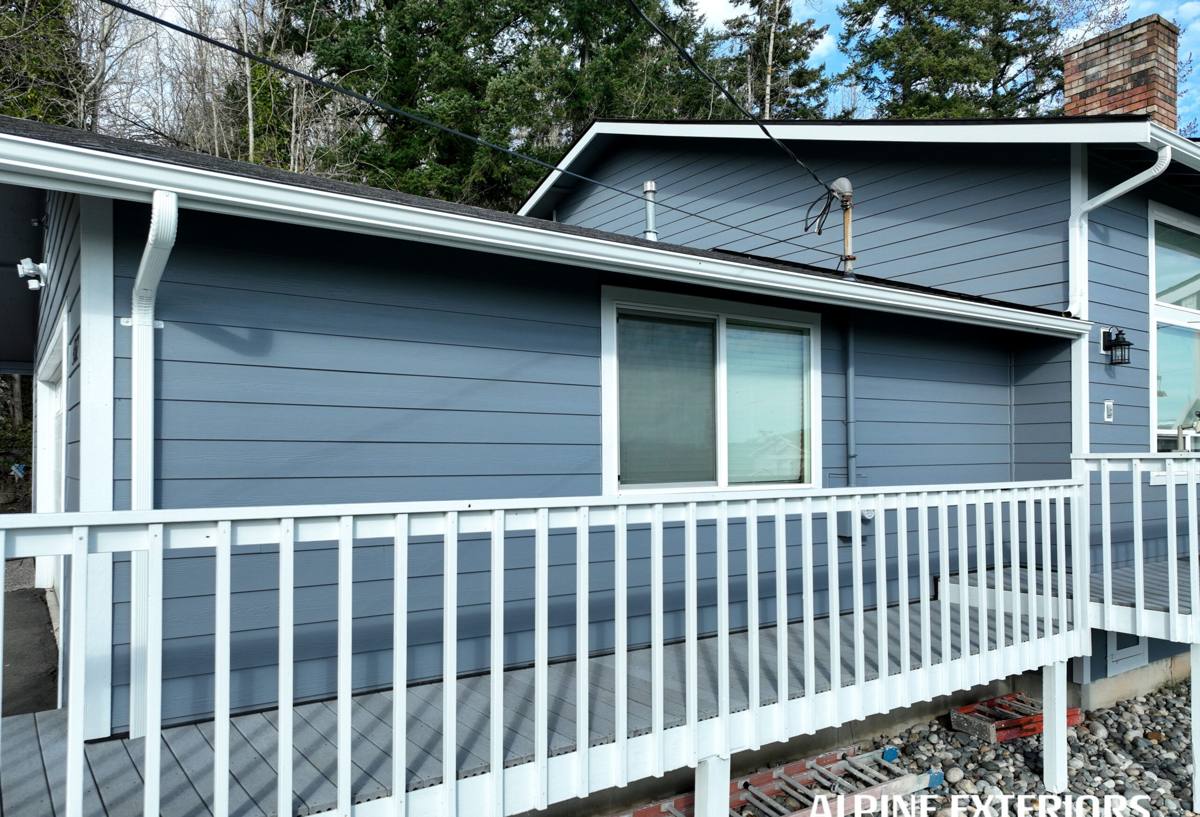
What the Local Climate Actually Does to a Roof
Salt Air and Metal Fatigue
Homes closer to the water take on airborne salt that accelerates corrosion on exposed metal — flashing, nail heads, vent stacks, and gutter hardware. Standard galvanized fasteners and thin flashing can start showing rust and pitting years before they would inland. This doesn't ruin a roof overnight, but it's usually the first thing to fail, and a failing flashing detail is one of the most common sources of a slow, hard-to-trace leak.
Driving Rain and Wind-Driven Water
Bellingham's rain doesn't always fall straight down. Storms off the Sound push rain sideways under wind, which means water finds its way into laps, seams, and fastener penetrations that would stay dry in a calm rain. Underlayment quality and shingle overlap become more important here than in places with gentler weather patterns.
Moss, Shade, and Prolonged Moisture
Happy Valley's tree cover is part of what makes the neighborhood pleasant to live in, but it also means many roofs get less direct sun and stay damp longer after a storm. That's exactly the environment moss and algae need to establish. Once moss takes hold under shingle tabs, it lifts them slightly, which lets more water in and accelerates granule loss — a slow cycle that shortens roof life if it isn't managed.
What a Correct Asphalt Shingle Job Looks Like Here
A roof built for this specific combination of conditions isn't a different product line — it's the same asphalt shingle system installed with attention to the details that matter locally. That includes:
- Corrosion-resistant flashing and fasteners at valleys, chimneys, and roof-to-wall transitions, not standard galvanized hardware that will pit faster this close to the water
- A synthetic or high-quality felt underlayment installed as a full water-resistant layer, not just a nailing surface, since wind-driven rain can get past the shingle course itself
- Ice-and-water shield or equivalent self-adhering membrane at eaves, valleys, and any low-slope transitions, even though Bellingham doesn't see heavy ice buildup — the same membrane protects against wind-driven rain intrusion
- Proper shingle nailing pattern and exposure, since under- or over-driven nails are a common cause of premature failure and are easy to miss on a rushed job
- Attic and roof deck ventilation sized correctly for the home, so trapped moisture from the shaded, damp local climate doesn't condense against the underside of the deck
- Shingle selection that accounts for algae resistance, since standard shingles in a shaded, damp lot will show staining and moss growth years sooner than algae-resistant (AR) shingles rated for it
Choosing Shingles for a Shaded, Coastal-Adjacent Lot
Not every asphalt shingle product is a good fit for Happy Valley conditions. The table below outlines the practical trade-offs we walk homeowners through when a roof is being replaced in this neighborhood.
| Shingle Type | Typical Lifespan | Fit for Happy Valley Conditions |
|---|---|---|
| 3-Tab Standard | 15–20 years | Lowest upfront cost; less wind resistance and no algae resistance built in — needs more frequent moss and moisture maintenance |
| Architectural / Dimensional | 25–30 years | Thicker profile handles wind-driven rain better; widely available with algae-resistant (AR) granules, which matters on shaded lots |
| Impact-Rated / Heavy-Duty Architectural | 30+ years | Best long-term option for exposed or tree-adjacent roofs; higher upfront cost offset by fewer repairs and stronger warranty coverage |
For most Happy Valley homes, we recommend an architectural shingle with algae-resistant granules as the baseline, not an upgrade. On a shaded, damp lot, the AR coating isn't a cosmetic add-on — it's the difference between a roof that stays clean for a decade and one that needs moss treatment every year or two.
Color and Heat Considerations
Darker shingle colors show less staining from moss residue but absorb more heat in the rare stretches of summer sun this neighborhood does get. Lighter and mid-tone colors show algae staining more visibly but keep attic temperatures lower. We talk through this trade-off with homeowners rather than defaulting to one answer, since it comes down to personal preference more than performance.
Our Process for a Happy Valley Roof Replacement
- On-site inspection. We walk the roof and attic, check for existing moss, flashing condition, ventilation, and any signs of past leaks — not just a drive-by estimate.
- Written scope and options. You get a clear breakdown of shingle options, underlayment, flashing, and ventilation work, with honest pricing ranges for each tier.
- Tear-off and deck inspection. Old roofing comes off down to the deck so we can check for soft spots or water damage that wouldn't show from the surface — common on older homes with a history of moss buildup.
- Underlayment and flashing installation. This is where the coastal-adjacent details get handled — corrosion-resistant hardware, properly lapped underlayment, and membrane at vulnerable points.
- Shingle installation. Correct nailing pattern, exposure, and starter course, with attention to valleys and penetrations where wind-driven rain is most likely to find a way in.
- Final walkthrough. We review the finished roof with you, including ventilation and any maintenance steps specific to your lot's shade and moisture exposure.
Maintenance That Matters in This Neighborhood
Asphalt shingle roofs in Happy Valley benefit from a maintenance rhythm that's a bit more attentive than a roof on an open, sunny lot would need. This isn't about babying the roof — it's about catching small issues from moss and moisture before they become deck-level problems.
- Check for moss buildup at least once a year, especially on north-facing or heavily shaded slopes
- Keep gutters and downspouts clear so water isn't sitting against the lower courses of shingles
- Trim back overhanging branches where practical to reduce shade, debris buildup, and moss-friendly conditions
- Have flashing and fasteners inspected periodically, particularly if your home is within a mile or two of the water
- Address moss with a proper treatment rather than aggressive pressure washing, which can strip granules and shorten shingle life
Repairs vs. Replacement: How We Help You Decide
Not every roofing issue in Happy Valley calls for a full replacement. If a roof is younger and the damage is localized — a section of lifted shingles from wind, a flashing leak around a chimney, moss damage isolated to one slope — targeted repair is usually the right call. We look at the age of the roof, the extent of the damage, and whether the underlying deck and underlayment are still sound before recommending either path. If a roof is past 20–25 years old and showing granule loss, widespread moss, or multiple past repairs, replacement is often the more cost-effective long-term decision rather than continuing to patch it.
Why Local Experience on This Specific Terrain Matters
A roofing crew that mostly works dry, inland, open-lot roofs will size ventilation, choose underlayment, and set a maintenance schedule differently than one that regularly works shaded, coastal-adjacent Whatcom County properties. The failure points aren't the same. We've seen how moss establishes on shaded Happy Valley roofs, how quickly standard hardware corrodes this close to the water, and where wind-driven rain tends to find its way in during a typical Bellingham winter storm. That local pattern recognition is what separates a roof that's technically installed to code from one that's actually built for where it sits.
It also means we're not guessing at shingle recommendations or underlayment specs — we're applying what consistently works for homes in this exact setting, adjusted for your specific lot's sun exposure, tree cover, and roof orientation.
Get a Straightforward Estimate
If your Happy Valley roof is showing moss, granule loss, flashing wear, or you're just planning ahead for a replacement, we're happy to take a look and walk you through honest options — no pressure, no upsell. Use the form below to request a free estimate, and we'll assess your roof's actual condition and talk through what makes sense for your home and budget.