 Bellingham Exterior
 Building a Deck That Actually Holds Up in Lynden
Lynden homeowners ask for a lot of the same things when they call about a deck: somewhere to put a table and chairs without the boards turning green by October, railings that don't stain the driveway rust-orange after one wet season, and a structure that doesn't feel spongy underfoot five years in. Those aren't unusual requests. They're just what it takes to build a deck correctly in Whatcom County, where long stretches of steady rain, high humidity, and a genuine moss season are simply part of the calendar, not an occasional inconvenience.
A deck built the same way you'd build one in Spokane or Phoenix will not perform the same way here. The lumber, the fasteners, the flashing, and even the gap spacing between boards all need to account for how much moisture this region holds onto for how long. This page focuses specifically on custom deck construction for Lynden properties — what the climate demands, what a correctly built deck involves, and how our process works from the first estimate to the final walkthrough.
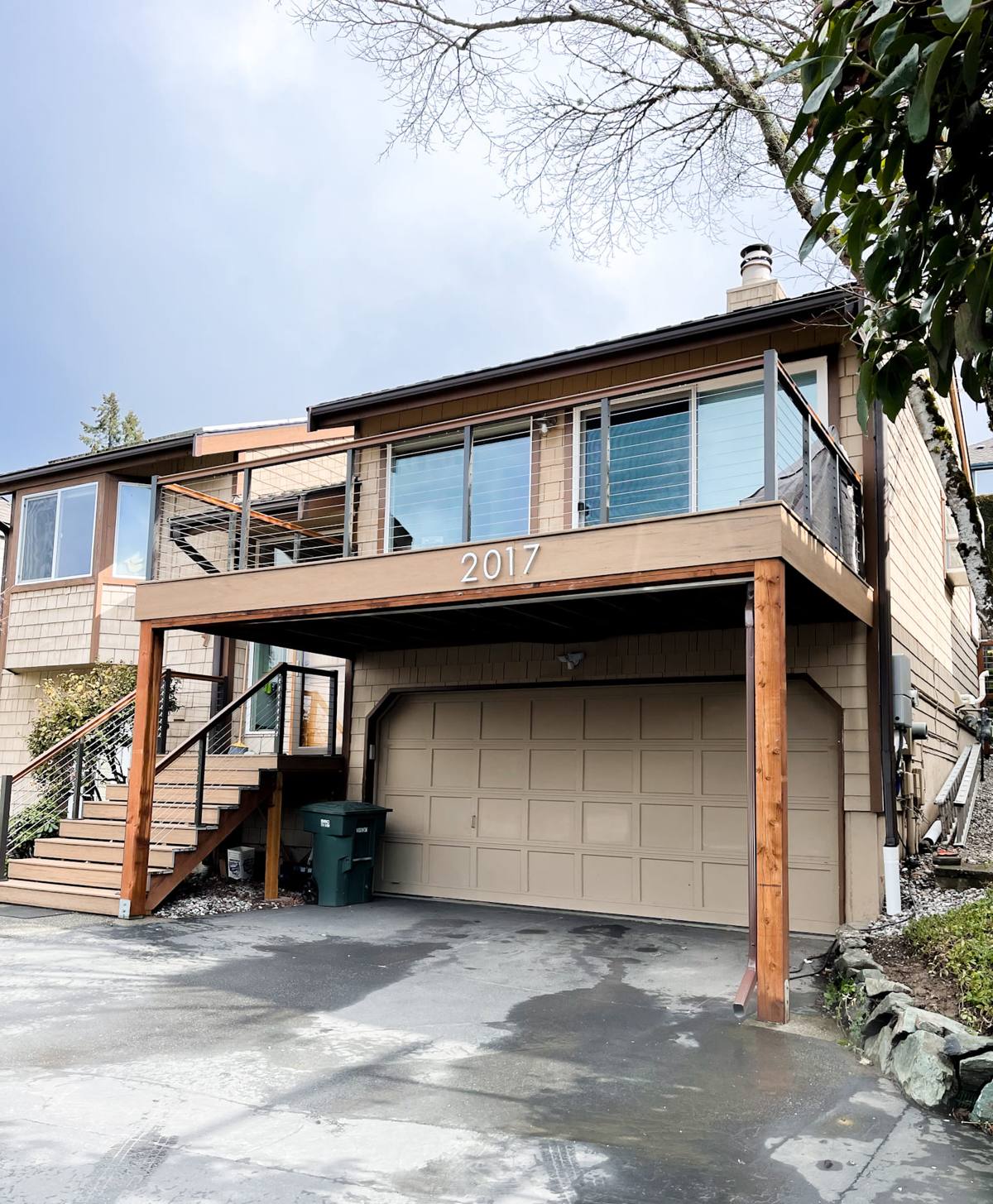
What Whatcom County Weather Does to an Unprotected Deck
Bellingham and the surrounding Whatcom County area sit inside a marine-influenced climate. Even away from the immediate shoreline, that marine layer keeps humidity elevated for much of the year, and it doesn't take direct rainfall to keep wood wet — condensation, shade, and poor airflow underneath a deck do plenty of damage on their own. A few specific failure patterns show up again and again on decks that weren't built with this in mind:
- Moss and algae growth on shaded boards, north-facing decks, and anywhere water sits instead of shedding
- Fastener corrosion from standard hardware that wasn't rated for constant moisture exposure, leaving black or rust streaks down the boards
- Ledger board rot where the deck attaches to the house, usually from missing or improperly installed flashing
- Warped or cupped boards from lumber that wasn't properly dried, sealed, or spaced before installation
- Soft or heaving footings where drainage wasn't addressed and water pools around posts through the wet months
None of these are exotic problems. They're the predictable result of building a deck without accounting for the amount of moisture Whatcom County sees over a typical year — and every one of them is preventable with the right materials and detailing.
Decking Material Options for a Lynden Property
There's no single "correct" decking material for every project — it depends on budget, maintenance tolerance, and how much sun or shade the deck gets. Here's how the common options actually perform in this climate:
| Material | Moisture Performance | Maintenance | Typical Lifespan Here |
|---|---|---|---|
| Pressure-treated fir/hem-fir | Good if properly sealed and re-coated | Annual cleaning, re-sealing every 1-2 years | 15-20 years with upkeep |
| Cedar | Naturally rot- and insect-resistant, but softer | Regular cleaning, periodic oil or stain | 15-25 years with upkeep |
| Composite decking | Excellent — doesn't absorb water, but can still grow surface algae in shaded, low-airflow spots | Periodic washing, no sealing needed | 25-30+ years |
| PVC/capped composite | Best moisture resistance of the group | Occasional washing | 25-30+ years |
Composite and capped composite products have become the default recommendation for a lot of our Lynden clients simply because they remove the annual sealing chore from the list — but cedar and treated lumber are still solid choices for homeowners who prefer the look and don't mind the maintenance rhythm. We'll walk through the honest trade-offs for your specific site, sun exposure, and budget rather than push one product line across the board.
Framing and Substructure: Where Deck Failures Actually Start
Almost every deck problem we get called out to repair traces back to the framing, not the decking boards on top. The visible surface can look fine for years while the structure underneath is quietly failing. A few details matter more here than they would in a drier climate:
Ledger Flashing
Where the deck attaches to the house, proper flashing has to direct water away from the ledger board and the house's wall assembly. This is the single most common shortcut we find on older or improperly built decks in this area, and it's also the most expensive to ignore — ledger rot can mean water intrusion into the house itself.
Joist Protection
Joist tape or a comparable moisture barrier on top of each joist keeps standing water from sitting directly on cut lumber, which is where rot typically starts even on pressure-treated framing.
Airflow Underneath
Decks built low to the ground or enclosed with solid skirting without ventilation trap humidity underneath, which accelerates both wood rot and moss growth on the underside of boards. Proper clearance and ventilation gaps matter more here than in dry climates where this rarely comes up.
Footings, Frost Depth, and Local Permitting
Footing depth for a deck in Whatcom County has to account for both frost depth and drainage — a footing that's technically deep enough but sitting in poorly draining soil can still heave or settle unevenly over a few wet winters. We size and place footings based on the specific soil and drainage conditions of each site rather than using a one-size answer for every yard.
Permits for Lynden Properties
Most custom deck projects in this area require a building permit, and requirements can vary depending on deck height, attachment to the house, and whether it falls within setback or shoreline-adjacent rules for your specific parcel. We handle the permit process as part of the job so you're not the one tracking down requirements or scheduling inspections — that's built into how we quote and schedule the project from the start.
Our Process, Start to Finish
- Site visit and consultation — we look at sun exposure, drainage, existing structure (if replacing a deck), and how you actually plan to use the space
- Design and material selection — honest comparison of decking materials, railing options, and layout based on your budget and maintenance preferences
- Permitting — we prepare and submit what's required for your property and schedule inspections around the build timeline
- Demolition (if replacing an existing deck) — including inspection of ledger, framing, and footings underneath before anything new goes in
- Framing and flashing — built to the moisture and drainage standard this climate requires, not just minimum code
- Decking, railing, and hardware installation — using fasteners and hardware rated for sustained moisture exposure
- Final walkthrough — we go over care and maintenance specific to the material you chose so the deck actually lasts as long as it should
Railings, Fasteners, and Hardware That Won't Let You Down
The hardware holding a deck together matters just as much as the boards on top, and it's the part most often value-engineered down on lower-quality builds. In a climate with this much sustained moisture, we use fasteners and structural hardware rated for exterior, high-moisture exposure — not standard interior-grade screws or connectors that will streak, corrode, or weaken well before the decking itself needs attention. Railings get the same consideration: metal components need a finish that holds up to Whatcom County's wet season after wet season without rusting through or staining the deck surface below.
Maintenance Checklist for a Deck That Lasts
Whatever material you choose, a small amount of seasonal maintenance goes a long way in this climate. A basic yearly routine:
- Clear leaves, needles, and debris out of gaps between boards before they hold moisture through fall and winter
- Wash down the deck surface at least once a year to remove early moss and algae growth before it takes hold
- Check and re-seal wood decking on the manufacturer's recommended schedule — don't wait until it looks obviously worn
- Inspect railing posts and connections for movement or rust staining each spring
- Confirm nothing is blocking drainage or airflow underneath the deck, especially after storms
- Look at the ledger board area where the deck meets the house for any signs of staining or soft wood
Why Hire a Crew That Already Works in Lynden
A deck built by a crew that hasn't accounted for Whatcom County's rain patterns, humidity, and moss season tends to look fine at handoff and start showing problems within a few years — by which point it's a repair job instead of routine maintenance. Working in this area regularly means we're not guessing at footing depth, flashing details, or which fasteners actually hold up here; it's the same climate on every job, and the details that matter don't change from one Lynden property to the next.
If you're planning a new deck or replacing one that's past its prime, we're happy to take a look and talk through honest options for your property. Reach out for a free, no-pressure estimate using the form below.