 Bellingham Exterior
 Roof Repair Built for the Puget Neighborhood's Weather
Homes in the Puget area of Bellingham sit close enough to the water and the tree line that their roofs take a different kind of beating than roofs twenty miles inland. Salt-laden air off the Puget Sound corrodes exposed metal faster than dry-climate roofs ever experience. Driving rain, pushed sideways by wind off the water, finds every marginal flashing detail and every lifted shingle tab. And the long, damp shoulder seasons in Whatcom County give moss and moisture months to work into a roof system before a homeowner ever sees a stain on the ceiling. Roof repair here isn't just patching a leak — it's addressing the specific combination of salt, wind-driven rain, and moss that defines this part of Bellingham.
We work on roofs throughout the Puget area regularly, which means we're not guessing at what these houses need. We know which roof ages, pitches, and exposures tend to show trouble first, and we know the difference between a cosmetic moss problem and one that's already compromising the roof deck underneath.
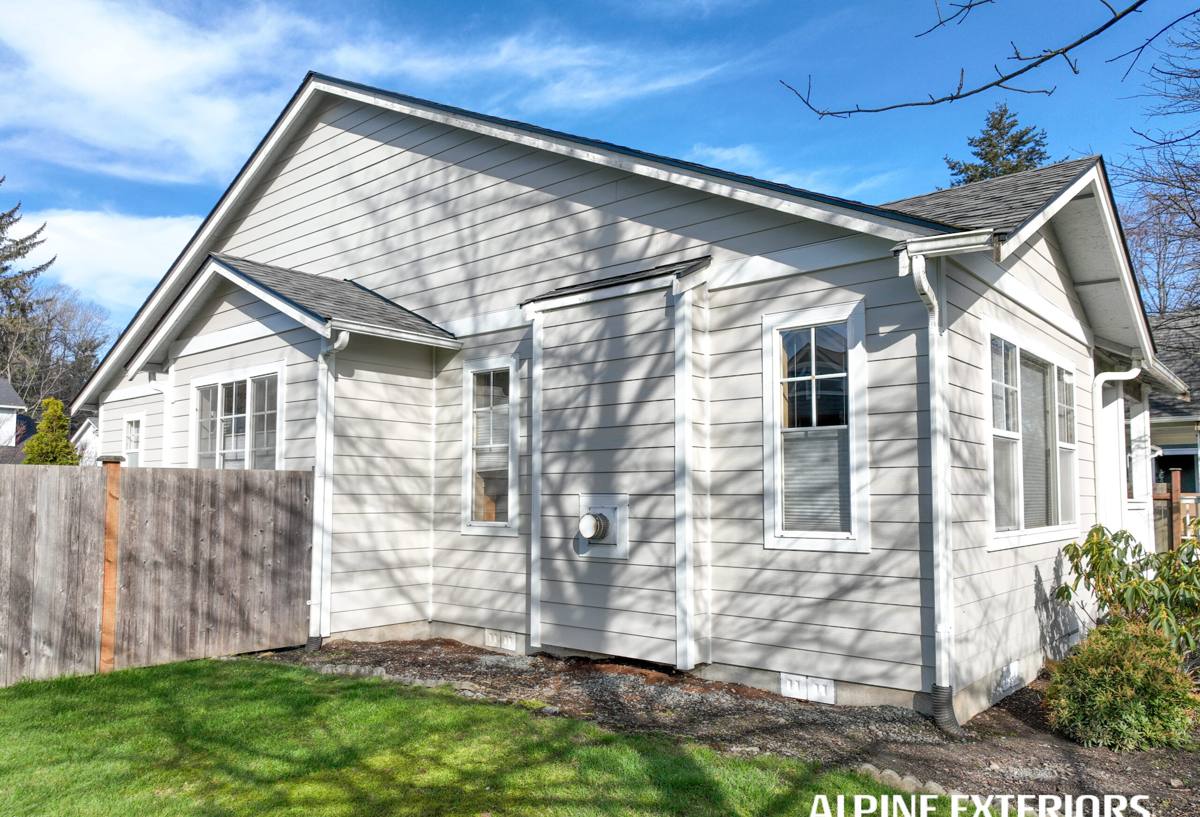
Why Puget-Area Roofs Wear Differently Than Roofs Elsewhere in Bellingham
Salt Air and Metal Fatigue
Flashing, fasteners, gutters, and any exposed metal roofing components corrode faster when they're regularly exposed to salt-carrying air. Once corrosion starts at a flashing seam or a nail head, it doesn't stay put — it spreads, and it compromises the seal that keeps water out of the structure below. On a standard inland roof, metal flashing might go a decade or more with minimal attention. In Puget's coastal exposure, we check flashing condition on every repair call regardless of what brought us out, because a homeowner calling about a leak often has a second problem developing at the same time.
Driving Rain and Wind Exposure
Wind off the Sound doesn't just add rainfall — it changes the direction water travels across a roof. Rain that would normally run straight down a slope gets pushed sideways and upward under shingle edges, ridge caps, and around penetrations like vent pipes and chimneys. Roofs designed and installed without that wind-driven behavior in mind tend to develop leaks at these transition points first, often well before the shingles themselves show visible wear.
Moss and the Long Wet Season
Whatcom County's mild, wet climate is close to ideal for moss growth, and roofs shaded by mature trees or facing north tend to hold moisture longer between dry spells. Moss isn't just unsightly — its root structure lifts shingle edges as it grows, creating gaps where wind-driven rain can get underneath. Left unaddressed through a full moss season, that lifting accelerates granule loss and shortens the useful life of the roofing material significantly.
What a Correct Roof Repair Actually Involves
A proper repair isn't just sealing the spot where water is currently showing up inside the house. Water travels before it drips, so the visible stain is rarely directly above the actual entry point. Our repair process on Puget-area homes typically includes:
- Tracing the leak path from the interior stain or damp spot back to its actual source on the roof, not just the nearest visible gap
- Inspecting flashing around chimneys, skylights, vent pipes, and roof-to-wall transitions for corrosion or separation
- Checking shingle or roofing material condition in the surrounding area, not just the failure point, since wind and moss damage rarely stay isolated
- Evaluating moss coverage and root penetration where present, and removing it properly rather than just scraping the surface
- Confirming underlayment and roof deck condition at the repair area — if water has been getting in for a while, the deck itself may need attention
- Matching repair materials to the existing roof as closely as possible so the fix doesn't stand out or create a mismatched wear pattern down the line
Skipping any of these steps tends to produce the kind of repair that holds for a season or two and then reopens — usually at the start of the next heavy rain stretch, which is the worst possible time to discover it.
Common Repair Scenarios We See in the Puget Area
Flashing Failure at Roof Penetrations
Chimneys, skylights, and vent pipes are the most common leak sources on an otherwise sound roof. The flashing around these features is a separate component from the roofing material itself, and it's often the first thing to fail — especially under the corrosive pressure of salt air. Repairing or replacing flashing correctly means removing the surrounding roofing material to reset it properly, not just running a bead of sealant over the gap.
Moss-Related Shingle Lift
When moss has been growing on a roof section for more than a season, the shingles underneath are usually already lifted at the edges. Treating this correctly means removing the moss, assessing how much granule loss and lift has occurred, and replacing shingles that are too far gone to reseal — rather than just cleaning the surface and hoping the underlying damage isn't significant.
Wind-Lifted Ridge Caps and Edges
Ridge caps and roof edges catch the most wind, and repeated wind-driven rain events gradually loosen the fasteners and seals holding them down. Once lifted, they become an open door for water during the next storm. This is one of the more common repair calls we get in the Puget area, particularly after a stretch of stronger winter storms off the Sound.
Localized Deck Damage
If a leak has been active for a while before it's noticed — which happens often, since attic and interior leak signs can lag behind the actual roof failure by weeks or months — the roof deck underneath may be softened or rotted at the repair area. This needs to be replaced as part of the repair, not covered over, or the new roofing material will be sitting on a compromised base.
How We Approach a Repair Call
- We inspect the full roof, not just the reported problem area, since related wear is common on Puget-exposed roofs
- We identify the actual water entry point and explain what we found in plain terms, including photos where useful
- We give you a clear scope and price for the repair before any work starts
- We complete the repair with materials matched to your existing roof
- We flag anything else we noticed — early moss growth, aging flashing, thinning granules — so you can plan ahead rather than get surprised by it later
We don't upsell a full roof replacement on a repair call unless the roof genuinely can't be reasonably repaired anymore. Most of the time, a well-executed repair extends a roof's useful life by years, and we'll tell you honestly when that's the case versus when replacement is the more sensible long-term investment.
What Drives Repair Cost
| Factor | Why It Matters |
|---|---|
| Size and location of the damaged area | Small, accessible repairs cost less than repairs on steep sections or hard-to-reach roof planes |
| Extent of moss or moisture damage | Repairs that require deck replacement underneath cost more than surface-level shingle and flashing work |
| Roofing material type | Matching specialty or older materials can take more time and cost more than standard asphalt shingle repair |
| Flashing condition | Corroded flashing from long-term salt air exposure often needs full replacement, not just resealing |
| Roof pitch and access | Steeper roofs and roofs with limited ground access require more setup time and safety equipment |
Most roof repairs in the Puget area fall into a moderate range rather than the cost of a full replacement, but the honest answer for your specific roof depends on what we find during inspection. We'll always walk you through the cost drivers before we start.
Signs You Shouldn't Ignore
Because water travels before it shows up as a visible stain, by the time you notice a problem inside the house, it's usually been developing for a while. Watch for:
- Visible moss patches, especially on north-facing or shaded roof sections
- Granules collecting in gutters or at downspout outlets
- Ceiling stains that appear or grow after wind-driven rain events specifically, rather than every rain
- Curling, lifted, or missing shingles visible from the ground
- Rust streaking below metal flashing or vent pipes
- Daylight visible through the roof deck from inside an unfinished attic
Catching any of these early is almost always cheaper and simpler to fix than waiting until there's active interior water damage.
Why Local Experience in Puget Matters
A roofing crew that mainly works dry, inland roofs isn't necessarily prepared for the specific combination of salt exposure, wind-driven rain, and heavy moss pressure that Puget-area homes deal with every year. We work throughout Bellingham and Whatcom County, and the roofs closest to the water consistently need a different level of attention to flashing condition, moss history, and wind exposure than roofs further inland. That's not a marketing distinction — it changes what we look for during inspection and what we prioritize in a repair.
If you're dealing with a leak, visible moss, or just want a straightforward opinion on your roof's condition before the next wet season sets in, we're glad to take a look. Reach out for a free, no-pressure estimate using the form below.