 Bellingham Exterior
 Window Replacement for Silver Beach Homes
Silver Beach is one of the older, established neighborhoods in Bellingham, and a lot of the housing stock reflects that — homes built anywhere from the mid-1900s through the 1990s, many with original or first-generation replacement windows that were never built to handle decades of Whatcom County weather. Salt air off the water, driving rain that comes in sideways for months at a stretch, and a moss season that seems to run longer every year all work on window frames, sills, and seals in ways that homeowners in drier climates never have to think about. By the time a window is visibly failing — fogged glass, swollen sash, a draft you can feel standing three feet away — the moisture damage behind the trim is usually further along than it looks.
This page is specifically about window replacement in Silver Beach: what the local climate does to windows here, what a correct replacement job actually involves, how we run the project from first look to final walkthrough, and why it matters to hire a crew that already knows this neighborhood rather than a company working from a generic playbook.
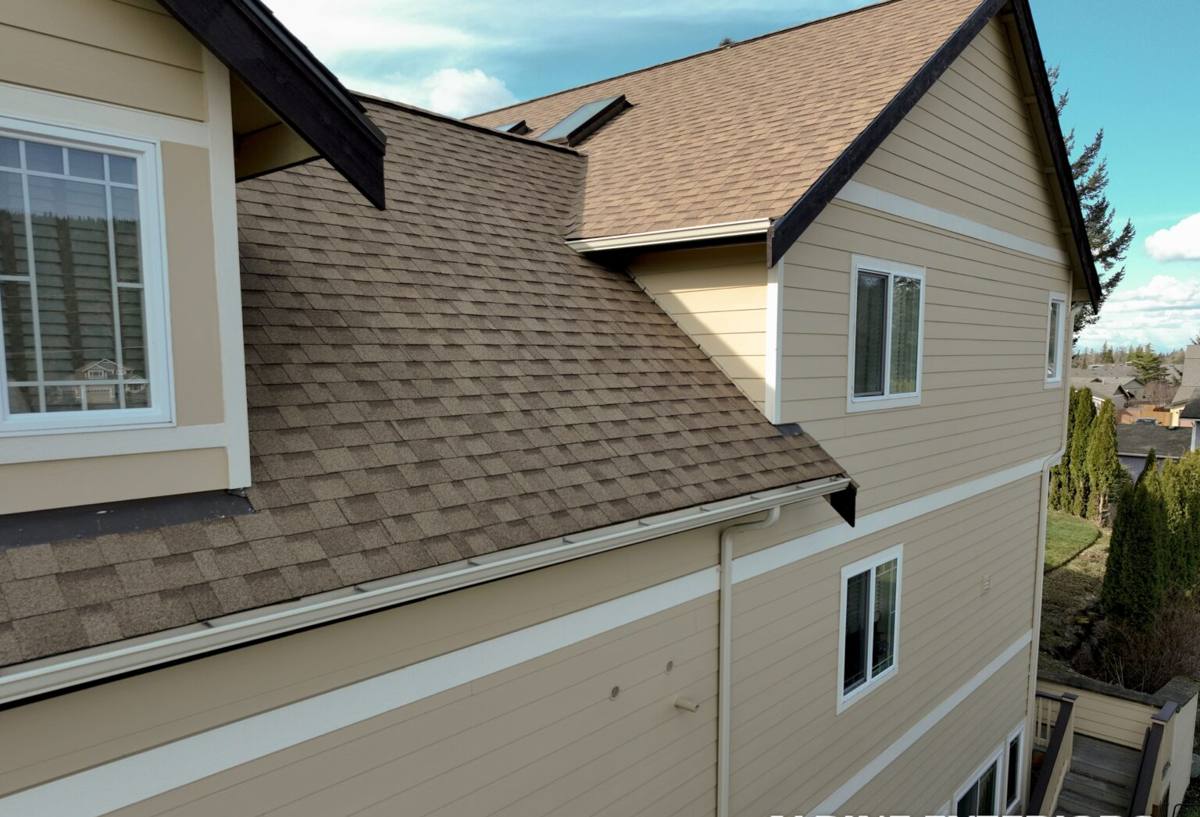
What Silver Beach's Climate Does to Windows
Bellingham sits in a marine climate zone, and Silver Beach gets the full effect of it. A few specific things happen here that homeowners further inland don't deal with to the same degree:
- Salt-laden air accelerates corrosion on aluminum frames, hardware, screws, and cheaper vinyl reinforcement — often from the outside in, so damage is hidden until it's advanced.
- Driving, wind-blown rain tests horizontal surfaces and sill design that would be fine in a climate with mostly straight-down rain. Flashing details and sill pitch matter more here than in most parts of the country.
- Moss and organic growth hold moisture directly against wood trim, sills, and lower frame sections for extended stretches, which is a slow but steady path to rot if surfaces aren't sealed and drained correctly.
- Persistent humidity keeps condensation and minor seal failures from drying out quickly, so small problems compound faster than they would in a drier region.
None of this means Silver Beach homes need exotic materials or extreme engineering. It means the ordinary parts of a window installation — flashing, sealant, sill pitch, drainage, fastener selection — have to be done correctly every time, because this climate has almost no tolerance for shortcuts.
Signs a Silver Beach Home Needs Window Replacement
Not every drafty window needs full replacement, but there are patterns we see consistently in this neighborhood that point to it being time:
- Fogging or a visible haze between panes of double-glazed units — the seal has failed and the gas fill is gone, which can't be repaired, only replaced.
- Soft or spongy wood at the sill or lower frame corners, especially on north- and west-facing windows that see the most driving rain.
- Visible corrosion or pitting on aluminum-framed windows, particularly on homes closer to open water or exposed hillside lots.
- Moss or dark staining building up on the sill or lower sash that keeps returning within weeks of cleaning it off.
- Windows that are difficult to open, don't latch fully, or let in a noticeable draft during winter storms.
- A jump in heating costs without any other explanation, which often points to failed seals or warped frames losing conditioned air.
If you're only seeing one or two of these on a single window, a repair or resealing may be enough. Widespread signs across multiple windows, especially on the weather-exposed sides of the house, usually mean it's more cost-effective to replace than to keep patching.
Full-Frame vs. Insert Replacement
One of the first decisions on any project is whether to do a full-frame (also called "new construction" style) replacement or an insert (pocket) replacement into the existing frame. Both are legitimate methods — the right choice depends on the condition of what's already there.
| Factor | Insert (Pocket) Replacement | Full-Frame Replacement |
|---|---|---|
| When it's appropriate | Existing frame is solid, square, and free of rot | Frame shows rot, water damage, or is out of square |
| Labor and disruption | Lower — works within existing opening and trim | Higher — removes trim, exposes wall framing |
| Glass area | Slightly reduced due to new frame nesting inside old one | Can match or improve original glass area |
| Access to hidden damage | Limited — problems behind the frame stay hidden | Full access to inspect and repair sheathing, flashing, framing |
| Best fit for Silver Beach | Homes with well-maintained, sound original frames | Homes with visible rot, staining, or long-term moisture exposure |
We don't default to one method across every job. Part of a correct estimate is opening things up enough to actually see what condition the frame and surrounding wall are in before recommending insert versus full-frame — guessing from the outside is how hidden rot gets sealed back up instead of fixed.
What a Correct Installation Actually Involves
The window unit itself is only part of the job. Most window failures we get called out to inspect in this area trace back to installation details, not the product. A correct job includes:
Removal and inspection
Careful removal of the old unit, then an honest look at the sill, king studs, and sheathing underneath for rot or prior water intrusion before anything new goes in. This is the point where problems get caught early instead of covered up.
Flashing and weather barrier integration
Proper flashing tied into the existing weather-resistant barrier so water is directed out and away from the wall assembly, not just caulked over the top. This is one of the most common places corners get cut, and it's the step that matters most in a climate with sustained driving rain.
Sill pan and drainage
A sloped or pan-style sill detail so any water that does get past the exterior cladding drains back out instead of pooling against the frame. This detail matters more in Whatcom County than in drier regions because the window gets more total exposure hours per year.
Air sealing and insulation
Low-expansion foam or backer rod and sealant around the perimeter to stop air infiltration without over-pressuring the frame, which can bow vinyl units and cause operational problems later.
Interior and exterior trim
Trim and caulking finished to shed water on the exterior and give a clean, sealed appearance on the interior — including matching existing trim profiles where the home has original woodwork worth preserving.
Choosing Materials for This Climate
Vinyl, fiberglass, and wood-clad windows are all viable in Silver Beach; the right choice depends on the home's style, budget, and how much long-term maintenance the homeowner wants to take on.
- Vinyl — the most common choice for straightforward replacements. Low maintenance, resists moisture well when properly installed, and performs consistently in this climate. Quality varies significantly between manufacturers, so frame thickness and reinforcement matter more than the vinyl label alone.
- Fiberglass — more dimensionally stable across temperature swings and holds paint well if you want a custom color. Higher upfront cost, but very low long-term maintenance in a wet climate.
- Wood-clad — the right call for older Silver Beach homes where matching original architectural character matters. Requires more maintenance attention on the exterior cladding and sill areas given the amount of moisture exposure here, so we're upfront with clients about that trade-off before they commit.
We don't push a single brand or material as the answer for every house. What we do insist on is verified glass performance — a low-E coating and gas fill suited to a marine climate — and hardware rated for coastal-adjacent conditions, since standard hardware corrodes faster here than in inland installations.
What Drives the Cost
Every Silver Beach project is priced individually, but the same handful of factors move the number up or down on almost every job:
| Cost Factor | Why It Matters |
|---|---|
| Insert vs. full-frame | Full-frame requires more labor, trim work, and often siding repair |
| Hidden rot or water damage | Sheathing or framing repair adds cost once the wall is opened up |
| Window size and configuration | Large picture windows, bays, and custom shapes cost more than standard sizes |
| Material | Vinyl is typically most affordable; fiberglass and wood-clad cost more upfront |
| Number of windows | Doing a full-house replacement in one project generally lowers the per-window cost versus one-off jobs |
| Trim and siding tie-in | Matching existing exterior trim or siding profiles takes more time than a simple swap |
We give a written, itemized estimate before any work starts, and if hidden damage turns up once a window is opened up, we stop and talk it through with the homeowner before proceeding — no surprise charges added after the fact.
How Our Process Works
1. On-site assessment
We walk the exterior and interior of every window being considered, checking for the signs of moisture damage described above and noting which are candidates for insert versus full-frame replacement.
2. Written estimate
A clear, itemized proposal covering material choice, installation method, and timeline — no vague allowances or bundled pricing that hides what you're actually paying for.
3. Scheduling around the weather
Window openings are exposed to the elements for the duration of the swap. We plan installation windows around Whatcom County's forecast rather than pushing through a job during an active storm system, which protects both the wall assembly and the new unit.
4. Installation
Removal, inspection, flashing, sill pan, air sealing, and trim — done to the standard described above on every unit, not just the ones that are easy to see.
5. Final walkthrough
We check operation, latch function, and the finished trim line with the homeowner before calling the job complete, and clean up the work area fully.
Why Local Experience in Silver Beach Matters
A crew that already works in this neighborhood knows what to expect before the first window is even opened up — the age range of the housing stock, the exposure patterns from prevailing weather, and the kinds of hidden moisture issues that show up more often here than in newer or more sheltered parts of Bellingham. That experience shows up in a few concrete ways: fewer surprises once a wall is opened, more accurate estimates from the start, and installation details — flashing, sill pans, sealant choice — that are dialed in for this specific climate rather than a national-average one. It also means someone is available and familiar with your home if a warranty question or minor adjustment comes up down the road, instead of a one-time crew that's moved on to a different region entirely.
After Installation: Keeping Windows Performing
New windows still need a small amount of ongoing attention in this climate to get their full lifespan:
- Rinse salt residue and organic buildup off exterior frames and sills a couple of times a year, especially after storm systems.
- Keep gutters and downspouts clear so roof runoff isn't dumping extra water directly onto window heads.
- Check exterior caulking annually for cracking or separation, and address small gaps before they become leaks.
- Trim back vegetation that's holding moss or moisture against the exterior wall near window openings.
- Operate every window a few times per season, even ones you don't use often, to keep hardware and weatherstripping working properly.
If you're weighing whether it's time to replace windows in your Silver Beach home, we're happy to take a look and give you a straight answer — including telling you if a repair is a better option than full replacement. Reach out for a free, no-pressure estimate using the form below.