 Bellingham Exterior
 Windows Built for South Hill's Weather, Not Just Its View
South Hill sits up on the slope overlooking Bellingham Bay, which means the homes here get two things at once: some of the best views in Whatcom County and some of the most punishing window exposure. Elevation and proximity to the water combine to push salt-laced air, wind-driven rain, and near-constant winter dampness straight at south- and west-facing glass. Add in the moss and algae season that runs long on the north side of most Bellingham lots, and a window that isn't detailed correctly will show its age fast — clouded glass, swollen sashes, and trim that stays damp long after the rain stops.
Custom windows done right in this neighborhood aren't just about picking a style you like. It's about matching the frame material, the flashing detail, and the installation sequence to what this specific microclimate does to a house year after year.
What "Custom" Actually Means Here
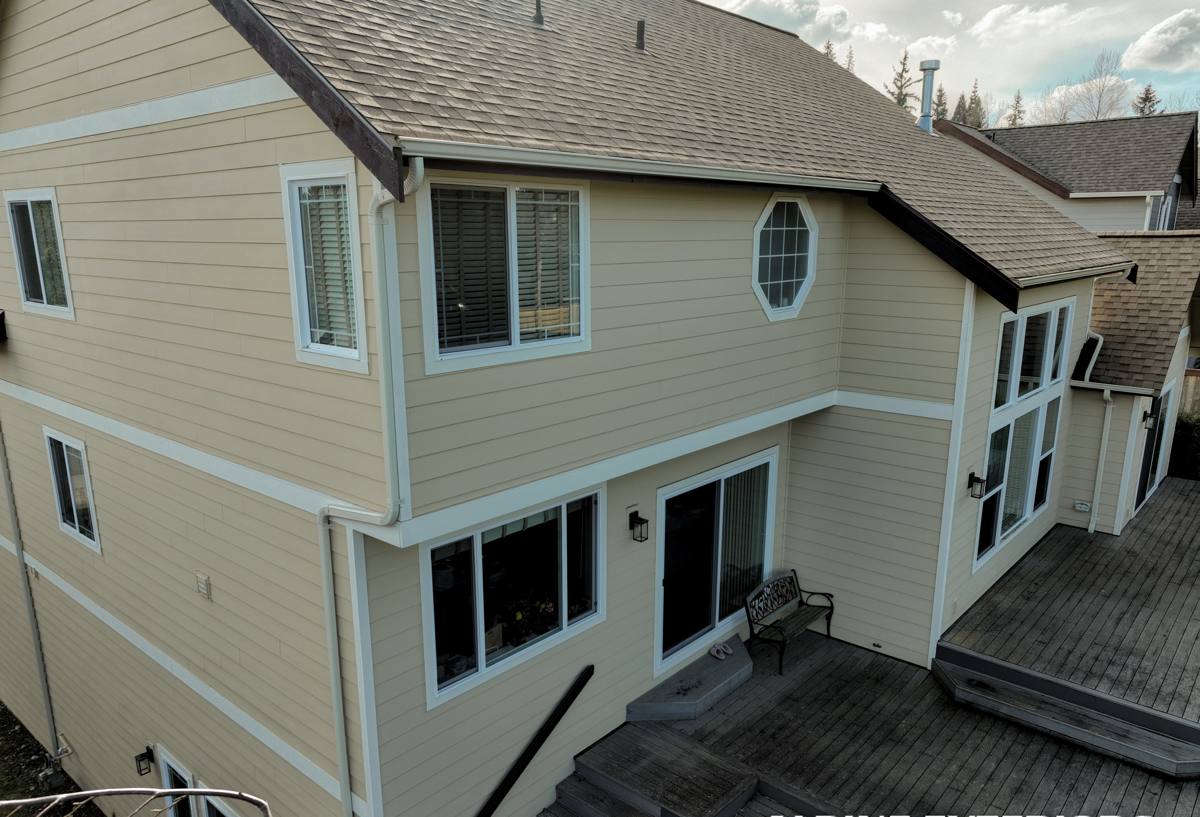
Custom windows means the units are made to fit your home's actual openings and architectural character, not pulled off a shelf in a handful of stock sizes. On South Hill that matters more than in a lot of neighborhoods because you've got a real mix of building stock — older homes with original openings that have settled or shifted slightly out of square, mid-century houses with non-standard sight lines, and newer construction where the goal is usually matching an existing aesthetic exactly. Custom sizing and shape options let us:
- Match odd or out-of-square openings without forcing a stock size into a hole it doesn't fit
- Preserve or recreate trim profiles and proportions on older homes
- Add specialty shapes (arched, picture, custom bay or bow configurations) where the view calls for it
- Upgrade glass and frame performance without changing the exterior look of the house
Why View-Facing Homes Need a Different Approach
A lot of South Hill homes are built to take advantage of the bay and mountain views, which usually means larger glass areas and more window per wall than a typical interior lot. Bigger glass units mean more surface area exposed to wind load and more linear feet of seal and flashing that has to perform. We size frame and glass packages to the actual wind exposure of the elevation, not just the opening dimensions — a west-facing picture window catching bay wind needs a heavier-duty frame and a different structural glass spec than a sheltered window on the same house.
The Climate Problems We're Actually Solving
Salt Air and Metal Fatigue
Salt-laden air off the bay accelerates corrosion on hardware, cranks, and any exposed fasteners. It also degrades certain finishes faster than the same product would wear inland. We spec hardware and frame finishes rated for coastal exposure on South Hill jobs, and we pay attention to where fasteners are placed so they're not sitting directly in the path of prevailing wind and moisture.
Driving Rain
Wind-driven rain doesn't just test the window — it tests the flashing and the wall assembly behind it. Most window failures we see in this area aren't the glass unit itself failing; they're water finding a path around a poorly flashed opening and rotting the framing behind the trim. Correct head flashing, proper sill pan drainage, and sealant installed in the right sequence (not just caulked over gaps as an afterthought) are what actually keep water out over the long run.
Moss, Algae, and Prolonged Dampness
Bellingham's moss season is long, and north-facing or shaded elevations on South Hill stay damp for extended stretches through fall, winter, and spring. That dampness works into any wood trim or sill that isn't properly sealed or that was installed with end grain exposed to weather. It also means vinyl and fiberglass frames need cladding and drainage details that shed water quickly rather than holding it against the frame.
Frame Material Comparison for This Location
| Material | Coastal/moisture performance | Maintenance | Best fit on South Hill |
|---|---|---|---|
| Vinyl | Good — won't rot or corrode; needs proper drainage detailing | Low | Value-focused replacements, rental or resale-flip projects |
| Fiberglass | Excellent — very stable in temperature swings and damp cycles | Low | View-facing walls with large glass, long-term ownership |
| Aluminum-clad wood | Good exterior protection with an interior wood look | Moderate | Homes prioritizing a traditional wood interior appearance |
| Solid wood | Requires diligent upkeep in this climate | High | Historic-character homes where authenticity matters most |
We don't push solid wood on exposed South Hill elevations as a default. It can look great and we'll install it when a homeowner wants that specific look and understands the upkeep, but on a bay-facing wall taking direct wind and rain, the maintenance burden is real — repainting and sealant checks need to happen on a schedule, not "whenever." For most South Hill homes we steer the conversation toward fiberglass or a quality clad option because they hold up with far less ongoing attention.
Glass Packages Worth Discussing
Standard double-pane glass is fine for a sheltered opening, but on a wind-exposed, view-facing wall we usually talk through a few upgrades:
- Triple-pane glass — better insulation value for west- and north-facing rooms that lose heat fast in winter wind
- Low-E coatings — cuts summer heat gain on south-facing glass without darkening the view
- Laminated glass — added durability against wind-driven debris on the most exposed elevations
- Argon or krypton gas fill — incremental insulation gain, worth it on larger units where the payoff scales with glass area
None of these are upsells for the sake of it — we'll tell you plainly if a given upgrade doesn't make sense for a particular opening's exposure.
Our Installation Process
- On-site assessment — we look at each opening's exposure (sun, wind, water path), the condition of the existing framing and sill, and any signs of past water intrusion before we quote anything
- Measurement and product selection — exact custom sizing, plus a frame and glass recommendation matched to that specific wall's conditions
- Removal and opening inspection — we don't just pull the old unit and drop in the new one; we check the framing underneath for rot or moisture damage while it's exposed
- Flashing and sill pan installation — correct water management details installed before the new window ever goes in, so it drains properly for the life of the window
- Window installation and shimming — set plumb, level, and square, with fasteners placed to manufacturer spec
- Sealing and finish work — sealant applied in the right locations (not everywhere, which can trap water) and exterior trim finished to match the home
- Walkthrough — we go over operation, drainage weep points, and basic care with the homeowner before we call it done
What Correct Flashing Looks Like
This is the step that separates a window installation that lasts twenty-plus years from one that causes a rot problem in five. The head flashing has to shed water out and away from the opening, the sill pan has to slope out with a clear path for any water that gets behind the frame, and the side flashing has to integrate with the home's existing weather-resistive barrier — not just get caulked to the surface of it. On a South Hill job, we treat this step as non-negotiable regardless of which window product is going in.
Signs Your South Hill Home's Windows Need Attention
- Fogging or moisture between panes (failed seal)
- Sashes that stick, don't latch fully, or feel loose in the frame
- Visible gaps, cracked caulk, or daylight around the frame
- Soft or discolored trim and sill wood, especially on north or west walls
- Noticeable draft or cold spot near the window in winter wind
- Persistent moss or algae staining on the sill or exterior trim
- Condensation on the interior glass during cold, damp stretches
If you're seeing more than one of these on the same window, it's usually a sign the seal or flashing has already failed, not just a cosmetic issue.
Why Local Installation Experience Matters
Window products themselves are largely the same whether they're installed in Bellingham or somewhere with a mild, dry climate. What differs is the installation detailing needed to make that product perform for years against Whatcom County's rain totals and coastal exposure. A crew that regularly works South Hill and similar bay-exposed neighborhoods already knows which elevations take the worst weather, how the local building stock tends to be framed, and where past installations in this area typically fail. That experience shows up in the small decisions — where flashing overlaps, how much reveal is left for drainage, which openings need extra attention — that a generic installation approach can miss.
We also stand behind our own workmanship on top of manufacturer warranties, so if something about the installation itself needs attention down the road, you're not stuck trying to sort out whose responsibility it is.
If you're weighing a window project for your South Hill home, we're glad to come take a look and give you a straight assessment — no pressure, no hard sell, just an honest read on what your home's exposure actually calls for. Use the form below to request a free estimate.