 Bellingham Exterior
 South Hill's Roofs Work Harder Than Most People Realize
South Hill sits up on the slope above downtown Bellingham, which means homes here get a mix of exposure that flatter neighborhoods don't deal with as much. You've got open views toward Bellingham Bay, which is great for the porch but means more direct salt-laden air hitting metal fasteners, flashing, and shingle granules over time. You've got mature tree cover on many of the older lots, which is beautiful but drops needles and debris into valleys and gutters all year. And you've got the standard Whatcom County weather pattern — long stretches of driving rain from fall through spring, followed by a cool, damp shoulder season that's basically an incubator for moss and algae on any roof that doesn't shed water and dry out efficiently.
None of that is unusual for this part of Washington. But it does mean a roof installed for South Hill needs to be installed with those specific conditions in mind, not just built to a generic code minimum. A roofing crew that treats every job the same way, regardless of elevation, tree cover, or exposure, tends to leave South Hill homeowners with the same moss stains and premature wear that got them calling in the first place.
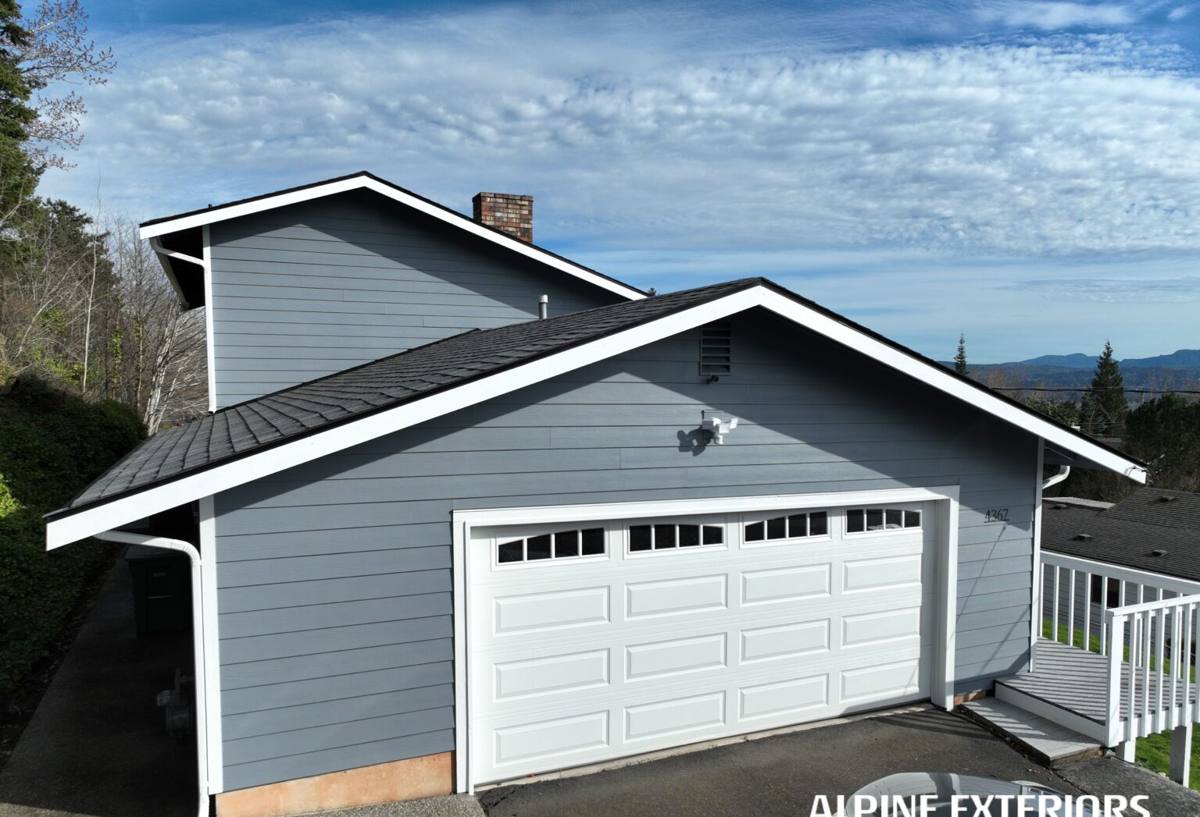
Signs a South Hill Home Needs a New Roof — Not Another Patch
A lot of homeowners call us after their third or fourth repair in a few years. That's usually the point where it makes more sense to talk about full replacement instead of continuing to chase leaks. Some signs worth paying attention to:
- Granule loss showing up in gutters or at the base of downspouts, especially on a roof over 15-20 years old
- Moss that keeps coming back within a season or two of cleaning, particularly on north-facing slopes shaded by trees
- Curling, cupping, or cracked shingles, especially on the sections that catch the most wind off the bay
- Soft spots or sagging in the decking, which usually means moisture has already gotten past the shingle layer
- Daylight visible through the attic sheathing, or water stains on interior ceilings after heavy rain
- Rising energy bills tied to poor attic ventilation, which often goes hand-in-hand with an aging roof system
Any one of these on its own might be a repair. Two or three together, especially on a roof that's already past its expected service life, usually means replacement is the more honest recommendation — and the more cost-effective one over the next decade.
What a Correct New Roof Installation Actually Involves
"New roof" gets used loosely. A correct installation is a specific sequence, and skipping steps is where most premature failures come from — especially in a climate that gives moisture this many chances to find a weak point.
Tear-Off and Decking Inspection
We don't install over an existing roof. A full tear-off lets us actually see the decking underneath, which is the only way to know whether it's still sound or whether sections have gone soft from years of slow moisture intrusion. Any compromised sheathing gets replaced before anything else goes down — installing new shingles over bad decking just hides a problem that will resurface.
Underlayment and Ice-and-Water Protection
Given how much rain this area sees, underlayment isn't a place to cut corners. We use synthetic underlayment across the full roof deck and add self-adhering ice-and-water membrane at the vulnerable points — eaves, valleys, and around any penetration — where wind-driven rain is most likely to work its way underneath the shingle layer.
Flashing Details
Flashing around chimneys, skylights, sidewalls, and valleys is where the majority of roof leaks actually originate, not in the open field of shingles. We install new flashing rather than reusing old pieces, and we pay particular attention to step flashing at sidewalls and valley construction, since these are the spots that take the brunt of driving rain coming off the water.
Ventilation
A roof system that doesn't breathe traps moisture in the attic, which shortens the life of the decking from underneath and contributes to ice damming risk during cold snaps. We check intake and exhaust ventilation as part of every installation and correct it where it's inadequate — this is one of the most commonly skipped steps on older South Hill homes.
Material Options for South Hill Homes
There's no single "best" material — it depends on your budget, your roof's slope and exposure, and how much moss and moisture resistance you want to prioritize. Here's an honest comparison of the main options we install:
| Material | Typical Lifespan | Moss/Moisture Resistance | Notes for South Hill |
|---|---|---|---|
| Architectural asphalt shingle | 25-30 years | Good, especially with algae-resistant granules | Best balance of cost and performance for most homes here |
| Standing seam metal | 40-50+ years | Excellent — sheds moisture fast, minimal moss growth | Higher upfront cost, strong long-term value on shaded or steep-pitched roofs |
| Synthetic/composite shingle | 30-40 years | Good | Good option where wood-shake appearance is wanted without the maintenance burden |
| Cedar shake | 20-30 years with upkeep | Requires regular maintenance to resist moss in wet, shaded conditions | Can work on well-ventilated, sun-exposed roofs; we're honest that shaded South Hill lots make upkeep demanding |
For homes with heavy tree cover or north-facing slopes that stay damp longer, we'll usually steer the conversation toward asphalt with algae-resistant granules or metal, simply because they hold up with less ongoing maintenance. That's a professional recommendation based on moisture behavior, not a knock on any manufacturer's product.
Our Process, Start to Finish
- Free on-site estimate. We walk the roof (or use a drone where access is limited), check the decking condition from the attic side where possible, and measure for an accurate material quote.
- Written estimate with material options. You get a clear breakdown of scope, materials, and price — no vague allowances.
- Scheduling around the weather. Given how much rain this region gets, we plan install windows carefully and keep the roof protected if conditions shift mid-job.
- Tear-off, decking repair, and installation. Full removal, inspection, and a properly sequenced install of underlayment, flashing, and roofing material.
- Site cleanup and magnetic sweep. We clear debris and sweep for nails and fasteners before we consider the job done.
- Final walkthrough. We go over the finished roof with you, including any ventilation or gutter recommendations that came up during the tear-off.
Cost Factors Worth Understanding
Roof replacement pricing varies a lot based on the specifics of the home, so we don't publish blanket prices — but these are the main factors that move the number up or down:
| Factor | How It Affects Cost |
|---|---|
| Roof size and number of facets | More square footage and more valleys/hips mean more material and labor time |
| Pitch and access | Steep roofs or limited access (tight lots, tall trees) require more safety setup and time |
| Decking condition | Rotted or soft sheathing found during tear-off adds material and labor to replace it |
| Material choice | Asphalt is the most budget-friendly; metal and premium shingle lines cost more upfront but last longer |
| Ventilation or flashing corrections | Bringing an older roof system up to proper standards adds modest cost but prevents future problems |
We'll walk through all of this during the estimate so there are no surprises once the tear-off starts.
Why a Crew That Already Works South Hill Matters
Roofing crews that work all over Whatcom County develop a feel for how a given neighborhood's exposure and tree cover behave over a full year, not just on the day of installation. That matters here — knowing which slopes on South Hill tend to hold moss longest, how driving rain off the bay hits certain roof orientations, and what decking condition tends to look like on homes of a certain age in this area all shape how we approach flashing details, ventilation, and material recommendations. It's the difference between a roof that's technically installed to code and one that's installed to actually perform in this specific setting for the next several decades.
Local crews are also easier to reach if a question comes up after the job — during the next big rain event, for instance, when you want a second opinion on whether that sound in the attic is normal.
Keeping a New Roof Performing Long-Term
A correctly installed roof still needs some basic upkeep, especially in a climate this wet. A short annual checklist goes a long way:
- Clear gutters and valleys of needles and debris at least twice a year, more often under heavy tree cover
- Have moss growth treated early — waiting until it's thick makes removal more disruptive to the shingle surface
- Check attic ventilation isn't blocked by insulation or storage
- After major windstorms, do a quick visual check for lifted or missing shingles
- Address any small leak signs immediately rather than waiting for the next dry season
A well-installed roof with reasonable maintenance should outperform its rated lifespan in most cases. A poorly installed one, even with expensive materials, tends to show problems well ahead of schedule.
If your South Hill roof is showing its age or you're planning ahead of a sale, we're happy to take a look and give you a straightforward, no-pressure estimate — just fill out the form below.