 Bellingham Exterior
 Storm Damage Roofing on South Hill: What Makes This Neighborhood Different
South Hill sits up above downtown Bellingham, which means homes here catch weather that lower parts of the city sometimes don't feel as hard. The elevation gives South Hill some of the best views in Whatcom County, but it also means more direct exposure to wind gusts coming off Bellingham Bay and the Strait of Georgia. When a winter storm rolls through, roofs on South Hill often take the brunt of it before the wind loses steam over the flatter neighborhoods below.
That exposure, combined with the mature tree cover common on South Hill's older lots, creates a specific pattern of roof damage: wind-lifted shingles along ridge lines and exposed slopes, branch strikes on roofs shaded by big conifers, and moss and moisture problems that build up quietly over our long wet season. A roof repair here has to account for all three, not just patch whatever's leaking today.
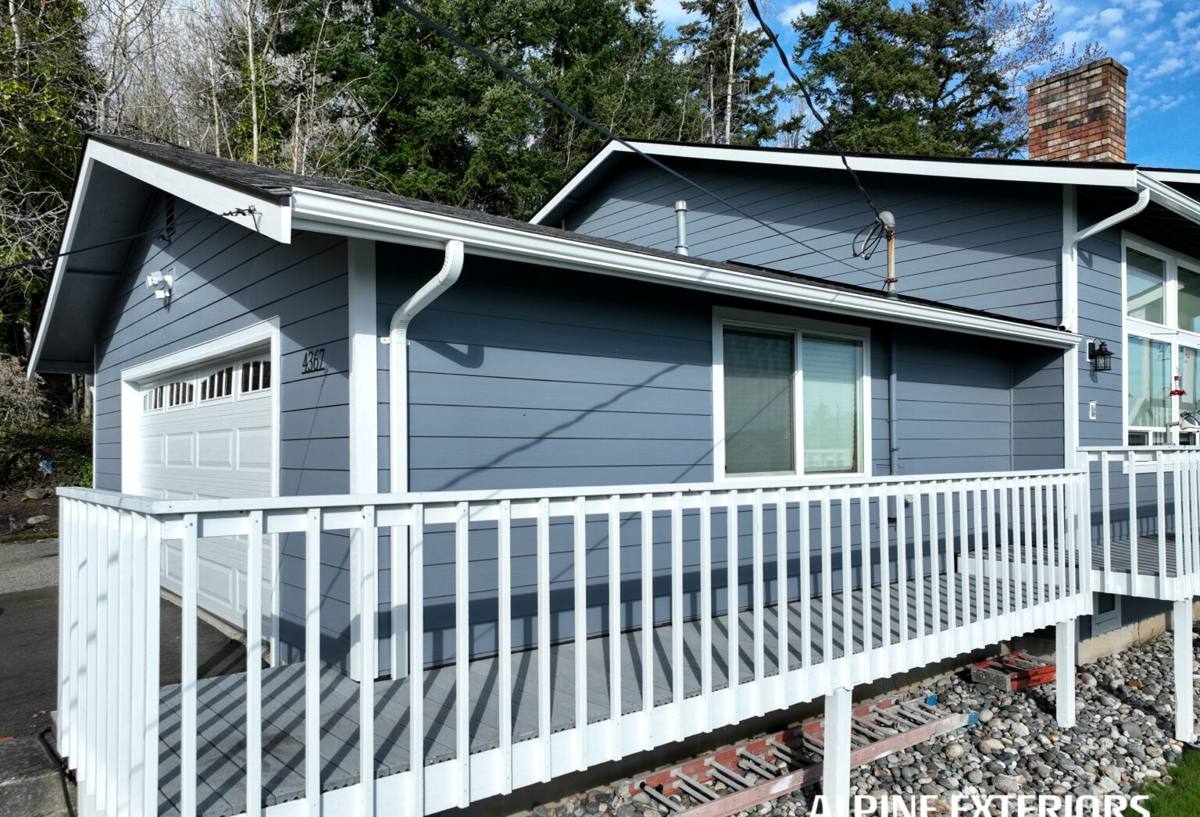
How Bellingham's Climate Wears Down a South Hill Roof
Three things do most of the damage to roofs in this part of Whatcom County, and they rarely act alone.
Salt Air
Being close to Bellingham Bay means a steady low-level exposure to salt-laden air, especially on south and west-facing slopes that catch the wind directly. Salt air accelerates corrosion on exposed metal — flashing, fasteners, gutter hardware, and any exposed nail heads. Once corrosion starts at a fastener, it creates a small path for water to follow, and that's often how a slow leak begins long before anyone notices a stain on the ceiling.
Driving Rain
Bellingham doesn't just get rain, it gets rain pushed sideways by wind during winter storms. Driving rain finds every weak point in a roofing system: lifted shingle tabs, undersized or improperly lapped flashing, and gaps around vents and chimneys that would never leak in a calm, straight-down rain. South Hill's elevation and open exposure make wind-driven rain a bigger factor here than in more sheltered parts of the city.
Moss Season
Our moss season isn't really a season anymore — on shaded, north-facing roof slopes in South Hill's tree-covered lots, moss can grow nearly year-round. Moss holds moisture directly against the roofing material, works its way under shingle tabs as it grows, and physically lifts the edges as its root structure spreads. A roof that looks fine from the ground can have moss doing real damage on the back slope that nobody sees until a leak shows up inside.
Signs Your South Hill Roof Has Storm Damage
Some damage is obvious right after a windstorm. Other damage takes weeks or months to show itself. Homeowners on South Hill should watch for both.
- Shingles or shingle tabs missing, curled, or lying in the yard after a windstorm
- Granules collecting in gutters or at downspout outlets — a sign of shingle wear or impact damage
- Dented or creased metal flashing around chimneys, skylights, or roof valleys
- New or spreading moss patches, especially on shaded north- and east-facing slopes
- Water stains on interior ceilings or upper-floor walls after a heavy rain
- Sagging or soft-feeling spots when walking the attic (never the roof itself) after a storm
- Debris, broken branches, or visible punctures on the roof surface after high wind
- Gutters pulling away from the fascia or overflowing during normal rainfall
What a Correct Storm Damage Repair Actually Involves
A lot of storm repair work in this region gets done as a quick patch — a few shingles swapped, a bead of sealant over a gap, done. That approach might stop a leak for a season, but it rarely addresses why the damage happened in the first place, which on South Hill is almost always some combination of wind exposure, moss, and aging flashing.
1. Full Roof Assessment, Not Just the Leak Point
Water doesn't always leak in from where it enters the roof. It can travel along the underlayment or roof deck before dripping through in a completely different spot inside the house. A correct repair starts with checking the whole roof plane, not just the ceiling stain's location — including slopes you can't see from the driveway.
2. Matching the Repair to the Existing Roofing System
Whether your roof is asphalt composition shingle, cedar shake, or metal, a storm repair needs to use compatible materials and match the existing pattern, fastening method, and flashing details. A mismatched patch is often where the next leak starts.
3. Flashing and Fastener Inspection
Given how much salt-air corrosion affects exposed metal on South Hill roofs, any storm repair should include a close look at flashing around penetrations — chimneys, vents, skylights — and the fasteners holding shingles or panels down. Corroded or loosened flashing is a common repeat-leak cause even after the visible shingle damage is fixed.
4. Moss and Debris Clearing Before Repair
Repairing over active moss growth or built-up debris just traps the moisture problem under new material. A proper repair clears the area first so the new work isn't sitting on top of the thing that caused the damage.
5. Gutter and Drainage Check
Storm damage repair isn't just about the roof surface. If gutters are clogged, sagging, or pulling away, water backs up against the roof edge and undoes the repair from below. We check drainage as part of the job, not as an afterthought.
Our Process for South Hill Storm Repairs
- Inspection. We walk the roof (or use appropriate access equipment for steep or high sections) and document the damage, its likely cause, and any secondary issues like moss or flashing wear.
- Honest scope and estimate. We tell you what actually needs repair versus what can wait, and give you a clear, itemized estimate before any work starts.
- Repair. We match materials to your existing roof, address the root cause — not just the visible damage — and reseal or re-flash any compromised points.
- Cleanup and check. We clear debris and moss from the work area and check nearby gutters and drainage so water moves off the roof the way it's supposed to.
- Documentation for insurance. If you're filing a storm damage claim, we provide clear documentation of what we found and repaired, in a format insurers expect.
Repair vs. Replacement: How to Tell Which You Need
Not every storm-damaged roof needs full replacement, but not every roof should be patched indefinitely either. The table below covers the general factors that push a decision one way or the other — your actual roof needs an in-person look before either recommendation makes sense.
| Factor | Leans Toward Repair | Leans Toward Replacement |
|---|---|---|
| Age of roofing material | Under roughly 12-15 years | Near or past manufacturer's rated lifespan |
| Extent of damage | Localized to one slope or area | Spread across multiple slopes or the whole roof |
| Moss and moisture history | Recently treated, isolated patches | Long-term moss growth with deck-level moisture damage |
| Underlying deck condition | Solid, no soft spots | Soft, spongy, or visibly rotted decking |
| Frequency of past repairs | First or second repair in several years | Repeated repairs to the same area |
Why a Crew That Already Works South Hill Makes a Difference
South Hill's mix of steep driveways, mature trees, and varied roof pitches means access and safety planning matter as much as roofing know-how. A crew that regularly works this neighborhood already knows how to stage equipment on tight lots, work safely around established landscaping, and account for the specific wind and moss patterns that show up on this side of Bellingham versus, say, a flatter subdivision closer to the water.
Local experience also means faster, more accurate estimates. We're not guessing at how Whatcom County's rain and wind patterns affect a given roof orientation — we see it repeatedly, on real South Hill homes, storm after storm.
Insurance and Storm Damage Claims
Many South Hill homeowners deal with storm damage through a homeowner's insurance claim rather than paying out of pocket, especially after a significant wind event. We're glad to document damage clearly — photos, notes on cause, and a written scope of repair — in a format that's useful for a claims adjuster. We don't handle the claim itself or promise a particular payout; that's between you and your insurer. What we can guarantee is an honest, accurate account of what the storm actually did to your roof.
Maintenance That Reduces Future Storm Damage
Some storm damage is unavoidable — you can't stop a Whatcom County windstorm. But regular maintenance measurably reduces how much damage a given storm does to your roof.
- Keep gutters and downspouts clear so water doesn't back up under roof edges during heavy rain
- Have moss treated and removed on a regular schedule, especially on shaded north-facing slopes
- Trim back tree limbs that overhang the roof, reducing both moss shading and branch-strike risk
- Have flashing and fasteners checked periodically for salt-air corrosion, particularly on west- and south-exposed slopes
- Get a roof inspection after any significant wind event, even if nothing looks wrong from the ground
If a recent storm has left your South Hill roof looking questionable, or you just want a second opinion before it becomes a bigger problem, we're happy to take a look. Reach out for a free, no-pressure estimate using the form below.