 Bellingham Exterior
 Window Installation Built for York's Coastal Climate
Homes in York don't deal with the same weather as homes further inland. Sitting close to Bellingham Bay and the broader Salish Sea, this part of Whatcom County gets a steady diet of salt-laden air, wind-driven rain that hits windows at an angle instead of straight down, and a long stretch of the year where everything north-facing stays damp enough to grow moss. Windows are one of the first places that combination shows up as a problem — swollen sashes, fogged glass, soft trim, and drafts that weren't there a few years ago.
Window installation done right in this environment isn't just about picking a good window. It's about how that window gets sealed, flashed, and tied into the wall around it so water has nowhere to go but back outside. That's the part that separates a window that lasts twenty-plus years from one that starts leaking within a few winters.
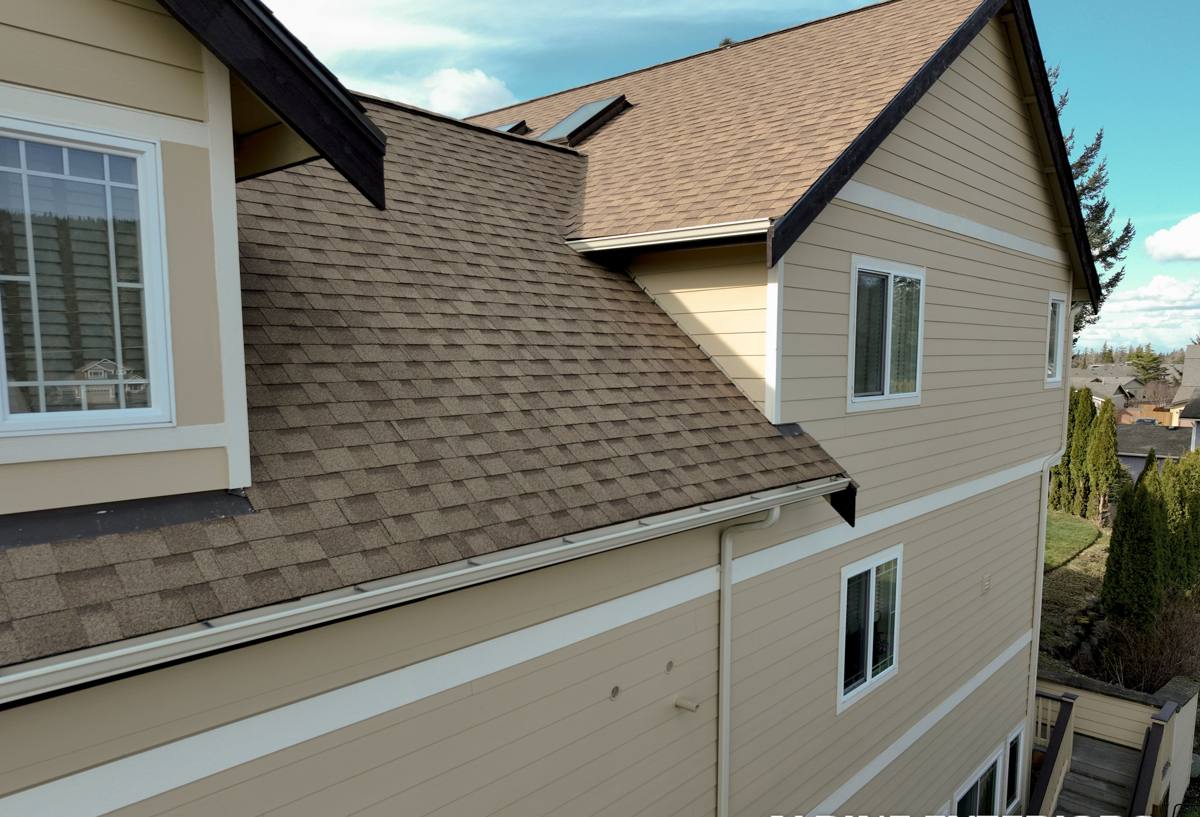
Signs a York Home Needs New Windows
Older wood or aluminum-frame windows are common in established Bellingham neighborhoods, and plenty of them are still doing their job. Others are quietly failing behind the trim. Here's what we look for during an assessment:
- Fogging or a milky haze between the panes of a double-pane window (the seal has failed and the gas fill is gone)
- Sashes that stick, won't stay open, or feel swollen — usually a sign of moisture getting into the frame
- Soft or spongy wood at the sill or lower corners when pressed with a thumb
- Visible daylight or a noticeable draft around the frame on a windy day
- Paint that bubbles or peels specifically around the window, even when the rest of the siding looks fine
- Moss or dark streaking building up on the sill or bottom corners faster than on the rest of the exterior
- A noticeable jump in heating costs without any other obvious cause
Any one of these on its own might not mean much. Two or three together, especially on the same window, usually means moisture has already gotten past the original flashing.
What a Correct Installation Actually Involves
Flashing and Weather Barrier Integration
This is the step that matters most in a climate like ours and the one that's easiest to shortcut. The window has to be flashed so that any water reaching the wall — whether from driving rain or condensation — sheds down and out, never behind the housewrap or siding. That means flashing tape or metal flashing at the sill, sides, and head, installed in the correct shingle-lap order (bottom first, then sides, then top) so each layer overlaps the one below it. Skip this order, or use the wrong material against the wrong siding type, and you've built in a leak that won't show up for a year or two.
Air Sealing Without Trapping Moisture
A tight window should stop drafts without turning the wall cavity into a place where moisture gets trapped. We use low-expansion foam or backer rod and sealant around the frame rather than packing the gap solid, and we make sure the weep holes in the window's own frame stay clear so any water that does get in can drain back out.
Proper Fastening and Leveling
A window that's slightly out of square will bind, won't lock tightly, and puts uneven stress on the seals over time. Shimming the frame level and plumb before fastening, and fastening through the manufacturer's specified points rather than wherever's convenient, keeps the window operating smoothly and keeps its own weatherstripping sealing the way it's designed to.
Interior and Exterior Sealant
Exterior sealant needs to be rated for the movement and moisture exposure it'll see; interior sealant is more about air sealing and finish. Using the same caulk for both is a common shortcut that fails early — exterior beads worked hardest by our wet winters are usually the first thing to crack.
Choosing Materials for a Salt Air, High-Moisture Climate
There's no single "best" window material — the right choice depends on the home's age, budget, and how exposed it is to wind and salt air. Here's how the common options compare for a York-area home:
| Material | Moisture & Salt Air Resistance | Maintenance | Typical Lifespan |
|---|---|---|---|
| Vinyl | Good — won't rot or corrode, but very dark colors can warp in direct afternoon sun | Low — occasional cleaning | 20–30 years |
| Fiberglass | Very good — dimensionally stable, holds paint well, resists salt corrosion | Low | 30+ years |
| Wood (clad exterior) | Good on the exterior; interior wood still needs protection from condensation | Moderate — exterior clad reduces upkeep vs. solid wood | 20–40 years with maintenance |
| Aluminum | Fair — prone to corrosion near salt air unless properly coated, and conducts cold | Moderate | 15–25 years |
For homes within a mile or so of the bay, we generally steer clients away from bare or mill-finish aluminum unless it's a high-quality coated commercial-grade product, simply because standard aluminum frames corrode faster in salt-influenced air. Vinyl and fiberglass tend to be the more forgiving, lower-maintenance choices for this specific stretch of coastline, though a well-maintained wood-clad window still has a place on homes where the look matters most.
Glass Packages That Make Sense for Bellingham Winters
Double-pane, low-E glass with argon fill is the baseline we'd recommend for most York homes — it handles our mild-but-damp winters well and keeps interior surfaces warmer, which cuts down on the condensation that feeds mold and mildew on sills and trim. Triple-pane is worth the added cost mainly for north-facing rooms, homes right along the water with more wind exposure, or anyone prioritizing sound reduction from nearby traffic. It's not a requirement everywhere, but it's a reasonable upgrade where the extra performance will actually get used.
Our Installation Process
1. On-Site Assessment
We look at the existing windows, the condition of the framing and sill behind them where visible, and the exposure each side of the house gets to wind and rain. This tells us whether we're dealing with a straightforward retrofit or a situation where some rot repair needs to happen first.
2. Accurate Measurement and Ordering
Windows are measured for the specific opening, not assumed to match a standard size — older homes especially tend to have openings that have shifted slightly over the decades.
3. Careful Removal
Old windows come out with attention to the surrounding wall material, so we're not tearing up more siding or trim than necessary and can properly inspect the sheathing underneath before anything new goes in.
4. Correcting Anything We Find
If there's soft sheathing, failed old flashing, or moisture damage behind the window, we address it before installing the new unit. Installing a new window over a damaged wall just hides the problem.
5. Flashing, Setting, and Sealing
The new window is set level and plumb, flashed in the correct order, fastened per manufacturer specs, and sealed inside and out with the appropriate materials for each side.
6. Final Check and Cleanup
We test operation, check the seal, and clean up the work area before calling the job done.
What Affects the Cost of a Window Installation
| Factor | Why It Matters |
|---|---|
| Number and size of windows | Larger openings and full-house projects have more material and labor per unit, though per-window cost often drops with volume |
| Retrofit vs. full-frame replacement | Retrofit reuses the existing frame where it's sound; full-frame replaces it entirely and is needed when there's rot or the frame is out of square |
| Material (vinyl, fiberglass, wood-clad) | Material cost and expected lifespan vary significantly, as shown above |
| Glass package | Double-pane low-E vs. triple-pane, plus any tempered glass required by code near doors or low sills |
| Condition of the existing wall | Hidden rot or old flashing failures add repair time that's hard to quote until the old window is out |
| Access and site conditions | Second-story windows, tight side yards, or landscaping close to the house can add labor time |
Because so much depends on what's found once the old window comes out, we'd rather give an honest range after seeing the home than a number over the phone that's likely to change.
Why a Crew That Already Works in York Matters
Every neighborhood in Bellingham has its own quirks — how homes were built in that era, which direction the prevailing weather hits from, how much tree cover shades the roofline and keeps moss pressure high. A crew that's worked on multiple homes in York already has a feel for what tends to be behind the siding before the first window comes out, which means fewer surprises and a more accurate estimate up front. It also means someone who understands that a rushed job on a house exposed to Whatcom County's wet season doesn't just look bad — it fails faster and costs more to fix later.
Keeping New Windows Performing Through Moss Season
A correctly installed window doesn't need much upkeep, but a little attention goes a long way in this climate:
- Clear debris and moss from window sills and tracks a couple of times a year, especially on north- and west-facing windows
- Check exterior caulk lines annually for cracking or separation and have gaps resealed before they let water in
- Keep gutters and downspouts clear so water isn't sheeting down across window heads
- Wipe down frames near the coast periodically to reduce salt residue buildup
- Watch for condensation between panes — it's the clearest sign a seal has failed and the window needs attention
If you're noticing drafts, fogged glass, or sticking sashes on a York home, we're happy to take a look and give you a straightforward, no-pressure estimate — just fill out the form below and we'll get in touch.