 Bellingham Exterior
 Cordata's Roofs Work Harder Than People Realize
Cordata sits in north Bellingham, close enough to Bellingham Bay that salt-laden air is a constant, and far enough inland that tree cover and shade keep roofs damp long after a storm has passed. That combination — salt air, driving rain off the Strait, and a moss season that can stretch from October into May — is tough on asphalt shingles in ways that don't show up on a sunny day walk-around. A roof that looks fine from the driveway can already have soft decking, corroding fasteners, or moss lifting shingle tabs at the eaves.
We work on homes in Cordata regularly, and the failure patterns we see are consistent: granule loss on north-facing slopes that never fully dry out, rusted valley flashing, and moss colonies that start small and spread until they're prying shingles apart at the seams. None of that is unusual for Whatcom County. It's just what asphalt shingle roofing has to be built to handle here, and it's why a roof installed the same way you'd install one in a dry climate tends to underperform in Cordata.
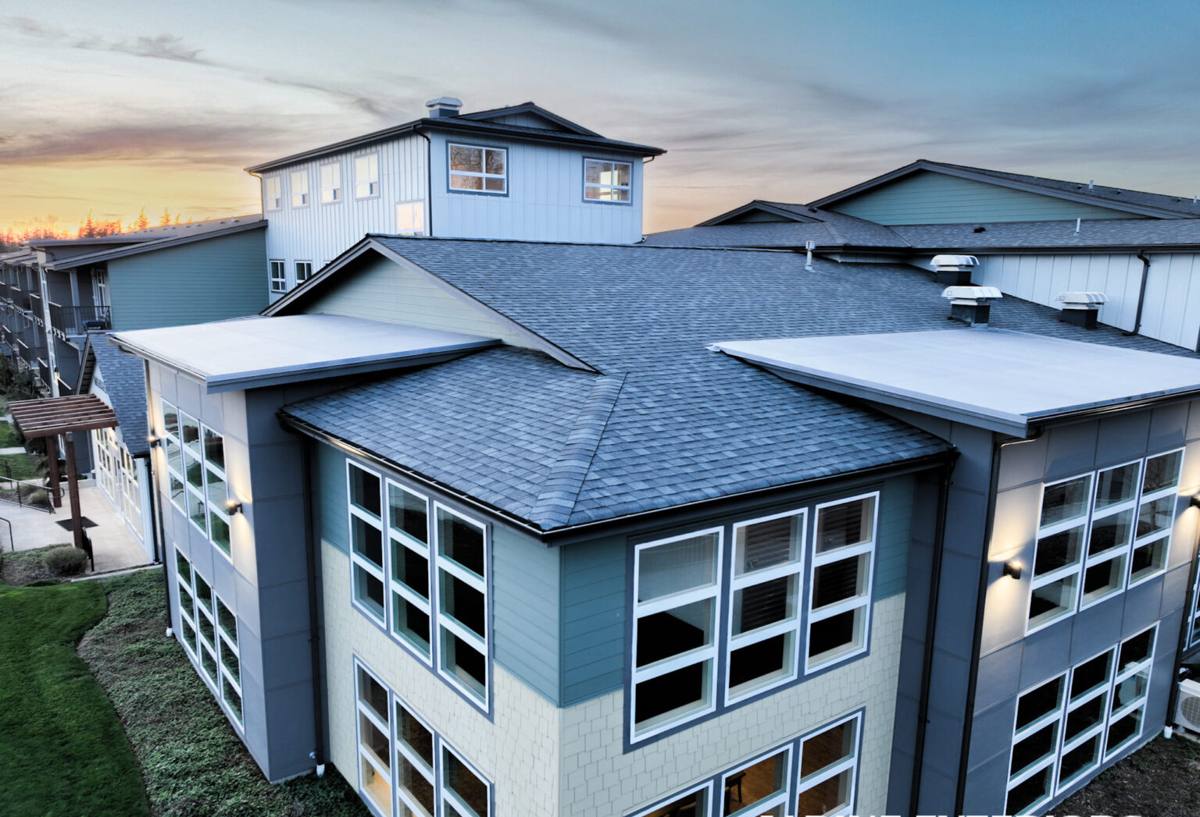
What We're Actually Working With in This Neighborhood
Cordata's housing stock is a mix — some older homes from before the area saw heavier development, and a lot of newer construction from the last two to three decades. That mix matters for roofing because older homes more often have original decking and older flashing details that were never upgraded, while newer homes sometimes have builder-grade shingles installed to a minimum spec rather than a climate-appropriate one. Roof pitches and tree coverage vary block to block too, which changes how much sun a roof gets and how fast it dries after rain.
Before we quote anything, we look at the actual roof in front of us — pitch, shade exposure, existing ventilation, and how many layers are already up there — rather than assuming one answer fits every house in the neighborhood.
What a Correct Asphalt Shingle Job Involves Here
Asphalt shingle roofing looks like a simple product installed in a simple way, but the details that hold up in a marine climate are specific. A correct install in Cordata isn't just "shingles nailed to a deck" — it's a system where the underlayment, flashing, and ventilation are all doing their part to manage moisture that a drier climate would never test.
Underlayment and Water-Entry Points
We install ice-and-water shield at eaves, valleys, and around any roof penetration — skylights, vent stacks, chimneys — because those are the spots where driving rain gets pushed uphill under shingles by wind instead of running off. Synthetic underlayment covers the rest of the field. This isn't optional upgrade territory in this climate; it's the baseline that keeps a normal winter storm from becoming a ceiling stain.
Shingle Selection for Coastal Moisture
We steer homeowners toward algae-resistant, architectural-grade shingles rather than basic 3-tab in most Cordata applications. The copper or zinc granules blended into algae-resistant shingles slow the black streaking that shows up fast on shaded, damp roofs near the coast. It's a modest cost difference upfront that pays for itself in appearance and shingle life — we'll walk you through the actual options rather than pushing one brand, because the right call depends on your roof's shade and slope.
Ventilation and Moisture Control
A hot, poorly vented attic in summer and a cold, damp one in winter both shorten shingle life from underneath — a failure mode that has nothing to do with the shingles themselves and everything to do with airflow. We check intake (soffit vents) and exhaust (ridge or box vents) as part of every inspection and correct imbalances during the tear-off, since it's far cheaper to fix while the roof is already open than to add later.
Flashing and Fasteners
Salt air corrodes lower-grade metal faster than homeowners expect, especially at valleys and chimney flashing. We use corrosion-resistant flashing and fasteners rated for coastal exposure, not because code requires the upgrade everywhere, but because we've seen what standard-grade metal looks like after a decade of Bellingham Bay air.
Our Process, Start to Finish
We keep the process straightforward and don't skip steps to save a day of labor:
- Inspection and honest assessment — we get on the roof (not just a ground-level look) and check decking, flashing, ventilation, and moss damage before recommending repair or replacement.
- Written estimate — clear scope, materials, and price before any work starts. No surprise change orders for things we should have caught up front.
- Tear-off and deck inspection — old shingles come off completely so we can see the actual decking condition. Soft or rotted sheathing gets replaced, not covered up.
- Underlayment, flashing, and ventilation correction — installed to the standard described above, not the minimum.
- Shingle installation — proper nailing pattern and exposure per manufacturer spec, which matters for both wind resistance and warranty validity.
- Cleanup and magnetic sweep — yard and driveway cleared of debris and stray fasteners.
- Final walkthrough — we show you the finished roof and answer questions before calling the job done.
What Drives Cost on a Cordata Roof
Every roof is priced individually, but the factors that move the number are consistent. Here's what we're actually weighing:
| Factor | Why It Matters | Typical Impact |
|---|---|---|
| Roof pitch and complexity | Steeper roofs and more valleys/dormers take longer and need more safety setup | Moderate to significant |
| Number of existing layers | Tear-off of multiple old layers costs more in labor and disposal | Moderate |
| Decking condition | Soft or rotted sheathing found at tear-off requires replacement | Variable — depends on damage found |
| Shingle grade chosen | Basic 3-tab vs. architectural algae-resistant shingles | Moderate, offset by longer service life |
| Ventilation corrections | Adding or rebalancing intake/exhaust vents during tear-off | Small to moderate |
| Moss and organic buildup | Heavy moss can mean extra cleanup and hidden shingle damage underneath | Small to moderate |
We don't quote from a distance sight-unseen — an accurate number requires actually getting on the roof, which is part of what a free estimate is for.
Moss and Maintenance: What Actually Helps
Moss is the single biggest recurring issue we see on Cordata roofs, and most of it is preventable with basic upkeep rather than a full replacement. A simple maintenance routine goes a long way in this climate:
- Keep overhanging branches trimmed back to reduce shade and let roofs dry faster after rain
- Clear gutters and valleys of debris at least twice a year — clogged gutters hold moisture against the roof edge
- Have moss physically removed (not just chemically treated) before it works under shingle tabs
- Use zinc or copper control strips at the ridge on roofs with a history of heavy moss
- Schedule a roof check after major fall or winter windstorms, not just when a leak shows up
- Avoid pressure washing shingles — it strips protective granules and shortens shingle life
None of this replaces a roof that's genuinely past its service life, but for a roof in otherwise good shape, this kind of maintenance is the cheapest insurance you can buy.
Signs It's Time for a Repair or Full Replacement
Homeowners often wait too long because a roof "isn't leaking yet." By the time water shows up inside, the damage underneath is usually already extensive. Watch for:
- Granules collecting in gutters or at downspout outlets
- Shingle edges curling or cupping, especially on south- and west-facing slopes
- Moss or dark streaking concentrated on shaded, north-facing sections
- Soft spots underfoot in the attic when walked (a sign of deck moisture, not just shingle wear)
- Visible daylight through the roof deck from inside the attic
- Flashing that's visibly rusted or pulling away at valleys and chimneys
Catching these early is usually the difference between a repair and a full tear-off.
Why Local Experience in Cordata Actually Matters
Anyone can install shingles on a dry day. What separates a good roof from a mediocre one here is knowing how Whatcom County's weather behaves over the following ten or twenty years — which slopes will hold moss, which valleys take the worst of the driving rain, and which flashing details fail first under salt air exposure. A crew that already works Cordata isn't guessing at those answers; we've seen the actual failure patterns on roofs like yours.
There's also a practical side: we're local, so a callback for a warranty question or a post-storm check isn't a multi-day wait for someone to drive in from out of the area. That responsiveness matters more than people expect until they need it.
If your roof is showing its age, dealing with persistent moss, or you just want a straight answer on whether repair or replacement makes sense, we're glad to take a look. The estimate is free, there's no pressure attached to it, and you'll get a clear answer about what your roof actually needs — just fill out the form below to get started.