 Bellingham Exterior
 Why Sehome Roofs Wear Differently Than Roofs Inland
Sehome sits close enough to Bellingham Bay that salt-laden air is a real factor in how fast metal fasteners, flashing, and exposed hardware corrode. Add Whatcom County's long wet season — steady, driving rain that comes in sideways off the water more often than most homeowners expect — and you get roofs that stay damp longer than they would in a drier climate. Combine that with tree cover on Sehome's hillier, more wooded lots, and you get shade that keeps roof surfaces from drying out between storms. That combination is exactly what moss needs to take hold.
None of this means Sehome homes need something exotic. It means the installation details that get skipped on a lot of roofing jobs — proper underlayment, real ventilation, flashing that's actually sealed instead of just caulked — matter more here than they would somewhere drier and sunnier. A roof installed without those details in mind might look fine for a year or two, then start showing problems that trace straight back to how it was put on, not the shingles themselves.
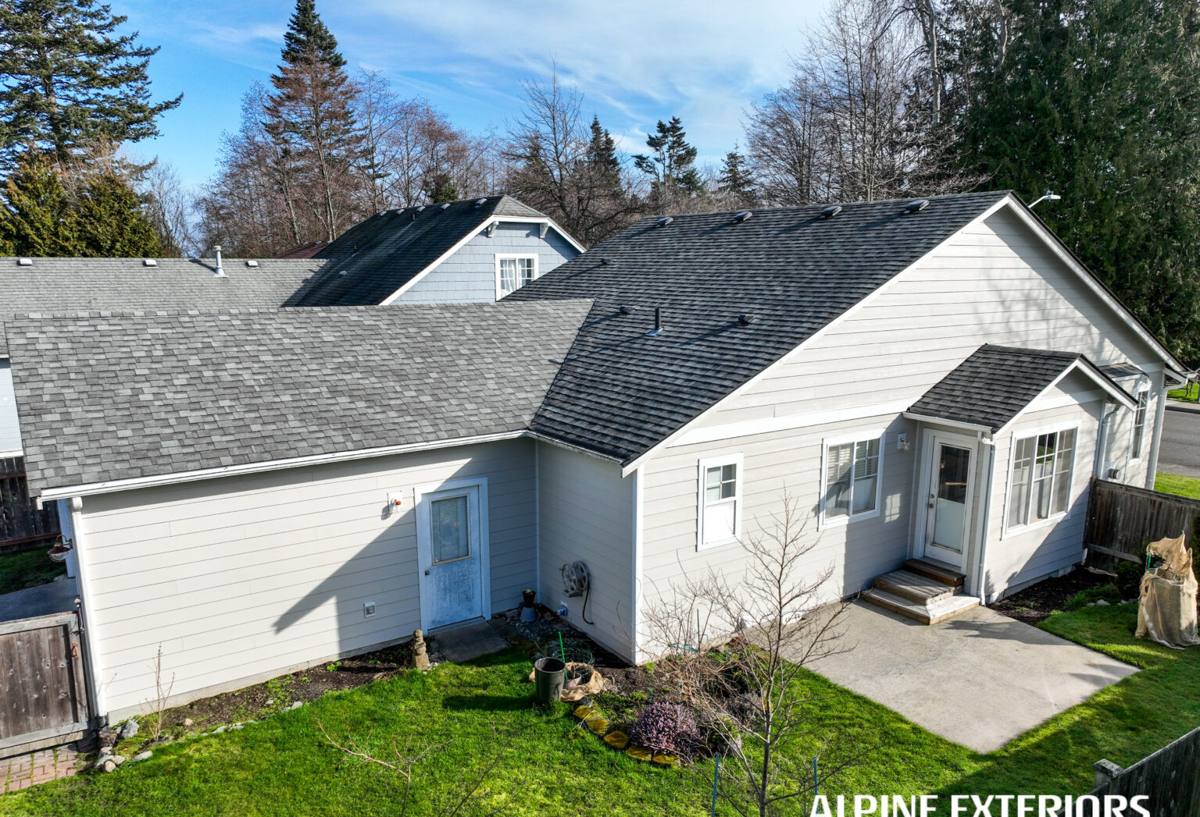
Signs a Sehome Roof Needs Replacement, Not Another Patch
A lot of Bellingham roofs get patched two or three times before anyone seriously looks at full replacement. That's not always wrong — a targeted repair can buy years on an otherwise sound roof. But there's a point where patching stops making financial sense and starts just delaying the inevitable while water finds new ways into the structure underneath.
- Granules collecting in gutters or at downspout outlets, especially after a hard rain
- Shingles that are cupping, curling at the edges, or visibly balding in patches
- Moss or dark streaking that comes back within months of being cleaned off
- Soft spots in the decking you can feel when walking the roof, or sagging visible from the ground
- Daylight visible through the roof deck from inside the attic
- Interior stains on ceilings or upper walls that appear after storms
- A roof that's 20+ years old, regardless of how it looks from the street
If you're seeing two or more of these, a repair is usually just delaying a replacement that's already needed — and every rainy season in between adds risk to the decking and framing underneath.
What a Correct New Roof Installation Actually Involves
"New roof" gets used loosely. A lot of installs are really just a re-cover — new shingles over old problems. A proper installation starts with a full tear-off so the decking, structure, and existing ventilation can actually be inspected and fixed, not covered up.
Tear-Off and Deck Inspection
Every layer of old roofing comes off down to the deck. This is the point where rot, soft plywood, or water damage from years of slow leaks gets found and replaced — not discovered later when it's a bigger problem. Skipping this step is how a brand-new roof ends up sitting on a compromised deck.
Underlayment and Ice-and-Water Protection
In a climate that gets sustained rain rather than short bursts, underlayment quality matters more than most homeowners realize. Self-adhering ice-and-water shield belongs at eaves, valleys, and around every penetration — chimneys, vents, skylights — because those are the spots where wind-driven rain gets pushed backward under shingles.
Flashing
Flashing failure, not shingle failure, is behind most of the leaks we get called out for. Step flashing at walls, counter-flashing at chimneys, and properly lapped valley flashing all need to be done correctly the first time — caulk is a stopgap, not a flashing method.
Material Choice
Material selection should account for moss resistance, wind exposure this close to the water, and how the roof will actually be maintained over time.
| Material | Typical Lifespan | Moisture / Moss Resistance | Relative Cost | Best Fit |
|---|---|---|---|---|
| Architectural asphalt shingle | 25–30 years | Good with proper ventilation; moss-resistant options available | $ | Most Sehome homes, best value |
| Standing seam metal | 40–50+ years | Excellent — sheds moisture fast, minimal moss growth | $$$ | Long-term owners, shaded/wooded lots |
| Synthetic composite (slate/shake look) | 30–50 years | Very good, resists rot unlike real wood shake | $$$ | Older homes wanting a traditional look |
| Basic 3-tab asphalt | 15–20 years | Fair — more prone to granule loss and moss in shaded areas | $ | Budget-driven, shorter-term ownership |
Ventilation and Moisture: The Part You Don't See
A new roof with poor attic ventilation will still trap moisture underneath it, and trapped moisture is what shortens the life of decking, insulation, and the shingles themselves from below. Balanced intake at the eaves and exhaust at the ridge lets warm, moist air escape instead of condensing against cold sheathing during Bellingham's wet, cool months. On shaded, tree-covered lots like a lot of what you'll find in Sehome, ventilation also helps the roof surface dry out faster after rain, which directly slows moss regrowth. This is one of the most common corners cut on lower-bid roofing jobs, because it's invisible once the roof is finished — but it's often the difference between a roof that reaches its full warranty life and one that doesn't.
Our Installation Process, Start to Finish
- On-site inspection and estimate. We look at the existing roof, attic ventilation, and any problem areas before quoting anything.
- Material selection. We walk through options based on your home, budget, and how long you plan to stay in the house.
- Scheduling around weather. Roofing in Whatcom County means working around rain windows — we plan tear-off days when we can get the deck covered and dried in before weather moves in.
- Tear-off and deck inspection. Old roofing removed, decking checked and repaired as needed.
- Underlayment, flashing, and ventilation installed. This is where the roof's long-term performance actually gets decided.
- New roofing material installed to manufacturer specification, which matters for keeping the material warranty valid.
- Final walkthrough and cleanup, including a magnetic sweep for stray nails and a review of what was done.
Cost Factors for a Sehome Roof Replacement
Every roof is different, but the same handful of factors drive most of the variation in price on jobs we quote in this neighborhood:
| Factor | Why It Matters |
|---|---|
| Roof size and pitch | Steeper roofs take longer and require more safety setup |
| Number of layers to remove | Some older homes have two or more roofing layers to tear off |
| Decking condition | Rotted or soft plywood found during tear-off needs replacement before new roofing goes on |
| Material choice | Asphalt, metal, and composite materials carry different upfront costs and lifespans |
| Roof complexity | Valleys, dormers, skylights, and chimneys all add flashing work and labor time |
| Access | Tree cover, steep lots, or limited driveway access can affect setup and disposal logistics |
We won't give you a number without seeing the roof — anyone who quotes a full replacement over the phone is guessing. What we can tell you upfront is honest ranges once we've actually looked at the specifics.
Why a Crew That Already Works in Sehome Matters
Roofing crews that work all over Western Washington aren't necessarily wrong for the job, but there's real value in a contractor who already understands how this specific area behaves — how much shade a given block gets, how fast moss comes back on north-facing slopes near the trees, which flashing details tend to fail first on homes exposed to wind off the bay. That's not something you learn from a training manual; it's something you learn from doing roofs in this neighborhood, in this weather, year after year. It also means someone local to call if a question comes up after the job is done, rather than a crew that's moved on to the next city.
Protecting Your New Roof After Installation
A correctly installed roof still needs basic upkeep to hit its full lifespan, especially in a climate this wet and shaded. None of this is complicated, but skipping it is how moss and slow leaks get a head start.
- Clean gutters and downspouts at least twice a year so water isn't backing up under the roof edge
- Have moss treated or removed before it spreads, rather than after it's covering half the roof
- Trim back overhanging branches to cut down on shade and debris buildup
- Walk the attic occasionally (or have it checked) for signs of moisture or daylight
- Get a quick visual inspection after major windstorms to catch lifted or damaged shingles early
- Don't ignore small interior stains — they're almost always cheaper to fix early
If your Sehome roof is showing its age, or you just want an honest read on what shape it's in, we're happy to take a look. Use the form below to request a free, no-pressure estimate — we'll tell you what we actually see, not just what sells a job.