 Bellingham Exterior
 Roofing in Barkley Isn't the Same as Roofing Inland
Barkley sits close enough to the water and the marine weather patterns that move through Whatcom County that its roofs take a different kind of beating than homes twenty miles inland. Salt-laden air corrodes exposed metal faster. Driving rain off Bellingham Bay finds every weak seam in flashing and underlayment. And the shade from mature trees around many Barkley properties keeps roofs damp long after a storm passes, which is exactly what moss needs to take hold. A new roof here has to be installed with those three things in mind from the first shingle to the last ridge cap, not as an afterthought.
This page is about one job, done right, in one part of Bellingham: full new roof installation for Barkley homes. Not a general overview of roofing services — the specific decisions that matter when the roof you're building has to survive this particular climate for the next few decades.
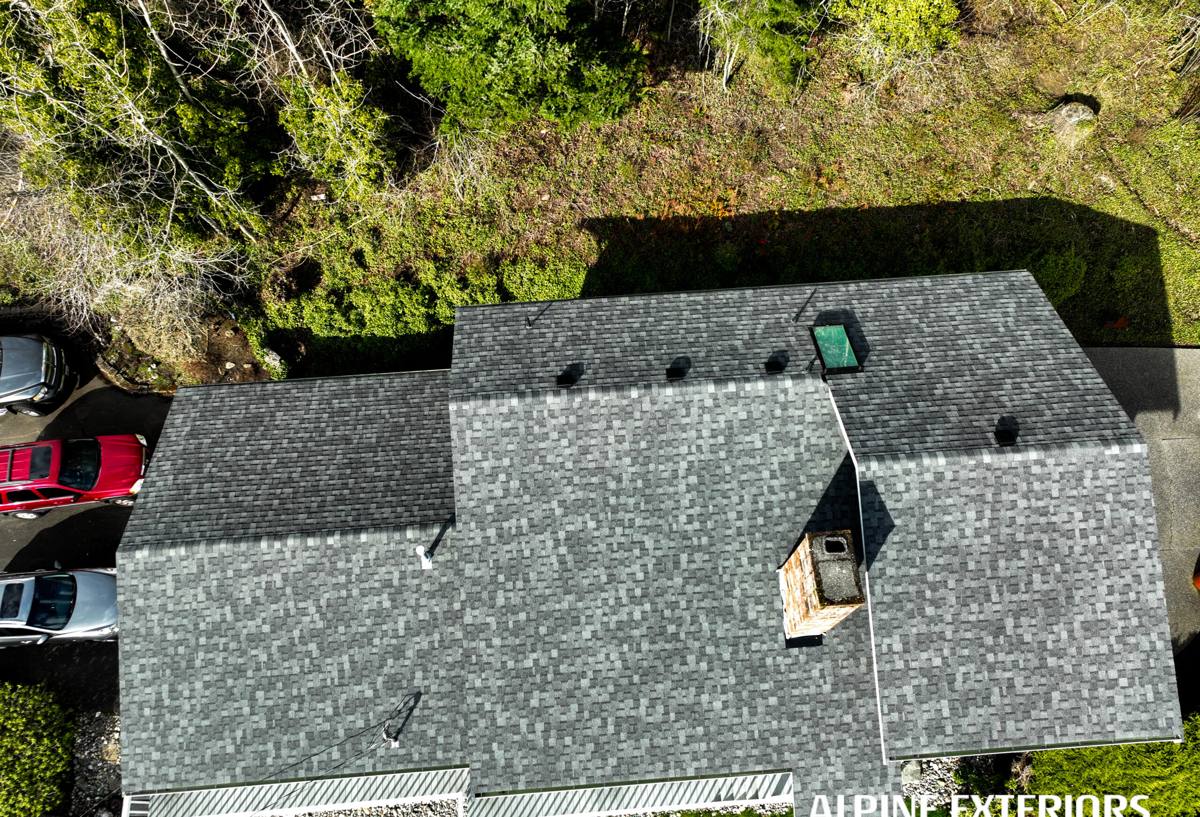
What This Climate Actually Does to a Roof
It helps to understand the mechanism, not just the symptom, before you're picking materials or evaluating a bid.
Salt Air and Corrosion
Bellingham's proximity to Puget Sound means airborne salt reaches further inland than people expect, especially on exposed or elevated lots. Standard steel fasteners, cheap drip edge, and unprotected flashing corrode faster in this environment. It's not dramatic — it's slow, and it shows up as rust streaks and failed fastener heads five or ten years before they should.
Driving Rain
Whatcom County doesn't just get a lot of rain — it gets wind-driven rain that hits roof planes at an angle instead of falling straight down. That matters because it pushes water sideways under shingle laps, into nail holes, and up against vertical flashing at walls, chimneys, and skylights. A roof designed for calmer climates can leak here even when every shingle looks intact, simply because the water intrusion points weren't sealed for angled rain.
Moss and Prolonged Moisture
Shade, humidity, and mild temperatures are ideal for moss growth. Moss holds moisture against the roofing surface, lifts shingle edges as it grows, and accelerates granule loss. On north-facing slopes and under tree cover — common in Barkley's more established, tree-lined lots — moss season effectively runs most of the year, not just a few wet months.
Signs a Barkley Home Is Due for a New Roof
Repairs make sense for isolated damage. A full replacement makes sense when the underlying materials are past their working life. Here's what we look for during an evaluation:
- Granule loss heavy enough that you can see bare asphalt on multiple shingles, not just one or two
- Shingles that are cupping, curling, or cracking across large sections rather than a single spot
- Moss or dark algae staining that keeps returning within a season or two of cleaning
- Soft spots or sagging when walked, which points to deck damage under the surface
- Daylight visible through the attic roof deck, or damp insulation after storms
- Flashing around chimneys, vents, or skylights that's rusted, lifted, or was never properly step-flashed
- A roof approaching or past the manufacturer's expected service life for its material and exposure
If you're only seeing one or two of these, a repair may still be the honest answer — we'll tell you that during an estimate rather than pushing a full tear-off you don't need yet.
What a Correct Installation Actually Involves
The difference between a roof that lasts and one that fails early almost never comes down to the shingle brand. It comes down to what's underneath it and how the details were handled.
Tear-Off and Deck Inspection
We remove the old roofing down to the deck rather than layering over it. That's the only way to actually see the sheathing, check for rot or soft spots from years of moisture intrusion, and replace damaged sections before new material goes down over a compromised base.
Underlayment Built for Wind-Driven Rain
Given how often rain in this area hits at an angle, we use synthetic underlayment across the field and self-adhered ice-and-water membrane at the vulnerable spots — eaves, valleys, and around any roof penetration — rather than relying on felt paper alone or standard coverage only at the eaves.
Flashing Done Properly
Step flashing at walls and chimneys, proper counter-flashing, and correctly lapped valley metal matter more in a driving-rain climate than almost anything else on the roof. This is also where corrosion-resistant materials pay off, since flashing takes the brunt of both water exposure and salt air.
Ventilation
A roof deck that can't breathe stays damp longer, which feeds moss growth and shortens shingle life from the underside as well as the top. Balanced intake and exhaust ventilation is part of a correct installation, not an upgrade.
Material Options for a Barkley Roof
There's no single "best" roofing material — the right choice depends on your roof's exposure, slope, tree cover, and budget. Here's how the common options hold up against this specific climate:
| Material | Typical Lifespan | Moss & Moisture Behavior | Relative Cost | Notes for Barkley Lots |
|---|---|---|---|---|
| Architectural asphalt shingle | 25–30 years | Good with proper ventilation; algae-resistant granules available | Moderate | Most common, cost-effective choice for the neighborhood's mixed sun/shade lots |
| Metal (standing seam or panel) | 40–50+ years | Sheds moisture and moss well due to smooth surface | Higher | Corrosion-resistant coatings matter more this close to salt air |
| Synthetic/composite shake | 30–50 years | Doesn't absorb moisture like wood; resists moss better than cedar | Higher | Gives a traditional look without cedar's ongoing moisture maintenance |
| Cedar shake | 20–30 years with upkeep | Absorbs moisture, needs regular treatment to resist moss and rot | Higher | We'll install it if requested, but the maintenance burden in this climate is real and ongoing |
We don't push cedar shake as a default recommendation for shaded or heavily wooded Barkley lots — not because it's a bad product, but because the moisture-retention and maintenance demands are genuinely higher in a climate that stays damp this much of the year. If low-maintenance matters more to you than a specific traditional look, architectural asphalt or synthetic shake are usually the more honest fit.
Our Process, Start to Finish
- On-site evaluation. We walk the roof, check the attic, and identify deck condition, ventilation, and any existing moisture damage before quoting anything.
- Written estimate. Material options, scope, and a clear price — no vague allowances that turn into surprise add-ons later.
- Scheduling around the weather. Roofing work has to work with rain windows here, not against them; we plan tear-off and dry-in stages to minimize open-deck exposure.
- Tear-off and deck repair. Full removal of old material, sheathing inspection, and replacement of any damaged decking.
- Underlayment, flashing, and ventilation installation. The layers that determine whether the roof actually performs in this climate, done before a single finish shingle goes down.
- Finish material installation. Installed to manufacturer specification, which is also what keeps the material warranty valid.
- Final walkthrough and cleanup. Site cleared of debris and nails, and we go over the finished roof with you directly.
Why a Crew That Already Works Barkley Matters
A roofing crew that works this neighborhood regularly already knows things a crew from outside the area has to learn on your dime: which lots hold shade and moisture longest, how the tree cover on older, established properties affects ventilation needs, and what the driving-rain exposure looks like on homes at different elevations around Bellingham. That familiarity shows up in fewer surprises during tear-off and fewer callbacks after the job is done.
It also matters for the practical side of the job — knowing current Whatcom County and City of Bellingham permitting requirements for roof replacement, pulling the right permits before work starts, and scheduling inspections without the job stalling out. That's part of doing the job correctly, not paperwork we treat as optional.
Keeping a New Roof Performing Long-Term
A correctly installed roof in this climate still benefits from basic upkeep:
- Keep gutters clear so water isn't backing up under the eaves during heavy rain
- Trim back tree limbs that shade the roof and drop debris, since that's what feeds moss growth
- Have moss treated or gently removed before it spreads under shingle edges, rather than waiting until it's visible from the street
- Check attic ventilation isn't blocked by insulation, since that's what keeps the deck dry from underneath
- Have flashing points inspected periodically, since that's where leaks start even on a newer roof
None of this replaces a properly installed roof — it just protects the investment once it's in place.
Get a Straight Answer About Your Barkley Roof
If you're not sure whether your roof needs a repair or a full replacement, or you want a clear, honest estimate before making that call, we're glad to take a look. The form below gets you a free, no-pressure estimate — no obligation, no pushy follow-up.