 Bellingham Exterior
 Why Silver Beach Roofs Wear Differently Than the Rest of Bellingham
Silver Beach sits along Lake Whatcom under heavy tree cover, and that combination changes how a roof ages compared to a house out in the open on the flats. Mature fir, cedar, and big-leaf maple shade large sections of most lots for much of the day, which keeps shingles cooler in summer but also keeps them wetter, longer, after every fall and winter rain. Add in Whatcom County's typical pattern of long stretches of drizzle followed by wind-driven downpours off the Sound, and you get a roof environment that's less about heat damage and more about sustained moisture exposure, organic debris, and shade that never really lets a roof dry out between storms.
None of that means Silver Beach homes need exotic materials. It means the asphalt shingle roof needs to be built and detailed correctly for a shaded, moisture-heavy lot from the start — the right underlayment, the right ventilation, and shingles chosen with algae and moss resistance in mind, not just color and price.
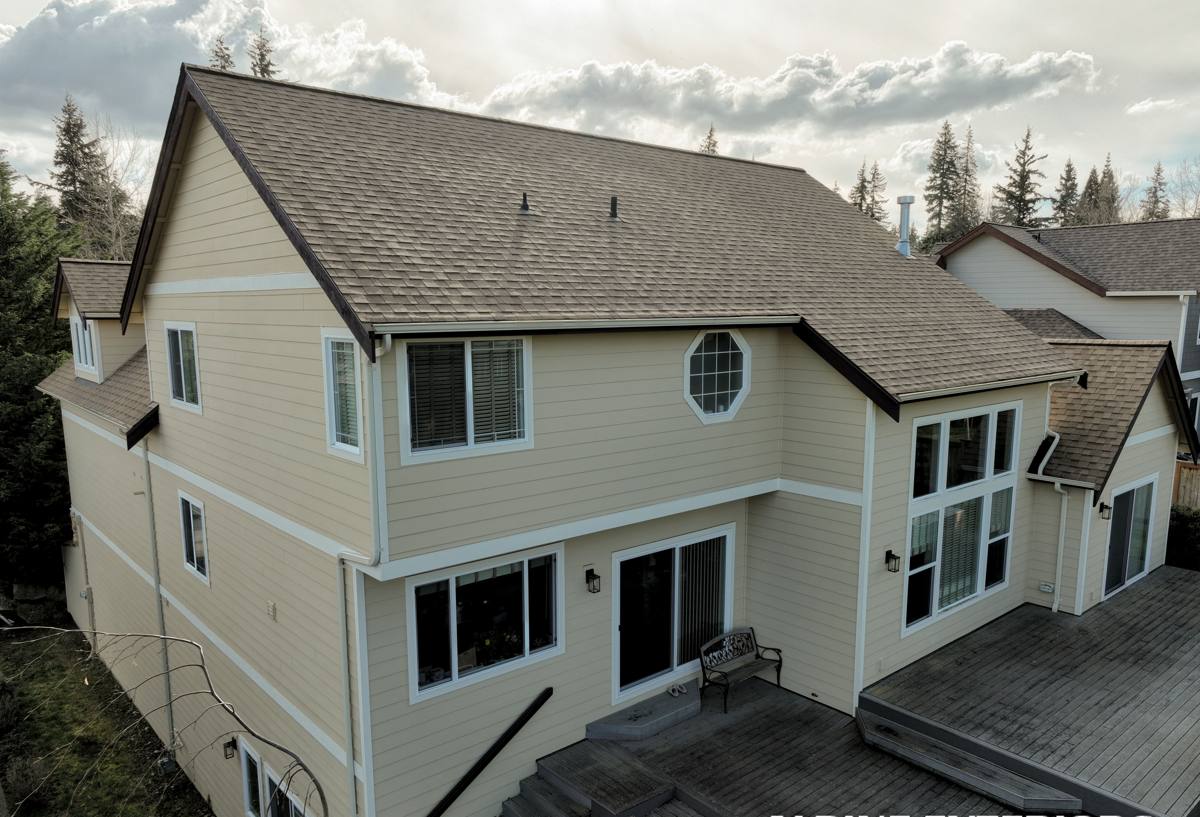
What the Local Climate Actually Does to a Shingle Roof
Moss and Algae Take Hold Fast in the Shade
On a sunny, open roof, moss spores mostly dry out before they can establish. Under Silver Beach's tree canopy, north-facing slopes and shaded valleys stay damp for days after a storm, which is exactly what moss and blue-green algae need to get a foothold. Once moss roots into a shingle's mat, it lifts the tabs, holds water against the roof deck, and accelerates granule loss — the granules are what protect the asphalt layer from UV and weather, so losing them shortens the roof's life.
Driving Rain Finds Every Weak Detail
Whatcom County storms don't always fall straight down. Wind off the lake and the surrounding hills can push rain sideways under shingle tabs, at valleys, and around any penetration — vents, chimneys, skylights. A roof that would hold up fine in a calmer climate can leak here if the flashing, valley work, and underlayment weren't installed with driving rain specifically in mind.
Needle and Leaf Debris Clogs Drainage
Homes tucked under conifers and deciduous trees collect a steady drop of needles, leaves, and cone debris in valleys and along eaves. Left alone, that debris holds moisture against the shingles and can back water up under the roofing at the edges, which is a common cause of hidden rot at the fascia and lower decking that has nothing to do with the shingles themselves failing.
What a Correctly Built Asphalt Shingle Roof Includes
A roof that's going to hold up on a shaded Silver Beach lot needs more than shingles nailed to a deck. Every layer matters:
- Deck inspection and repair — any soft, delaminated, or water-stained sheathing gets replaced before new roofing goes down, not covered over.
- Ice-and-water shield at eaves, valleys, and around penetrations, giving a sealed backup layer exactly where driving rain and debris cause the most trouble.
- Synthetic underlayment across the full deck for a moisture barrier that outperforms old felt paper in a wet, shaded climate.
- Balanced attic ventilation — intake at the eaves and exhaust at the ridge, sized correctly, so moisture inside the attic doesn't condense against the roof deck from underneath.
- Algae-resistant, quality architectural shingles chosen for the specific exposure of each slope, since a heavily shaded north face and a sun-exposed south face on the same house don't age the same way.
- Properly detailed flashing at every valley, wall intersection, chimney, and vent, since these are the points most likely to leak under wind-driven rain.
Skipping any one of these to save money up front tends to show up as a callback within a few years — usually as a leak at a valley or a soft spot at the eave, not as a shingle simply "wearing out" the way people expect.
Our Process for a Silver Beach Roof
We treat every Silver Beach roof as its own project, shaped by that specific lot's tree cover, slope orientation, and access. The general process looks like this:
- On-site inspection — we walk the roof and the attic, checking the deck, existing ventilation, moss and algae patterns, and any signs of past leaks before quoting anything.
- Written scope and estimate — you get a clear breakdown of what's being replaced, what materials are specified, and why, so there are no surprises mid-job.
- Tear-off and deck assessment — old roofing comes off down to the deck so we can actually see the wood, not guess at its condition from the attic side.
- Deck repair as needed — any compromised sheathing is replaced before anything new is installed.
- Underlayment, flashing, and shingle installation — built in the sequence above, with extra attention to valleys and shaded slopes.
- Ventilation check and correction — we confirm intake and exhaust venting is balanced for the house, adjusting if the existing setup is undersized.
- Final walkthrough — we go over the finished roof and basic upkeep with you before we consider the job done.
Choosing a Shingle for a Shaded, Wet Lot
Not every asphalt shingle performs the same way under tree cover. Here's how the common options compare for a Silver Beach-style lot:
| Shingle Type | Moss/Algae Resistance | Typical Lifespan Here | Best Fit |
|---|---|---|---|
| Standard 3-tab | Low unless treated | Shorter end of range under heavy shade | Budget-driven projects on sun-exposed slopes only |
| Algae-resistant architectural | Good — copper/zinc granules resist growth | Longer end of range, even under shade | Most Silver Beach homes, especially shaded slopes |
| Impact-rated architectural | Good, same algae-resistant granule options | Comparable to standard architectural | Homes wanting extra durability against falling branches/debris |
For a lot with real tree cover, we generally steer homeowners toward algae-resistant architectural shingles as the honest baseline, not an upsell — the granule technology is built specifically for the conditions Silver Beach roofs face, and the cost difference over a 3-tab shingle is modest relative to the added years of service before moss and granule loss become a problem.
What Drives the Cost of a Silver Beach Roof
Every roof is priced on its own specifics, but the same handful of factors move the number up or down on almost every job in this neighborhood:
| Factor | Why It Matters Here |
|---|---|
| Roof pitch and complexity | Steeper, multi-valley roofs common on lake-view homes take longer and need more flashing work |
| Tear-off layers | Older homes with multiple layers of prior roofing cost more to strip and haul away |
| Deck condition | Shaded, moisture-prone lots are more likely to need sheathing repair once the old roof is off |
| Access and tree cover | Tight lake-side lots and overhanging trees can slow staging, material delivery, and debris removal |
| Shingle grade | Algae-resistant architectural shingles cost more per square than basic 3-tab but last longer under shade |
| Ventilation upgrades | Older homes often need added intake or exhaust venting to meet current standards |
We'd rather walk your roof and give you real numbers than quote a range that doesn't mean much for your specific house — access and deck condition alone can shift a project significantly.
Simple Maintenance That Extends Roof Life Under Tree Cover
A well-installed roof still needs occasional attention on a shaded lot. A short seasonal checklist covers most of it:
- Clear needles, leaves, and debris from valleys and gutters at least twice a year, more often on heavily wooded lots.
- Have visible moss or algae growth treated or removed before it spreads, rather than waiting until it's covering a slope.
- Trim back branches that overhang the roofline to cut down on debris buildup and reduce the chance of physical damage.
- Check attic ventilation isn't blocked by insulation or debris, since poor airflow speeds up deck moisture problems from the inside.
- Have the roof looked at after any major windstorm, especially if branches came down nearby.
Why Working With a Crew That Knows Silver Beach Matters
A contractor who mostly works open, sun-exposed roofs elsewhere in Whatcom County can still do competent work here, but they're guessing at things a crew familiar with Silver Beach already knows — which slopes on a lake-adjacent, tree-shaded lot tend to hold moisture longest, where moss typically establishes first, and how to sequence a tear-off around tight access and overhanging trees without turning it into a multi-day headache. That familiarity shows up in the details: valley work sized for real driving rain, ventilation planned for a house that sits in shade most of the day, and a shingle recommendation based on how that specific roof actually behaves rather than a one-size-fits-all default.
It also means fewer surprises. We've seen how these roofs age, what typically fails first, and what holds up, and we build and price the job around that experience rather than treating every Bellingham roof the same.
If you're dealing with moss buildup, a roof that's overdue, or just want an honest read on where your current asphalt shingle roof stands, we're happy to take a look. The estimate is free, there's no pressure, and you'll get a straight answer about what your Silver Beach home actually needs — just fill out the form below to get started.