 Bellingham Exterior
 Siding Repair in Barkley: A Different Job Than New Construction
Repairing existing siding is a different discipline than installing it fresh on a new build, and homeowners in Barkley often call us after a patch job somewhere else didn't hold. A repair has to match the existing wall's exposure, age, and moisture history, not just replace a damaged board and move on. In a climate that puts salt air, driving rain, and a long moss season against a home year after year, a repair that doesn't account for what's happening underneath the visible damage tends to fail again within a season or two.
We treat every repair call in Barkley the same way we'd treat a full installation: find out why the siding failed before deciding how to fix it. Sometimes that's a straightforward panel swap. Sometimes it's evidence of a flashing or moisture problem that needs to be corrected first, or the repair will just recur in the same spot.
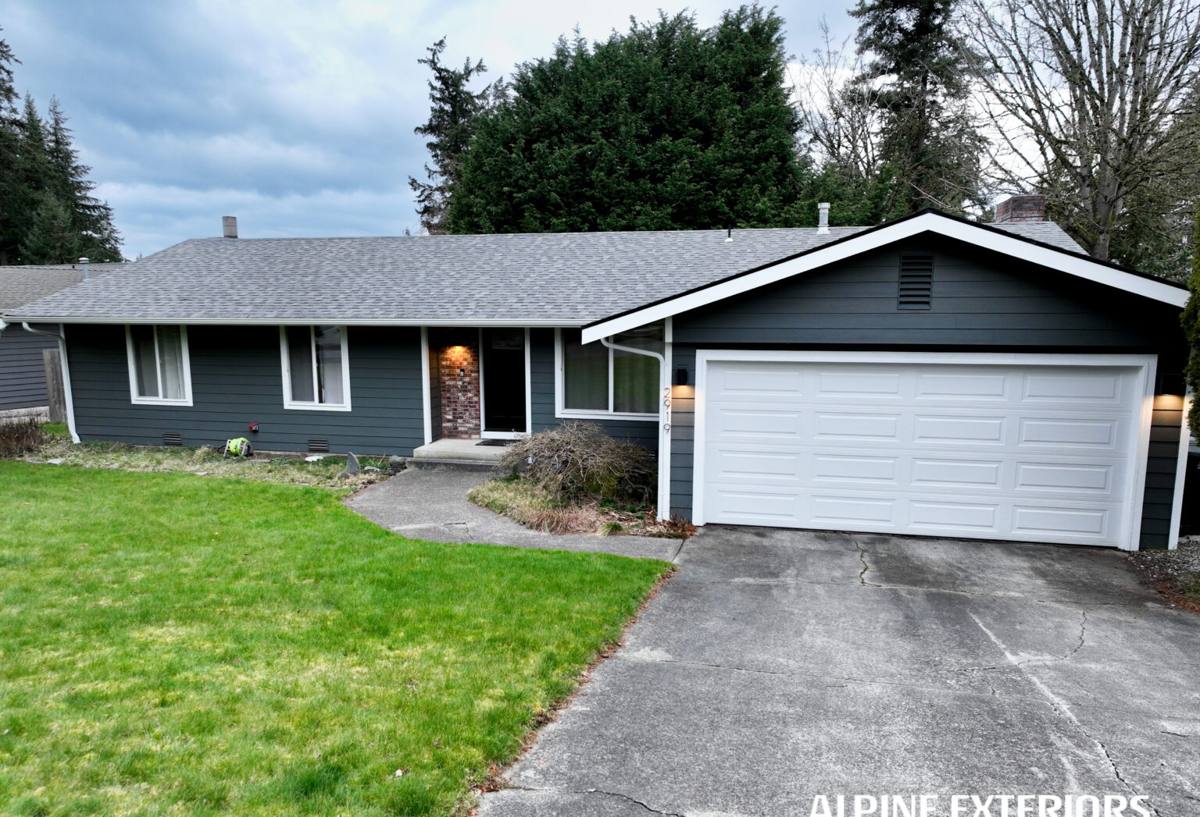
What This Climate Does to Existing Siding
Barkley sits inside Whatcom County's coastal weather pattern, and that pattern is hard on siding in ways that show up gradually rather than all at once. Salt-laden air speeds up corrosion on exposed fasteners and hardware, which is often the real cause behind a panel that's come loose or a streak of rust bleeding down a wall. Driving rain — rain pushed sideways by wind rather than falling straight down — gets forced into laps, seams, and fastener points that a calmer climate wouldn't test as hard, which is why repair issues tend to cluster at specific spots: corners, window trim, and lower courses near grade.
Then there's moss. Shaded and north-facing walls, and anything under tree cover, stay damp for extended stretches through fall, winter, and much of spring. On wood-based or wood-look siding, that ongoing dampness isn't cosmetic — sustained moisture against a moisture-absorbent material leads to swelling, softening, and rot at edges and seams, which is exactly where we find the worst repair cases.
Why Repairs Cluster in the Same Spots
Once we've looked at enough Barkley homes, the pattern is consistent: damage shows up first where water has the most opportunity to sit or collect — behind poorly lapped trim, at clearance points too close to grade or hardscape, and on shaded elevations that never fully dry out between rain events. A repair plan that ignores this pattern and just addresses the visible damage is treating a symptom, not the cause.
What a Correct Siding Repair Actually Involves
A repair done right starts with removing enough surrounding material to see what's actually happening behind the damaged section — not just swapping out the piece that looks bad. That means checking the condition of the house wrap or weather-resistive barrier underneath, confirming flashing is intact and correctly lapped at any nearby window, door, or penetration, and verifying that fasteners and clearances meet spec once the new material goes back in.
On a home with James Hardie fiber cement, repair is usually straightforward: cut back to sound material, replace the damaged section with matching board, and reset flashing and fastening to the manufacturer's specification. On homes with other materials — vinyl, engineered wood, primed spruce, or cedar — a repair can be more involved, since matching an aged, weathered panel and addressing the underlying moisture sensitivity of the material itself both add complexity that a simple patch doesn't solve.
- Identify the actual cause of the failure, not just the visible symptom
- Inspect and correct flashing at any nearby window, door, or penetration
- Confirm the weather-resistive barrier underneath is intact before closing the wall back up
- Match replacement material, fastener spacing, and clearance to manufacturer spec
- Check adjacent sections for early-stage damage that hasn't become visible yet
- Touch up or match finish so the repair doesn't stand out as a patch
Repair or Replace? How We Make That Call
Not every damaged section means a homeowner needs to replace the whole wall, and we're not going to recommend a bigger project than a property actually needs. The decision usually comes down to how contained the damage is and what caused it.
| Situation | Usual Recommendation |
|---|---|
| Isolated panel damage from an impact or one-time event, siding otherwise sound | Targeted repair — replace the affected section and confirm flashing underneath |
| Repeated moss, staining, or soft spots on one or two shaded walls only | Repair those elevations, but address the drainage or ventilation cause so it doesn't recur |
| Widespread cupping, rot, or fastener failure across multiple walls | Full or partial replacement — patching a system that's failing broadly rarely holds |
| Original material is wood-based, primed spruce, or cedar nearing end of service life | Discuss replacement with James Hardie fiber cement rather than repeated patching of a moisture-sensitive material |
A lot of Barkley homes we look at fall into the first two categories, and an honest repair is genuinely the right call there. We'd rather do a smaller job correctly than talk a homeowner into a full replacement they don't need yet.
Why We Only Install James Hardie Fiber Cement — Even for Repairs
When a repair requires new material rather than reusing what's there, we install James Hardie fiber cement. That's a professional standard we hold to across every project, not just new installations. We don't install vinyl, LP SmartSide, primed spruce, cedar, or other fiber cement brands, because in a climate like this one, the products that struggle most over time share a common weakness: they absorb moisture directly, rely on a coating to keep water out indefinitely, or expand and contract enough with humidity swings that seams and joints eventually work loose.
James Hardie fiber cement is non-combustible, doesn't swell or feed moss the way wood-based products can, and its ColorPlus factory finish is baked on under controlled conditions and warrantied against fading and chalking. Hardie also builds climate-specific HZ formulations rather than one generic board, which matters when the region sees this much sustained dampness. When a repair calls for new siding material, that's what we bring — paired with a strong transferable warranty and installation carried out to the manufacturer's actual specification.
Repairing Non-Hardie Siding
We'll still repair existing vinyl, engineered wood, or cedar siding on a Barkley home — a homeowner shouldn't be forced into a full material change just to fix a damaged section. But we're honest about the trade-off: patching a moisture-sensitive material buys time, it doesn't remove the underlying vulnerability, and if repairs are recurring, replacement with fiber cement is usually the more cost-effective path over the long run.
Cost Factors in a Barkley Siding Repair
Repair costs vary enough by situation that a broad number isn't much use without seeing the property, but the factors that actually drive the price are consistent.
| Factor | Why It Matters |
|---|---|
| Extent of hidden moisture damage | What's found once the wall is opened up often determines the real scope, not the visible symptom |
| Material match | Matching an aged, weathered panel — especially on painted or faded siding — takes more care than fresh installation |
| Number and location of affected sections | Scattered damage across several elevations costs more to address than one contained area |
| Flashing or drainage corrections needed | Fixing the underlying cause adds labor but prevents the same repair from recurring |
| Access and wall height | Second-story or hard-to-access sections take longer regardless of the repair's size |
Signs a Barkley Home Needs Siding Repair
Most repair calls start with something a homeowner noticed during routine upkeep or after a storm. Here's what's worth a closer look before it becomes a bigger problem:
- Visible moss or green staining concentrated on shaded or north-facing walls
- A section of siding that's cupping, warping, or pulling away from the wall
- Soft spots or slight give when pressing near a window, door, or corner trim
- Paint or finish that keeps failing in the same spot no matter how often it's redone
- Rust streaks running down from fasteners or hardware
- A panel that came loose or cracked after a storm with heavy wind
- Visible gaps or daylight where siding meets trim, window, or corner boards
Any one of these can be a contained, inexpensive fix if it's caught early. Left alone through another wet season, the same issue tends to spread to the framing or sheathing underneath, which turns a repair into a much larger project.
Why a Local Crew Matters for Repair Work Specifically
Repair work rewards local experience even more than new installation does, because diagnosing a repair correctly means recognizing patterns specific to this climate. A crew that works Barkley and the surrounding Whatcom County area regularly has already seen where salt air corrodes fasteners fastest, which wall orientations take the worst wind-driven rain, and where moss establishes first based on shade and drainage. That familiarity is what separates a repair that actually holds from one that's back on the schedule in two years.
An out-of-area crew unfamiliar with these patterns is more likely to treat a repair as a cosmetic fix — replace the bad board, caulk the seam, call it done — without checking whether the actual cause, usually a flashing or moisture issue, has been addressed. That approach tends to produce repairs that look fine on completion day and fail again the next wet season.
Our Repair Process
We start every repair call with an on-site look at the damage and, just as important, the areas around it. That means checking flashing at nearby windows and penetrations, assessing how much moisture may have reached the sheathing or framing, and confirming whether the issue is isolated or a sign of a broader problem on that elevation. From there, we give a straightforward recommendation — targeted repair, a larger section replacement, or in some cases a conversation about full replacement if the material itself has reached the end of its useful life.
We don't pad a repair into a bigger job than a property needs, and we don't quote a patch when the underlying cause needs to be fixed first. That kind of straight answer is part of what we think a homeowner is owed when they're trying to decide whether a repair is really the right call.
If you've got damaged, aging, or failing siding on a Barkley-area home, we're glad to take a look and give you an honest read on what it actually needs. Reach out using the form below to schedule a free, no-pressure estimate.