 Bellingham Exterior
 Why Roofs in Sehome Take a Different Kind of Beating
Sehome sits close enough to Bellingham Bay that salt-tinged air still reaches homes here, especially on windy days off the water. That salt air is hard on exposed metal — nail heads, flashing edges, gutter fasteners — long before it does visible damage to the shingles themselves. Add in Whatcom County's driving rain, which comes in sideways often enough to test every lap and seal on a roof, and you've got a climate that punishes shortcuts.
The neighborhood's mature tree canopy, including the wooded slopes around Sehome Hill, keeps a lot of roofs in partial shade for large stretches of the year. Shade plus moisture is exactly what moss wants. Once moss gets a foothold under shingle tabs, it holds water against the roof deck long after the rain has stopped, which is how a slow leak turns into rot nobody sees until it's expensive.
None of this means Sehome roofs fail faster than roofs anywhere else in Bellingham. It means the details — ventilation, flashing, underlayment, and material choice — matter more here than they would in a drier, more open part of the state.
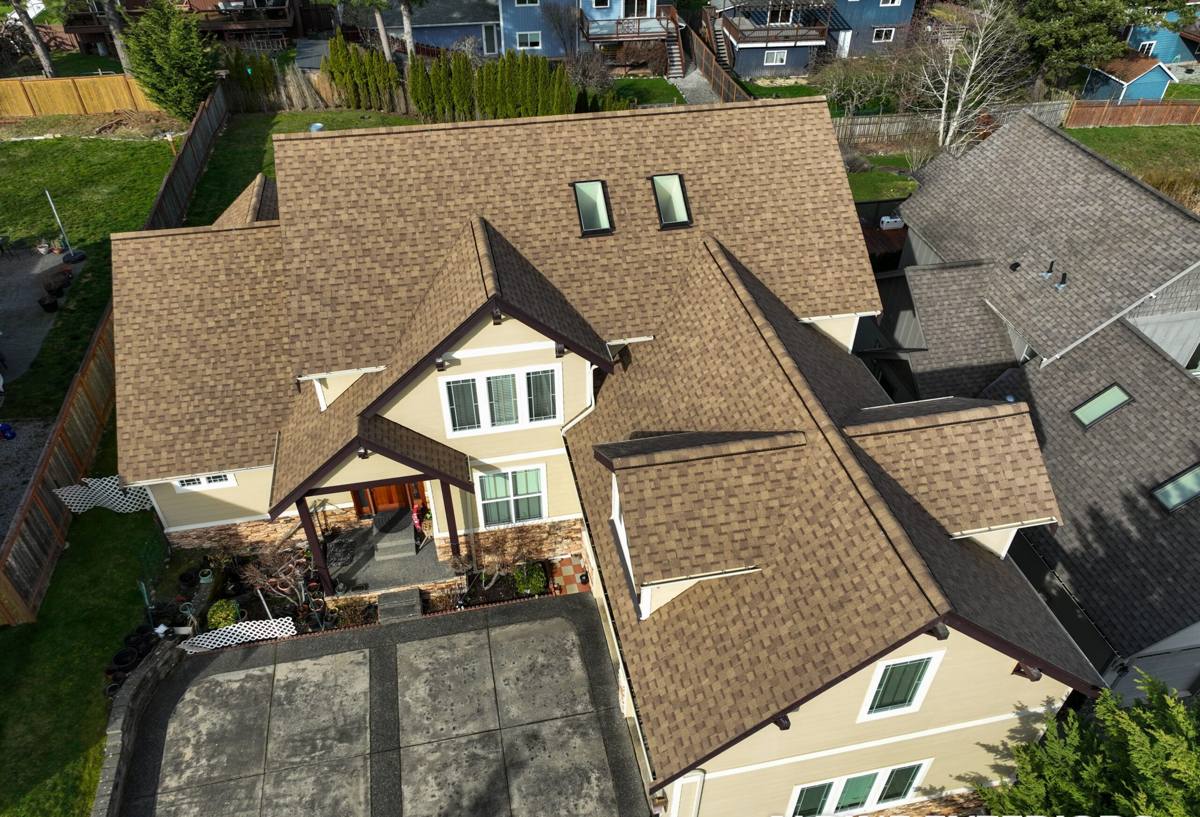
Signs Your Sehome Home Is Due for a Roof Replacement
Most roofs don't fail all at once. They give warning signs for months or years before a leak actually shows up inside the house. Worth checking for, especially if your roof is past the 20-year mark or has heavy moss growth:
- Shingles that are cupping, curling at the edges, or have lost so much granule coverage the surface looks patchy or shiny
- Moss or algae streaking that keeps coming back within a season or two of cleaning
- Soft or spongy spots when walked on, which usually means the decking underneath has started to rot
- Daylight visible through the attic roof boards, or damp insulation after a hard rain
- Granules collecting in gutters and downspouts, a sign the shingles are shedding their protective layer
- Flashing around chimneys, vents, or skylights that's rusted, lifted, or was sealed with visible caulk patches instead of proper metal work
- Missing, cracked, or blown-off shingles after a windstorm, especially if it's happened more than once
One or two of these on their own might mean a repair is enough. Several at once, or a roof that's simply reached the end of its material's service life, usually means replacement is the more honest recommendation — repeated patch jobs on an aging roof rarely save money in the long run.
What a Correct Roof Replacement Actually Involves
Tear-Off and Deck Inspection
A proper replacement starts with a full tear-off down to the roof deck, not a layer installed over old shingles. That's the only way to actually see the plywood or OSB underneath, check it for soft spots or rot, and replace any sections that won't hold a nail properly. Skipping this step is how new shingles end up sitting on a compromised deck — problems that were hidden get sealed back in rather than fixed.
Underlayment and Ice-and-Water Protection
Under the shingles, a synthetic underlayment provides the roof's real waterproofing layer — the shingles are the weather shield, but the underlayment is the backup that keeps a roof dry if wind-driven rain gets past them. In vulnerable spots — eaves, valleys, and around penetrations — a self-adhering ice-and-water membrane adds a second layer of protection where water is most likely to back up or pool.
Flashing and Penetrations
Chimneys, vent pipes, skylights, and roof-to-wall transitions are where most leaks actually start, not in the open field of shingles. Correct flashing means new metal, properly stepped and lapped with the underlayment and shingles — not caulk smeared over old flashing to buy another season.
Ventilation
Balanced intake and exhaust ventilation keeps the attic space at close to outdoor temperature and humidity. Without it, moisture builds up under the deck from the inside, which accelerates rot and can void a shingle manufacturer's warranty regardless of how well the roof was installed.
Choosing a Roofing Material for Sehome's Climate
Most Sehome homes end up with architectural (dimensional) asphalt shingles, and for good reason — they perform well in the Pacific Northwest, come with solid manufacturer warranties, and are more resistant to wind uplift than older three-tab styles. But the right material still depends on the roof's slope, sun exposure, and how much moss pressure the site has.
| Material | Typical Lifespan | How It Handles Moss & Moisture | Trade-Offs |
|---|---|---|---|
| Architectural asphalt shingle | 25–30 years | Good with algae-resistant granules; still needs clean gutters and airflow | Best cost-to-performance balance for most homes |
| Standing seam metal | 40–50+ years | Sheds moss and moisture very well; smooth surface discourages growth | Higher upfront cost; requires an installer experienced with the panel system |
| Cedar shake | 20–30 years with upkeep | Attractive but holds moisture in a wet, shaded climate; needs regular maintenance | Highest ongoing maintenance burden of the common options |
| Synthetic composite shingle | 30–50 years | Resists moisture absorption better than wood; low maintenance | Material and labor cost sits above standard asphalt |
We'll walk through these trade-offs honestly rather than steering every homeowner toward the highest-margin option. For a shaded, moss-prone lot in Sehome, the deciding factor is often less about the material's look and more about how much roof maintenance you actually want to do each year.
Ventilation, Moss, and Long-Term Moisture Control
A new roof in a climate like this needs a moss-management plan built in from day one, not added later. Zinc or copper control strips near the ridge release trace amounts of metal ions with every rain, which discourages new moss growth on the shingles below without harsh chemical treatments. They're inexpensive relative to the roof as a whole and worth including on any Sehome replacement, especially under tree cover.
Beyond that, moss control comes down to keeping water moving off the roof: clean gutters, trimmed-back branches where practical, and a roof pitch and layout that don't trap standing water or debris in valleys. None of this replaces good ventilation — it works alongside it.
Our Roof Replacement Process
- On-site inspection and estimate. We look at the current roof, the attic, ventilation, and any trouble spots, and give you a straightforward written estimate — no pressure, no inflated first number to "negotiate" down from.
- Material selection. We go over the options that make sense for your roof's slope, sun exposure, and budget, including the honest trade-offs of each.
- Scheduling and prep. We schedule around Bellingham's weather windows and protect landscaping, siding, and gutters before work starts.
- Tear-off and deck repair. Old roofing comes off completely; any damaged decking is identified and replaced before anything new goes down.
- Underlayment, flashing, and shingle installation. Installed in the sequence that actually sheds water correctly, not just the fastest sequence.
- Cleanup and final walkthrough. Magnetic sweep for stray nails, full debris haul-off, and a walkthrough so you can see the finished work before we consider the job done.
What Affects the Cost of a Sehome Roof Replacement
Every roof is different, so exact numbers only make sense after an on-site look. In general terms, the biggest cost drivers are:
| Factor | Why It Matters |
|---|---|
| Roof size and number of facets | More square footage and more valleys, hips, and dormers mean more labor and material |
| Roof pitch and access | Steep or hard-to-access roofs take longer and require more safety setup |
| Existing deck condition | Rotted plywood or OSB found during tear-off adds material and labor to replace |
| Material choice | Standard asphalt, premium asphalt, metal, and composite all sit at different price points |
| Layers of old roofing | Removing multiple existing layers takes more time and disposal cost than a single layer |
| Ventilation and flashing upgrades | Bringing older ventilation or flashing up to current standards adds scope but reduces future problems |
We'd rather explain what's driving a number than hand over a vague quote and let you guess. If a lower bid from somewhere else skips tear-off, deck inspection, or proper flashing work, it isn't actually a lower price for the same job.
Why Hiring a Crew That Already Works in Sehome Matters
Bellingham has its own permitting process for roof replacement, and Whatcom County's building requirements around ventilation and ice-dam protection reflect the region's rain and occasional cold snaps. A crew that already pulls permits and passes inspections in this area isn't learning the process on your roof.
Sehome's mix of older, established homes and closer-in lots also means roofs here often have quirks — additions, mismatched pitch lines, or older decking under newer shingles — that a crew unfamiliar with the neighborhood might not anticipate in an estimate. Local experience shows up less in marketing and more in fewer surprises once the tear-off actually starts.
Caring for Your New Roof After Installation
A correctly installed roof still needs basic upkeep to hit its full lifespan in this climate. A short annual routine goes a long way:
- Clear gutters and downspouts each fall once trees have dropped most of their leaves
- Do a visual check after major windstorms for lifted or missing shingles
- Keep overhanging branches trimmed back to reduce shade and debris buildup
- Watch for early moss regrowth and address it before it spreads under shingle tabs
- Have the attic checked periodically to confirm ventilation isn't blocked by insulation or storage
If you're noticing any of the warning signs above, or just want an honest read on how much life is left in your current roof, we're happy to take a look. Fill out the form below for a free, no-pressure estimate on your Sehome roof replacement.