 Bellingham Exterior
 Deck Replacement Built for Birchwood's Climate, Not a Catalog Photo
If you own a home in Birchwood, you already know what a Bellingham winter does to a deck. It isn't one dramatic storm that wrecks a deck out here — it's the slow grind of salt-tinged marine air, months of driving rain, and a moss season that seems to start earlier every year. A deck that looked fine in July can be soft underfoot by February if it was built, or repaired, without that reality in mind. Deck replacement in this neighborhood isn't just swapping old boards for new ones; it's rebuilding the whole system so it can actually survive Whatcom County weather for the long haul.
This page is about one thing: full deck replacement for homes in and around Birchwood. Not a patch job, not a board-by-board repair — a real replacement, done in a way that respects what this specific climate does to wood, fasteners, and framing over time.
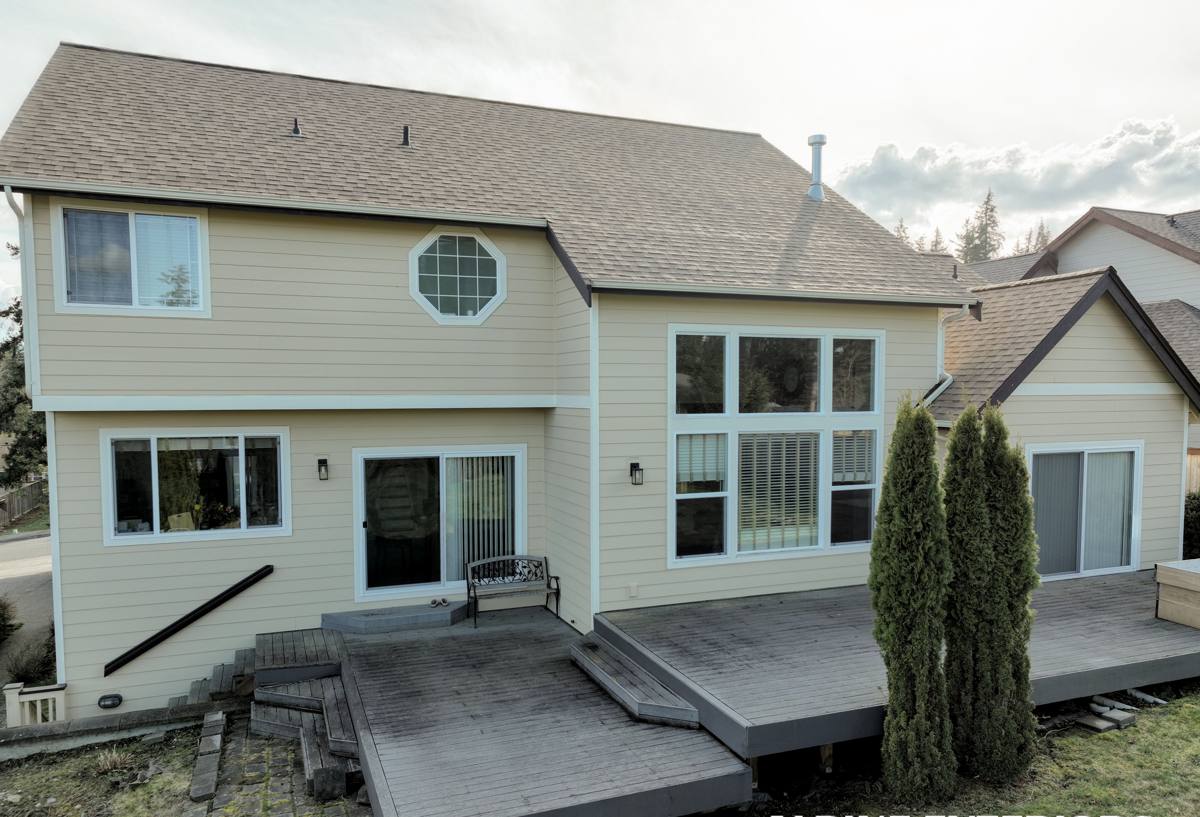
Why Decks Fail Faster Here Than in Drier Climates
Bellingham sits close enough to the water that homes throughout Whatcom County deal with a steady dose of salt-laden air, even blocks away from the shoreline. Combine that with our long stretch of wet months and short, cool summers, and you get conditions that are genuinely tough on exterior structures. A few specific ways this shows up in decks:
- Moisture that never fully leaves. With rain spread across so much of the year, wood framing and decking often doesn't get a real chance to dry out between storms, which speeds up rot in anything that wasn't detailed correctly.
- Salt air accelerates metal corrosion. Fasteners, joist hangers, and structural screws that aren't rated for coastal exposure can corrode from the inside of the connection outward — often invisible until the deck starts to feel spongy or a board lets go.
- Moss and algae hold moisture against the surface. Northwest-facing and shaded decks especially grow a film of moss that traps water right where boards meet, which is exactly where rot starts.
- UV is mild, but freeze-thaw cycling still happens. We don't get brutal winters, but repeated freezing and thawing in ledger connections and fastener holes still opens up small gaps that let water in deeper each season.
None of this means decks can't last in Birchwood — plenty do, for decades. It means the build details matter more here than they would in a dry inland climate, and a replacement is the right time to correct whatever the old deck got wrong.
Signs a Repair Won't Cut It Anymore
We get calls from Birchwood homeowners at every stage of deck failure, and one of our first jobs is being honest about whether a repair is realistic or whether it's throwing money at a structure that's past the point of patching. General signs replacement is the right call:
- Soft, spongy, or springy sections of decking, especially near the house or along the perimeter
- Visible rot or dark staining at the ledger board (where the deck attaches to the house)
- Rusted, corroded, or missing joist hangers and structural fasteners
- Posts that have shifted, or footings that look undersized or improperly set
- A deck that's more than 20-25 years old and has never had the framing inspected
- Persistent moss growth that keeps coming back no matter how often it's cleaned
- Railings that flex or feel loose when leaned on
Any one of these on its own might be repairable. Several together, especially involving the ledger or framing, usually means the deck's structural life is done, and replacing it is both safer and more cost-effective than chasing repairs year after year.
The Ledger Board Deserves Special Attention
The ledger — the board that bolts the deck to your house — is the single most common failure point we see, and it's also the most dangerous when it fails, because it's what keeps the whole deck attached to your home. In a wet climate like ours, ledger rot is often hidden behind the decking and only found once we start pulling boards. A correct deck replacement always includes proper flashing at this connection, not just a caulked seam, because caulk alone doesn't hold up to years of Bellingham rain.
What a Correct Deck Replacement Actually Involves
A quality replacement is a full system rebuild, not a resurfacing. Here's what that means in practice:
1. Full Demo and Honest Framing Assessment
We remove the old decking, railings, and as much framing as needed to see the actual condition of posts, beams, and footings. This is also when we check the footings themselves — undersized or frost-heaved footings are common in older Whatcom County decks and need to be addressed, not built around.
2. Ledger Flashing Done Right
Proper deck flashing — installed so water sheds away from the house rather than behind the siding — is non-negotiable on every replacement we do. This one detail prevents the majority of the hidden rot problems we find on older decks in this area.
3. Corrosion-Resistant Hardware Throughout
Given the salt air common to this region, we use structural connectors and fasteners rated for coastal/wet exposure, not standard interior-grade hardware. It costs more up front and is one of the easiest places for a lower bid to cut corners invisibly.
4. Framing Spaced and Detailed for Drainage
Joist spacing, decking gaps, and ventilation underneath the deck all affect how quickly water leaves the structure after a storm. We build in airflow and drainage paths rather than sealing the underside of the deck off from air movement.
5. Decking Material Suited to Moss and Moisture
Material choice matters more here than in drier regions — more on that below.
6. Code-Compliant Railings and Stairs
Railing height, baluster spacing, and stair geometry get checked against current code, which older decks frequently don't meet.
Choosing Decking Material for a Wet, Mossy Climate
There's no single "best" decking material for every home — it depends on budget, maintenance appetite, and how much shade and moss exposure a particular deck gets. Here's how the common options compare for a Birchwood-type climate:
| Material | Moisture/Moss Behavior | Maintenance | Typical Lifespan Here |
|---|---|---|---|
| Pressure-treated wood | Absorbs moisture; needs sealing to resist moss staining | Annual cleaning, periodic re-staining/sealing | 15-20 years with upkeep |
| Cedar | Naturally moisture-resistant but still needs sealing in shaded, damp spots | Regular sealing to maintain resistance and appearance | 20-25 years with upkeep |
| Composite decking | Doesn't absorb water like wood; still needs cleaning where moss can sit on the surface | Occasional washing, no staining/sealing | 25-30+ years, varies by product warranty |
| PVC decking | Fully water-resistant surface; least prone to moss taking hold | Lowest — mostly just periodic washing | 25-30+ years, varies by product warranty |
We'll walk through these options honestly based on your budget and how much of your deck sits in shade, since that's usually the biggest factor in how much moss and moisture exposure it'll actually face.
What Drives the Cost of a Deck Replacement
Every deck is different, so we don't quote sight unseen — but these are the main factors that move the price:
| Factor | Why It Matters |
|---|---|
| Deck size and shape | Square footage and complexity (multiple levels, curves, built-in seating) directly affect material and labor |
| Decking material chosen | Pressure-treated wood is the lowest upfront cost; composite and PVC cost more but need far less upkeep |
| Framing and footing condition | If posts or footings need to be replaced or added, that's structural work beyond a surface swap |
| Height and access | Second-story decks or ones with limited access take longer and require more safety setup |
| Railings and stairs | Custom railing materials (cable, glass, composite) add cost versus standard wood or metal baluster systems |
| Permit requirements | Most full replacements in this area require a permit and inspection, which is included in our process, not an afterthought |
As a general guide, a straightforward wood deck replacement typically lands at the lower end of the cost spectrum, while larger composite or PVC decks with custom railings run higher. We'll give you a firm, itemized number after seeing the site — not a rough guess that changes once we start.
Our Process for Birchwood Deck Replacement Projects
- On-site assessment. We inspect the existing deck, framing, footings, and ledger connection to determine what's actually failing versus what's cosmetic.
- Honest scope and written estimate. You get a clear breakdown of what's being replaced, what materials are recommended and why, and a firm price — no vague allowances.
- Permitting. We handle the permit application and coordinate required inspections so the project is fully compliant, which also matters for your homeowner's insurance and any future home sale.
- Demo and structural rebuild. Old materials come out, framing and footings get corrected as needed, and ledger flashing goes in properly before a single deck board is installed.
- Decking, railings, and finish work. Your chosen material goes down, railings and stairs are built to current code, and everything is cleaned up before we walk it with you.
- Final walkthrough. We go over the finished deck together, confirm you're satisfied, and explain any maintenance the material you chose will need going forward.
Why a Crew That Knows Birchwood Matters
Deck-building know-how is not one-size-fits-all across the country. A crew used to building in a dry, low-moisture climate can do a technically fine job that still fails early here, simply because they didn't detail the flashing, hardware, and drainage for what Whatcom County actually throws at a structure. Working regularly in Bellingham and neighborhoods like Birchwood means we've seen how decks in this specific area age — where moss builds up first, which ledger details hold up and which don't, and which materials are worth the extra cost versus which ones are overkill for a given yard's sun and shade pattern. That local pattern recognition is part of what you're paying for, not just the labor.
A Quick Pre-Replacement Checklist
Before you commit to a deck replacement, it's worth walking your own deck with these questions in mind:
- Does any part of the deck feel soft, springy, or spongy when you walk on it?
- Is there visible staining, gaps, or rot where the deck meets the house?
- Do the railings flex noticeably when you lean on them?
- Is moss regrowing within weeks of cleaning, even in the same spots?
- Do you know the age of the deck, and has the framing ever been inspected?
- Are you seeing rust streaks near fasteners or hardware?
If you answered yes to two or more of these, it's worth having someone take a real look before another wet season goes by.
If your Birchwood deck is showing its age, we're happy to come take an honest look and walk you through what a proper replacement would involve for your specific home — no pressure, no obligation. Use the form below to request a free estimate.