 Bellingham Exterior
 Happy Valley Homes Face a Specific Kind of Wear
Happy Valley is one of Bellingham's older, established residential neighborhoods, and that means a lot of the housing stock here is carrying siding that's well past its intended service life. Bellingham sits close enough to the water that salt-laden air reaches inland neighborhoods on a regular basis, and Whatcom County's marine climate keeps humidity high for most of the year. Add in driving rain that comes sideways off Pacific storms and a moss season that can run from October through May, and you've got a combination that's genuinely hard on exterior materials.
None of that is unique to Happy Valley specifically, but it does explain why we see the same failure patterns street after street here: caulking that's cracked and pulled away at trim joints, paint that's chalking or peeling on the sun-and-rain-exposed elevations, and moss or algae staining creeping up from grade or down from gutters. On older wood or engineered wood siding, that moisture exposure eventually turns into soft spots, delamination, or rot at the bottom courses and around window trim. On siding that's structurally fine but visually tired, it's usually a sign the finish has given out even if the substrate hasn't failed yet.
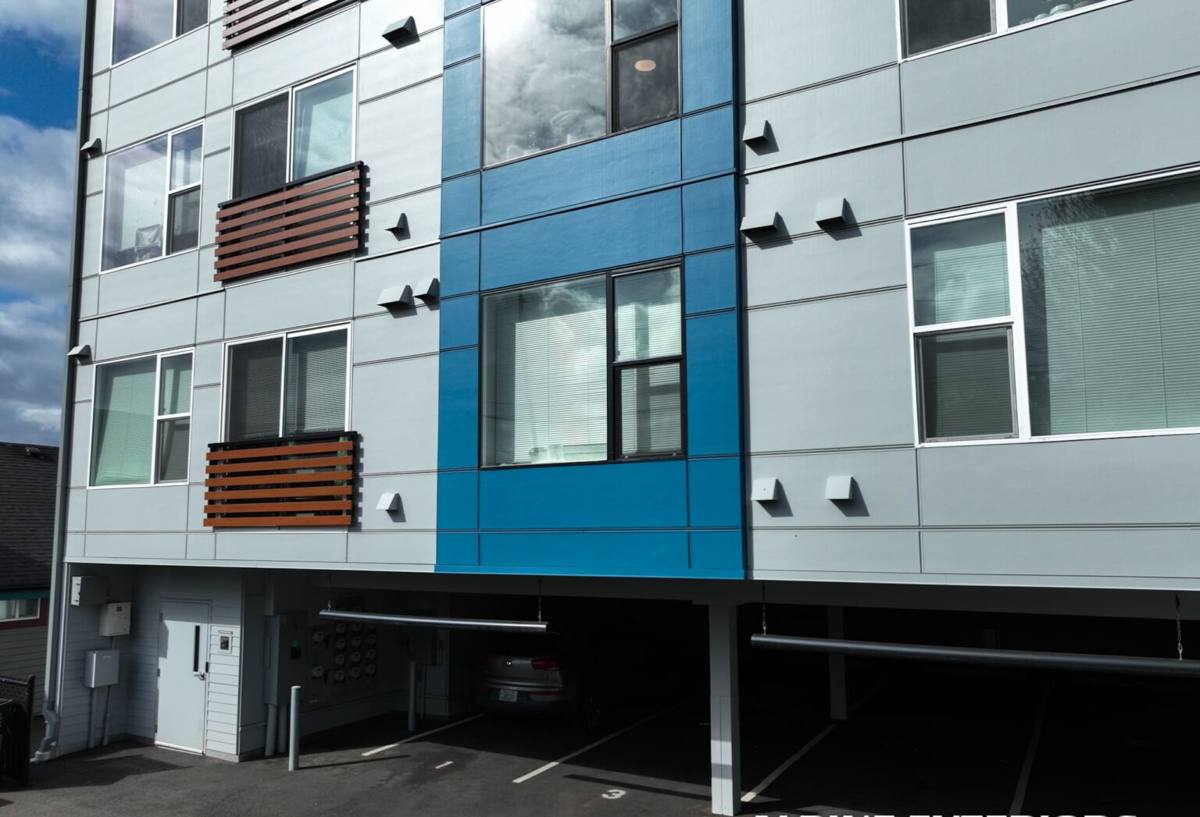
Signs Your Siding Has Reached the End of Its Useful Life
Not every siding problem means a full replacement. But when several of these show up together, patching stops making financial sense and a full re-side becomes the more honest recommendation.
- Soft, spongy, or crumbling spots when you press on the siding, especially near the bottom of walls or below windows
- Paint that won't hold anymore — repainted within the last few years but already peeling, bubbling, or chalking heavily
- Visible gaps, warping, or cupping in individual boards or panels
- Persistent moss or black streaking that comes back within a season of cleaning
- Rising energy bills with no other explanation, which can point to failed sheathing or missing house wrap behind the siding
- Siding that's original to a home built more than 25-30 years ago, particularly if it's wood, hardboard, or early-generation engineered wood
- Interior signs like musty smells, staining on interior walls near exterior corners, or visible mold near baseboards on exterior-facing rooms
If you're seeing two or three of these, it's worth having someone pull a board and look at the sheathing underneath before deciding between a repair and a full replacement. What's happening behind the siding matters as much as what you can see from the sidewalk.
What a Correct Siding Replacement Actually Involves
A siding replacement is not just swapping old boards for new ones. Done right, it's a full envelope job, and the steps that happen before the new siding goes up are what determine whether the job lasts 10 years or 40.
Tear-Off and Inspection
We remove the existing siding down to the sheathing so we can actually see what's there. This is the point where hidden rot, damaged sheathing, or missing flashing gets found and dealt with — not covered over. In a climate like Bellingham's, skipping this step is how a re-side ends up trapping moisture problems instead of solving them.
Weather-Resistive Barrier
A properly lapped, sealed weather-resistive barrier goes over the sheathing before anything else. This layer is what actually keeps wind-driven rain from reaching your wall structure — the siding itself is the first line of defense, but the barrier behind it is what protects the house if water gets past that first line, which it eventually will in this kind of weather.
Flashing at Every Penetration
Windows, doors, hose bibs, vents, and any other penetration through the wall need proper flashing integrated with the weather barrier, not just caulked over. Caulk fails; correctly lapped flashing doesn't rely on a sealant staying intact for 20 years to keep water out.
Rainscreen or Drainage Gap
Depending on the wall assembly and exposure, we build in a drainage gap or rainscreen so any moisture that does get behind the siding has somewhere to go and a way to dry out, rather than sitting against the sheathing. This detail matters more here than in drier climates, and it's one that gets skipped on cut-rate jobs.
Siding Installation to Manufacturer Spec
Fastener type, fastener spacing, board overlap, gapping at butt joints, and clearance from grade, roofing, and decks all have to follow James Hardie's published installation instructions. This isn't optional detail work — it's what the product warranty is actually contingent on.
Why We Install Only James Hardie Fiber Cement
We don't install vinyl, LP SmartSide, primed spruce, cedar, or other fiber cement brands. That's a deliberate standard, not a sales pitch, and it's worth explaining honestly rather than just asserting it.
Vinyl is inexpensive and low-maintenance in the sense that it doesn't need painting, but it's a thin plastic product that expands and contracts significantly with temperature swings, can crack or become brittle over time, and isn't rated to stop combustion the way fiber cement is. Engineered wood products like LP SmartSide perform reasonably well when installation and maintenance are perfect, but they're still wood-based — they depend on an intact factory treatment and diligent field-sealing of every cut edge to resist the moisture exposure a marine climate delivers year-round. Miss a cut edge or let caulking fail at a joint, and moisture gets a foothold in a way it doesn't with fiber cement. Cedar and primed spruce require ongoing refinishing and are the most exposed of all these options to the rot and moss issues this climate produces.
James Hardie fiber cement is non-combustible, dimensionally stable across our temperature range, and doesn't feed moss or mildew growth the way wood-based products can. The ColorPlus factory finish is baked on under controlled conditions rather than field-applied, which means better UV and fade resistance than a job-site paint job, and Hardie backs it with a real, transferable warranty. We standardized on one product because we can install it to spec every time, stand behind it fully, and not have to explain to a homeowner five years later why a product we installed is underperforming.
Hardie Product Lines Built for Marine Climates
James Hardie engineers its siding in regional formulations called HZ5 and HZ10, matched to different climate zones across the country. Bellingham falls into the HZ5 zone, which is formulated for wetter, milder climates like the Pacific Northwest — it's a different engineered mix than what Hardie ships to hot, dry, or freeze-heavy regions, and it's the version we install here.
| Product | Profile | Best Use on a Happy Valley Home |
|---|---|---|
| HardiePlank Lap Siding | Traditional horizontal lap boards, multiple width and texture options | Whole-house replacement; the most common choice for classic and craftsman-style homes in the neighborhood |
| HardieShingle | Staggered or straight-edge shingle panels | Accent gables, dormers, or full-shingle styling on cottage and bungalow-style homes |
| HardiePanel | Vertical panel siding, smooth or stucco-look texture | Modern facades, porch gables, or mixed-material accent walls |
| HardieTrim | Fascia, corner boards, and window/door trim boards | Pairs with any of the above for a finished, rot-resistant trim package |
All of these come pre-finished with ColorPlus technology, or can be installed primed for field painting if you want a fully custom color. For a wet, moss-prone climate, we generally steer homeowners toward ColorPlus finishes — the factory coating resists the kind of algae and mildew staining that plagues field-painted surfaces here.
Our Process, Start to Finish
- Free on-site estimate. We walk the home, check the current siding and any accessible sheathing, and talk through what you're seeing and what you want out of the project.
- Written scope and product selection. You get a clear scope of work, a firm quote, and help picking the right Hardie profile, texture, and color for your home.
- Scheduling. We give you a realistic timeline, factoring in Bellingham's weather windows so we're not fighting rain the whole way through.
- Tear-off and sheathing inspection. Old siding comes off, and we address anything we find underneath before covering it back up.
- Weather barrier, flashing, and drainage detail. The parts you won't see again get done right, because they're the parts that actually keep water out.
- Hardie installation to spec. Fastening, spacing, and clearances follow manufacturer requirements so your warranty is intact.
- Final walkthrough. We go over the finished job with you before we consider it done.
What Drives the Cost of a Siding Replacement
Every home is different, and we won't throw out a number without seeing the house, but these are the factors that actually move the price up or down.
| Factor | How It Affects Cost |
|---|---|
| Extent of sheathing or framing damage found at tear-off | Rot repair is priced separately from siding and varies with how far it's spread |
| Home size and wall complexity | More corners, gables, and cutouts around windows/doors mean more labor per square foot |
| Siding profile chosen | Lap siding, shingle, and panel styles have different material and labor costs |
| Factory finish vs. field paint | ColorPlus pre-finished product costs more upfront but skips a paint job and holds color longer |
| Trim and accessory scope | Full trim replacement, added rainscreen detailing, or accent work adds to the total |
| Access and site conditions | Multi-story sections, tight lot lines, or landscaping that limits staging can affect labor time |
Why It Matters to Hire a Crew That Already Works This Neighborhood
Siding installation quality is only half the equation — the other half is knowing how a specific neighborhood's homes tend to be built and what climate exposure they're getting. A crew that regularly works Happy Valley and the surrounding Bellingham neighborhoods has already seen how the local mix of home ages, wall assemblies, and moss/moisture patterns plays out over years, not just at the moment of installation. That matters when you're deciding how much rot repair is worth doing versus what can wait, where a drainage gap needs extra attention because of a shaded, damp side of the house, or how a particular street's tree cover changes moss exposure compared to a more open lot two blocks over.
It also means faster, more predictable permitting and a crew that isn't learning Bellingham's building department requirements on your project. Local, consistent work is also how a contractor builds a reputation worth protecting — that's a better guarantee of quality than a sales pitch.
Caring for Your New Siding After Installation
James Hardie siding is genuinely low-maintenance, but "low-maintenance" doesn't mean "no maintenance," especially in a climate that grows moss on almost anything left alone long enough.
- Rinse the exterior with a garden hose once or twice a year to keep organic buildup from taking hold, especially on shaded, north-facing walls
- Keep gutters clean and downspouts directed away from the siding so water isn't running down the face of the wall
- Trim back landscaping and tree limbs that keep siding shaded and damp longer than necessary
- Re-caulk trim joints and penetrations on the manufacturer's recommended schedule — caulk is a maintenance item even on a fiber cement installation
- Address any impact damage or cracked boards promptly rather than letting a small opening become a moisture entry point
If you're seeing wear on your current siding or just want an honest read on whether repair or replacement makes sense for your Happy Valley home, we're happy to come take a look. The estimate is free, there's no pressure, and you'll get a straight answer either way — use the form below to get started.