 Bellingham Exterior
 Built for Barkley's Wet, Salt-Tinged Climate
Barkley sits close enough to Bellingham Bay and the Salish Sea that salt-laden air is a fact of life here, not an occasional nuisance. Add Whatcom County's long rainy season and the deep shade thrown by mature trees on many Barkley lots, and you get homes that spend a good part of the year damp, cool, and slow to dry out. Siding here has to shed driving rain off vertical joints, resist the slow corrosion that salt air causes on fasteners and trim, and stand up to moss and algae that take hold wherever moisture lingers longest. Board and batten's strong vertical lines look sharp on Barkley's mix of craftsman, farmhouse, and contemporary homes, but the style only holds up long-term if the material underneath is chosen and installed with this climate in mind, not just for the look.
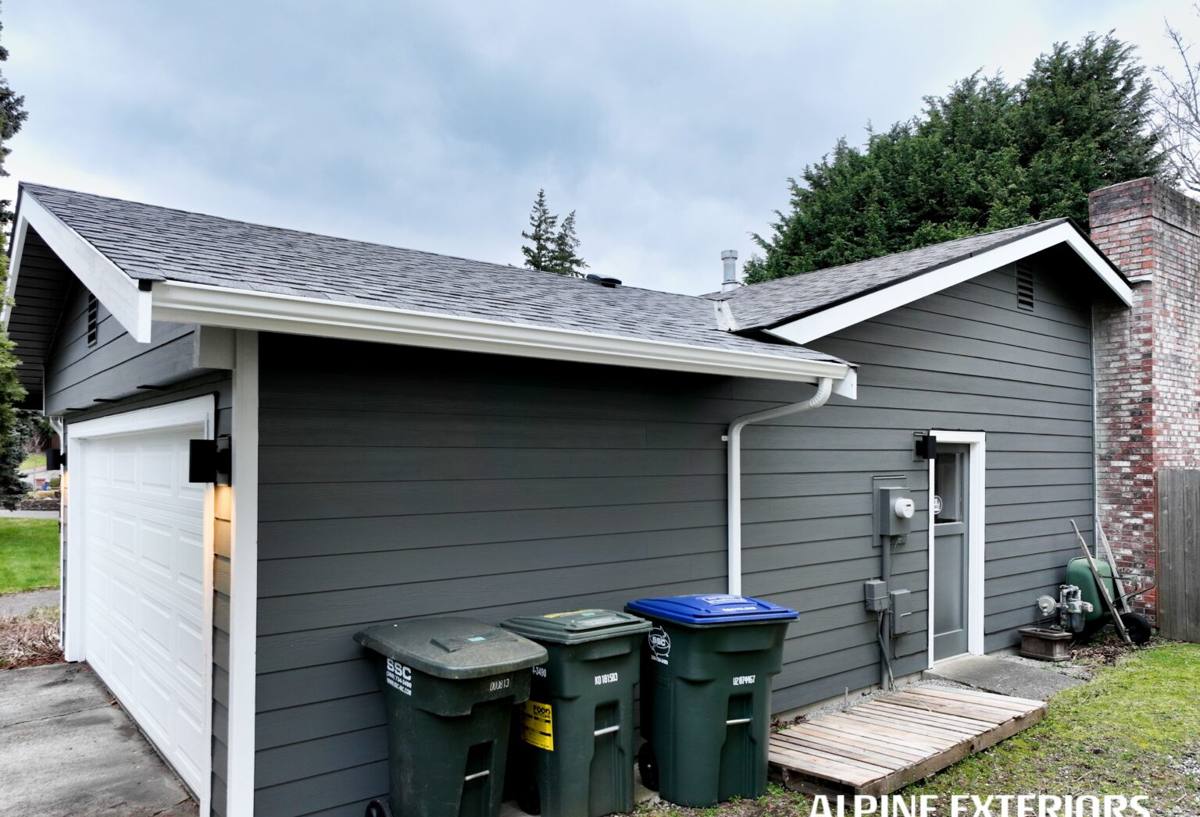
What Board & Batten Actually Is (And Isn't)
Board and batten is a siding pattern, not a material. It's built from wide, flat panels or boards installed vertically, with narrower strips — battens — covering the seams between them. That's the whole idea. The look can be built in cedar, in vinyl, in engineered wood, or in fiber cement, and the material you choose determines whether that pattern lasts twenty years or needs replacing in five. A lot of homeowners searching for board and batten siding are really searching for a look, without realizing how much the underlying product matters once it's exposed to a Bellingham winter.
On a properly built board and batten wall, the panels do the structural work of shedding water off the wall, and the battens are decorative and protective at the joints — not the primary defense against moisture. If that hierarchy gets reversed, or the battens are relied on to seal gaps that were cut poorly to begin with, the wall behind them can trap water long before any problem shows up at the surface.
Why We Build Barkley's Board & Batten in Fiber Cement, Not Vinyl or Wood
We install James Hardie fiber cement exclusively, and board and batten is one of the styles where that choice matters most. Here's the honest comparison, product by product.
Vinyl board and batten
Vinyl board and batten panels are inexpensive and go up fast, and manufacturers have gotten better at faking the shadow lines of true boards and battens. But vinyl expands and contracts more than fiber cement across Bellingham's temperature and humidity swings, which can telegraph waviness into those long vertical lines over time. It's also a thin, hollow-backed product — fine against ordinary rain, but without the mass or rigidity to perform like an actual board.
Cedar and painted wood board and batten
Real wood board and batten is the historical version of this style, and it looks genuinely good new. The problem in Barkley's climate shows up exactly where the style is most vulnerable: the vertical joints and the base of the battens, which sit in near-constant shade and dampness on tree-covered lots. That's where moss gets a foothold first, and it's also where wood siding starts to fail first. Keeping painted wood board and batten looking right here means a repaint and recaulk cycle most owners underestimate before they commit to it.
Engineered wood (LP-style) board and batten
Engineered wood products can look convincing off the truck and install quickly, but they're wood-based at the core, which means the cut edges and the panel-to-batten seams — the two places board and batten has the most of — are exactly the parts most sensitive to moisture intrusion if a seam ever opens.
James Hardie's fiber cement doesn't share these weak points. It won't warp with humidity swings, it's non-combustible, and it's engineered specifically for wet coastal climates in its HZ5 product line, which matches the rain and moisture profile Whatcom County sees every winter. That's the reason it's the only material we put on a Barkley home, board and batten or otherwise.
What a Correct Board & Batten Installation Involves
Board and batten hides a lot of the work that makes it succeed or fail. From the curb, two installations can look nearly identical; five years later, only one of them is still tight, straight, and dry behind the wall. The details that separate a correct job from a fast one:
- A continuous water-resistive barrier and rainscreen gap behind the panels, so any moisture that does get past the surface can drain and dry instead of sitting against the wall sheathing
- HardiePanel sections installed plumb, with the batten layout planned against the home's actual window and door openings before the first panel goes up, not adjusted on the fly
- Fastener spacing and type matched to Hardie's published fastening schedule at every batten, not whatever's fastest for the crew
- Factory-applied ColorPlus finish on both panels and battens, so color and sheen match without a field-painted batten standing out against a factory-finished panel
- Proper flashing and z-flashing at every horizontal transition, window head, and roofline intersection — the spots where vertical siding is most likely to leak if the work is rushed
- Caulk used only where Hardie specifies it, never as a stand-in for flashing that should have been installed instead
Any one of these done wrong usually doesn't show up on move-out day. It shows up two or three wet seasons later, as a soft spot, a streak, or a batten that's started to pull away.
Our Process, Start to Finish
We walk every Barkley project the same way, because skipping steps is exactly how siding jobs go wrong in this climate.
Assessment and layout
We look at the existing wall assembly, note any moisture damage already present, and plan the batten layout around the home's actual openings rather than a generic spacing — this is what makes board and batten read as intentional instead of applied afterward.
Tear-off and sheathing check
Old siding comes off down to the sheathing so we can check for rot or soft spots before anything new goes on. Covering up a problem is worse than finding it, and it's cheaper to fix now than after new siding is up.
Weather barrier and rainscreen
We install a continuous water-resistive barrier with a drainage gap behind the new siding — the single most important defense against the driving rain Barkley sees off Bellingham Bay and passing winter systems.
Panel and batten installation
HardiePanel goes up plumb and level, followed by battens fastened to Hardie's specification, with flashing integrated at every penetration and transition as we go rather than patched in afterward.
Finish and walkthrough
We check caulking, touch up any cut edges with matched ColorPlus touch-up product, and walk the finished job with the homeowner before calling it done.
Cost Factors for Board & Batten Siding in Barkley
Board and batten typically costs somewhat more than lap siding in the same material, mostly because of the extra labor in the battens and the layout planning involved. What actually moves the price on a given Barkley home:
| Factor | Why it matters |
|---|---|
| Wall height and complexity | Multi-story walls, dormers, and cut-ins around Barkley's varied rooflines add labor and material waste |
| Existing siding removal | Tear-off and sheathing repair costs vary a lot depending on what's found underneath the old siding |
| Batten spacing and reveal | Tighter batten spacing looks more traditional but uses more material and fastening time |
| Trim and color | Standard ColorPlus colors are more cost-efficient than premium or custom-matched finishes |
| Access and site conditions | Tree cover, tight side yards, and sloped lots common around Barkley can add setup and staging time |
We give every homeowner a firm, itemized estimate after seeing the home in person — never a phone quote based on square footage alone.
Living With Board & Batten: Maintenance and Longevity
One reason we like recommending fiber cement board and batten in this neighborhood is how little it asks of the homeowner afterward. There's no annual recaulking cycle to stay ahead of, no repaint schedule tied to keeping rot out, and the factory finish is warranted to hold its color and integrity for years, not just to look good on installation day. What we do recommend:
- An annual rinse-down, especially on shaded elevations, to keep moss and algae from getting established in the first place
- A visual check of caulking at trim and penetrations every couple of years — normal building movement can open a joint that's worth resealing early
- Keeping shrubs and low branches trimmed back from the wall so the shaded, damp microclimates that feed moss don't form right against the siding
That's the whole list, and it's short on purpose — the material and the installation are doing the heavy lifting so the maintenance doesn't have to.
Why a Crew That Already Works Barkley Matters
Board and batten rewards a contractor who plans the layout before the first panel goes up, and that planning depends on knowing what a neighborhood's homes actually look like. Barkley includes sections with their own architectural character, and a crew that's already worked the area knows how to lay out battens that read as original to the house rather than added on later. Local experience also means knowing which elevations catch the worst of the driving rain and shade in this particular pocket of Bellingham, and building the flashing and rainscreen details accordingly instead of applying a one-size-fits-all approach borrowed from a drier climate.
If you're weighing board and batten for a home in Barkley, we're glad to walk the property, talk through where it makes sense, and give you a straight answer — including if a different siding style is actually the better fit for your house. Reach out for a free, no-pressure estimate and we'll take it from there.