 Bellingham Exterior
 Roofing in Bellingham's Columbia Neighborhood
Columbia is one of Bellingham's older, established residential pockets, with a real mix of home ages and roof types sitting close enough to the water and the hills that the weather hits them from more than one direction. A roof here has to shed heavy winter rain, tolerate salt-laden air drifting off Bellingham Bay, and survive months of shade and dampness that let moss take hold. None of that is unusual for Whatcom County, but it does mean a roof replacement in this neighborhood isn't a generic job — the materials, ventilation, and detailing all need to account for what the roof will actually face here, not just what's cheapest to install.
This page is about one thing: doing a full roof replacement correctly on a Columbia-area home, and why the local specifics matter more than most homeowners realize until they've lived through a bad one.
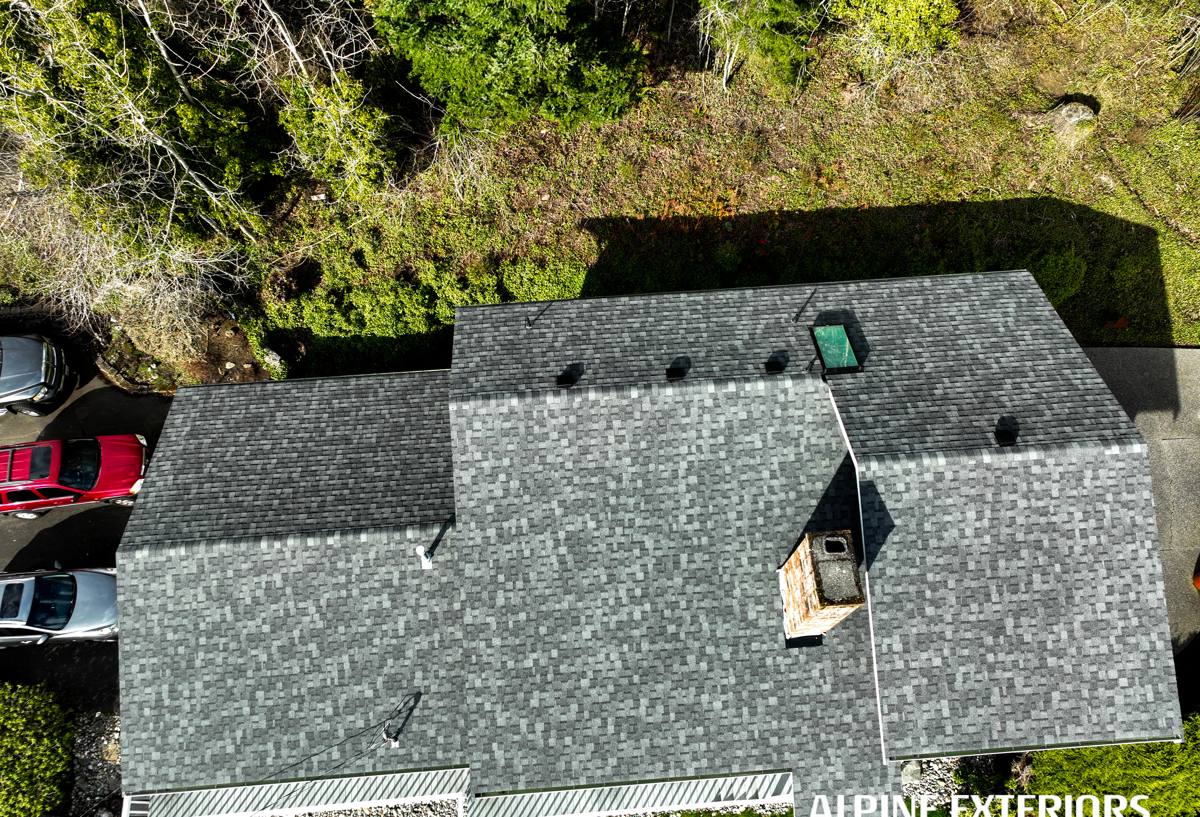
How Bellingham's Climate Wears Down a Roof
Salt Air and Metal Fasteners
Homes within a few miles of the bay are exposed to a fine, constant salt mist that most people never notice but that steadily corrodes unprotected metal. Exposed fasteners, cheap flashing, and lower-grade metal drip edge are the first things to show rust streaks and pitting. Once fasteners start to corrode, they lose holding power long before the shingles around them look worn.
Driving Rain
Whatcom County rain rarely falls straight down — wind off the water pushes it sideways and up under laps, edges, and flashing that would be fine in a calmer climate. That's why underlayment quality, flashing details, and lap technique matter more here than in drier parts of the country. A roof that's "watertight" on a still day can still leak in a January windstorm if those details were rushed.
Moss Season
Columbia's tree cover and the region's long, damp, low-sun stretch from fall through spring create ideal conditions for moss and algae to establish on north-facing slopes and shaded valleys. Moss holds moisture against the roof surface, works into shingle laps, and — left unaddressed for years — lifts and cracks shingles from underneath, which is a different failure mode than simple sun and weather aging.
Signs a Roof Needs Replacing, Not Patching
Not every roof problem calls for a full replacement, but on Columbia's older housing stock we see the same set of signs repeatedly when a roof has genuinely reached the end of its service life:
- Granule loss heavy enough that shingles look blotchy or bald in patches, especially on south- and west-facing slopes
- Shingles that are cupping, curling at the edges, or cracking when walked on
- Soft or spongy decking felt underfoot, or daylight visible through the attic sheathing
- Persistent moss growth that keeps returning within a season or two of cleaning
- Rust staining or visible corrosion at flashing, vents, or fastener heads
- Multiple past repairs in different spots — a sign the roof is failing broadly, not in one isolated area
- Attic insulation that's damp, discolored, or matted after a heavy rain event
If you're seeing two or more of these at once, patching usually just delays a bigger repair bill rather than avoiding it.
What a Correct Roof Replacement Actually Involves
Full Tear-Off
We remove the existing roofing down to the decking rather than layering over it. Layering hides problems, adds weight, and often voids material warranties — and on an older Columbia home, it's the only way to find out what condition the decking is actually in.
Decking Inspection and Repair
Any soft, delaminated, or water-stained sheathing gets replaced before new roofing goes down. Skipping this step is the single most common cause of early roof failure, because new shingles laid over compromised decking have nothing solid to hold onto.
Underlayment and Ice/Water Protection
Given how much wind-driven rain this area sees, we use a synthetic underlayment system with self-adhering membrane at vulnerable points — eaves, valleys, and around penetrations — rather than relying on standard felt alone.
Flashing
New flashing at every chimney, wall intersection, skylight, and vent — not a reuse of old, corroded pieces. This is where the majority of "mystery leaks" originate on older homes, and it's a detail that's easy to shortcut and hard for a homeowner to inspect afterward.
Ventilation
Balanced intake and exhaust ventilation keeps the attic temperature and moisture level stable, which reduces both moss formation on the roof surface and condensation damage inside the attic. On many older Columbia homes, ventilation was never brought up to a modern standard, and a replacement is the natural time to fix that.
Choosing the Right Roofing Material for This Climate
There's no single "best" roofing material — the right choice depends on your home's roof pitch, your budget, and how much long-term maintenance you want to take on. Here's how the common options actually compare for a home dealing with salt air, heavy rain, and moss pressure:
| Material | Moss/moisture resistance | Salt air durability | Typical lifespan | Maintenance |
|---|---|---|---|---|
| Architectural asphalt shingle | Good, with proper ventilation | Good with corrosion-resistant fasteners | 25–30 years | Periodic moss treatment recommended |
| Standing seam metal | Excellent — sheds moss growth | Very good with coastal-rated coatings | 40–50+ years | Low |
| Basic 3-tab asphalt shingle | Fair — more prone to moss lodging in laps | Fair, shorter fastener life | 15–20 years | Higher, more frequent moss cleaning |
| Synthetic/composite shingle | Good | Good | 30–40 years | Moderate |
For most Columbia-area homes, a mid-to-upper-tier architectural shingle or a standing seam metal roof gives the best balance of moss resistance, longevity, and appearance. We'll walk through your specific roof pitch, sun exposure, and tree cover before recommending one over the other — a heavily shaded, low-slope section of roof has different needs than a sunny, steep-pitched one, even on the same house.
Moss and Moisture: The Detail Most Replacements Get Wrong
A new roof is not automatically moss-proof. Moss establishes based on shade, moisture retention, and surface texture — all things a replacement can address directly:
- Zinc or copper strips installed near the ridge on moss-prone slopes, which release trace metal ions that inhibit regrowth as rain washes over them
- Improved attic ventilation so the roof surface isn't held artificially warm and damp from below
- Correct shingle lap and fastening so moss can't easily gain a foothold at the edges
- Trimming recommendations for overhanging branches where it's practical, since shade is the biggest driver of moss growth
None of these steps eliminate the need for occasional moss treatment over the roof's life, but they meaningfully extend the time between cleanings and reduce the risk of moss working its way under shingles.
Our Roof Replacement Process
Every roof replacement we do follows the same sequence, regardless of material chosen:
- On-site inspection and measurement, including attic ventilation assessment
- Written estimate covering material options, tear-off scope, and any decking contingencies
- Scheduling that accounts for Whatcom County's weather windows — we don't start a tear-off with rain in the forecast
- Full tear-off and decking inspection, with photos of any issues found before we cover them
- Underlayment, flashing, ventilation, and roofing installation
- Site cleanup, including a magnetic nail sweep of the yard and driveway
- Final walkthrough so you can see the completed work before we consider the job done
We keep you informed at each stage rather than disappearing until the invoice — especially around decking repairs, which are the one part of a replacement that can't be fully scoped until the old roofing is off.
What Drives the Cost of a Roof Replacement
| Factor | Why it matters |
|---|---|
| Roof size and number of planes | More cuts, ridges, and valleys mean more labor and material waste |
| Roof pitch | Steep roofs require more safety setup and slow the work down |
| Decking condition | Rot or delamination found during tear-off adds material and labor not visible from the ground |
| Material choice | Metal and premium composites cost more upfront but last longer with less maintenance |
| Ventilation upgrades | Adding or correcting intake/exhaust venting is worth doing during a replacement, not after |
| Access and site conditions | Tree cover, tight lot lines, and limited driveway access affect setup and disposal logistics |
We give a firm, written estimate before work starts, and we flag any decking or structural surprises before we fix them — not after they've already been billed.
Why It Matters That We Already Work in Columbia
A crew that's replaced roofs across Columbia and the surrounding Bellingham neighborhoods already knows which slopes hold moss longest, which older home styles tend to have under-ventilated attics, and how the wind comes off the bay during a winter storm. That local pattern recognition shows up in small decisions — where to add extra membrane, which slopes need zinc strips, how to detail a flashing junction — that a crew unfamiliar with the area might not think to make. It also means we're a known, reachable local business if a warranty question comes up five or ten years down the road, not a crew that worked here once and moved on.
If your Columbia-area roof is showing its age, or you just want a straight answer on whether repair or replacement makes sense, we're glad to come take a look. Reach out for a free, no-pressure estimate using the form below.