 Bellingham Exterior
 Windows in Columbia Take a Different Kind of Beating
Columbia is one of Bellingham's older, closer-in neighborhoods, and that shows up in the window stock we see on service calls: original wood sash from early-century bungalows, a wave of aluminum-frame replacements from the 1970s and 80s, and a mix of vinyl retrofits from every decade since. Each of those generations of windows was built for a different set of expectations, and almost none of them were built for what Whatcom County weather actually does to a house over 40, 60, or 100 years.
The combination that wears windows out here isn't any single extreme — it's the steady overlap of salt-laden air off the Sound, long stretches of driving rain, and a moss and algae season that runs longer than most homeowners realize. Salt air accelerates corrosion on metal hardware and older aluminum frames. Driving, wind-pushed rain finds every gap in aging flashing and caulk, rather than just running off a wall the way it would in a calmer climate. And moss doesn't just grow on roofs — it colonizes damp wood sills, sits against glazing putty, and holds moisture against a frame long after the rain has stopped. On an older Columbia home, these three factors compound: a wood sill that's been slowly wicking moisture for two decades is much more vulnerable to a moss colony than a new one would be.
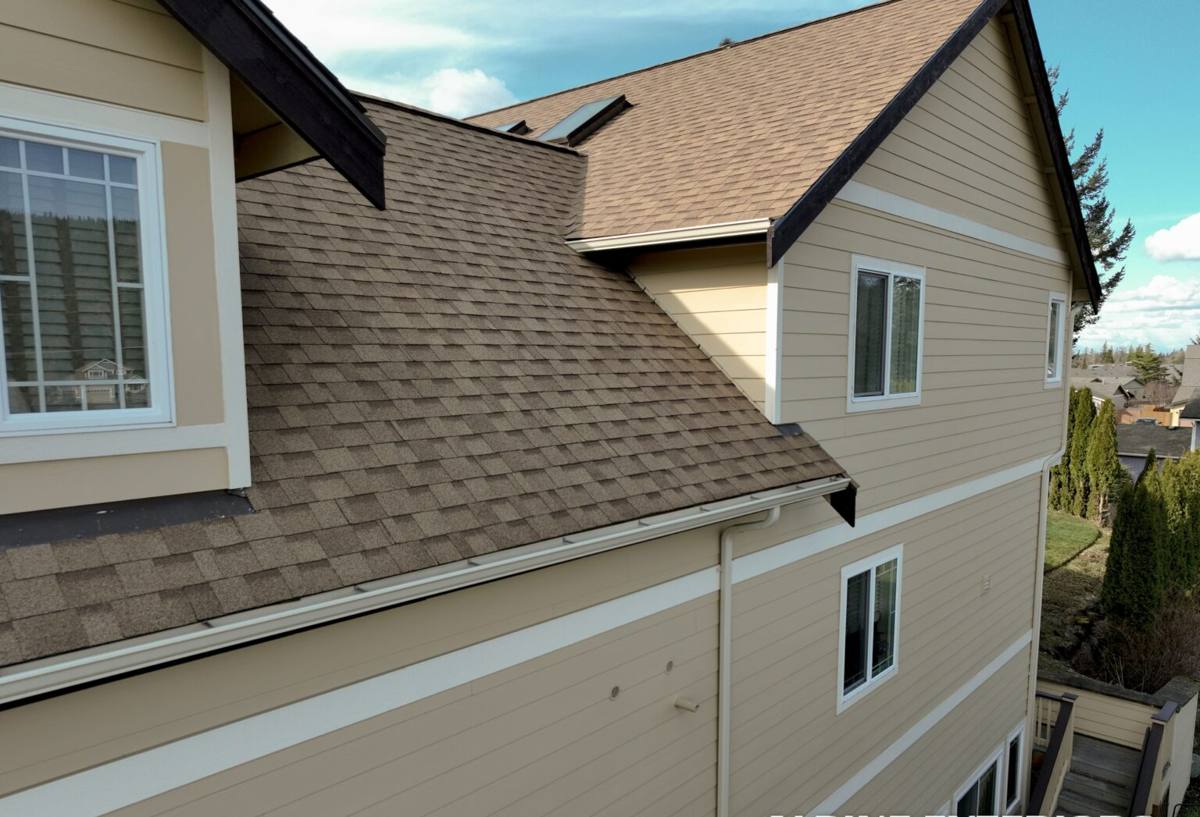
How to Tell a Window Is Actually Due for Replacement
Not every drafty window needs full replacement — sometimes reglazing, weatherstripping, or a storm window solves the problem. But there are signs that point clearly toward replacement rather than repair:
- Wood sash or sill that's soft, spongy, or visibly rotted when pressed with a thumb
- Persistent condensation between panes on double-pane units — this means the seal has failed and the insulating gas is gone
- Frames that no longer sit square, making the sash bind, stick, or fail to latch
- Visible daylight or a noticeable draft around the frame even with the window fully closed
- Paint that keeps failing in the same spot year after year, which usually points to moisture getting into the wood underneath
- Aluminum frames that feel cold to the touch and regularly run with condensation in winter
- Moss or dark algae staining that keeps returning on the sill or lower frame within a season of cleaning
If you're seeing two or more of these on the same window, replacement is usually the more honest recommendation than another round of caulk and paint.
What a Correct Window Replacement Actually Involves
It Starts Before the New Window Ever Shows Up
The single biggest factor in how a replacement window performs in this climate isn't the window itself — it's what happens at the rough opening before that window goes in. On an older Columbia home, that opening was almost never built to modern water-management standards, so a correct install means treating every opening as a small waterproofing project, not just a swap.
The Steps That Matter
- Full removal of the old unit and inspection of the framing, sill, and sheathing underneath for hidden rot or prior water damage
- Any compromised framing or sheathing repaired or replaced before the new window goes anywhere near the opening
- Proper flashing tape and a sloped sill pan installed so any water that does get past the exterior finish drains back out, not into the wall
- Window set plumb, level, and square, then shimmed and fastened per the manufacturer's specific installation instructions
- Insulation around the frame (not just caulk) to stop air movement without over-packing, which can bow the frame
- Exterior sealed with the correct sealant for the siding material, and interior finished to match the existing trim
Skipping the sill pan or flashing step is the single most common shortcut we see behind failed replacement windows in this area — and it's invisible until the wall starts showing damage years later.
Choosing a Window Built for This Climate
Frame material matters more here than in drier inland climates, because the frame is what's absorbing the daily cycle of rain, humidity, and salt air. Here's how the common options actually hold up over time in a coastal Whatcom County setting:
| Frame Material | How It Handles Salt Air & Rain | Maintenance Burden | Typical Lifespan Here |
|---|---|---|---|
| Vinyl | Won't corrode or rot; performs consistently in wet, salty air | Low — occasional cleaning | 20–30+ years |
| Fiberglass | Very stable in temperature swings and moisture; strong seal retention | Low | 30+ years |
| Wood (unclad) | Classic look but most vulnerable to sustained moisture and moss | High — regular painting/sealing | Varies widely with upkeep |
| Wood-clad (vinyl or aluminum exterior) | Good moisture protection outside, wood warmth inside | Moderate — interior finish care only | 25–35 years |
| Aluminum (uninsulated) | Prone to condensation and corrosion near salt air over time | Moderate to high | Shorter than insulated options |
We don't push a single "best" product on every home — the right call depends on your existing trim, budget, and whether you're trying to preserve a period look on an older Columbia house or simply get the most durable, low-upkeep option. What we do avoid is uninsulated aluminum replacement in full sun-and-rain exposure spots, because of how it performs against this specific climate pattern, not because of any brand issue.
Glass Package Matters As Much As Frame
For this climate, we generally recommend dual-pane units with a Low-E coating and an argon or krypton gas fill. The Low-E coating helps manage heat loss during the wet, overcast months that make up much of the year here, and a good gas fill slows heat transfer without adding meaningful cost. Triple-pane is worth discussing on north-facing or particularly exposed walls, but for most Columbia homes, a quality dual-pane package with tight installation outperforms a cheaper triple-pane unit installed poorly.
Our Process, Start to Finish
- On-site assessment — we look at every window being considered, not just the ones you called about, and check framing condition, not just glass
- Honest scope — we tell you which windows genuinely need replacement, which could be repaired instead, and why
- Written estimate — clear pricing by window, materials specified, and a realistic timeline
- Opening prep — removal, framing repair if needed, flashing and sill pan installation
- Window installation — set, shimmed, insulated, and sealed to manufacturer spec
- Finish work — interior trim and exterior sealant finished to match your home
- Final walkthrough — every window opened, closed, and checked with you before we consider the job done
What Actually Drives the Cost
We won't quote a price without seeing the openings, but these are the factors that move the number up or down on most Columbia-area jobs:
| Factor | Why It Matters |
|---|---|
| Frame material chosen | Vinyl, fiberglass, and wood-clad have different material costs and labor requirements |
| Hidden rot or framing damage | Older homes with long-term moisture exposure often need framing repair discovered only once the old window is out |
| Window size and configuration | Large picture windows, bays, and custom shapes cost more than standard double-hung sizes |
| Number of openings | Whole-house replacement typically has a lower per-window cost than a handful done separately |
| Access and second-story work | Upper-floor windows on older homes sometimes need staging or extra safety setup |
| Trim and interior finish matching | Matching older or custom interior trim profiles adds finish labor |
As a rough guide, straightforward single-window replacements in this region often land in the low-to-mid thousands per window depending on size and material, with whole-house projects priced per-opening at a lower blended rate. Any number we give you in person will be based on what we actually see at your house, not a generic average.
Why a Crew That Already Works Columbia Matters
A lot of window problems on Bellingham's older homes aren't obvious from the street. Knowing that a given block tends to have original single-pane wood sash under storm windows, or that a certain era of construction in this part of town skipped modern flashing details entirely, changes how we approach the estimate before we even open the first window. It also means we're not guessing at how the local moss and algae cycle behaves against your specific siding and trim combination — we've seen it play out on similar homes nearby, season after season.
There's also a practical side to being local: when a window needs a follow-up adjustment after the first winter's storms, or a warranty question comes up two years later, you're calling a crew that's still working in Whatcom County, not chasing down a company that did one job in the area and moved on.
Keeping New Windows Performing for Decades
A correct installation gets you most of the way to a long-lasting window, but a little seasonal attention protects that investment:
- Clear debris and moss from sills and tracks at least twice a year, especially going into the wet season
- Check exterior caulk lines annually for cracking or gaps, particularly on the sun-and-rain-exposed sides of the house
- Vacuum weep holes on vinyl and fiberglass frames so water can still drain out as designed
- Test locks and hardware yearly — salt air can stiffen or corrode hardware faster than it affects the frame itself
- Address any new condensation between panes right away, since it signals a seal failure rather than a cleaning issue
If you're weighing repair versus replacement on aging windows in Columbia, or you already know it's time, we're happy to take a look and give you a straight answer. Use the form below to request a free, no-pressure estimate — we'll tell you what we'd actually do if it were our own house.