 Bellingham Exterior
 Cordata's Climate Is Hard on Decks
North Bellingham gets a specific kind of weather punishment. Cordata sits far enough from the water that people assume salt air isn't a factor, but Bellingham Bay's influence reaches inland more than most homeowners realize, and combined with Whatcom County's long wet season, it adds up. Nine months of the year, a deck in this neighborhood is dealing with some combination of driving rain, standing moisture, and shade from mature landscaping that never quite lets the surface dry out. That's the environment moss loves, and it's the environment that finds every weak point in a deck's construction.
A deck built for a dry climate, or built without much thought to drainage and airflow underneath, will show it here faster than almost anywhere else in the state. Boards cup, fasteners work loose, and the substructure underneath — the part nobody sees until there's a problem — quietly rots while the top surface still looks fine.
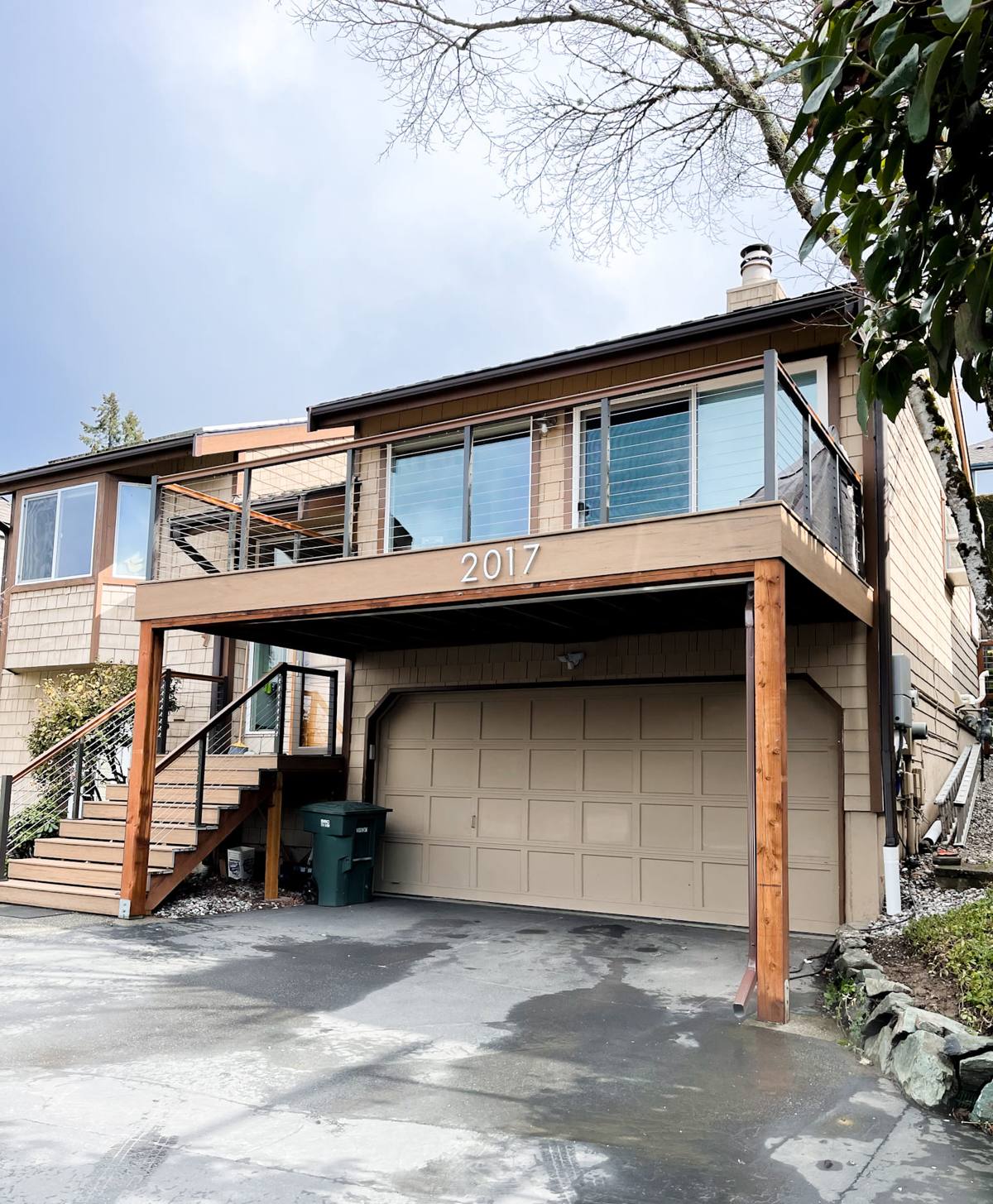
Why Composite Makes Sense for This Neighborhood
Composite decking isn't a fix for bad framing or poor drainage, but it does remove one whole category of problem that wood decks in Cordata deal with constantly: the board itself absorbing water, swelling, checking, and eventually rotting from repeated wet-dry cycles. Modern composite boards are engineered to shrug off moisture at the board level, which matters a lot when a deck spends half the year damp.
That doesn't mean composite is maintenance-free, and we won't tell you it is. It means the maintenance shifts from "sand, seal, and stain every year or two" to "keep the surface clean and make sure water can actually get away from the deck." For most homeowners in this area, that trade is worth it, especially on decks that get afternoon shade or sit under trees where a wood deck would need constant attention just to hold its finish.
What a Correct Composite Installation Actually Involves
The board is the part everyone sees. The part that determines whether the deck lasts is almost entirely underneath it. In a climate like this one, cutting corners on the structure is where decks fail early, regardless of what decking material sits on top.
Substructure and Framing
Composite boards are heavier than most people expect and behave differently than wood under load, so joist spacing needs to match the manufacturer's span rating for that specific product — not whatever spacing the old wood deck happened to use. We check the ledger board attachment to the house, confirm proper flashing where the deck meets the structure, and verify that any existing framing we're building on is actually sound before a single new board goes down. In a wet climate, hidden rot in old framing is common enough that we treat this step as non-negotiable, not optional.
Drainage and Ventilation
This is the step that gets skipped most often, and it's the one that matters most here. Composite decking doesn't rot, but the framing underneath it still can if water and debris collect and never dry out. Correct installation means grading and gapping that let water shed away from the house, keeping the underside of the deck ventilated rather than sealed off, and making sure nothing traps standing water against a joist or beam.
Fasteners and Flashing
Hidden fastener systems, correctly spaced clips, and stainless or coated fasteners rated for coastal-adjacent moisture all matter more here than they would in a drier climate. Cheap fasteners corrode, and corroded fasteners are how a deck that looks fine on top starts failing structurally underneath.
Choosing the Right Composite Board
Not all composite decking is built the same way, and the differences matter more in a climate that stays damp for months at a time. The table below covers the general categories we work with and how they hold up here.
| Board Type | Moisture Behavior | Maintenance | Typical Cost Position |
|---|---|---|---|
| Uncapped composite | Wood-plastic blend; can absorb some moisture at cut edges and fade faster in constant damp shade | Occasional cleaning; more prone to surface mold in shaded, wet spots | Lower upfront cost |
| Capped composite | Protective outer shell resists moisture and staining much better; handles Cordata's wet season with less surface trouble | Simple periodic washing | Mid-range |
| PVC/cellular decking | No wood content, essentially immune to rot; performs well in constant moisture and shade | Lowest maintenance of the group | Higher upfront cost |
| Pressure-treated wood | Absorbs water readily; needs regular sealing to slow rot in this climate | Annual or biennial cleaning/sealing | Lowest upfront cost, higher lifetime maintenance |
For most Cordata homes, especially anything with shade from landscaping or facing prevailing weather, we steer people toward capped composite or PVC. It's not that uncapped boards or wood are bad products — it's that they demand more upkeep in exactly the conditions this neighborhood produces, and we'd rather set that expectation up front than have a homeowner surprised two years in.
Problems We Find on Existing Decks Around Cordata
When we're called out to look at an aging deck in this area, the same handful of issues show up repeatedly:
- Moss and algae buildup on boards that never fully dry, especially on the shaded side of the house
- Soft or spongy framing under decking that still looks presentable on the surface
- Ledger board flashing that was never installed or has failed, letting water into the house rim joist
- Fastener corrosion causing boards to loosen or rattle underfoot
- Poor drainage where the deck sits low against grade, trapping water against the structure
Most of these trace back to shortcuts taken during the original build, not to the age of the deck itself. A well-built deck, wood or composite, can handle Whatcom County's weather for decades. A poorly drained or under-flashed one won't make it half that long.
Our Process From First Call to Final Walkthrough
We start with an on-site assessment of the deck footprint, the framing (if we're replacing decking on an existing structure), and how water currently moves around the house in that spot. From there we talk through board options honestly, including the trade-offs above, rather than steering everyone toward the most expensive product by default.
Once we're building, framing and flashing come first and get inspected before any composite board goes down — that sequence doesn't change regardless of schedule pressure. Board installation follows manufacturer spacing and fastening specs exactly, because warranty coverage on composite decking depends on it. We finish with a walkthrough covering how the specific product you chose handles cleaning and what, if anything, needs periodic attention.
Living With a Composite Deck in Whatcom County
Composite decking cuts down on maintenance, but "low-maintenance" isn't "no-maintenance" here. Moss and algae will still land on any outdoor surface in this climate, composite included, particularly in shaded corners that stay damp longer. A simple periodic wash with a soft brush and a composite-safe cleaner handles most of it. Avoid pressure washing directly into the board grain on uncapped products, since it can wear the surface texture over time.
The other half of long-term performance has nothing to do with the boards: keeping gutters and downspouts clear so water isn't dumping onto or near the deck, and keeping the area underneath the deck clear of leaf litter and debris so airflow keeps doing its job. A five-minute check after a big storm goes a long way in this region.
Why Hire a Crew That Already Works in Cordata
A lot of decking problems in this area aren't failures of the material — they're failures of a build plan that didn't account for what this specific climate does to a structure over time. A crew that already works in Cordata has seen how water moves around these lots, which sides of a house take the worst weather, and where drainage tends to go wrong on the kinds of framing common in this neighborhood. That's not something you get from a general framing spec sheet; it's something you get from doing the work here repeatedly.
Before hiring anyone for composite decking work in this area, it's worth asking a few direct questions:
- Will you inspect and address the existing framing, or just deck over what's there?
- What fastener system and hardware rating will you use, and is it suited for a wet climate?
- How will you handle ledger flashing where the deck meets the house?
- What's the manufacturer's span rating for the board you're recommending, and will the joist spacing match it?
- Does the installation meet the manufacturer's requirements for warranty coverage?
Straight answers to those questions tell you more about a contractor than any brochure will.
Get an Estimate for Your Cordata Deck
If you're planning a new composite deck or replacing an aging one in Cordata, we're happy to take a look and give you an honest read on what your project needs — no pressure, no upsell. Fill out the form below and we'll set up a time to come by.