 Bellingham Exterior
 Building a Deck in Fairhaven: What the Neighborhood Actually Demands
Fairhaven sits close to Bellingham Bay, on hilly ground with a mix of century-old homes and newer infill construction tucked under mature tree cover. That combination — salt-laden air off the water, sloped lots, and a lot of shade — puts different stress on an outdoor deck than you'd see on a flat, inland lot elsewhere in Whatcom County. A deck built for Fairhaven needs to be engineered for its slope, hardware rated for its air quality, and detailed for drainage in a spot that stays damp for months at a time.
We're not describing a different deck than we'd build anywhere else in Bellingham. We're describing the same core discipline — solid footings, correct fasteners, proper drainage — applied with extra attention to the specific conditions Fairhaven throws at a structure. Skip that attention and you get a deck that looks fine for a year or two and then starts showing rust streaks, soft spots, or a green film that never quite goes away.
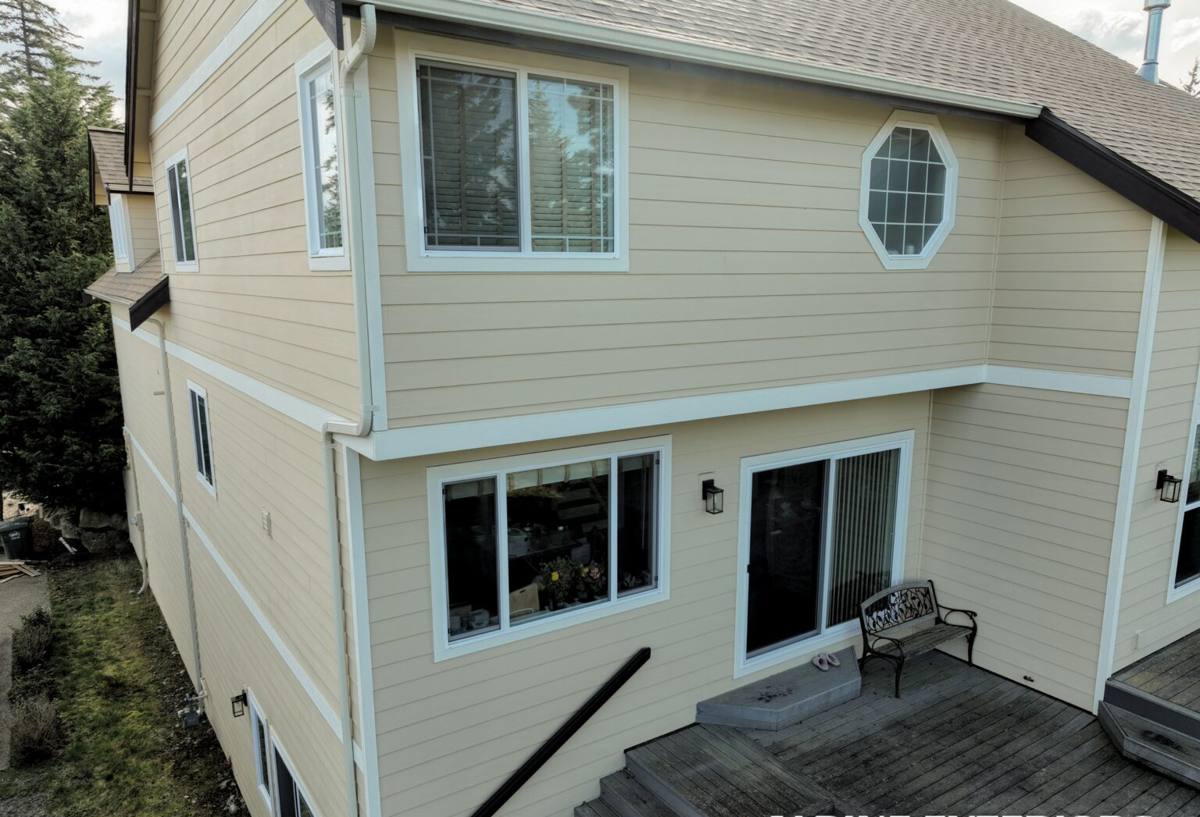
Salt Air, Driving Rain, and a Long Moss Season
Three regional factors do most of the damage to decks in this part of Bellingham, and they interact with each other.
Salt Air
Proximity to Bellingham Bay means airborne salt is a constant, low-level presence — not enough to notice day to day, but enough to accelerate corrosion on any hardware that isn't rated for it. Standard interior-grade screws and generic mounting brackets will start showing rust bleed into the wood within a season or two near the water. Once a fastener starts corroding, it loses holding strength long before it looks bad enough to worry most homeowners.
Driving Rain
Storms coming off the water don't just fall straight down — wind-driven rain gets pushed sideways into ledger boards, railing posts, and any spot where the deck meets the house. If flashing and sealant details aren't done correctly at that ledger connection, water works its way behind the siding and into the rim joist, and you don't find out until there's rot to deal with.
Moss Season
Whatcom County's wet season runs long, and Fairhaven's tree canopy keeps a lot of lots shaded and slow to dry. That's ideal growing conditions for moss and algae on horizontal wood surfaces. Beyond the cosmetic issue, a moss layer holds moisture against the decking material and turns a walking surface slick and genuinely dangerous on stairs and ramps.
None of these factors are dealbreakers for a deck in this neighborhood — they're just design and material inputs that have to be accounted for from the start, not patched in later.
What a Correctly Built Deck Involves Here
Footings and Framing
Many Fairhaven lots slope, sometimes steeply, which changes how a deck's substructure has to be engineered. Footings need to be sized and placed for the actual soil and grade at your property, not a generic spacing pulled off a plan built for flat ground. On a sloped lot, that often means deeper or additional footings, taller posts with proper bracing, and more attention to lateral support so the structure doesn't rack over time.
Fasteners and Hardware
Given the salt air, we use stainless steel or hot-dip galvanized fasteners and connectors rated for coastal exposure and for contact with treated lumber — treated wood contains chemicals that corrode ordinary galvanized hardware faster than people expect. This isn't an upgrade we push to run up a bid; it's the standard we hold ourselves to for anything built this close to the bay, because replacing rusted-out hardware later means tearing into a finished deck.
Drainage and Airflow
Every ledger board gets proper flashing so water sheds away from the house rather than behind the siding. Decking boards get the gap spacing they need to shed water instead of trapping it, and where we can, we keep airflow moving underneath the deck so the framing has a chance to dry out between rain events instead of staying damp for weeks. On lower decks close to grade, that ventilation detail matters even more, since airflow is naturally more restricted.
Choosing a Decking Material for This Climate
There's no single "right" decking material for Fairhaven — it depends on your budget, how much upkeep you want to do, and how long you want the deck to last before major work is needed. Here's how the common options actually compare under local conditions.
| Material | Upfront Cost | Maintenance | Moisture/Salt Resistance | Typical Lifespan |
|---|---|---|---|---|
| Pressure-treated wood | Lowest | Annual cleaning, periodic sealing | Good if fasteners and sealant are kept current | 15–20 years with upkeep |
| Cedar | Moderate | Regular sealing to hold color and resist moisture | Naturally moisture-resistant, but softer surface | 15–25 years with upkeep |
| Capped composite | Highest | Occasional washing, no sealing/staining | Very good — doesn't absorb water or feed rot | 25–30+ years |
In a shaded, damp neighborhood like Fairhaven, the maintenance column matters more than it does elsewhere. A pressure-treated or cedar deck that doesn't get its annual cleaning and resealing will grow moss faster and hold moisture longer here than the same deck on a sunny, exposed lot. Composite decking costs more upfront but sidesteps that maintenance burden almost entirely, which is why we see more homeowners in this part of Bellingham lean that direction for decks that get heavy shade. None of these are the "wrong" choice — they're a trade-off between cost now and time spent maintaining it later.
Designing for Fairhaven's Terrain and Character
Two things shape deck design in this neighborhood more than most: the slope of the lot and the character of the homes.
On a sloped lot, a deck often ends up taller off the ground than homeowners initially picture, which brings guardrails and stair design into play early rather than as an afterthought — code requires guardrails once a deck surface gets high enough above grade, and stair geometry has to be right for safety, not just looks. If your lot has any kind of view toward the bay, railing choice matters too: a cable rail or glass panel system preserves sightlines in a way a solid rail doesn't, though it costs more and has its own maintenance profile in salt air.
For the neighborhood's older homes, we try to design decking that complements the house rather than fighting it — trim details, railing style, and even fastener finish can either blend with a historic-character home or clash with it. That's a conversation we have during design, not something we default on without asking what you're going for.
Our Process, From Estimate to Finished Deck
- Site visit — we walk the lot, check slope and soil, note sun and shade exposure, and look at how the deck will tie into the house.
- Design and material selection — we go over layout, decking material, and railing options against your budget and how much upkeep you want to take on.
- Permit — decks above a certain height off grade typically require a permit and code-compliant guardrails; we handle that paperwork rather than leaving it on you.
- Build — footings and framing first, then decking, railing, and stairs, with fastener and flashing details done to the standard this climate requires.
- Walkthrough — we go over the finished deck together, including what maintenance it'll actually need going forward.
Keeping a Fairhaven Deck Sound Year After Year
Whatever material you choose, a little seasonal attention goes a long way in this climate. A simple routine most homeowners here should follow:
- Sweep leaves and debris off the deck regularly through fall — trapped organic matter is what feeds moss and rot fastest.
- Rinse or lightly scrub off moss and algae buildup before it gets a foothold, especially on stairs and shaded sections.
- Check exposed fasteners and hardware once a year for rust streaks or corrosion, particularly on railing posts and stair connections.
- Reseal or restain wood decking on the manufacturer's recommended schedule — don't wait until it looks obviously weathered.
- Keep gutters and downspouts near the deck clear so runoff isn't dumping extra water onto or under the structure.
- Confirm gaps between deck boards stay clear of debris so water keeps draining the way it was built to.
Why Hire a Crew That Already Works Fairhaven
A lot of deck problems in this neighborhood trace back to work that was designed for a different climate — hardware that wasn't rated for salt air, drainage details that assumed a sunnier, flatter lot, or footings sized for soil conditions that don't match what's actually under a Fairhaven property. A crew that already builds in this part of Bellingham has seen how sloped lots, bay-adjacent air, and heavy tree shade actually play out on a finished deck over several seasons, not just on paper.
That familiarity also speeds up the practical side of the job — knowing what the local permitting process expects, knowing which material choices hold up under this specific combination of moisture and shade, and knowing how to detail a deck so you're not calling someone back out in two years to deal with avoidable rot or corrosion.
If you're thinking about a custom deck for your Fairhaven property, we're happy to come take a look, walk the lot with you, and put together a straightforward estimate — no pressure, no obligation. Use the form below to get started.