 Bellingham Exterior
 Board & Batten in Cordata: A Style That Has to Earn Its Keep
Board and batten has become one of the most requested looks for homes going through a siding replacement in north Bellingham, and Cordata is no exception. The vertical lines read as clean and modern on newer builds, and they work just as well dressing up an entryway, gable, or accent wall on an older home that's otherwise clad in lap siding. But board and batten isn't just a look — it's a different way of shedding water off a wall, with more seams and more vertical joints than horizontal lap siding. In a Whatcom County climate, that detail matters more than the color choice.
We install board and batten siding in Cordata regularly, and we treat it as its own trade skill, not a variation on standard lap work. Getting the vertical joints, batten spacing, and water management right is what decides whether this siding looks sharp for two years or for twenty.
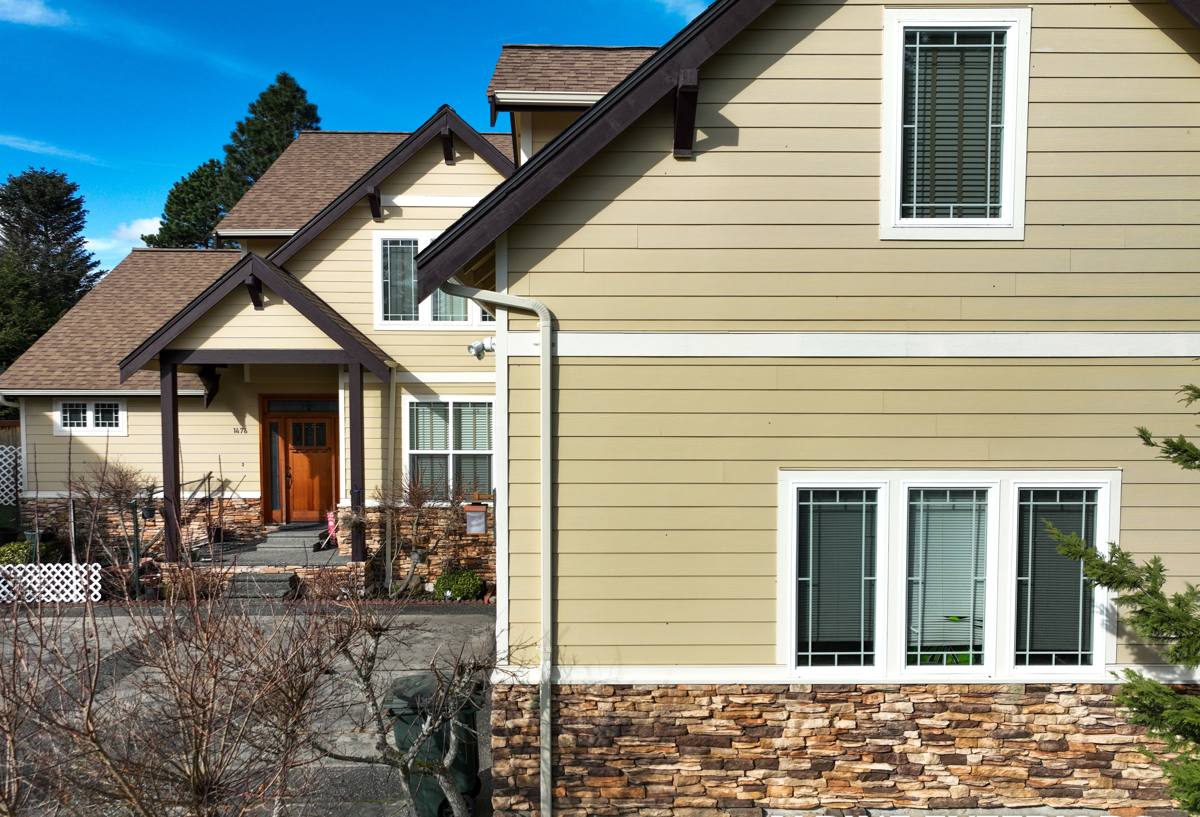
What Board & Batten Siding Actually Is
The Look
Board and batten uses wide flat panels or boards installed vertically, with narrower strips (the battens) covering the seams between them. The result is a rhythmic, shadow-lined facade that reads as more architectural than standard lap siding — which is why it shows up so often on accent gables, porches, and modern farmhouse-style remodels around Bellingham.
The Substrate Question
Board and batten can be built two ways: true board-on-board (two layers, more material, more depth) or a single-layer vertical panel with battens fastened over the joints. We install James Hardie's engineered vertical siding products for this application because they hold a straight line, don't cup or bow with seasonal moisture swings, and take a factory finish that doesn't rely on field-applied stain or paint to stay protected.
Why This Climate Is Tougher on Vertical Siding
Three things define siding performance in this part of Whatcom County, and all three hit vertical siding differently than horizontal:
Salt Air
Bellingham sits on Puget Sound, and marine air carries salt inland further than most homeowners expect. Cordata is farther from the immediate waterfront than neighborhoods right on the bay, but the region's air is still salt-influenced, and that moisture accelerates corrosion on exposed fasteners and degrades finishes that aren't built for it.
Driving Rain
Vertical board and batten has more linear feet of seam per square foot of wall than lap siding does. Every one of those seams is a place wind-driven rain can push moisture behind the cladding if the water-resistive barrier, flashing, and batten spacing weren't detailed correctly. This is the single biggest failure point we see on board and batten jobs done without PNW-specific technique.
Moss Season
Bellingham's long wet season keeps north- and shade-facing walls damp for months at a time, and vertical grooves and batten shadow lines are exactly where moss, algae, and mildew like to establish. A siding material that resists moisture absorption stays cleaner longer with far less scrubbing and pressure washing.
Why We Only Install James Hardie for This Application
Board and batten gets specified in vinyl, LP SmartSide (engineered wood), primed spruce, and cedar as often as it does in fiber cement. We don't install any of those for this job, and it's worth explaining why in plain terms rather than just listing a brand preference.
| Material | Common Trade-Off in Vertical Applications |
|---|---|
| Vinyl | Vertical panels can show waviness in temperature swings and rely on interlocking joints that aren't as rigid as a fastened board-and-batten profile; color is baked in but the material itself is thinner and less impact-resistant. |
| LP SmartSide (engineered wood) | Wood-based core, so cut edges and any breach in the factory coating are vulnerable to moisture wicking — a real risk on a profile with this many seams in a wet climate. |
| Primed Spruce / Cedar | Real wood grain and depth, but field-finished coatings need recoating on a maintenance cycle, and end grain at every board and batten joint is a moisture entry point that has to be sealed and re-sealed over the life of the siding. |
| James Hardie Fiber Cement | Non-combustible, dimensionally stable in wet-dry cycles, factory ColorPlus finish carries its own warranty, and the HZ5 product line is engineered for Pacific Northwest moisture exposure. |
None of those other products are junk — they're reasonable choices for some climates and budgets. We just don't think they hold up to Bellingham's combination of salt air, sustained rain, and moss pressure as well as Hardie does, especially in a vertical profile where seam count is higher than a standard wall.
What a Correct Board & Batten Installation Involves
Water Management Behind the Cladding
Before any board goes up, the wall needs a continuous water-resistive barrier with correctly lapped and taped seams, proper flashing at every window, door, and penetration, and a drainage plane that lets any moisture that gets past the cladding find its way back out. This step is invisible once the job is done, and it's also the step that separates a board and batten install that lasts from one that doesn't.
Panel and Batten Fastening
James Hardie publishes specific fastener patterns, edge clearances, and batten spacing for vertical applications, and those specs exist because they were tested for wind and moisture performance. Overdriven nails, wrong fastener spacing, or battens installed too tight against the substrate are common shortcuts that shorten the life of the siding even when the surface looks fine on install day.
Joint and Trim Detailing
Every horizontal joint, corner, and transition to trim needs to be flashed or caulked with a product rated for the exposure, not just whatever caulk was on the truck. On a vertical profile, these details repeat far more often than on lap siding, so consistency across the whole wall matters.
How the Job Runs in Cordata
- On-site walkthrough to assess existing siding, sheathing condition, and any moisture damage before quoting
- Written estimate covering tear-off, water-resistive barrier, flashing, Hardie material, and labor as separate line items
- Old siding removed and sheathing inspected — this is often where hidden rot from a prior installation shows up
- Water-resistive barrier and flashing installed to current best practice, not just "what was there before"
- James Hardie vertical panels and battens installed to manufacturer fastening spec
- Final walkthrough with the homeowner before we consider the job done
Because we work this neighborhood regularly, we already know what north Bellingham weather does to a job site — when rain delays are worth taking versus when work can proceed safely, and how to sequence a project so exposed sheathing isn't left uncovered overnight.
What Board & Batten Costs Depend On
| Factor | Why It Moves the Price |
|---|---|
| Wall prep condition | Rotten sheathing or old moisture damage found at tear-off adds repair cost before new siding can go on |
| Board-on-board vs. panel-and-batten | True board-on-board uses more material and labor than a single vertical panel with applied battens |
| House height and access | Multi-story walls, steep gables, and tight side yards affect scaffolding and labor time |
| Full re-side vs. accent application | An accent gable or entry feature costs far less than cladding an entire elevation |
| Trim and detail complexity | Windows, corners, and transitions all add fastening and flashing labor |
We give exact numbers only after seeing the wall in person — anyone quoting a firm price for board and batten siding sight unseen is guessing at what's under the old cladding.
Maintaining Board & Batten Through a Bellingham Winter
- Rinse shaded and north-facing walls periodically during moss season to prevent buildup in the batten shadow lines
- Keep gutters and downspouts clear so roof runoff isn't sheeting down the siding face
- Trim back vegetation and landscaping that keeps a wall section shaded and damp longer than the rest of the house
- Have caulked joints and trim transitions checked periodically — caulk is a maintenance item on any siding system, including Hardie
- Watch for any soft spots or discoloration near the base of the wall, which usually points to a drainage or flashing issue worth catching early
Why Hiring a Crew That Already Works Cordata Matters
Board and batten forgives fewer mistakes than lap siding, and a crew that hasn't detailed it for this climate before is learning on your wall. We install James Hardie exclusively, we've built our fastening and flashing practices around what actually holds up through a Whatcom County wet season, and we're not guessing at how salt air and driving rain treat a vertical seam pattern — we've seen it firsthand on homes in this area.
If you're considering board and batten siding for a Cordata home, we're glad to take a look and walk you through what your specific walls need. Reach out for a free, no-pressure estimate using the form below.