 Bellingham Exterior
 Birch Bay Decks Face a Different Kind of Wear
Birch Bay sits right on the water, and that changes what a deck has to survive. Homes here get a steady mix of salt-laden air off the bay, wind-driven rain that finds its way under flashing and between boards, and a long stretch of gray, wet months where moss and algae get a real foothold on anything horizontal. A deck built the same way you'd build one twenty miles inland in a drier pocket of Whatcom County often shows problems within a few seasons here — soft spots at the ledger, corroded fasteners, slick green boards by December, railing posts that start to wobble.
None of that is unusual for waterfront and near-waterfront property. It's just a reason to build differently. This page covers what we've learned building and repairing decks specifically in this stretch of coastline, and what that means for material choice, framing, and upkeep.
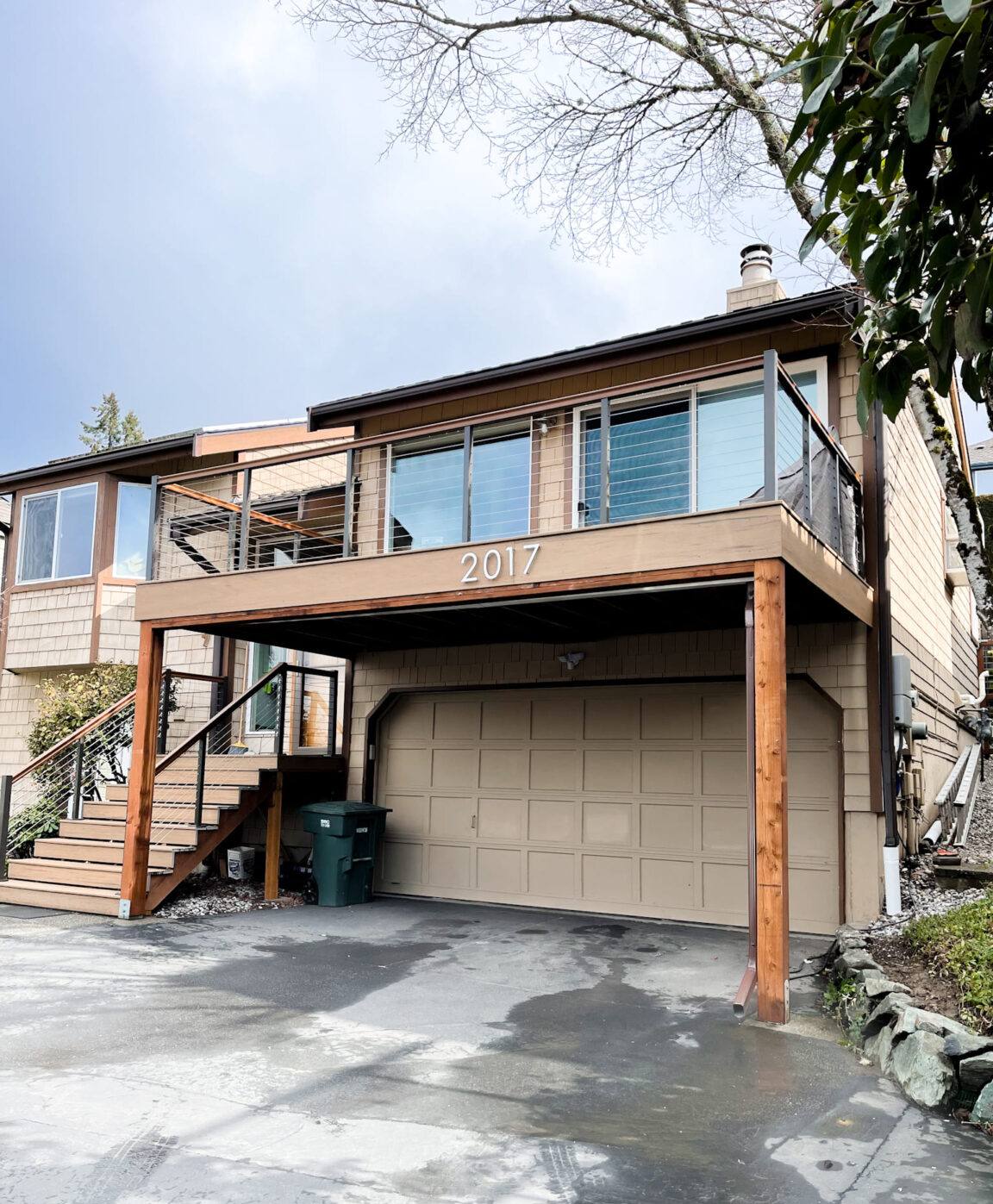
What a Birch Bay Property Actually Needs From Its Deck
A lot of homes in Birch Bay are used differently than a typical inland residence — some are full-time homes, many are weekend or vacation properties, and quite a few sit close enough to the water that wind exposure and salt spray are a daily fact of life rather than an occasional storm event. That changes the priority list:
Sitting Empty Between Visits
If a property isn't occupied every week, small problems don't get caught early. A hairline gap at a ledger flashing or a fastener that's starting to bleed rust can turn into real rot or structural movement before anyone notices. That argues for materials and connections that fail slowly and visibly, not ones that hide damage underneath.
Wind Exposure
Open exposure toward the water means higher sustained wind loads on railings and any roof or pergola structure tied into the deck. Post spacing, railing attachment, and footing design all need to account for that, not just copy a spec sheet written for a sheltered inland lot.
Foot Traffic in Wet, Mossy Conditions
Bare feet, pool or beach gear, and a deck surface that's damp more months than it's dry — slip resistance matters as much as looks. Some of the most attractive decking profiles are also the slickest once algae gets started, which is worth knowing before you pick a board.
Decking Material: What Actually Holds Up Here
There's no single "best" decking material — there's a best material for this climate and how you use the space. Here's how the common options actually perform under salt air, driving rain, and a long moss season, based on what we see come back for repair versus what doesn't.
| Material | Moisture & Salt Air Behavior | Moss/Algae Resistance | Maintenance |
|---|---|---|---|
| Pressure-treated wood | Absorbs moisture readily; fasteners and hardware need corrosion-rated coatings or they'll bleed rust into the boards | Low — needs regular cleaning and re-sealing to resist growth | Annual cleaning, periodic re-staining/sealing |
| Cedar | Naturally more rot-resistant than treated pine, but still absorbs moisture at end grain and fastener holes | Moderate — still needs upkeep in a wet, shaded yard | Regular cleaning, oil or sealant every 1-2 years |
| Capped composite | Doesn't absorb water into the core; shrugs off salt spray well | Higher — smooth cap sheds algae more easily than wood grain, but still needs washing | Periodic washing; no staining or sealing |
| Uncapped composite (older style) | Can absorb some moisture at the surface over time | Moderate — textured surface can hold onto moss and mildew | Regular washing; more prone to surface staining than capped versions |
Our default recommendation for anything close to the water in Birch Bay is capped composite decking, for one simple reason: it doesn't give moisture or salt a way into the board itself, and the smooth cap is far easier to keep clear of moss through the wet months. Real wood still has its place — it's warmer underfoot, it's often less expensive up front, and some homeowners simply prefer the look and are willing to keep up with sealing on a schedule. We'll lay out the honest trade-offs for your specific property rather than push one material across the board.
What's Underneath Matters More Than What's On Top
A deck's surface gets all the attention, but the framing, fasteners, and footings are what actually fail first in a salt-air, high-rainfall environment — and they're the part a homeowner can't easily inspect themselves once the boards are down.
Fasteners and Hardware
Standard galvanized fasteners corrode faster near salt water than they do inland. We use stainless steel or coastal-rated corrosion-resistant fasteners and structural hardware on Birch Bay builds — it costs more up front, but it's the single biggest factor in whether a deck's connections are still sound in fifteen years or starting to fail in five.
Ledger Flashing and Attachment
Where the deck ties into the house is the most common place we find water damage on older decks in this area — usually from flashing that wasn't detailed for the amount of wind-driven rain this stretch of coast actually gets. Proper flashing here isn't optional trim work; it's the difference between a dry rim joist and a rotted one behind the siding.
Footings on Coastal Soil
Soil conditions close to the water can vary quite a bit from lot to lot — some pockets are sandy and well-draining, others hold water longer than you'd expect. We size and place footings based on what we actually find when we dig, not a generic spec, and we won't guess on frost depth or bearing capacity to save a site visit.
Railings, Stairs, and Code
Any deck more than a modest height off grade needs a guardrail, and Washington's building code sets minimum requirements for railing height, baluster spacing, and stair geometry that we build to as a floor, not a suggestion. In a wind-exposed spot like Birch Bay, we typically go beyond code minimums on post spacing and railing attachment simply because the loads are higher than what the code assumes for a sheltered inland deck. Whatcom County handles permitting for most elevated deck construction, and we coordinate that as part of the job rather than leaving it for the homeowner to sort out.
How We Build a Custom Deck in Birch Bay
- Site visit and design: We walk the property, check soil and drainage, note wind exposure and sun/shade patterns, and talk through how you actually plan to use the space.
- Material selection: Based on that site visit, we give you honest options — not just the highest-margin product — with real trade-offs for your specific lot.
- Permitting: We handle the Whatcom County permit application and inspections tied to the build.
- Footings and framing: Footings sized to what we find on site, framing with coastal-rated fasteners and hardware throughout.
- Decking, railing, and stairs: Installed to code minimums or better, with attention to drainage and airflow underneath to reduce moisture buildup.
- Final walkthrough: We go over care and maintenance specific to the materials you chose before we consider the job done.
Living With a Deck Through Moss Season
Even the best-built deck in this climate needs some seasonal attention. A short, honest maintenance routine keeps a Birch Bay deck looking and performing the way it should:
- Sweep and rinse the deck surface regularly through fall and winter to keep organic debris from feeding moss and algae growth
- Check for standing water after storms — pooling usually points to a drainage or slope issue worth addressing before it causes rot
- Inspect fasteners and hardware once a year for early rust staining, especially near the ledger and stair stringers
- Keep gutters and downspouts clear so roof runoff isn't dumping extra water directly onto or under the deck
- Re-seal or re-stain wood decking on the schedule the product actually calls for — skipping a cycle in this climate shows up fast
- Trim back vegetation that's shading the deck and keeping it damp longer than it needs to be
What Affects the Cost of a Custom Deck
| Factor | Why It Matters in Birch Bay |
|---|---|
| Size and footprint | More square footage means more framing, footings, and decking material |
| Decking material | Capped composite costs more up front than treated wood but needs far less upkeep in this climate |
| Site access and grading | Sloped or hard-to-access waterfront lots can add labor and equipment time |
| Height and railing complexity | Taller decks need more substantial railing and stair structures to meet code and hold up to wind |
| Hardware and fastener grade | Coastal-rated stainless hardware costs more than standard galvanized but is worth it this close to salt water |
| Permitting | County permit and inspection requirements add time and a fee, but protect you if the deck is ever inspected during a sale |
We're glad to give you a real, itemized number for your specific project instead of a rough per-square-foot guess — the honest range depends heavily on the factors above.
Why It Matters That We Already Work in Birch Bay
Building decks along this part of the Whatcom County coastline for a while means we're not guessing about what fails here. We know which corner of a lot tends to hold water, roughly what kind of wind exposure a waterfront-facing deck is going to see, and which materials actually make it through a full wet season without turning green. That local track record matters more than it sounds — a deck spec that works fine in a sheltered Bellingham backyard can be the wrong call fifty yards from the water in Birch Bay, and we've seen both sides of that mistake on repair calls.
We also already know the local permitting process, which keeps a project moving instead of stalling on paperwork neither of us has dealt with before.
If you're planning a new deck or replacing one that hasn't held up to the salt air and rain, we're happy to come take a look and put together a straightforward, no-pressure estimate. Use the form below to get started.