 Bellingham Exterior
 Building a Deck That Actually Belongs in Birchwood
Birchwood sits close enough to Bellingham Bay and the surrounding wetlands that its homes deal with a specific combination of conditions: salt-tinged air drifting in off the water, long stretches of driving rain through fall and winter, and heavy tree cover that keeps everything shaded and damp well into spring. A deck built for a dry inland climate, or even one built the way it was done twenty years ago in this same neighborhood, will not hold up the same way here. The wood, the fasteners, the framing details, and the finish schedule all need to account for moisture that doesn't fully go away for months at a time.
This page is about one thing: what it takes to build a custom deck in Birchwood that survives Whatcom County's wet season after wet season without rotting, corroding, or growing a green film every spring. It's not a general "how decks work" page — it's what we've learned building and repairing decks in this specific part of Bellingham.
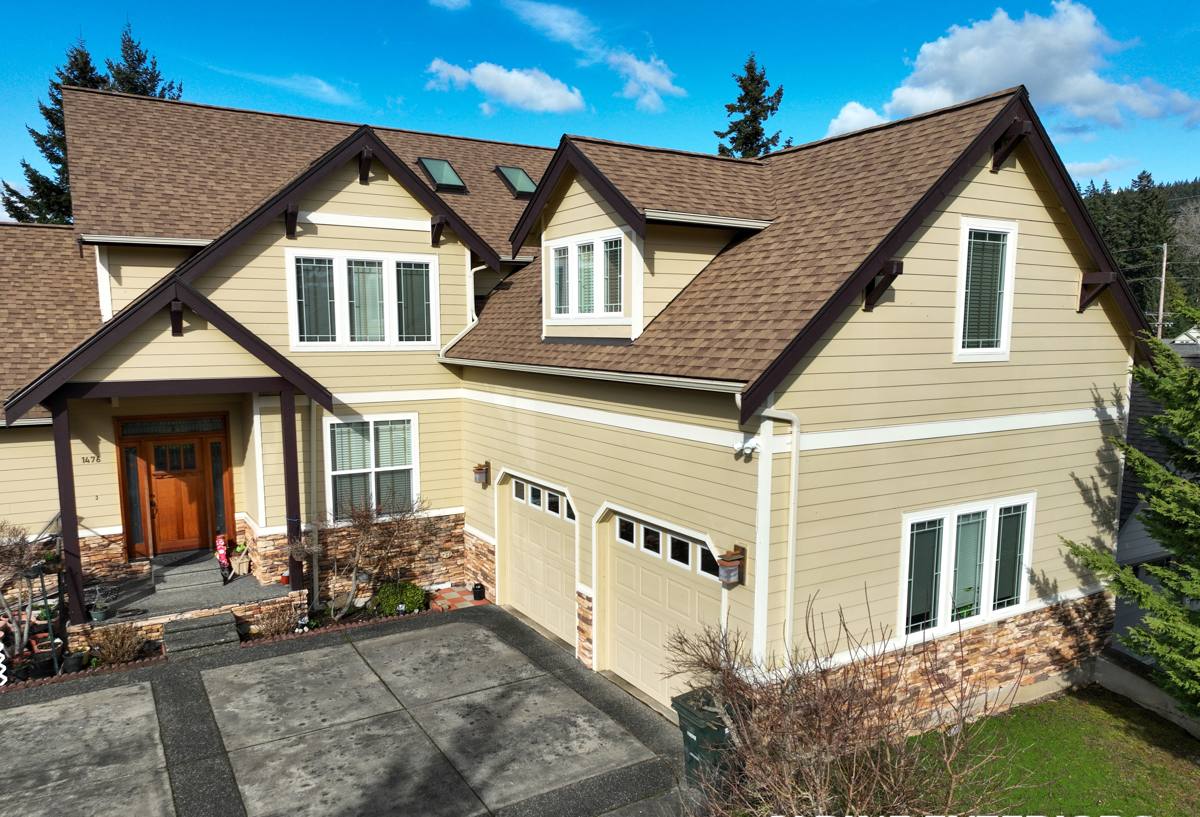
What Birchwood's Climate Actually Does to a Deck
Three things drive almost every deck problem we see in this area, and they compound each other.
Salt Air
Being close to the bay means airborne moisture carries trace salt, even a few miles inland. Salt accelerates corrosion on any exposed metal — fasteners, joist hardware, railing brackets — far faster than it would in a dry inland town. A deck screw or bracket rated for general outdoor use can start showing rust streaks within a couple of seasons here if it wasn't specified for a coastal or marine-grade environment.
Driving Rain
Bellingham's rain doesn't just fall straight down — winter storms push it sideways, which means water gets driven up under railings, behind fascia boards, and into any gap in flashing that would stay dry in a calmer climate. Horizontal rain finds every shortcut a crew took on flashing and end-grain sealing.
Moss and Shade
Birchwood's tree canopy is part of what makes the neighborhood appealing, but it also means many decks sit in partial or full shade most of the day. Shaded, damp wood is exactly what moss and algae need to establish. Once moss gets a foothold on decking or stair treads, it holds moisture against the wood surface constantly and becomes a slip hazard, especially on stairs.
None of this means a deck can't hold up well in Birchwood — it means the design and material choices have to be made with these three factors in mind from the start, not patched around later.
Choosing Decking Material for This Site
There's no single "best" decking material for every Birchwood yard — the right choice depends on how much sun the deck gets, how much upkeep the homeowner wants to do, and budget. Here's how the common options actually perform under this area's conditions.
| Material | How It Handles Salt Air & Rain | Moss/Algae Resistance | Maintenance |
|---|---|---|---|
| Cedar | Naturally rot-resistant heartwood, but needs sealing to keep water out of end grain | Moderate — still needs cleaning in shaded spots | Annual cleaning, re-oil or re-seal every 1-2 years |
| Pressure-treated fir/pine | Treated for rot but fasteners and cut ends need extra sealing | Low — prone to moss if shaded and not cleaned | Annual cleaning, staining every 2-3 years |
| Composite decking | Doesn't absorb water or rot; hardware still needs to be corrosion-rated | Higher — but can still get a moss film in deep shade without cleaning | Periodic washing, no staining or sealing |
| PVC decking | Fully water-resistant, unaffected by salt exposure | Highest resistance, though surface films can still form in constant shade | Occasional washing only |
For a Birchwood lot with heavy tree cover and limited direct sun, we usually steer homeowners toward composite or PVC decking on the walking surface, paired with a well-detailed wood or steel substructure. On more open, sun-exposed lots, a well-maintained cedar deck can look great for many years and is a reasonable choice if the homeowner is willing to keep up with sealing.
Where the Structure Matters More Than the Surface
Homeowners often focus on the decking boards because that's what they see, but the framing underneath is what actually determines how long a deck lasts in this climate. A beautiful composite deck built over undersized, unprotected joists will still fail from the bottom up.
Framing and Structure: Where Birchwood Decks Actually Fail
When we get called out to repair or replace a deck in this neighborhood, the failure almost never starts at the decking boards. It starts underneath, in places the homeowner couldn't see until something gave way.
- Ledger board flashing — Where the deck attaches to the house is the single most common failure point. Without proper flashing and a moisture barrier behind it, driving rain works its way behind the ledger and rots the house's rim joist from the inside, which is a far more expensive problem than the deck itself.
- Joist protection — Cut ends and the tops of joists are where rot starts first if they aren't sealed or capped, because that's where standing water sits longest under the decking boards.
- Footings and post bases — Whatcom County soils hold moisture well into summer in shaded lots. Posts set directly in or near standing water, or footings poured too shallow for our frost depth, move and crack over time.
- Fastener corrosion — Standard-grade screws and joist hangers rust and weaken well before the wood around them fails, especially with salt air in the mix. This is often invisible until a board pulls loose.
- Ventilation under the deck — Low-clearance decks with poor airflow underneath trap moisture against the framing year-round, which is common on sloped Birchwood lots where the downhill side sits close to grade.
A correct build addresses every one of these before the first decking board ever goes down. It's slower and it's not the part of the job anyone photographs, but it's the difference between a deck that lasts 10 years and one that lasts 25.
Railings, Fasteners, and Hardware for a Coastal-Influenced Climate
Railings and hardware take the most direct weather exposure on a deck and are usually the first visible sign of a corrosion problem. We spec stainless steel or hot-dip galvanized fasteners and structural hardware — not the standard coated screws sold for general outdoor use — specifically because of the salt air this close to the bay. The cost difference is modest relative to the whole project, and it's one of the cheapest ways to add years to a deck's life.
Railing systems also need attention to how water sheds off horizontal surfaces like cap rails and stair treads. A flat-topped rail cap that pools water will hold moisture against the wood or metal underneath far longer than a rail designed to shed water to one side.
Our Process for a Birchwood Deck Project
Every yard in this neighborhood is a little different — slope, tree cover, and how close the house sits to the property line all change the plan. Here's how we typically approach a custom deck build here.
- Site walk and drainage assessment — We look at how water actually moves across the yard, where the deck will sit relative to shade and tree roots, and what the existing grade and drainage are doing before we design anything.
- Design and material selection — We talk through decking material, railing style, and layout based on sun exposure, maintenance preference, and budget, using the honest trade-offs above rather than pushing one product.
- Permitting — We handle the permit application and inspection scheduling with the City of Bellingham or Whatcom County, depending on the property's location.
- Structural build — Footings, framing, ledger flashing, and joist protection go in first, using corrosion-rated hardware throughout.
- Decking, railing, and finish work — Surface material and railings are installed, with attention to drainage details like rail cap slope and board spacing for airflow.
- Final walkthrough — We go over care and maintenance specific to the material chosen, so the homeowner knows what upkeep (if any) is actually needed.
Permits and Local Requirements
Most custom deck projects in Bellingham require a building permit, particularly for decks attached to the house or built more than a modest height above grade, and inspections typically check footings, framing, and guardrail height and spacing before the project is signed off. Whatcom County has its own permitting process for properties outside city limits. Requirements can vary depending on the specific parcel and its zoning, so we confirm what applies to your property rather than assuming, and we handle the paperwork and inspection scheduling as part of the job.
Keeping a Birchwood Deck Looking Good Long-Term
Whatever material you choose, a little seasonal maintenance goes a long way in this climate. This is the same checklist we walk homeowners through after a build.
- Sweep leaves and debris off the deck regularly in fall — trapped organic matter holds moisture and feeds moss growth.
- Rinse or lightly scrub shaded areas and stair treads at least once or twice a year to keep moss from establishing.
- Check gaps between decking boards periodically and clear out compacted debris so water can drain through instead of pooling.
- Inspect the ledger board area where the deck meets the house once a year for any sign of staining or soft wood.
- For wood decking, plan on re-sealing or re-staining on a regular cycle rather than waiting until it visibly needs it.
- Look under the deck occasionally for standing water or blocked airflow, especially after a wet winter.
None of this is difficult, but skipping it is exactly how a well-built deck starts showing problems years earlier than it should in a climate like ours.
Why Local Experience Matters for This Job
A deck built to a generic national spec sheet can still fail here if it doesn't account for what Birchwood's specific mix of shade, rain, and salt air actually does over time. Crews that haven't worked this area before sometimes under-spec fasteners, skip proper ledger flashing, or choose a decking material that looks fine on day one but grows moss within a year in a shaded yard. We've repaired decks built exactly that way. Working this neighborhood regularly means we already know which details can't be skipped and which material choices actually hold up here, instead of learning that on your project.
If you're planning a new custom deck in Birchwood or want an honest look at whether an existing one needs repair versus replacement, we're happy to walk the site with you. Fill out the form below for a free, no-pressure estimate.