 Bellingham Exterior
 Custom Decks Built for Sunnyland's Climate, Not a Catalog
Sunnyland is one of Bellingham's older, established neighborhoods, and that means a lot of the decks we see here were either built decades ago under different code and different materials, or they're additions tacked onto a house that was never designed with a deck in mind. Either way, a deck in this part of Whatcom County has to deal with the same thing every outdoor structure in Bellingham deals with: months of steady rain, salt-laced air rolling in off the bay, and shaded, damp conditions that keep moss and algae growing longer than most homeowners expect. A deck built without that reality in mind will look fine for a season or two and then start showing problems — soft spots, slick surfaces, rusting hardware, and rot at the points where wood meets wood or wood meets the house.
This page is specifically about custom deck building for homes in Sunnyland. Not a generic overview of decks everywhere — the actual decisions that matter when you're building or replacing a deck in a Bellingham neighborhood with this climate profile.
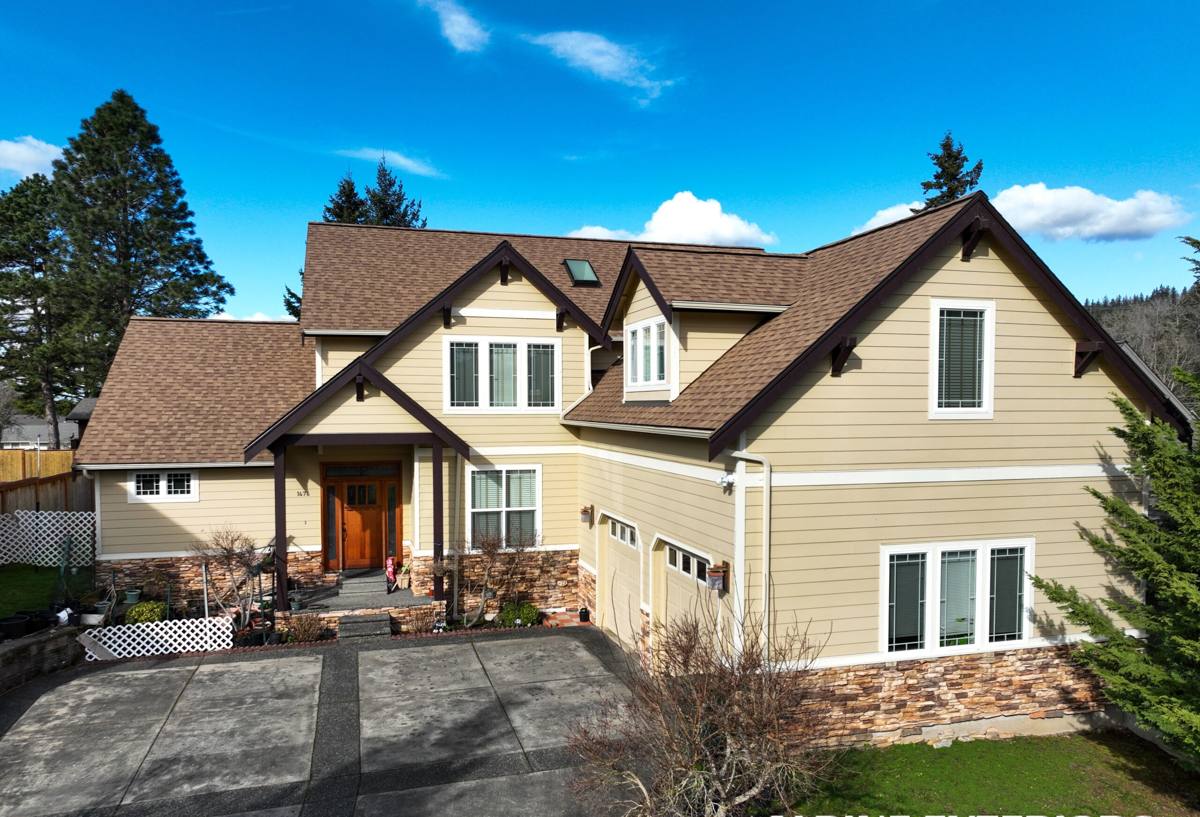
What Salt Air, Rain, and Moss Actually Do to a Deck
It helps to understand the specific ways our climate attacks a deck, because it changes almost every decision in the build — from the fasteners we use to the gap we leave between boards.
Moisture Doesn't Let Up
Whatcom County gets a long stretch of the year where wood surfaces simply don't get a chance to dry out fully between rain events. That constant dampness is what feeds rot in end grain, in ledger connections, and in any spot where two pieces of lumber sit tight against each other without room for water to escape. It's also exactly what moss and algae need to establish themselves on a deck surface, which is a slip hazard as much as it is an eyesore.
Salt Air Accelerates Corrosion
Even homes that aren't right on the water pick up salt-laden air moving in off the Puget Sound, and that air is hard on metal. Standard galvanized fasteners and connectors can start to corrode faster here than they would inland, and once a fastener starts rusting, it weakens and can stain the wood around it. This is why fastener and hardware selection isn't a minor detail on a coastal Whatcom County deck — it's one of the things that determines whether the structure is still sound in fifteen years.
Shade and Moss Season
Many Sunnyland lots have mature trees and enough tree cover that parts of a deck rarely see direct sun, especially through fall and winter. Shaded, damp wood is where moss gets a foothold first, and once established it holds moisture against the board surface even longer, which speeds up the exact decay process you're trying to avoid. A deck design that ignores sun exposure and airflow is fighting an uphill battle from day one.
Choosing the Right Decking Material for This Climate
There's no single "best" decking material — there's a best fit for your budget, your home's style, and how much upkeep you're willing to do. Here's how the common options actually perform under Bellingham's conditions.
| Material | How It Handles Rain & Moss | Maintenance Needed | General Cost Tier |
|---|---|---|---|
| Pressure-treated pine | Resists rot when properly sealed, but moss and mildew can still colonize the surface if not cleaned | Annual cleaning, periodic re-sealing | Lowest upfront cost |
| Cedar | Naturally rot- and insect-resistant, ages well in wet climates, but surface graying and moss growth still occur without upkeep | Regular cleaning, refinishing every few years | Mid-range |
| Composite decking | Doesn't absorb water or rot, but can still get slick with algae film in shaded, damp spots | Periodic washing, no sealing or staining | Higher upfront, lower long-term labor |
| PVC decking | Fully resists moisture absorption and rot; performs well in wet, shaded yards | Occasional washing | Highest upfront cost |
We won't tell you composite or PVC is the only "right" answer — plenty of Sunnyland homeowners want the look and feel of real wood and are willing to do the maintenance to get it. What matters is that you go in with a clear-eyed understanding of the trade-off: natural wood costs less up front and needs more attention every year, while synthetic decking costs more up front and asks less of you afterward. We'll walk through that trade-off honestly during your estimate rather than pushing whatever happens to be easiest for us to install.
What's Underneath Matters More Than What's On Top
Homeowners naturally focus on the decking boards because that's what you see and walk on, but the structure underneath is what determines whether the deck is actually safe and long-lasting. This is where a lot of older or budget-built decks in this climate run into trouble.
Footings
Deck footings need to be sized and set below the local frost line, on stable, well-draining soil. In a region that gets as much sustained rain as ours, footings set too shallow or in poorly draining soil can shift over time, which throws the whole structure out of level.
The Ledger Board Connection
If your deck attaches to the house, the ledger board and its flashing are the single most important detail on the entire project. This is the point where wood-framed structure meets your home's exterior wall, and if it's not flashed correctly, wind-driven rain — which we get plenty of here — will find its way behind the siding and rot the rim joist and wall framing from the inside, often long before it's visible from outside.
Joist Spacing and Airflow
Tighter joist spacing adds strength, but the framing also needs enough airflow underneath to let moisture escape instead of getting trapped. We size joist spacing to the decking material being installed and make sure there's enough clearance and drainage below the deck so water isn't sitting against the framing.
Fasteners and Connectors
Given how salt air treats standard hardware here, we use fasteners and structural connectors rated for coastal, high-moisture exposure rather than the cheapest galvanized option. It costs a little more up front and saves a homeowner from hidden corrosion damage years down the road.
Railings, Stairs, and Code Requirements
Any deck built to a meaningful height needs railings and stairs that meet current code — this isn't optional, and it's not just about passing inspection. It's about the structure actually holding up under real use.
- Guardrails are required once a deck surface reaches a certain height above grade, with minimum height and load requirements set by code
- Baluster spacing has to meet code spacing limits so young children can't fit through
- Stair stringers need to be sized for the run and rise, with consistent step height — inconsistent steps are one of the most common trip hazards on older decks
- Handrails on stairs need to be graspable and continuous, not just decorative
- Permits are typically required for new decks and significant rebuilds in Bellingham — we handle that process as part of the job rather than leaving it to the homeowner
We build to current code as a baseline, not a minimum to argue about. On a project like a deck, code requirements exist because of real accident histories — they're not red tape for its own sake.
Our Process, From Estimate to Finished Deck
The steps we follow are the same on every custom deck project, and the goal is to catch problems on paper instead of after the framing is up.
- On-site assessment — we look at your lot's grade, drainage, sun exposure, tree cover, and how the deck will attach to your home
- Design and material selection — we talk through decking material, railing style, and layout based on how you actually plan to use the space
- Permitting — we prepare and submit what's needed for local permit approval before any framing begins
- Footings and framing — footings are set to proper depth, the ledger board is flashed correctly, and framing is built to code with corrosion-resistant hardware
- Decking, railings, and stairs installed — with attention to board spacing for drainage and airflow underneath
- Final walkthrough — we go over the finished deck with you, including what maintenance it needs and when
Every step is aimed at a deck that's still structurally sound and safe to use a decade or more from now, not just one that looks good at handoff.
Keeping a Sunnyland Deck Ahead of Moss and Rot
No decking material is completely maintenance-free in this climate — the difference is how much and how often. A little consistency goes a long way toward avoiding a full resurfacing job down the road.
| Task | How Often | Why It Matters Here |
|---|---|---|
| Sweep debris and leaves off the surface | Through fall, as needed | Trapped leaves hold moisture against boards and speed up moss growth |
| Wash surface with a deck-safe cleaner | 1–2 times per year | Removes early moss and algae film before it takes hold and becomes slippery |
| Inspect ledger flashing and fasteners | Annually | Catches early corrosion or water intrusion before it reaches structural framing |
| Re-seal or re-stain wood decking | Every 1–3 years, material dependent | Keeps moisture from soaking into end grain and board surfaces |
| Check for soft or spongy spots underfoot | Annually | Early sign of rot in framing or decking that's easier to fix before it spreads |
- Trim back overhanging branches to improve sun and airflow on shaded sections
- Keep gutters and downspouts near the deck clear so runoff isn't draining directly onto it
- Address any loose railing or wobbly stair before it becomes a safety issue, not after
- Don't paint over existing moss — clean it off, then treat the surface
Why a Crew That Already Works Sunnyland Streets Makes a Difference
Bellingham's neighborhoods aren't uniform — lot grading, tree cover, soil drainage, and even how much salt air a given block picks up can vary street to street. A crew that's already worked on homes in and around Sunnyland has a feel for how the local conditions actually play out on a real deck, not just in a textbook. That shows up in small decisions: how deep to set a footing on a particular soil type, how much slope to build into the decking for drainage, which spots on a lot are going to stay shaded and mossy no matter what.
It also shows up in the practical side of the job — knowing what Bellingham's permitting process typically requires, working efficiently around the rain windows that this part of Whatcom County gets for most of the year, and building a schedule that accounts for it instead of getting derailed by it every time. That local familiarity doesn't replace good craftsmanship, but it does mean fewer surprises during the build and a deck that's designed around how this specific climate and this specific neighborhood actually behave.
Ready to Talk Through Your Deck Project?
If you're planning a new custom deck or replacing one that's showing its age, we're happy to walk your property, talk through material options, and give you a straightforward estimate — no pressure, no upsell. Use the form below to get started.