 Bellingham Exterior
 Why Lynden's Weather Is Tough on Windows
Lynden sits in open Whatcom County farmland, and that setting matters more than most homeowners realize when it comes to windows. Without the tree cover and tighter lot spacing you get closer to Bellingham, many Lynden properties take wind and wind-driven rain straight on. Add the marine-influenced climate that moves through the whole county — the same damp, salt-tinged air off the Sound that keeps everything from roofs to fences perpetually green with moss — and you have conditions that expose weak window installations fast.
It isn't usually the glass that fails first. It's the seal around the frame, the flashing behind the trim, and the caulk lines that were never meant to hold up nine months of steady moisture a year. A window that would perform fine in a drier climate can start leaking, fogging, or rotting out its surrounding framing within a few seasons here if it wasn't installed with this climate specifically in mind.
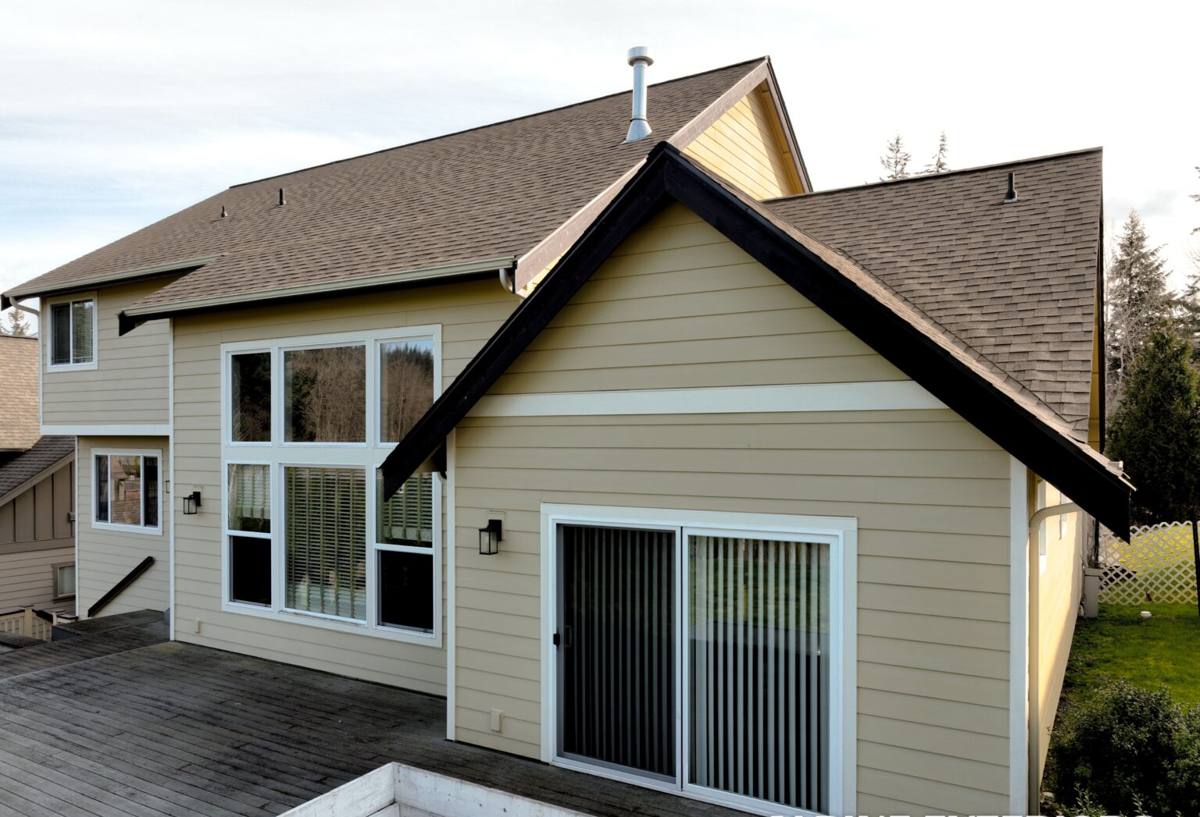
What a Correct Custom Window Installation Actually Involves
"Custom" windows means more than picking a size and color — it means the unit is built to the exact opening and installed with a water-management system suited to how rain actually behaves in this area. That's a different job than dropping in a stock replacement.
Flashing and Water Management
Every window needs a way to shed water that gets past the exterior finish, because in driving rain, some always will. That means correctly lapped flashing tape at the sill, jambs, and head, a sloped sill pan so water drains outward instead of pooling, and a weather-resistant barrier that ties into the house wrap properly. Skip any one of these and water finds its way into the wall cavity — usually silently, for years, before it shows up as a soft spot or a stain.
Sealing Without Trapping Moisture
Caulking the exterior is only half the equation. The window also needs an interior air seal and enough of a moisture-tolerant gap in the assembly to let any trapped humidity escape rather than get sealed in against wood framing. A window that's sealed "too well" on both sides with the wrong materials can actually trap moisture inside the wall — which is how you get hidden rot behind a window that looks fine from both sides.
Fit and Structural Integration
Older Lynden homes, especially farmhouses and homes built before modern energy codes, often have openings that are slightly out of square or sized differently than anything on a big-box shelf. Custom units are built to that actual opening, which means less shimming, less gap-filling with foam and caulk, and a tighter, more predictable seal from day one.
Signs Your Lynden Home's Windows Are Failing
Whatcom County's climate accelerates window problems, so it's worth checking your current windows rather than waiting for an obvious leak. Look for:
- Fogging or a hazy film between panes of double-pane glass — the seal has failed and the insulating gas is gone
- Soft, discolored, or bubbling paint on the interior or exterior trim around the frame
- Visible daylight or a draft you can feel around the sash when the window is closed
- Difficulty opening, closing, or locking — often a sign the frame has swollen or shifted
- Moss or dark streaking building up on the sill or in the corners faster than the surrounding siding
- A musty smell near the window that wasn't there before, especially after a stretch of rain
Choosing Window Materials and Glass for This Climate
There's no single "best" window material — the right choice depends on how much upkeep you want to do and what the rest of your home's exterior looks like. Here's how the common options hold up under Whatcom County's wet, moss-prone conditions:
| Material | Moisture Resistance | Maintenance | Typical Lifespan |
|---|---|---|---|
| Vinyl | Very good — won't rot, doesn't need painting | Low | 20-30+ years |
| Fiberglass | Excellent — very stable, resists warping | Low | 30-40+ years |
| Wood (unclad interior) | Poor exposed to weather without cladding | High — periodic painting/sealing | Varies widely with upkeep |
| Wood-clad (exterior aluminum or fiberglass shell) | Good — protected exterior, warm interior look | Moderate | 25-35 years |
| Aluminum | Fair — can conduct cold and condensate without a thermal break | Low | 20-30 years |
On the glass side, most Lynden homes do best with a double- or triple-pane unit with a Low-E coating and argon or krypton gas fill. Triple-pane costs more up front but pays off in comfort near larger window walls or on exposed, wind-facing sides of the house. We size the glass package to the specific window's exposure rather than using one spec for the whole house — a small bathroom window facing a sheltered side yard doesn't need the same package as a large picture window catching the prevailing wind and rain.
Custom vs. Stock: Why Exact Fit Matters More Here
A stock replacement window is built to standard sizes and then made to fit your opening with shims, extra foam, and extra caulk. That works fine in a dry climate where any small gap stays dry. In a climate where wind-driven rain regularly tests every seam, those gap-filling materials are exactly where problems start — foam and caulk degrade over time, and once they do, there's no flashing behind them to catch the water.
A true custom window is built to your opening's actual dimensions, which means the factory-sealed edges of the unit — the most weather-resistant part of any window — end up doing more of the work, and the field-applied materials do less. For older or custom-built Lynden homes with non-standard openings, this is usually the difference between a window that performs for decades and one that needs re-caulking every couple of years.
Our Process for Lynden Window Projects
We run the same disciplined process on every window job, adjusted for the specific home:
- On-site assessment of existing windows, framing condition, and exposure on each side of the house
- Precise measurement of each opening — no stock-size assumptions
- Product and glass package selection matched to that window's sun, wind, and rain exposure
- Careful removal of the old unit with inspection of the framing and sheathing underneath for hidden rot or moisture damage
- Repair of any damaged framing before the new window goes in — we don't install over a problem
- Installation of sill pan flashing, properly lapped water-resistive barrier, and the new window, shimmed level and square
- Exterior sealing and trim work matched to your home's existing finish
- Interior finish work and a final operational check on every unit — smooth operation, tight seal, secure lock
- Walkthrough with you before we consider the job done
What New Windows Cost — and What Drives the Price
Costs vary a lot based on the specifics of the job, but the main factors are consistent across projects:
| Factor | Why It Matters |
|---|---|
| Window size and count | Larger openings and more windows mean more material and labor |
| Material (vinyl, fiberglass, wood-clad) | Fiberglass and wood-clad generally cost more than vinyl, but last longer and need less upkeep |
| Glass package | Triple-pane, specialty coatings, and tempered or impact-rated glass add cost |
| Framing condition | Rotted sheathing or framing found during removal adds repair time before installation can continue |
| Access and height | Second-story or hard-to-reach windows take longer and may need additional equipment |
| Trim and siding tie-in | Matching existing trim profiles or siding around the new opening adds finish work |
We give a firm, itemized quote after seeing the actual windows and openings — not a per-window average pulled from a website, since the same-sized window can cost noticeably different amounts depending on what we find once the old unit comes out.
Why Hire a Crew That Already Works in Lynden
Window installation is one of those jobs where local experience shows up in the details. A crew that regularly works in Lynden and the surrounding Whatcom County area already knows the common housing stock — older farmhouses with balloon framing, newer builds on slab, and everything in between — and adjusts the approach accordingly instead of treating every home the same. That familiarity also means fewer surprises with local permitting requirements and a crew that isn't guessing at how the county's rain and moss season will treat a given detail over time.
It also matters after the job is done. If a seal ever needs a look or a question comes up during the first wet season, you want a contractor who's a short drive away and already knows your house, not a call center for a national outfit that installed windows here once.
Caring for Your New Windows Through Whatcom County's Wet Season
Good installation does most of the work, but a little upkeep extends the life of any window in this climate:
- Clear moss and debris from sills and tracks a couple of times a year so water doesn't pool against the frame
- Check exterior caulk lines annually, especially after the first year, and touch up any cracking before it lets water behind the trim
- Keep gutters and downspouts clear so roof runoff isn't sheeting down across upper-story windows
- Operate locking hardware periodically even on windows you rarely open, so mechanisms don't seize up from disuse and humidity
If you're weighing new windows for a Lynden home, we're happy to take a look and give you a straightforward, no-pressure estimate — just fill out the form below and we'll set up a time to come by.