 Bellingham Exterior
 Windows Built for Silver Beach's Waterfront Climate
Silver Beach sits close enough to Bellingham Bay that salt-laden air is a daily fact of life, not an occasional nuisance. Combine that with Whatcom County's driving winter rain, long stretches of overcast humidity, and a moss season that can run eight months out of the year, and you have one of the tougher window environments in the county. Frames, sashes, and seals here work harder than they do just a few miles inland, and that shows up first at the window line — the point where a house is most often asked to keep weather out while still admitting the light and views that make the neighborhood desirable in the first place.
We install and replace custom windows throughout Silver Beach and the surrounding Bellingham waterfront neighborhoods, and we've built our process around what actually fails here: corroded hardware, swollen wood sashes, fogged glass units, and trim that's held moss and moisture against the siding for years. This page covers what a correct window job looks like for a Silver Beach home — not a generic replacement pitch, but the specifics that matter for this stretch of coastline.
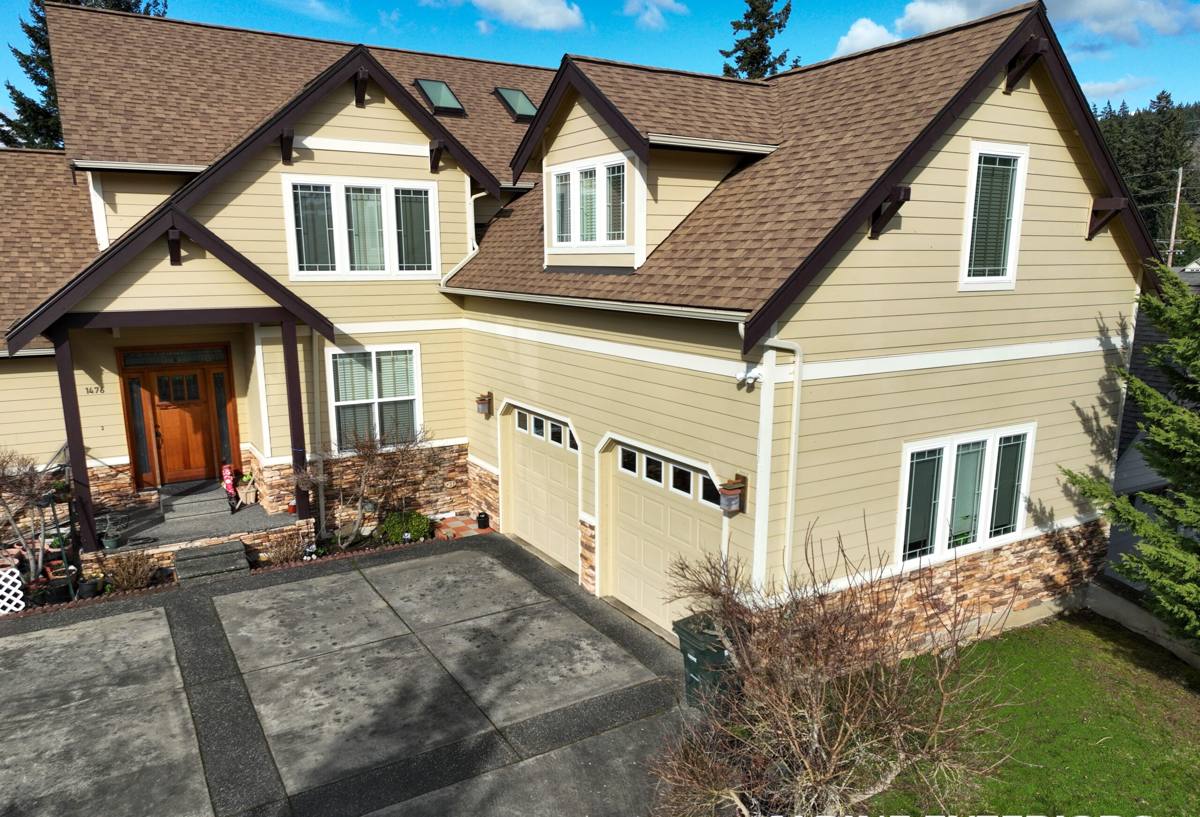
Why Salt Air and Coastal Moisture Change the Job
Homes a mile or two off the water don't deal with the same combination of stresses that Silver Beach properties do. It's worth understanding why, because it changes what "correct" installation and material choice actually mean here.
Salt Air and Metal Components
Airborne salt accelerates corrosion on anything metal — window hardware, screen frames, fasteners, and especially lower-grade aluminum components. Once corrosion starts on a hinge, lock, or roller, it rarely stops on its own, and a window that won't latch or slide properly is also a window that won't seal properly. We spec corrosion-resistant hardware and fasteners for anything installed within the salt-air zone, which includes most of Silver Beach.
Driving Rain and Wind-Driven Water
Bellingham's storms frequently come in sideways off the water, which means rain doesn't just fall on a window — it gets pushed into every gap, lap joint, and flashing detail. A window that would perform fine in a calmer inland setting can leak in a waterfront home simply because the flashing and sill pan weren't detailed for wind-driven water. This is the single most common cause of the interior water stains and rot we find during Silver Beach window inspections.
Moss, Algae, and Prolonged Dampness
Moss and algae need sustained moisture and shade to establish, and Silver Beach's tree cover combined with our long wet season gives them plenty of both. Moss holding against a sill or lower sash keeps that wood wet for weeks at a time, which is exactly the condition that leads to rot. Moss on nearby roofing and siding also sheds organic debris into window tracks and weep holes, clogging the drainage paths that are supposed to let water escape.
Signs a Silver Beach Home Needs Window Attention
Because coastal deterioration is gradual, most homeowners notice symptoms long before they connect them to the window itself. Common signs we see on service calls in this neighborhood include:
- Fogging or a hazy film between the panes of a double-pane window — the seal has failed and the gas fill has escaped
- Sashes that stick, drag, or won't latch fully, often from swollen wood or corroded hardware
- Soft or discolored wood at the sill, especially where moss or debris has been sitting
- Cold drafts near the frame even when the window is fully closed and locked
- Peeling or bubbling paint on interior trim, a common early sign of moisture getting past the seal
- Visible daylight or a gap where the frame meets the siding
- A musty smell near the window that doesn't clear with ventilation
Any one of these can be a minor fix. Several together, especially on windows facing the water or prevailing weather, usually point to a frame or seal that's past the point of patching.
What "Custom" Actually Means for This Job
We use "custom" deliberately, not as a marketing word. Silver Beach has a mix of older waterfront homes, mid-century construction, and newer builds, and very few of them have standard, off-the-shelf rough openings. Custom windows means:
- Exact measurement of each opening — older homes especially can have openings that are slightly out of square, and a factory-standard size will never seal correctly in an opening that isn't standard
- Frame material chosen for the specific exposure — a window on the water-facing side of a house may warrant a different material or finish than one on a sheltered side
- Glass package matched to orientation and view — homes with water views often want larger glass areas with a glazing package that manages heat loss and glare without a heavy tint that dulls the view
- Trim and cladding details that match the existing exterior, so the replacement doesn't look like a patch job from the street or the water
Comparing Window Options for a Coastal Bellingham Home
There's no single "best" window for every Silver Beach home — the right choice depends on exposure, budget, and how the house is built. Here's an honest comparison of the frame materials we most often discuss with clients in this neighborhood.
| Frame Material | Coastal / Moisture Performance | Maintenance | Typical Fit |
|---|---|---|---|
| Vinyl | Good — won't rot or corrode, handles humidity well | Low; occasional cleaning | Value-focused replacements, rental or secondary properties |
| Fiberglass | Very good — dimensionally stable, resists salt air degradation | Low | Homes wanting durability without wood's upkeep, strong choice near the water |
| Wood (clad exterior) | Good on the exterior face if cladding is intact; interior wood needs protection from condensation | Moderate — exterior clad reduces upkeep, but seals and joints need periodic inspection | Historic or traditional homes where interior wood trim matters aesthetically |
| Solid wood (unclad) | Requires diligent upkeep in this climate; we recommend it only with a clear maintenance plan | High | Restoration projects prioritizing historical accuracy over low maintenance |
| Aluminum (standard grade) | Prone to corrosion and thermal transfer in salt air unless marine-grade and thermally broken | Moderate to high near the water | Best reserved for thermally broken, marine-rated products; we steer clients away from standard-grade aluminum in this neighborhood |
We're upfront when a material isn't a good fit for a given exposure rather than selling whatever's easiest to install. A window that looks right for the first two years but fails at year six because it wasn't rated for this environment isn't a good deal at any price.
How Our Installation Process Works
Correct installation matters at least as much as the window unit itself — most premature failures we see trace back to flashing and sealing details, not the window product. Our process for Silver Beach jobs:
1. On-Site Assessment
We inspect the existing opening, sill condition, surrounding siding, and any signs of past water intrusion before quoting anything. This tells us whether we're dealing with a straightforward swap or whether there's rot or framing damage that needs to be addressed first.
2. Precise Measurement and Product Selection
We measure the actual opening, not an assumed standard size, and walk through material and glazing options based on that window's specific sun, wind, and rain exposure.
3. Removal and Opening Preparation
Old windows are removed carefully to avoid damaging surrounding siding and trim. Any soft or damaged framing found underneath is repaired before the new unit goes in — installing a new window into a compromised opening just hides the problem temporarily.
4. Flashing and Water Management
This is where coastal installations earn their keep. We install sill pan flashing and integrate it correctly with the house's water-resistive barrier so that any water reaching the window sheds outward, not into the wall cavity. Given how much wind-driven rain this neighborhood sees, we don't treat this step as optional or interchangeable.
5. Setting, Shimming, and Sealing
The window is set level and plumb, shimmed correctly so it isn't under stress that could crack glass or bind hardware, then sealed with exterior sealant rated for marine and coastal exposure.
6. Trim, Cladding, and Final Inspection
Exterior trim and cladding are finished to match the surrounding siding, and we do a final operational check — every sash opens, closes, and locks the way it should before we call the job done.
Questions Worth Asking Before You Hire Anyone
Because a bad window install can look fine for a year or two before problems surface, it's worth vetting whoever does the work. A checklist we'd suggest for any Silver Beach homeowner comparing contractors:
- Do they inspect and discuss the sill and flashing detail, or just quote a window swap?
- Can they explain why they're recommending a specific frame material for your specific exposure?
- Are they licensed and insured to work in Washington, and can they show it without hesitation?
- Do they offer a written warranty that covers both the product and their installation labor?
- Have they worked on homes in your specific neighborhood, with its specific exposure conditions?
- Will they show you what they find once the old window is out, before closing everything up?
Maintenance That Extends the Life of Coastal Windows
Even a well-installed, well-chosen window benefits from basic seasonal attention in a climate like this one. A short routine goes a long way:
- Rinse salt residue off frames and glass periodically, especially after storms with onshore wind
- Clear weep holes and tracks of moss, needles, and debris before they dam up water
- Check exterior caulking annually and touch up before gaps widen
- Keep nearby vegetation trimmed back so window sills get some airflow and sun rather than staying shaded and damp
- Address any sticking sash or stiff lock early — it's often a five-minute fix before it becomes a seal or frame issue
Why Local Experience in Silver Beach Matters
A crew that mostly works dry inland suburbs and only occasionally handles a waterfront job doesn't have the same feel for how fast salt air and driving rain can undo a window installation here. We work this neighborhood and the rest of Bellingham's waterfront regularly, so we're not guessing at flashing details, hardware grades, or material choices — we're applying what we've seen hold up, and what we've seen fail, on homes with the same exposure yours has. That local pattern recognition is often the difference between a window that's still performing well in fifteen years and one that needs attention again in five.
If you're noticing drafts, fogged glass, sticking sashes, or just want an honest read on how your current windows are holding up against the salt air and rain, we're happy to take a look. Reach out for a free, no-pressure estimate using the form below.