 Bellingham Exterior
 Why Decks in Puget Wear Out Faster Than the Manuals Say
Every deck manufacturer publishes a service life for their product, and almost none of those numbers were tested against a Puget Sound winter. Homes in the Puget area of Bellingham sit close enough to the water to pick up salt-laden air, and that salt works its way into fasteners, flashing, and any exposed end-grain long before the wood or composite itself shows visible wear. Add Whatcom County's pattern of driving, wind-blown rain — not gentle vertical rainfall, but rain that gets pushed sideways under rail caps and behind ledger boards — and you have a climate that attacks a deck from angles most installation manuals never account for.
Then there's moss season, which in this part of Washington isn't really a season so much as most of the year. Anywhere a deck holds shade, holds moisture, or has a joist bay that doesn't drain and dry quickly, moss and algae get a foothold. Beyond looking bad, that growth holds water against the structure and turns the deck surface slick and genuinely dangerous underfoot for a good stretch of the year.
None of this means a deck in Puget can't last — it means it has to be built with these specific conditions in mind from the framing up, not just finished with a coat of sealer and hoped for the best.
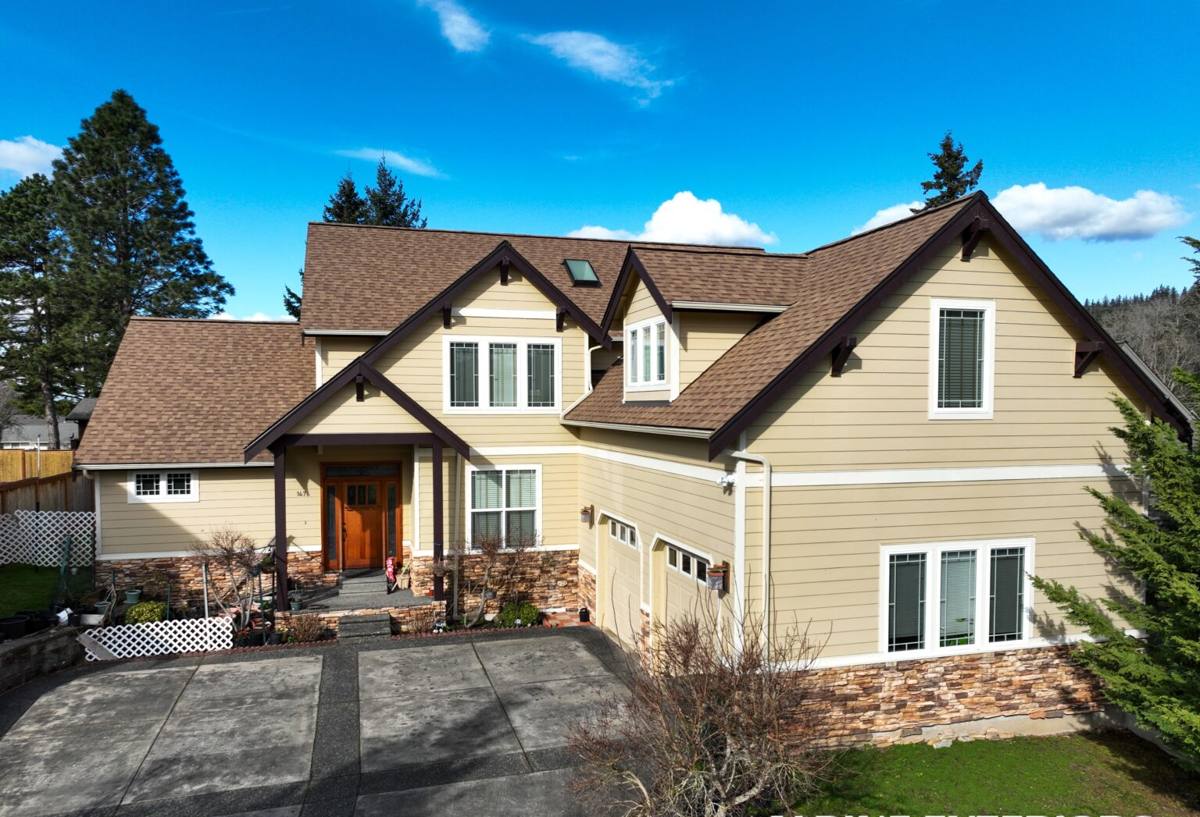
Signs It's Time to Replace, Not Repair
We get called out to plenty of decks where the owner wants a quote on repair, and we're honest when repair is genuinely the better move — replacing a whole deck when the structure is sound is a waste of money. But there's a point where patching stops making sense, and it usually shows up as more than one of the following at once.
- Soft or spongy decking boards, especially near the house or at butt joints
- Rot or discoloration at the ledger board where the deck attaches to the house
- Rust streaking from fasteners, or fasteners that back out or spin freely
- Persistent moss or black staining that returns within weeks of cleaning
- Wobble in the railing posts or noticeable deck movement when several people are on it
- Joists or beams that are cracked, split, or visibly sagging between supports
- A deck older than 15-20 years that was never re-flashed or had its ledger connection inspected
If what you're seeing is limited to a few worn boards on an otherwise sound frame, repair is worth discussing. If the problems are at the structural level — ledger, joists, posts, or footings — replacement is almost always the more honest recommendation, because patched framing in a wet climate tends to fail again within a season or two.
What a Correct Deck Replacement Actually Involves
Structural Framing and Ledger Flashing
The single most common failure point on Pacific Northwest decks isn't the decking surface — it's the ledger board connection to the house. This is where the deck attaches structurally, and it's also the spot most exposed to water tracking down the siding and behind the deck. A correct replacement means proper flashing integrated with the house's water-resistive barrier, not just caulk and a board, along with joists and beams sized for the actual span and load rather than whatever was on hand at the original build.
Fasteners and Hardware
Given the salt air common to homes near the Sound, we use fasteners and structural hardware rated for coastal or corrosive exposure — not the standard-grade hardware that's fine inland but starts rusting and staining within a couple of years here. This is a small line-item cost difference that has an outsized effect on how long the frame lasts underneath the decking.
Drainage and Airflow Beneath the Deck
Moss and rot both need standing moisture to take hold. Framing that allows air to move underneath the deck, along with grading or drainage that gets water away from posts and footings, does more to prevent moss regrowth long-term than any surface cleaning ever will.
Choosing a Decking Material for This Climate
There's no single "best" decking material — there's a best fit for your budget, your maintenance appetite, and how much shade and moisture your specific lot holds. Here's how the common options actually compare once you factor in Puget Sound conditions rather than a manufacturer's national averages.
| Material | Moisture & Moss Behavior | Maintenance | Typical Lifespan Here |
|---|---|---|---|
| Pressure-treated wood | Absorbs water, needs sealing to resist moss and cupping | Annual cleaning and re-sealing recommended | 10-15 years with upkeep |
| Cedar | Naturally moisture- and insect-resistant, but surface still needs attention | Periodic cleaning and oiling to hold color and resist moss | 15-20 years with upkeep |
| Composite decking | Doesn't rot, but can hold surface moss/algae if boards aren't kept clean | Low — occasional washing, no sealing or staining | 25-30 years, manufacturer warranty dependent |
| PVC/capped polymer | Fully moisture-resistant surface, best resistance to staining | Lowest — rinse and go | 25-30+ years, manufacturer warranty dependent |
We install all of these depending on what a homeowner wants, but we're upfront about trade-offs. Composite and PVC cost more up front and require correct hidden-fastener installation to perform well — done wrong, boards can still trap moisture at the ends and edges. Wood costs less initially but asks for real annual maintenance in a climate that doesn't give you many dry weeks to do that maintenance in. There's no wrong answer here as long as the choice matches what you're actually willing to keep up with.
Our Deck Replacement Process
1. On-Site Assessment
We walk the existing deck, check the ledger connection, probe the framing for soft spots, and talk through what you actually use the space for — dining, grilling, hot tub, entertaining — since load and layout decisions follow from that.
2. Design and Material Selection
We go over decking material, railing style, and any code-driven requirements together, and give you a straightforward quote with material and labor broken out so you know what you're paying for.
3. Permitting
Most deck replacements above a certain height or footprint require a permit through the City of Bellingham or Whatcom County, depending on where the property sits. We handle that process rather than leaving it to you to figure out.
4. Demolition and Framing
Full removal of the old decking and inspection of what's underneath. If the frame, footings, or ledger need work — and on an older deck they often do — that gets addressed before a single new board goes down. We don't cover up a bad frame with new decking.
5. Decking, Railing, and Finish Work
Installation follows manufacturer specs for fastening and spacing, which matters more here than in drier climates since correct gapping affects how well the deck drains and dries.
Building Against Moss and Mildew for the Long Term
You can't eliminate moss risk entirely on a shaded property near the water, but you can build a deck that sheds water fast and doesn't give moss the standing moisture it needs. That comes down to a few things working together: adequate slope in the decking, board spacing that allows drainage, ventilated framing underneath, and, where the site allows it, trimming back overhead growth that keeps sections of the deck in constant shade. We'll flag these factors during the assessment rather than leaving you to discover them a year later.
Permits and Local Code in Whatcom County
Deck projects here are subject to local building code, and requirements vary depending on deck height, whether it's attached to the house, guardrail height, and stair geometry. Rules also differ slightly between city of Bellingham jurisdiction and unincorporated Whatcom County, so where your property falls matters. We build to current code as a baseline on every project, not as an upsell, because a deck that doesn't meet guardrail and structural code isn't a deck we'll put our name on.
Why a Crew That Already Works in Puget Makes a Difference
A contractor who mainly works drier inland climates can still build you a technically sound deck on paper, but they may not think to spec coastal-grade hardware, may not account for how much moss pressure a shaded, near-water lot actually gets, or may not know the local permitting process well enough to keep your project moving. Working regularly in and around Puget and the wider Bellingham area means we're not guessing at how these houses and lots behave in this specific climate — we're applying what we've already seen hold up, and what we've already seen fail.
Getting Started
If your deck is showing its age, feels less solid than it used to, or you're just planning ahead before it becomes a safety issue, we're happy to take a look and give you a straight answer on repair versus replacement. Reach out below for a free, no-pressure estimate — there's no obligation, just an honest assessment of what your deck actually needs.