 Bellingham Exterior
 Storm Damage Roof Repair for Sunnyland Homes
Sunnyland is a residential neighborhood in Bellingham, and like the rest of the city it sits in a stretch of Whatcom County where winter weather doesn't just rain — it blows. When a front moves through off the Salish Sea, wind and water hit a roof from angles that a calmer, drier climate never tests. Most of the time a well-built roof shrugs it off. But storms strong enough to lift shingles, drive water sideways under flashing, or knock down a tree limb leave real damage behind, and that damage doesn't always announce itself right away.
We do storm damage roof repair work in Sunnyland as part of the broader exterior work we do across Bellingham and the rest of Whatcom County. The approach is the same every time: figure out what actually happened to the roof, be straight about whether it needs a repair or something bigger, and fix it in a way that holds up to the next storm — not just this one.
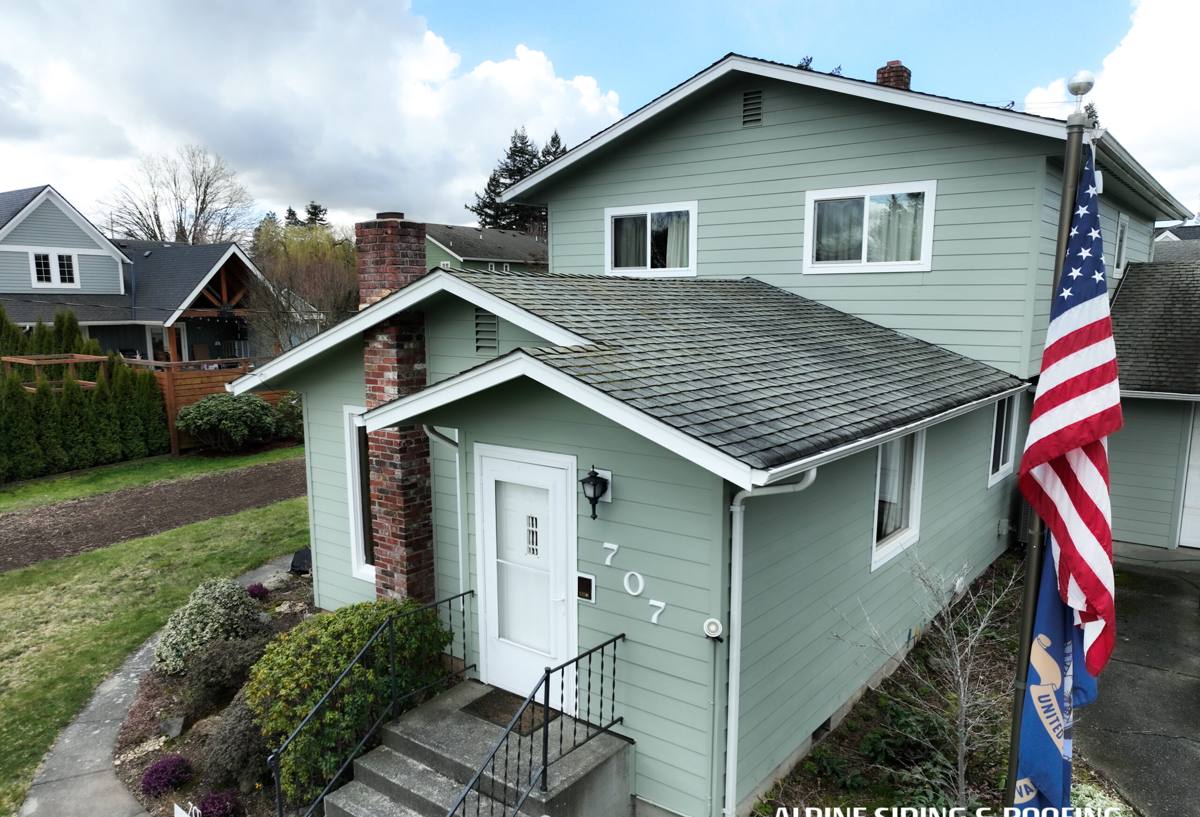
What Storm and Winter Weather Do to a Sunnyland Roof
Wind-Driven Rain and Uplift
Bellingham's storms rarely drop rain straight down. Wind off the water pushes it sideways and, on a pitched roof, sometimes upward under the edge of a shingle or panel. A roof that's fine in a light, calm rain can still take on water during a real windstorm because the water is being forced into laps, seams, and flashing details that were never designed to handle rain moving at an angle. Strong gusts can also physically lift shingle edges or loosen fasteners, and once a shingle's seal is broken it usually doesn't reseal itself — it just keeps working looser with every storm after that.
A Long Moss and Mildew Season
Whatcom County's mild, damp climate keeps moss and organic growth active on shaded and north-facing roof slopes for much of the year, not just a few weeks in spring. Moss holds moisture directly against the roofing material, and a storm hitting a section of roof that's already damp and softened underneath does more damage than the same storm would do to a clean, dry roof. It's one reason two roofs that took the same storm can come out of it looking very different.
Salt Air and Fastener Corrosion
Bellingham sits close enough to Bellingham Bay that salt-tinged marine air is a constant, low-level presence, not just something that shows up during a coastal storm. Over years, that air corrodes lower-grade fasteners, flashing metal, and hardware faster than it would in a drier inland climate. A storm doesn't cause that corrosion, but it exploits it — a fastener or flashing seam that's already weakened by years of salt exposure is exactly what gives out first when wind and rain hit it hard.
Falling Limbs and Debris Impact
Established neighborhoods with mature landscaping tend to have more overhanging tree cover than newer developments, and wind events are when that becomes a roofing problem. Even a limb too small to punch through decking can crack shingles, tear off flashing, or knock granules loose in a way that shortens the roof's remaining life. We look at impact damage separately from wind and water damage, because the repair approach and materials needed aren't always the same.
What Storm Damage Actually Looks Like
Visible Damage
Some storm damage is obvious from the ground: missing or torn shingles, a section of ridge cap knocked loose, a dented or crushed spot from a fallen branch, gutters pulled away from the fascia, or debris scattered across the yard. Any of these is a reasonable trigger to get the roof looked at, even if nothing is actively leaking yet.
Hidden Damage That Shows Up Later
The more common — and more expensive — problem is damage you can't see from the driveway. A shingle that lifted during a windstorm and settled back down can look normal from below while its seal is permanently broken. Flashing that shifted slightly at a valley or chimney might not leak until the next storm pushes rain from a different direction. Water that got under the roofing material can track sideways along the deck before it ever shows up as a stain on a ceiling, sometimes weeks after the storm that caused it. This is why we recommend an actual inspection after a significant wind or rain event rather than just checking whether anything's dripping inside.
Storm Damage Inspection Checklist
- Shingles or panels that are lifted, cracked, torn, or missing outright
- Granules collecting in gutters or downspouts after a storm, beyond normal wear
- Flashing at valleys, chimneys, skylights, and wall intersections that looks bent, lifted, or separated
- Dented, cracked, or displaced sections where a branch or debris made contact
- Gutters or downspouts pulled loose from fascia boards
- New water stains, damp spots, or musty smell in the attic
- Soft or spongy decking felt from inside the attic where accessible
Repair or Replace? How We Make That Call
Not every storm-damaged roof needs a full replacement, and we're not going to tell you it does just because that's the bigger job. The right call depends on how much of the roof is affected, how old it already was going into the storm, and whether the damage is isolated or a sign the roof was already near the end of its useful life.
| Situation | Usually Points Toward | Why |
|---|---|---|
| A few shingles lifted or torn on an otherwise sound, mid-life roof | Targeted repair | Isolated damage on a roof with years of life left can be matched and resealed without disturbing the rest |
| Storm damage on a roof already near or past its expected lifespan | Full or partial replacement | Patching an aging roof often just delays a bigger job while surrounding materials keep degrading |
| Widespread granule loss or multiple damaged sections across the roof | Replacement, often full | Scattered damage usually means the whole surface took the same stress, not just one spot |
| Flashing failure at a single valley or penetration | Targeted repair | Flashing can typically be replaced and resealed without touching the surrounding field |
| Soft or water-stained decking discovered during inspection | Partial or full replacement of that section | Damaged decking has to be replaced before new roofing goes on top of it regardless of the surface material's condition |
We'll walk the roof, show you what we find, and give you our honest read on which column your situation falls into — including telling you when a repair is genuinely the right call, not just the cheaper one.
Our Storm Damage Repair Process
1. Temporary Weatherproofing, If You Need It
If a storm has left a roof actively leaking or exposed, the first priority is stopping more water from getting in — tarping, temporary flashing, or covering an exposed section — before anything else happens. This buys time to do the actual repair correctly instead of rushing it.
2. Full Inspection and Documentation
Once the immediate exposure is handled, we do a full inspection of the roof, not just the section that's obviously damaged, since one storm often stresses more of the roof than the one spot that failed first. We document what we find with photos and a written summary, which gives you a clear record of the damage — useful whether you're filing an insurance claim or just deciding how to proceed. We're not insurance adjusters and won't promise a specific claim outcome, but a clear, itemized description of the actual damage is something homeowners consistently find useful when working with their insurer.
3. A Written Estimate and the Repair Itself
You get a written estimate before any work starts, laying out what's being repaired or replaced and why. On the repair itself, we match materials as closely as possible on targeted repairs, replace any damaged decking before new roofing goes over it, and reseal or replace flashing rather than just caulking over a gap — caulk is a stopgap, not a fix, and it tends to fail again in the next storm.
Materials and Details Built for the Next Storm
Underlayment and Flashing
A synthetic or self-adhered underlayment handles wind-driven rain far better than older felt products, and it matters most exactly where storm damage tends to originate — valleys, chimneys, skylights, and wall intersections. When we replace flashing after storm damage, we install new material rather than reusing bent or corroded pieces, since flashing that's already been stressed once is more likely to fail again under the next load.
Fastening and Shingle Grade
Proper fastening pattern and placement matter more in a wind-exposed climate than the shingle brand does. We also point homeowners toward algae-resistant shingle products when a full section or roof is being replaced, since Whatcom County's long moss season affects material choice here more than it would in a drier region — a roof that resists organic growth stays structurally sound longer between storms.
What Storm Repair Costs and What Drives the Number
| Cost Factor | What It Affects | Why It Matters After a Storm |
|---|---|---|
| Extent of damage | Whether it's a targeted repair or a larger section | Isolated damage costs far less than a roof with damage spread across multiple slopes |
| Decking condition | Whether sheathing needs replacing before new roofing goes on | Water that tracked under damaged roofing before repair often means hidden decking damage |
| Material matching | Whether existing shingles or panels can be matched | Older or discontinued products can be harder to match on a small targeted repair |
| Roof pitch and access | Labor time and safety equipment | Steeper roofs and tighter Sunnyland lots can add real time to staging and access |
| Insurance involvement | Paperwork and documentation requirements | Claims typically require detailed photo documentation and an itemized written estimate |
A small flashing repair or a handful of replaced shingles is usually a modest job. A section that needs decking replacement or a full re-roof after widespread storm damage is a much larger investment. We won't know which one you're actually looking at until we've inspected the roof, which is why we walk every property in person before giving a real number.
Avoiding Storm-Chasing Crews
After any significant windstorm, it's common for crews from outside the area to show up canvassing neighborhoods, offering fast repairs and claiming to have spotted damage from the street. Some of this work is honest. A lot of it isn't built to last, and a crew that isn't local often isn't around a year or two later when a workmanship issue shows up.
- Ask for a current Washington state contractor license number and verify it before signing anything
- Be wary of high-pressure tactics tied to a fake "insurance deadline"
- Don't hand over a large deposit before materials are ordered
- Ask for proof of liability insurance and workers' compensation coverage
- Ask whether they'll still be a local business next year to honor a workmanship warranty
Why a Local Bellingham Crew Matters in Sunnyland
A crew that works Bellingham roofs through the wet season year after year knows how salt air corrodes cheap hardware, how wind-driven rain finds gaps in poorly lapped flashing, and which roof slopes hold moss longest through winter. That's the kind of judgment that shapes real decisions on a repair — where to spend a little extra time on flashing, and where a targeted fix is genuinely enough. If a storm has left your Sunnyland roof damaged, or you just want an honest opinion on whether what you're looking at is a repair or something bigger, we're glad to come take a look and put together a free, no-pressure estimate.