 Bellingham Exterior
 Building New in Fairhaven? Windows Are Not the Place to Cut Corners
If you're framing a new home or a major addition in Fairhaven, the windows you choose and how they're installed will quietly determine how that house performs for the next 20-30 years. New-construction windows are different from replacement units in a meaningful way: they go in with a nailing fin, tied directly into the house wrap and flashing system before siding goes on. Done right, that assembly is one of the most weathertight parts of the whole envelope. Done wrong — even in small, hard-to-see ways — it's one of the most common sources of hidden water intrusion we get called out to diagnose years later, usually after the damage is already inside the wall cavity.
Fairhaven sits close enough to the water that the building envelope has to work harder than it would a few miles inland. Salt-laden air, wind-driven rain off Bellingham Bay, and a long wet moss season put real, sustained stress on window units, flashing, and the trim around them. Getting the install right the first time — while the wall is still open and accessible — is far cheaper and far more reliable than trying to fix a leaky window after the siding, insulation, and drywall are closed up.
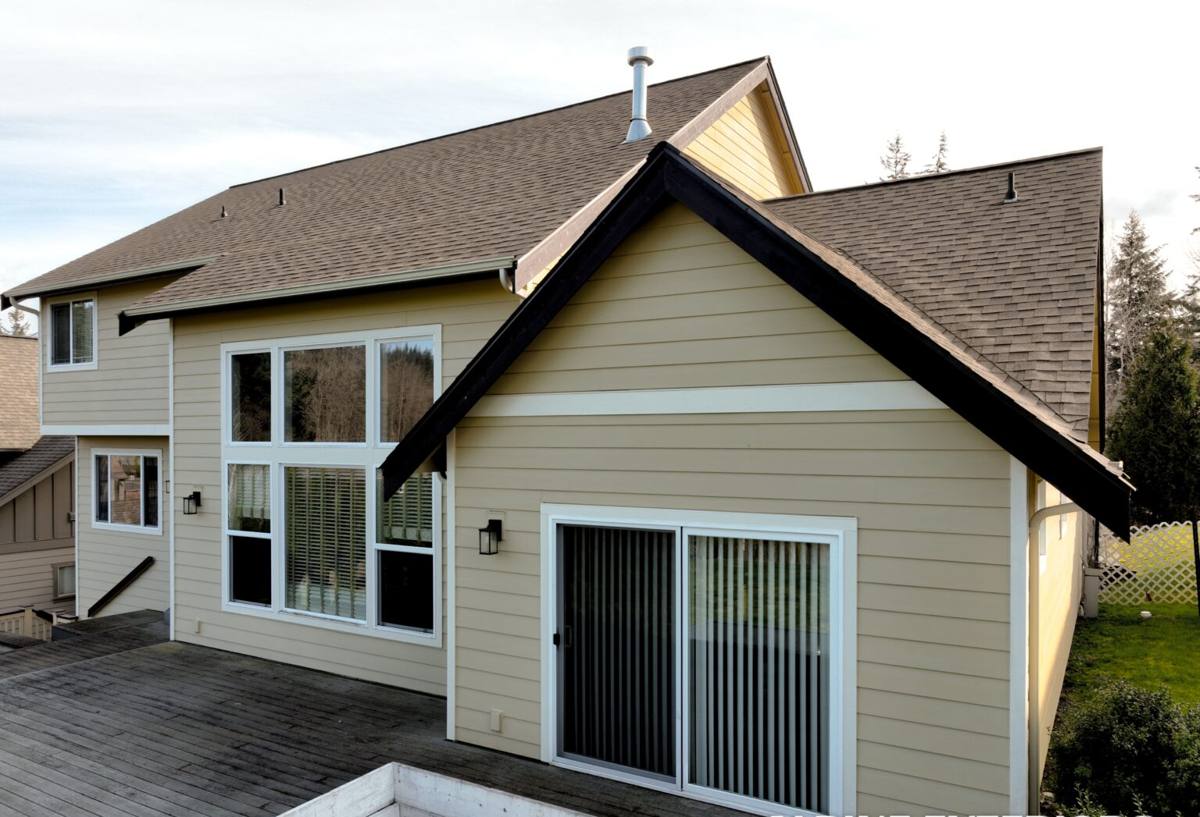
What Fairhaven's Climate Actually Does to Windows
Salt Air and Corrosion
Homes near the water deal with airborne salt that settles on hardware, cladding, and exposed fasteners. Over time it accelerates corrosion on cheap or unprotected components — screws, cranks, hinges on casement units, and any exposed metal flashing that isn't corrosion-resistant. It's not dramatic, it's cumulative: a window that would last decades inland can develop sticky hardware or streaking corrosion stains within a handful of years near Fairhaven's shoreline exposure if the wrong materials were used.
Driving Rain
Wind off the water doesn't just drop rain straight down — it pushes it sideways and up under trim, sills, and poorly lapped flashing. A window flashing detail that would be "good enough" in a sheltered inland lot can fail on a west- or south-facing wall in Fairhaven during a real winter storm. This is why flashing sequence and sill pan details matter more here than the window brand does.
Moss and Prolonged Dampness
Whatcom County's wet season runs long, and moss and algae don't just grow on roofs — they take hold on sills, trim, and any horizontal surface that stays damp and shaded. Beyond the cosmetic issue, moss holds moisture against wood trim and caulk joints far longer than open air would, which shortens the life of exterior finishes and can mask a slow leak until it's already caused damage.
New-Construction Windows vs. Replacement Windows
These two install types are often confused, but they're built and installed differently, and mixing them up on a new build leads to real problems.
| Factor | New-Construction Window | Replacement (Insert) Window |
|---|---|---|
| Installation method | Nailing fin fastens directly to sheathing, integrated with house wrap/flashing before siding | Fits inside the existing frame, no nailing fin, relies on the old frame's condition |
| Best used when | Framing is open, wall isn't sided yet | Existing siding and trim stay in place |
| Flashing control | Full control — sill pan, tape, and WRB lap built from scratch | Limited — you inherit whatever flashing already exists |
| Long-term weather performance in coastal wind/rain | Highest, when installed correctly | Good, but only as good as the original opening |
For a new build or addition in Fairhaven, new-construction windows are almost always the right call — but that only holds true if the install sequence is followed correctly. A new-construction window installed poorly performs worse than a well-installed replacement unit.
What a Correct New-Construction Install Actually Involves
This is the part that separates a window that lasts decades from one that causes a callback. The sequence matters as much as the window itself.
1. Rough Opening Prep
The opening is checked for square, level, and correct size before anything goes in. A sloppy rough opening forces shims and gaps that become future leak paths.
2. Sill Pan Flashing
A sloped, back-dammed sill pan is installed at the bottom of the opening so any water that does get past the window has a way out instead of a place to pool. This single detail is one of the biggest predictors of whether a window leaks in a driving-rain climate like ours.
3. Window Set and Fastening
The unit is set into the opening, checked plumb and square, and fastened through the nailing fin per the manufacturer's schedule — not just a few nails in the corners.
4. Flashing Tape and WRB Integration
Flashing tape laps over the nailing fin in the correct shingle-style order (sides first, then top, always over the housewrap below and under it above) so water sheds outward and down, never inward. This is the step most often rushed on cheap installs, and it's invisible once siding goes on.
5. Insulation and Air Sealing
The gap between the window frame and rough opening gets backer rod and low-expansion sealant or insulation — not just spray foam jammed in, which can bow frames if overfilled.
6. Interior and Exterior Trim
Exterior trim and caulking are detailed to shed water away from joints, with attention to any horizontal trim surface that could collect moss and standing moisture over a wet Whatcom County winter.
Choosing Materials for a Salt Air, High-Rain Environment
Not every window product is a good fit for Fairhaven's exposure. We steer clients toward materials and hardware that hold up under sustained coastal moisture and salt rather than whatever is cheapest per unit.
| Material | How it holds up near the water | Trade-offs to know |
|---|---|---|
| Vinyl | Good corrosion resistance, no painting needed | Lower-end vinyl can warp with heat/cold cycling; quality varies a lot by manufacturer |
| Fiberglass | Excellent dimensional stability and corrosion resistance, handles moisture well | Higher upfront cost than vinyl |
| Aluminum-clad wood | Attractive, exterior face resists weather well | Any exposed cut edges or damaged cladding can let moisture reach the wood core |
| Bare wood | Classic look, but exterior wood needs ongoing maintenance in wet climates | Requires diligent repainting/sealing to avoid rot in a long moss season |
Hardware matters as much as frame material. We favor stainless or coated corrosion-resistant hardware on operable units, since standard-grade hinges and cranks are often the first thing to fail in salt air exposure — usually well before the window itself has any issue.
Our Process for New-Construction Window Installs in Fairhaven
- On-site walkthrough of the framing plan and window schedule before ordering
- Confirm rough openings match ordered window sizes before units arrive on site
- Verify manufacturer flashing instructions and match our install sequence to them (installing outside spec can void warranty coverage)
- Install sill pans, set units, and apply flashing tape in the correct lapped order
- Coordinate timing with your siding and WRB installer so nothing gets covered before it's inspected
- Photo-document flashing details before siding closes the wall — useful for your records and for warranty claims down the road
- Final walkthrough covering hardware operation, weep paths, and exterior trim caulking
Why a Crew That Already Works Fairhaven Matters
Fairhaven has its own character — older lots, mature tree cover in places, and a mix of new construction squeezed in among established homes, often with view or setback considerations tied to its slope toward the water. A crew that regularly works in this specific pocket of Bellingham already understands the permitting expectations, typical soil and drainage conditions on these lots, and how the local exposure to Bellingham Bay's wind and salt should change material choices compared to a build a few miles inland in Whatcom County. That's the difference between a generic install and one that's actually built for where the house sits.
It also matters for scheduling and coordination. New-construction window installs happen at a specific, narrow point in the build sequence — after framing and WRB, before siding. A crew unfamiliar with local builders and typical framing timelines on Fairhaven jobs is more likely to cause delays that ripple through the rest of your build schedule.
What Drives Cost on a New-Construction Window Job
Every build is different, but the same handful of factors move the price up or down on most Fairhaven new-construction window jobs:
- Window count and size — more units and larger openings mean more material and labor
- Material choice — vinyl, fiberglass, and aluminum-clad wood carry different price points, as shown above
- Glass package — upgraded low-E coatings or impact-resistant glass cost more than standard double-pane
- Wall height and access — second-story or vaulted openings take longer and may need lift equipment
- Site conditions — slope, limited access, or tight lot lines common on some Fairhaven parcels can add setup time
- Trim complexity — custom exterior trim details take more labor than standard trim packages
As a broad guide, expect new-construction window packages for a full home to range widely — from a modest mid-five-figure number for a smaller home with standard units, up into six figures for a larger home with premium materials and many openings. We'll give you an honest, itemized number once we've seen your window schedule and plans, not a ballpark pulled out of thin air.
Keeping New Windows Performing Long-Term in This Climate
A correct install is the foundation, but a few ongoing habits keep new-construction windows performing well through Bellingham's wet winters:
- Rinse salt residue off exterior frames and hardware periodically if the home has direct water exposure
- Keep gutters and downspouts clear so runoff doesn't sheet across window heads
- Clear moss and organic buildup off sills and horizontal trim before it holds moisture against the finish
- Exercise operable hardware a few times a year so cranks and hinges don't seize from disuse plus salt air
- Re-caulk exterior trim joints if you notice cracking or gaps, rather than waiting for a visible leak
None of this replaces a correct install — it just protects the investment you already made in one.
If you're framing a new home or addition in Fairhaven and want windows installed the right way the first time, we're happy to walk your plans, talk through material options for your exposure, and give you a straightforward, no-pressure estimate. Use the form below to get started.