 Bellingham Exterior
 Fairhaven Windows Live in a Tougher Climate Than People Realize
Fairhaven sits close to Bellingham Bay, and that proximity to open water changes what a window has to survive. It isn't just rain — Whatcom County gets plenty of that everywhere — it's the combination of salt-laden air off the water, wind-driven rain that hits siding and window assemblies sideways instead of straight down, and a moss season that can stretch from fall through spring. Windows here don't fail because they're old in the abstract sense. They fail because moisture and salt found a way in through a seam, a sill, or a frame joint that was never sealed to handle this specific exposure.
That's the core difference between a generic window replacement and one done right for a neighborhood like Fairhaven. The window unit itself matters, but so does everything around it — flashing, sill pan design, frame material, and how the installer treats the rough opening. Get any of that wrong and you'll see the consequences in a few years as fogged glass, soft trim, or interior staining, not right away.
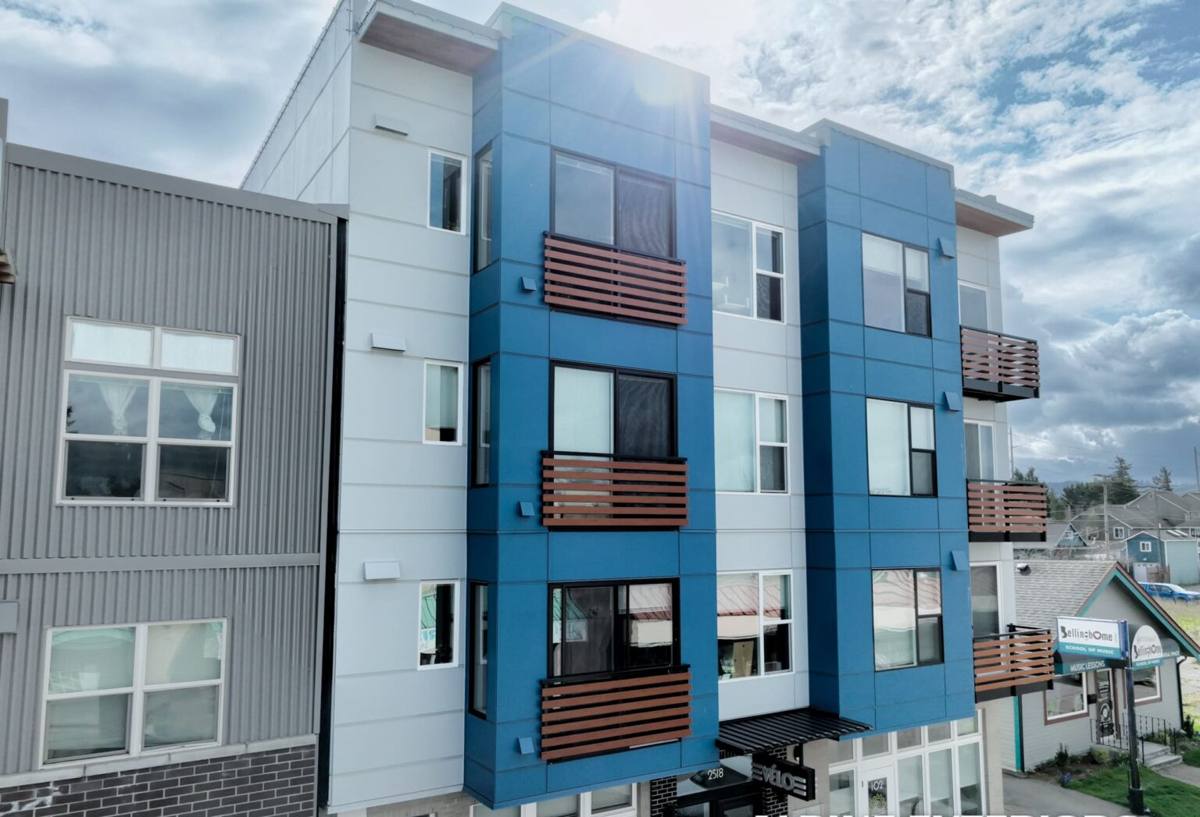
What Salt Air, Driving Rain, and Moss Season Actually Do to Windows
Salt Air
Airborne salt is corrosive to exposed metal hardware — hinges, cranks, balance systems, and some low-grade fasteners. It also accelerates the breakdown of certain sealants and finishes faster than the same products would wear inland. Over time this shows up as stiff or failing hardware, pitted metal components, and caulk lines that crack and let water behind them years before they should.
Wind-Driven Rain
Because Fairhaven catches wind off the water, rain doesn't just fall on a window — it's pushed into it horizontally. A window and installation that would keep out vertical rainfall can still leak under wind pressure if the flashing details and sill pan aren't built to shed water actively, not just passively. This is one of the most common reasons homeowners get a "good" window that still leaks.
Moss and Sustained Damp
Long stretches of overcast, damp weather keep moss and algae established on north-facing walls, sills, and anywhere debris collects. Moss holds moisture against wood trim and cladding far longer than open air would allow, which is exactly the condition that lets rot start in window sills, jambs, and the framing behind them — often invisibly, until the wood is already soft.
Fairhaven's Older Housing Stock Adds Its Own Challenges
Many homes in and around Fairhaven date back decades, with a mix of original wood-frame construction, older aluminum-frame replacements from past decades, and a variety of additions and updates over the years. That history matters for a window job in a few concrete ways:
- Original openings are often slightly out of square after decades of settling, so new units need careful field measurement rather than assuming factory-standard dimensions.
- Older wall assemblies may not have modern weather-resistive barriers or house wrap behind the siding, which changes how flashing needs to integrate at the window opening.
- Some homes have architectural character worth preserving — trim profiles, sightlines, and proportions that a replacement window should respect rather than flatten into a generic modern look.
- Layers of old paint, caulk, or even lead-based coatings on pre-1978 homes require the right handling and containment during removal.
None of this means older Fairhaven homes need exotic solutions. It means the installer has to actually look at the specific opening in front of them instead of running a standard process meant for new construction.
What a Correct Window Replacement Job Actually Involves
A window replacement is judged by what you can't see once it's done. The visible glass and frame are only part of the job. Here's what should happen at every opening, regardless of brand:
- Full removal and inspection of the opening — not just popping in a replacement, but checking the sill, jambs, and surrounding framing for hidden rot or moisture damage before anything new goes in.
- Repair of any damaged framing or sheathing found during removal, addressed before the new window goes in, not covered over.
- A sloped sill pan that actively directs any water that gets past the window back out, rather than letting it sit against the sill.
- Proper flashing integration with the existing wall assembly — housewrap or building paper, if present, needs to lap correctly with the new flashing, not just get taped over.
- Correct sealant selection and placement — sealed on the sides and top, with a gap left at the bottom so any water that does get in has somewhere to drain rather than being trapped.
- Proper shimming and fastening so the frame isn't racked or bowed, which affects both the seal and how smoothly the window operates for years to come.
- Interior and exterior trim work finished to match the home, with attention to caulking joints that will be exposed to wind-driven rain.
Skip step 3 or step 5 and you can still end up with a leak in a brand-new window — which is why so many "why is my new window leaking" problems trace back to installation, not the product.
Choosing the Right Frame Material for This Climate
There's no single "best" window material for every home — it depends on the home's style, budget, and how much upkeep you want to take on. For a salt-air, high-moisture environment like Fairhaven, here's how the common options actually compare:
| Frame Material | Salt Air / Moisture Performance | Maintenance | Best Fit |
|---|---|---|---|
| Vinyl | Won't corrode or rot; performs well near salt air | Low — occasional cleaning | Budget-conscious replacements, most home styles |
| Fiberglass | Excellent — very stable, resists moisture and doesn't corrode | Low | Homes wanting durability with a more refined look, larger openings |
| Wood (unclad) | Vulnerable — requires diligent finish maintenance to avoid rot in this climate | High — repainting/sealing on a regular cycle | Historic-character homes where appearance is a priority and upkeep is planned for |
| Wood with aluminum/fiberglass cladding | Good — cladding protects the exterior face, interior keeps wood look | Moderate | Homes wanting a traditional look with less exterior upkeep |
| Aluminum | Prone to corrosion and condensation issues in salt air unless thermally broken and well-finished | Moderate | Specific architectural applications; not our default recommendation here |
We generally steer Fairhaven homeowners away from unclad wood exteriors and standard aluminum frames unless there's a specific architectural reason to use them, simply because the maintenance burden and corrosion risk near the water are real trade-offs — not because those materials are bad products in the right setting. Vinyl and fiberglass tend to be the most forgiving choices for this specific climate.
Our Process, Start to Finish
- On-site assessment — we look at every opening individually, check for existing moisture or rot, and take real field measurements rather than working off assumptions.
- Honest recommendations — we'll tell you which openings genuinely need replacement now, which can wait, and which material makes sense for your home and budget, without upselling.
- Clear scope and timeline — you'll know what's being done, in what order, and roughly how long it will take before we start.
- Removal, repair, and correct installation — following the sill pan, flashing, and sealing details above at every single opening, not just the ones that are easy to see.
- Cleanup and walkthrough — we walk the finished work with you so you know it operates correctly and looks the way you expected.
Signs Your Fairhaven Home May Need Window Replacement Now
- Fogging or moisture trapped between panes of double- or triple-glazed windows — the seal has failed and it can't be fixed, only replaced.
- Soft, spongy, or discolored wood at the sill or bottom corners of the frame, often hidden under paint until you press on it.
- Windows that are hard to open, close, or lock — a sign the frame has shifted or swollen.
- Visible gaps, drafts, or daylight around the frame when the window is closed.
- Persistent moss or algae buildup on the sill or lower frame that keeps coming back no matter how often it's cleaned.
- Interior staining, bubbling paint, or a musty smell near a window after wind-driven rain events.
- Noticeably higher heating bills without another clear cause, especially in a home with older single-pane or early dual-pane windows.
Why Local Experience in Fairhaven Matters
A crew that regularly works homes in this part of Bellingham already knows what to expect before they pull the first old window: the exposure this close to the bay, the age and construction habits typical of the area's housing stock, and how moss and dampness behave through a Whatcom County winter. That means fewer surprises during the job and installation details that are chosen for this environment specifically, not borrowed from a drier climate playbook. It also means being available and accountable afterward if a question comes up — not a crew that did one job in the neighborhood and moved on.
Window replacement is also one of those projects where cutting corners doesn't show up as a problem on day one. It shows up two or three wet seasons later, as a soft sill or a fogged pane, once it's already expensive to fix properly. Doing it right the first time, with the local climate specifically in mind, is what actually saves money over the life of the windows.
Get a Straightforward Estimate
If you're dealing with drafty, foggy, or aging windows in Fairhaven, we're happy to take a look and give you an honest read on what your home actually needs — no pressure, no inflated urgency. Fill out the form below for a free estimate, and we'll walk you through your options plainly.