 Bellingham Exterior
 Why Ferndale Windows Wear Out Faster Than the Manufacturer's Warranty Suggests
Ferndale sits close enough to Bellingham Bay and the Strait of Georgia that salt-laden air is a regular visitor, not an occasional one. Add Whatcom County's long stretch of driving rain and the shaded, damp conditions that keep moss thriving most of the year, and you've got a climate that's genuinely harder on window assemblies than the sales brochure at a big-box store accounts for. Aluminum hardware pits and corrodes faster near the water. Wood sashes that aren't properly clad or sealed hold moisture and start to soften at the joints. Weep holes clog with moss spores and debris, trap water against the frame, and quietly rot sill areas from the inside out.
None of that means Ferndale is a bad place for windows — it means it's a place where the installation details matter more than they would somewhere dry and inland. A window that's correctly flashed, correctly sealed, and made from the right material for this specific exposure will outlast one that was installed the same way you'd install it in eastern Washington.
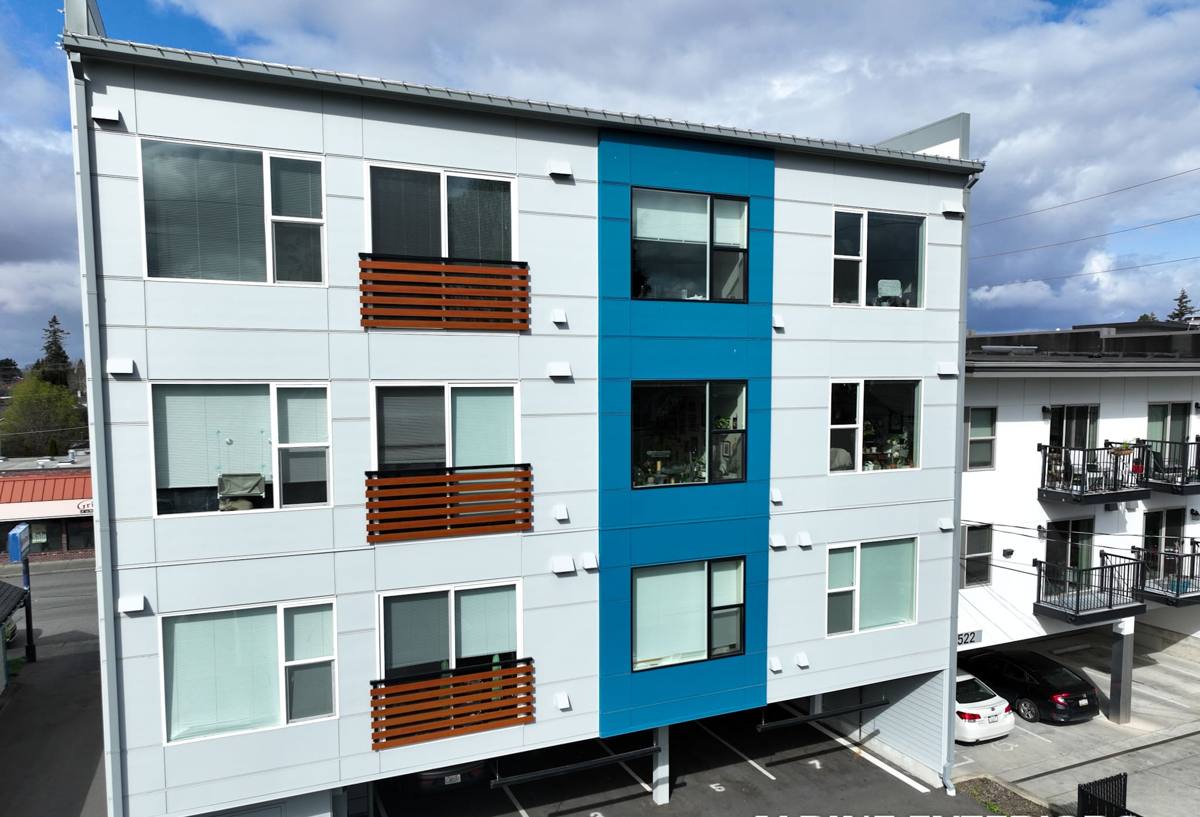
What We Look For in Ferndale Homes Before We Ever Talk Product
Before we talk vinyl versus fiberglass or double-pane versus triple-pane, we look at how the house is actually behaving. That means checking:
- Soft or spongy trim and sills around existing window openings, which usually means water has already gotten behind the frame
- Visible fogging or moisture between panes, a sign the seal has failed and the insulated glass unit is done
- Drafts or cold spots near the frame edges, even when the sash itself looks fine
- Moss or dark streaking on the exterior casing, which points to water sitting where it shouldn't
- Paint that's bubbling or peeling specifically around window openings rather than the whole wall
- Difficulty opening, closing, or locking sashes, which often means the frame has shifted or swelled
Any of these on their own can be a minor fix. Several together usually means the window opening itself — not just the window — needs attention before a new unit goes in.
What a Correct Custom Window Installation Actually Involves
"Custom" doesn't just mean the window is built to a non-standard size, though a lot of older Ferndale homes do have openings that don't match modern stock dimensions. It means the whole assembly — window, flashing, sealant, and trim — is matched to how water actually moves around this specific house.
The parts that don't show up in a sales pitch
A correct install starts with checking the rough opening for rot or square before anything new goes in. It includes proper sill pan flashing so any water that does get past the exterior gets directed back outside instead of into the wall cavity. It means using the right sealant at the right joints — not caulking everything shut, which can trap moisture instead of letting it drain. And it means flashing tape and house wrap integration that actually ties into the existing weather barrier, rather than just caulking around the new frame and calling it done.
This is the part of the job that's invisible once the trim goes back on, and it's also the part that determines whether the window lasts fifteen years or thirty in a climate like this one.
Frame Materials: What Actually Holds Up Near Bellingham Bay
There's no single "best" frame material for every home — it depends on your budget, your home's style, and how much maintenance you're willing to do. Here's how the common options actually perform under Whatcom County's salt air and rain load:
| Frame Material | How It Handles Salt Air & Rain | Maintenance | Typical Fit |
|---|---|---|---|
| Vinyl | Won't rust or corrode; performs well long-term with minimal upkeep | Low — occasional cleaning | Most homes, best value |
| Fiberglass | Excellent stability in temperature swings and moisture; very durable near the coast | Low | Higher-end replacements, larger openings |
| Wood-clad | Good if the exterior cladding is intact and well-sealed; interior wood offers a traditional look | Moderate — watch cladding seams for water intrusion | Historic or traditional-style homes |
| Aluminum | Prone to corrosion and condensation in this climate unless thermally broken | Higher — needs monitoring near salt exposure | Best limited to specific architectural needs |
Our standard is to steer most Ferndale homeowners toward vinyl or fiberglass unless there's a specific architectural reason to go another direction. It's not that wood or aluminum can't work — it's that the maintenance burden and moisture sensitivity of those materials go up noticeably this close to the water, and we'd rather set that expectation up front than have you dealing with surprise rot in year eight.
What we generally steer away from
Bare (non-clad) wood frames facing prevailing weather, and standard mill-finish aluminum without a thermal break, both ask more of a homeowner's maintenance schedule than most people realistically keep up with here. If either fits your home's look and you understand the upkeep involved, we'll install them correctly — we just believe in saying that plainly before you commit, not after.
Glass Packages: Matching Performance to This Climate
Ferndale's weather isn't extreme cold like the mountains, but it is persistently damp, breezy, and overcast for long stretches. That combination makes a few glass features worth prioritizing over others:
- Low-E coatings help manage heat loss during our long gray stretches without making the house feel like a greenhouse on the sunny days we do get
- Argon or krypton gas fill adds insulating value between panes, which matters more for comfort near the frame edges than most homeowners expect
- Warm-edge spacers reduce condensation risk at the glass perimeter — a real issue in a consistently humid climate
- Double vs. triple pane is a budget and noise conversation as much as an efficiency one; triple pane pays off more in comfort near busy roads or exposed elevations than it does in raw energy savings for most Ferndale homes
Our Process, Start to Finish
We keep the process straightforward on purpose — this isn't a high-pressure sales visit.
1. On-site assessment
We look at your existing windows and openings, note any moisture or rot issues, and measure for a true custom fit rather than assuming stock sizes.
2. Honest recommendation
We walk you through material and glass options based on your home's exposure — which side faces prevailing weather, how much sun it gets, and what your budget target is — without pushing the most expensive option by default.
3. Written estimate
You get a clear scope of work: what's being replaced, what flashing and sealing work is included, and what the timeline looks like.
4. Installation
Old windows come out, openings get inspected and repaired as needed, new units go in with proper flashing and sealant, and trim is finished to match.
5. Final walkthrough
We check operation on every window, confirm seals and locks function correctly, and clean up the site before we consider the job done.
Cost Factors Worth Understanding
We're not going to throw out a number that doesn't mean anything without seeing your home, but the factors that actually move the price are worth knowing going in:
| Factor | Why It Matters |
|---|---|
| Number and size of openings | Larger or non-standard openings require more custom fabrication |
| Frame material chosen | Vinyl, fiberglass, and wood-clad carry different material costs and labor requirements |
| Condition of existing openings | Rot or water damage found during removal adds repair scope before installation can proceed |
| Glass package | Low-E coatings, gas fill, and double vs. triple pane all affect unit cost |
| Access and site conditions | Second-story or hard-to-access openings take more time and equipment |
The honest answer to "what will this cost" is that it depends on what we find once we're actually looking at your windows, which is exactly why the estimate visit matters.
Why a Crew That Already Works Ferndale Matters
A contractor who works across Whatcom County regularly knows which side of a Ferndale home typically takes the worst weather, what kind of rot patterns show up in homes of a certain age and construction type in this area, and how local building department expectations apply to window replacement work. That's not something you get from a crew passing through on a one-off job. It also means when you call about a warranty question or a follow-up concern, you're calling someone who's still working in your area, not chasing down a company that moved on to the next region.
We treat every custom window job in Ferndale the way we'd want it done on our own house — matched to the actual exposure and conditions of that specific home, not a generic install applied the same way everywhere.
If your windows are showing their age — drafts, fogging, sticking sashes, or moss and staining around the frames — we're happy to take a look and give you a straightforward, no-pressure estimate. Use the form below to get started.