 Bellingham Exterior
 Why Ferndale Siding Takes a Different Kind of Beating
Ferndale sits close enough to Bellingham Bay and the Salish Sea that homes here deal with a specific combination of stresses: salt-laden air moving in off the water, long stretches of driving rain through fall and winter, and a moss season that can run eight months or more under the tree cover common in Whatcom County neighborhoods. None of these alone is unusual for Western Washington. Together, on a home that isn't inspected regularly, they accelerate almost every type of siding failure we see.
Salt air is corrosive to fasteners and hard on paint films, especially on the west- and south-facing walls that catch the prevailing weather. Driving rain doesn't just wet the surface of siding — wind-driven moisture gets forced up under laps, around trim, and into any gap left by a shrinking caulk joint or a nail that's backed out. And moss doesn't just look bad; it holds moisture directly against the siding surface for months at a time, which is exactly the condition that causes rot, delamination, and paint failure to take hold.
Siding repair in Ferndale isn't just patching a hole or replacing a cracked board. It's addressing the reason that section failed in the first place, so the same spot isn't back on our schedule two winters from now.
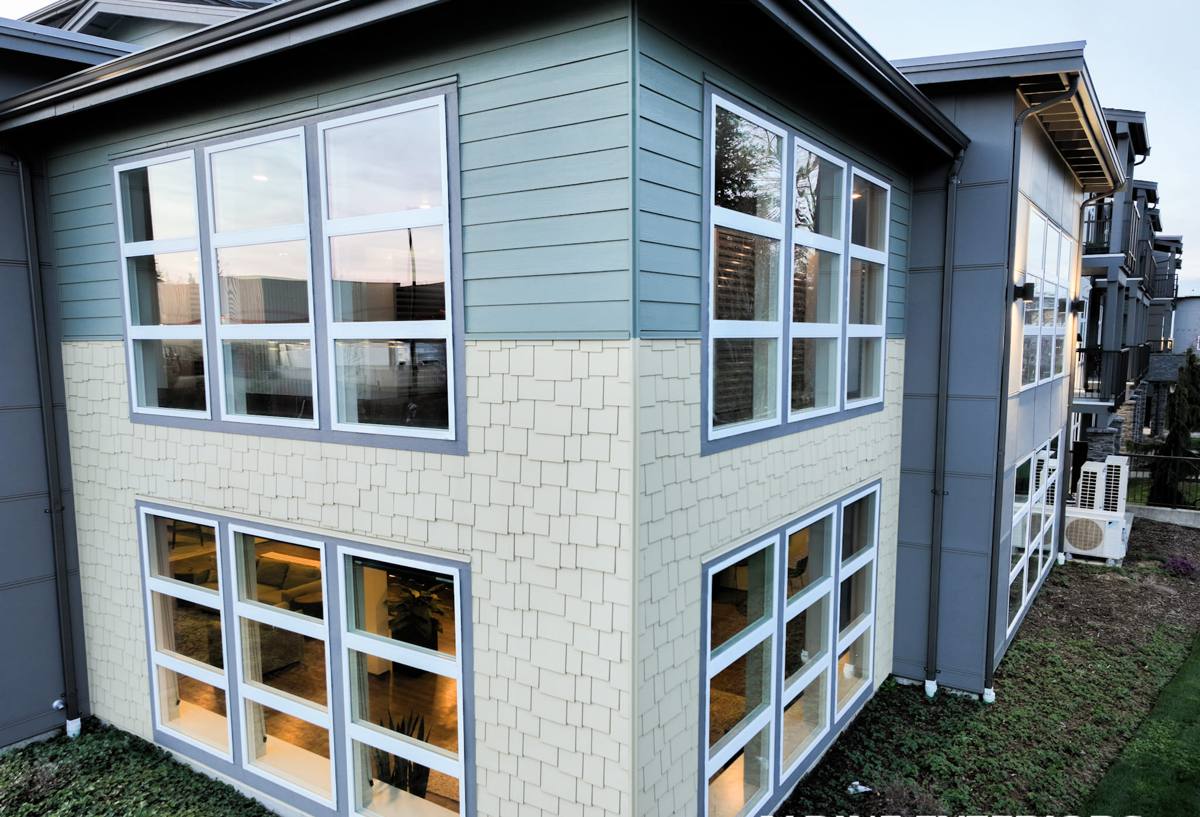
Signs Your Siding Needs Repair, Not Just a Wash
Homeowners often call us after noticing something cosmetic, and that's a reasonable starting point — but a trained eye is looking for a few other things at the same time. Before you decide a problem is minor, walk your exterior and check for these:
- Soft or spongy spots when you press on siding, especially near the bottom courses and around window and door trim
- Visible cracking, buckling, or warping in individual boards or panels
- Paint that's peeling, bubbling, or chalking heavily in one area but not others (often a sign of trapped moisture behind that section)
- Dark streaking or persistent moss and algae growth that comes back within weeks of cleaning
- Gaps opening up at seams, corners, or where siding meets trim, flashing, or the foundation
- Soft trim boards, fascia, or corner boards near the siding — these fail before the siding often does and let water in behind it
- An increase in pest activity (carpenter ants, for example) near a specific wall section
Any one of these can be an isolated, inexpensive fix. Several together, especially on the same wall, usually mean water has been getting behind the siding for a while and the repair needs to include what's underneath, not just what's visible.
Why "Just Caulk It" Isn't Always the Answer
Caulk and touch-up paint are the most overused quick fixes in siding repair. They work fine for hairline cracks and minor gaps. They do not work when the underlying problem is a failed water-resistive barrier, missing or damaged flashing, or siding material that's already absorbed moisture and started to break down internally. Sealing the surface of a board that's rotting from the inside just traps the moisture that's already there — it doesn't remove it.
What a Correct Repair Actually Involves
A repair done right starts with diagnosis, not a patch kit. On every job we:
- Identify the actual source of water intrusion — not just the damaged board, but the flashing, trim, or gap that let moisture in
- Check moisture content in the siding and sheathing around the damaged area with a moisture meter, not just a visual guess
- Remove and replace only the material that's actually compromised, without disturbing sound siding unnecessarily
- Correct the underlying cause — reflashing a window head, resealing a penetration, adjusting a J-channel — so the repair doesn't fail again in the same spot
- Match new material to existing siding as closely as possible in profile, reveal, and finish
That last point matters more in Ferndale than it might elsewhere, because a lot of homes here have siding that's been through one or more prior repairs, or that's aged unevenly on different elevations due to sun and weather exposure differences. A patch that doesn't match is a repair you'll notice every time you pull into the driveway.
Repair or Replace? How We Help You Decide
Not every damaged section needs a full re-side, and not every repair is worth doing on siding that's near the end of its useful life. We walk every homeowner through the same basic factors:
| Factor | Leans toward repair | Leans toward replacement |
|---|---|---|
| Extent of damage | Isolated to one or two sections/walls | Spread across multiple elevations |
| Cause | One-time event: impact damage, a single failed flashing detail | Systemic: original installation errors, chronic moisture intrusion |
| Age of existing siding | Siding is well within its expected service life | Siding is old, brittle, or already showing widespread wear |
| Material match | Discontinued or faded material can be reasonably matched | Material is no longer available or match will be visibly off |
| Underlying sheathing | Sheathing tests dry and sound | Sheathing shows rot or sustained moisture damage |
We'll always tell you honestly which side of that table your home falls on. Sometimes that means a $400 repair. Sometimes it means telling you the repair would be a band-aid on a wall that needs to be redone properly.
What Kind of Siding Are We Repairing?
Ferndale has a real mix of siding types, and what's on your walls affects both how we repair it and what we'd recommend if repair isn't the right call.
Cedar and Wood Siding
Older Ferndale homes often have cedar. It repairs reasonably well when caught early, but wood siding in this climate needs consistent paint maintenance and is genuinely vulnerable to the rot that comes from prolonged moss cover and driving rain. Repairs on wood siding are usually straightforward carpentry, but they don't stop the clock on the material's ongoing exposure to moisture.
Vinyl Siding
Vinyl repairs are often limited by availability — colors fade unevenly and older profiles get discontinued, so a patched section can stand out even when the repair itself is done well. Vinyl also becomes brittle with age and UV exposure, which makes clean removal of a damaged section harder without cracking adjacent panels.
LP SmartSide and Engineered Wood
Engineered wood products are sensitive to edge and cut-end moisture exposure. If the factory-sealed edges have been compromised — by a bad cut on-site, a missing touch-up sealant, or years of standing moisture — the repair needs to address that vulnerability directly, or the same spot will swell and fail again.
Fiber Cement (James Hardie)
This is the only siding material we install as a company, and it's also the easiest to repair correctly when it's what's already on the wall. It doesn't absorb water the way wood or engineered wood products do, and it doesn't become brittle with age and sun exposure the way vinyl does. When a Hardie board is damaged — usually from impact rather than moisture — we can cut in a matching replacement piece and finish it with a color-matched product, and it holds up the same way the original did.
When a repair on a non-Hardie product turns into "this section needs to come off entirely," that's the point in the conversation where we talk about what we'd put back up. We only install James Hardie fiber cement, because in this climate — salt air, sustained rain, moss — it's the product we're comfortable standing behind long-term. That's not a sales pitch tacked onto a repair call; it's the honest answer to "if you're already opening up this wall, what should go back in its place?"
Our Process, Start to Finish
- On-site inspection of the damaged area and a broader check of the same wall and adjoining trim
- Moisture readings on siding and, where accessible, sheathing behind it
- A clear explanation of what's causing the damage — not just what's visibly wrong
- A written repair scope with an honest repair-vs-replace recommendation
- Correction of the root cause (flashing, sealant, drainage path) alongside the visible repair
- Material matching as close as reasonably possible, or a conversation about options if a true match isn't available
- A final walkthrough so you know exactly what was done and why
Why It Matters That We Already Work in Ferndale
Siding repair is a trade where local, hands-on experience shows up in the details. A crew that regularly works Ferndale and the surrounding Bellingham area already has a feel for which walls take the worst of the driving rain, how fast moss reestablishes itself under tree-covered lots, and where salt-influenced corrosion tends to show up first on fasteners and flashing. That's the difference between a repair that treats the symptom and one that treats the cause.
It also means we're not guessing at material availability or committing to a "quick patch" that doesn't hold up through the next wet season. We've seen how each type of siding actually performs in this specific climate over years, not just in a manufacturer's spec sheet.
After the Repair: Keeping It From Happening Again
A good repair buys you time, but a few habits keep it from being undone by the next wet season:
- Keep gutters clear so overflow doesn't run down and pool against siding and trim
- Trim back vegetation and tree limbs that shade siding and keep it damp longer after rain
- Rinse moss and algae off siding before it builds up a thick mat, rather than after
- Have caulking and trim checked every year or two, especially on walls facing the prevailing weather
- Address small issues — a lifted piece of trim, a hairline gap — before winter rains arrive, not after
If you're noticing damage, soft spots, or recurring stains on your Ferndale home's siding, we're happy to take a look and give you a straight answer on what's actually going on and what it'll take to fix it. Reach out for a free, no-pressure estimate using the form below.