 Bellingham Exterior
 Edgemoor's Setting Puts Real Demands on Siding
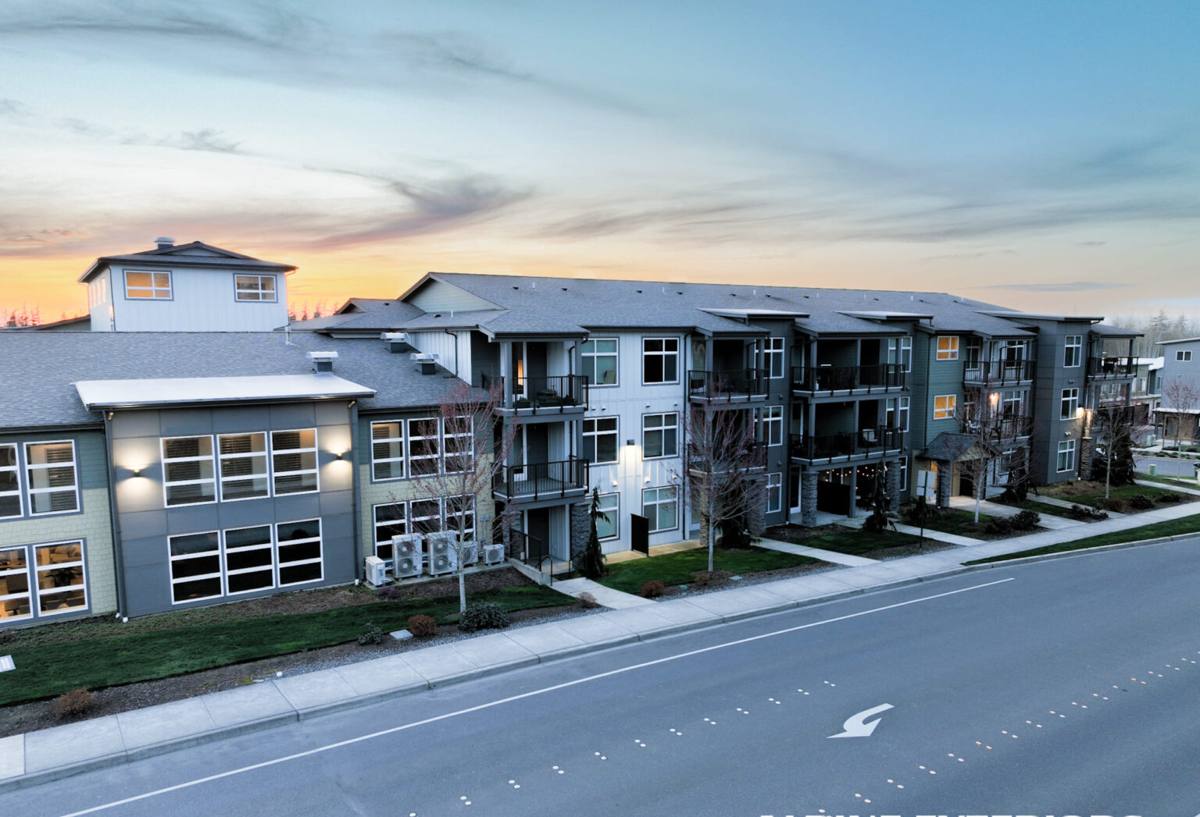
Edgemoor sits close to Bellingham Bay, tucked into mature tree cover on sloped, wooded lots that were never going to make siding's job easy. Homes here deal with a combination most siding never has to survive anywhere else in the country: salt-laden air moving off the water, wind-driven rain that hits walls at an angle instead of falling straight down, and deep shade from evergreens that keeps north- and east-facing walls damp long after a storm has passed. That combination is exactly why moss and mildew get a foothold on siding here that would never survive a drier, sunnier climate.
None of this is unique to any one house in the neighborhood — it's a function of geography. Bluff and hillside lots get more direct exposure to wind off the bay, while lots further under tree canopy trade wind exposure for near-constant shade and slower drying times. Either way, the siding on an Edgemoor home is working harder, more of the year, than siding on a comparable house twenty miles inland.
What Siding Actually Needs to Do Here
Whatcom County's marine climate means siding rarely gets a real dry season to reset. Moisture sits in wall assemblies longer, paint films break down faster under UV and damp cycles, and any product that relies on a field-applied coating is fighting a losing battle against recoat schedules homeowners realistically won't keep up with. For Edgemoor specifically, siding needs to:
- Resist moisture absorption at the board itself, not just at the surface coating
- Hold its finish and color without chalking, peeling, or fading from salt exposure and UV
- Resist rot and won't feed mold or moss growth the way organic wood fibers can
- Stay dimensionally stable through repeated wet-dry and freeze-thaw cycles
- Handle wind-driven rain at seams, corners, and penetrations without letting water track behind the cladding
That list rules out a lot of products before cost or color ever enter the conversation. It's also the exact reason this company installs only James Hardie fiber cement siding.
Why James Hardie Is the Only Product We Install
Fiber cement is cement, sand, and cellulose fiber — an inorganic composition that doesn't rot, doesn't feed mold the way wood-based products can, and doesn't warp or delaminate the way OSB-backed panel products can when they take on moisture over time. James Hardie engineers its siding by climate zone, and the HZ5 formulation used in the Pacific Northwest is built specifically for cold, wet, freeze-thaw conditions rather than a one-size-fits-all product.
The factory-applied ColorPlus finish matters just as much as the substrate. It's baked on under controlled conditions, which gives it far better adhesion and UV resistance than a coat of paint rolled on in the field after installation. On a home in Edgemoor's tree shade or salt exposure, that difference shows up directly in how long the color holds before it needs attention — and unlike primed wood or field-painted products, ColorPlus siding isn't asking the homeowner to commit to a repaint cycle just to keep water out.
Fiber cement is also non-combustible, which is a real advantage during wildfire smoke seasons and ember exposure, even in a marine climate that doesn't see wildfire the way inland Washington does. And Hardie's transferable limited warranty is backed by a company that's been manufacturing this specific product category for decades, not a newer entrant still building a track record.
What We Don't Install, and Why
We don't install vinyl, LP SmartSide, cedar, primed spruce, Cemplank, or Allura. Vinyl expands and contracts more than fiber cement and can warp or crack in sustained cold snaps; it also can't be painted a dark color without heat-warping risk, which limits homeowners in a neighborhood where deeper, natural tones fit the setting. Wood-based products, including engineered wood siding, depend on an intact factory coating and diligent maintenance to keep moisture out — miss a maintenance cycle in a climate this wet, and the wood substrate is exposed to exactly the kind of sustained dampness Edgemoor delivers. Other fiber cement brands may be reasonable products, but we've standardized on one manufacturer, one installation system, and one warranty structure so every crew member knows it cold and every job gets installed the same correct way.
What a Correct Installation Actually Involves
Fiber cement siding fails prematurely almost exclusively because of installation mistakes, not the product itself. In a climate like Whatcom County's, the margin for error is smaller than it would be somewhere drier. A correct install includes:
- A weather-resistive barrier installed and lapped correctly behind the siding, not just tacked up as an afterthought
- Proper clearance between the bottom of the siding and grade, decks, and roof lines so water can't wick up into the board
- Correct fastener type, spacing, and depth — over-driven nails crack the board's edge and create a moisture entry point
- Kickout flashing at every roof-to-wall intersection, which is one of the most common places driving rain finds its way behind siding
- Caulking only where Hardie's specifications call for it, and leaving true expansion gaps where they don't
- Butt joints and corners detailed to shed water outward instead of trapping it
Skip any one of these steps and you can end up with a product rated for decades failing in a fraction of that time — not because fiber cement is a bad product, but because it was installed like a product that doesn't need these details, which none of them are immune to.
Our Process for an Edgemoor Project
Assessment
We start by walking the exterior and looking at how the current siding, trim, and flashing are actually performing — not just how they look. On a shaded or bluff-exposed lot, we're checking for soft spots, existing moisture intrusion at penetrations and roof lines, and how the home's orientation to the bay affects which walls take the worst of the weather.
Tear-Off and Sheathing Check
Once the old siding comes off, we inspect the sheathing underneath. Any wood rot or moisture damage gets addressed before anything new goes up — installing new siding over a compromised wall assembly just hides the problem instead of solving it.
Weather Barrier and Flashing
We install the weather-resistive barrier and all flashing — window, door, roof-to-wall, and penetration flashing — before a single piece of Hardie board goes on. This is the step that determines whether wind-driven rain off the bay stays outside the wall assembly or finds a way in.
Siding Installation
HardiePlank, panel, or shingle siding goes on to manufacturer spec: correct fastener pattern, correct clearances, correct joint treatment. Trim and corner details are installed to shed water outward, which matters more here than it would in a drier climate.
Final Walkthrough
We inspect every seam, penetration, and transition before calling the job done, and walk the finished exterior with the homeowner so they know what was done and what to expect from the product going forward.
Fiber Cement vs. Other Siding Options
| Factor | James Hardie Fiber Cement | Vinyl | Wood / Cedar / Primed Spruce |
|---|---|---|---|
| Moisture resistance | High — inorganic composition | Good, but seams can let water track behind panels | Depends entirely on coating upkeep |
| Performance in salt air | Strong; factory finish resists UV and salt exposure | Can chalk and fade over time | Coating breaks down faster near salt air |
| Moss / mildew resistance | Resists growth; non-organic surface | Resists growth but seams collect debris | Organic material is more vulnerable to moss and rot |
| Maintenance | Occasional rinse; no repainting for the life of ColorPlus finish | Low, but limited to lighter colors and can crack in cold | Regular recoating and rot inspection required |
| Fire resistance | Non-combustible | Melts/deforms under heat | Combustible |
Living With Fiber Cement in a Moss-Prone Neighborhood
Correctly installed fiber cement is low-maintenance, not no-maintenance. In a neighborhood with this much tree cover and moisture, a little seasonal attention goes a long way toward getting the full lifespan out of the product:
- Rinse siding annually, focusing on shaded, north-facing walls where moss and algae are most likely to start
- Keep gutters and downspouts clear so overflow isn't running down the siding face
- Trim back vegetation and tree limbs that keep a wall surface shaded and damp
- Check caulked joints once a year for cracking or separation, and have them addressed before water gets behind the board
- Avoid pointing a pressure washer directly into seams or under butt joints — it can force water past details that are meant to shed it, not take it head-on
- Watch roof-to-wall intersections after heavy wind-driven rain events for any signs of staining or trapped moisture
Cost Factors for an Edgemoor Siding Project
Every home is different, so we don't quote a number without seeing the house, but a few factors consistently drive cost on projects in this neighborhood:
| Factor | Why It Matters |
|---|---|
| Home size and wall complexity | More corners, dormers, and roof lines mean more cutting, flashing, and labor |
| Siding profile chosen | Lap, panel, and shingle profiles differ in material and install time |
| Existing sheathing condition | Rot repair discovered at tear-off adds scope before new siding can go on |
| Site access and lot slope | Bluff lots and steep, tree-lined driveways can affect staging and equipment access |
| Trim and detail level | Custom trim, corner boards, and accent details add labor beyond a straightforward re-side |
Why Hire a Crew That Already Works in Edgemoor
A contractor who already understands this neighborhood isn't guessing at how a house will hold up — they've seen how bluff exposure, tree cover, and bay-facing walls actually perform over time. That local knowledge shows up in small but important decisions: which walls need extra attention to flashing detail, how to stage material and equipment on a sloped or tree-lined lot, and which orientations take the worst of the region's wind-driven rain.
It also shows up in permitting and process. A crew that regularly works in Bellingham and Whatcom County knows the local permitting expectations and won't be learning that process for the first time on your project. That familiarity keeps a siding replacement moving instead of stalling on avoidable delays.
Ready to Talk About Your Home
If your Edgemoor home is dealing with moss buildup, failing paint, soft spots, or siding that's simply reached the end of its service life, we're happy to take a look and give you an honest read on what's going on and what it would take to fix it right. There's a free, no-pressure estimate form below — reach out and we'll walk the property with you.