 Bellingham Exterior
 Why Sunnyland's Climate Is Hard on Exterior Siding
Sunnyland sits inside Bellingham, close enough to Bellingham Bay and the Salish Sea that homes here deal with a steady mix of salt-laden air, wind-driven rain, and long stretches of overcast, damp weather. Whatcom County doesn't get the same intensity of storms as some coastal areas, but it makes up for that with duration — siding here can stay wet for days at a time during the fall and winter, and even in summer the marine layer keeps humidity higher than most homeowners expect.
That combination is tough on siding in a few specific ways. Salt air accelerates corrosion on exposed metal fasteners and trim. Driving rain pushes moisture into any gap in flashing or caulk that a lower-quality installation left open. And the long stretch of cool, wet months from October through April creates ideal conditions for moss and algae growth, especially on north-facing walls and anywhere siding sits close to landscaping or tree cover. Homes in established Bellingham neighborhoods like Sunnyland, with mature trees and older lot layouts, tend to have more shaded, slow-drying wall sections than newer subdivisions built on cleared ground.
None of this means siding is doomed to fail here — it means the material and the installation both have to be matched to the conditions. That's the whole reason we standardized on James Hardie fiber cement rather than installing whatever a homeowner asks for.
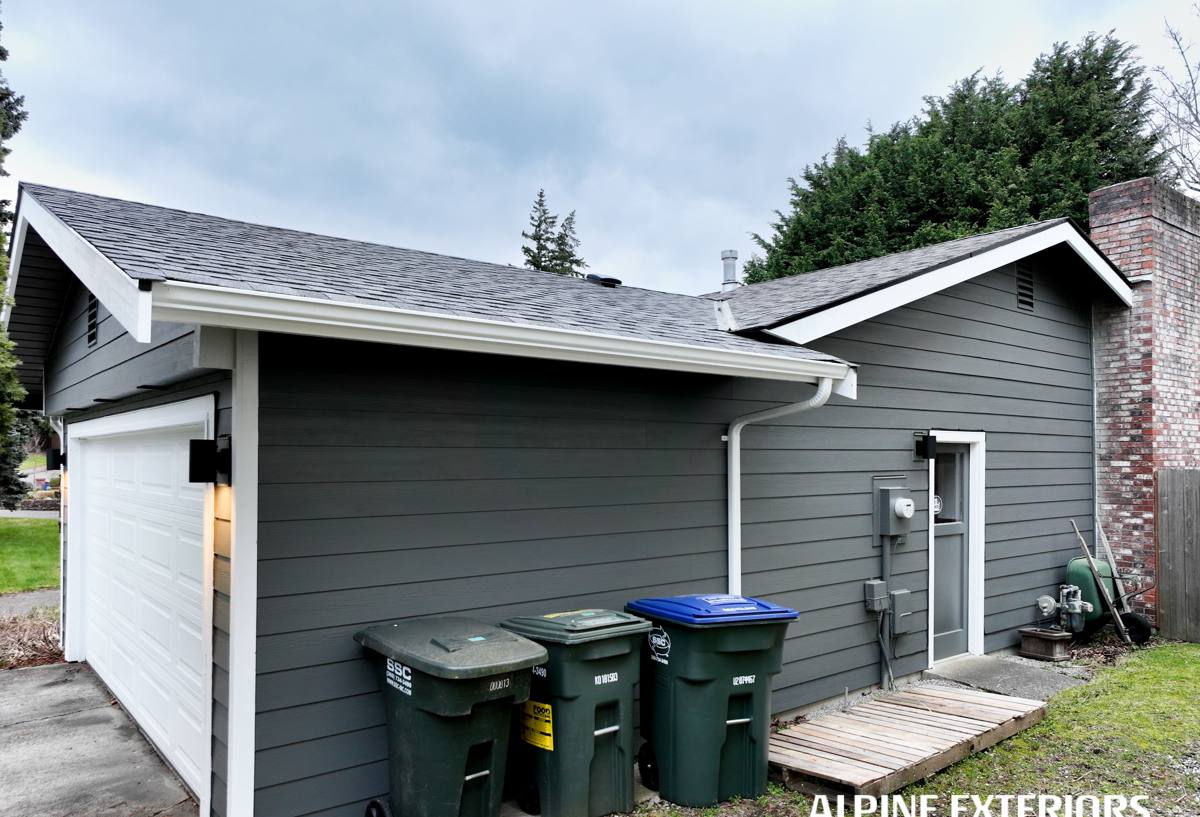
What Correct Fiber Cement Installation Actually Requires
Fiber cement siding has a strong track record, but that track record depends entirely on installation quality. A poorly installed Hardie job can trap moisture just as badly as any other product. A few details matter more in a climate like ours than they would in a drier region.
Flashing and Water Management
Every window, door, and horizontal trim transition needs proper flashing that directs water outward, not behind the siding plane. In a climate with as much sustained rain as Bellingham gets, a missed or undersized flashing detail eventually shows up as staining, soft trim, or worse — rot in the sheathing underneath, which is far more expensive to fix than the siding itself.
Fastening and Clearances
James Hardie specifies exact fastener types, spacing, and minimum clearances from grade, roof lines, and decks. Skipping the required clearance at the bottom of a wall is one of the most common shortcuts we see on older installations, and it's also one of the fastest ways to invite moisture and moss into the bottom courses of siding.
Joint and Seam Treatment
Butt joints and panel seams need to be treated with the right sealant or covered with proper trim — not just caulked and painted over. Done wrong, these become the first place water gets in and the first place algae takes hold, since seams hold moisture longer than a flat panel face.
Why We Install Only James Hardie
We don't install vinyl siding, LP SmartSide, Cemplank, Allura, or unfinished wood siding, and we're upfront about why. Vinyl expands and contracts more than fiber cement in temperature swings and can crack or warp over time, and it doesn't hold paint if a homeowner ever wants to change the color. LP SmartSide is an engineered wood product — treated to resist moisture, but still wood at its core, which means the seams and cut edges are more sensitive to sustained wet weather than a true cement composite. Cemplank and Allura are also fiber cement and reasonably solid products, but we don't stock or install them because we've built our entire process, warranty relationship, and crew training around one manufacturer's system rather than splitting attention across several.
James Hardie's product is non-combustible, holds a factory-applied ColorPlus finish far better than field-applied paint, and offers HZ product engineering built specifically for regions with sustained moisture exposure — which describes Whatcom County well. The warranty is also transferable to a future homeowner, which matters if you plan to sell.
Choosing the Right Hardie Product Line for a Sunnyland Home
James Hardie makes climate-specific versions of its siding, and picking the right one is part of doing the job correctly rather than just installing "Hardie siding" generically.
| Product Line | Best Suited For | Why It Matters Here |
|---|---|---|
| HardiePlank HZ5 | Homes in moderate, drier climate zones | Baseline moisture resistance; less critical for our region specifically |
| HardiePlank HZ10 | Homes in wetter, marine-influenced climates | Engineered for higher moisture exposure — the better fit for Bellingham's rainfall and humidity |
| ColorPlus Technology finish | Any home wanting long-term color retention | Factory-baked finish resists fading and holds up better against damp, shaded wall sections prone to moss |
| HardieTrim boards | Corners, window/door surrounds, fascia | Matches siding durability so trim doesn't fail before the field siding does |
For most Sunnyland homes, we recommend the HZ10 engineered line paired with ColorPlus factory finish. It costs a bit more upfront than the standard line, but it's a better match for a wall that may stay damp for days after a fall storm.
Our Installation Process, Start to Finish
- Assessment — we inspect existing siding, trim, and visible sheathing for hidden moisture damage before quoting anything
- Tear-off — full removal of old siding rather than installing over it, so we can actually see and address what's underneath
- Sheathing and moisture barrier check — any soft or water-damaged sheathing gets repaired before new siding goes up, not covered over
- Weather-resistive barrier and flashing installation — installed to Hardie's spec at every penetration, window, and door
- Siding and trim installation — panels, lap siding, and HardieTrim installed with correct fastener spacing and clearances
- Seam and joint detailing — proper caulking or trim coverage at every seam
- Final walkthrough — we go over the finished job with the homeowner before calling it done
Cost Factors for a Sunnyland Siding Project
| Factor | Why It Affects Price |
|---|---|
| Tear-off vs. new construction | Removing and disposing of old siding adds labor the job wouldn't otherwise need |
| Hidden sheathing repair | Moisture damage found during tear-off has to be fixed before new siding can go up correctly |
| Home size and wall complexity | More corners, gables, and trim details mean more cutting and detail work |
| HZ10 vs. standard product line | Higher moisture-rated siding costs somewhat more per square foot but reduces long-term risk |
| Color and finish choice | Factory ColorPlus finishes vs. field-painted options affect material cost and long-term upkeep |
We give straightforward, itemized estimates rather than a single lump number, so homeowners can see exactly what's driving the cost before committing to anything.
Signs Your Current Siding Is Already Failing
Because Bellingham's damp season lasts so long, siding problems here often show up as slow, quiet deterioration rather than a single dramatic failure. Worth checking for:
- Persistent green or black staining on north-facing or shaded walls that returns shortly after cleaning
- Soft, spongy spots when you press on siding or trim near the bottom of a wall
- Paint that's bubbling, peeling, or failing faster in one area than the rest of the house
- Visible gaps or separation at seams, corners, or window trim
- A musty smell in an interior room that backs onto an exterior wall
- Siding sitting flush against grade, mulch, or a deck with no visible clearance gap
Any one of these on its own might be minor. Several together, especially combined with an older or unknown siding installation, usually means it's worth having someone look before a small issue becomes a sheathing repair.
Why Local Bellingham Experience Matters
A crew that already works in and around Sunnyland and greater Bellingham knows which wall exposures in this area tend to hold moisture longest, which neighborhoods have older homes more likely to need sheathing repair before re-siding, and how Whatcom County's permitting process works for exterior remodel projects. That's not something a crew coming from a drier region picks up on the first job — it comes from doing this work repeatedly in this specific climate. It also means we're not guessing at how much clearance, flashing, or drainage a given wall needs; we've seen what happens when those details are shortchanged in this exact weather pattern.
Maintenance After Installation
Correctly installed Hardie siding with a ColorPlus finish is low-maintenance, not no-maintenance. A yearly rinse-down to keep moss and organic buildup from taking hold, a quick visual check of caulked seams every year or two, and prompt attention to any landscaping that's grown up against the siding will keep a Sunnyland installation performing the way it's designed to for decades.
If you're dealing with aging siding, ongoing moss and moisture issues, or just want a straight answer on what a proper fiber cement installation would look like on your home, we're happy to come take a look. Fill out the form below for a free, no-pressure estimate.